
On the occasion of his interview with Days of Art in Greece, Nikolaos Kantiranis, Director of the English-language MSc in “Hydrocarbon Exploration and Exploitation,” addresses issues concerning the specialization of young scientists in a highly demanding field, the international dimension of hydrocarbons, and the career opportunities available to the program’s graduates. At the same time, he highlights the importance of a program that combines fundamental scientific knowledge with practical training, in an environment that integrates geology, engineering, technology, and the energy economy.
In the discussion that follows, Mr. Kantiranis points out that the program is aimed at graduates in geology, engineers, and, more broadly, scientists with a relevant background, offering them training across the full spectrum of research and production—from seismic interpretation and basin modeling to reservoir management and the economic evaluation of projects. It also emphasizes that graduates acquire the skills necessary for the modern job market, as well as a strong foundation for doctoral studies and a research career, within a four-semester, 120 ECTS program with an international focus.
Days of Art in Greece: You are the director of the English-language program “Hydrocarbon Exploration and Exploitation.” Who is the program intended for? What career paths will graduates pursue in the job market after graduation? What academic opportunities are available to them?
Nikolaos Kantiranis: The program is aimed at geology graduates, engineers, and, more broadly, scientists with a relevant academic background who wish to specialize in a particularly demanding and internationally competitive field. This is not a theoretical master’s program. It is a program that combines fundamental scientific knowledge with practical skills and training in the same software and methodologies currently used by the global hydrocarbon industry. Our graduates gain knowledge across the entire spectrum of exploration and production: from petroleum geology, seismic interpretation, and basin modeling, to well engineering, reservoir management, production, and the economic evaluation of projects. At the same time, they develop skills in teamwork, project management, risk analysis, and decision-making, which are essential requirements of today’s job market. Career opportunities extend both in Greece and internationally, in hydrocarbon exploration and production companies, technical service providers, consulting firms, public energy resource management agencies, and research institutions. At the same time, the program serves as an ideal starting point for those wishing to pursue doctoral studies and a research career in Greece or abroad, as it is structured over four semesters and comprises 120 ECTS credits.
Greece is currently undergoing a period of vigorous research development aimed at exploiting its hydrocarbon reserves. This means that young scientists have the opportunity to participate from the very beginning in shaping a modern and responsible energy sector and to become involved in all stages of the hydrocarbon industry.
D.A.: Our country is considered to have a short history in the field of hydrocarbon extraction. The program is international. Why should prospective students choose this particular program in our country?
N.K.: Greece may not have the long industrial tradition of countries such as Norway or the United States, but it does have something equally important: an exceptionally interesting geological environment, high-caliber academic staff, and a period of intense scientific and research activity in the energy sector, particularly in the field of hydrocarbons. The program is a collaboration among four leading Greek universities, a unique initiative by Greek standards. The program features faculty from various academic disciplines as well as executives from the international industry, and students are trained in specialized software of significant commercial value that is used daily by the largest companies in the sector. Furthermore, the language of instruction is English, a fact that makes the program truly international. Students not only acquire academic knowledge; they also gain work experience in an international academic environment and are prepared for a job market without geographical boundaries.
D.A.: We are currently in a period of intense debate regarding hydrocarbon production on Greek land and in Greek waters, in quantities significant enough to be exploited and exported. What information should graduate students who choose to work in our country be aware of?
N.K.: The most important thing is for them to understand that the modern exploitation of hydrocarbons is not solely a technical issue. It is a complex process that combines geosciences, engineering, economics, environmental protection, legislation, and social acceptance, as well as international geopolitical conditions. Greece is currently in a phase of actively expanding research aimed at exploiting its hydrocarbon reserves. This means that young scientists have the opportunity to participate from the outset in shaping a modern and responsible energy sector and to become involved in all stages of the hydrocarbon industry. However, this requires a high level of scientific training, strict adherence to international safety standards, and continuous updating on technological developments. The goal today is not simply to produce energy resources. It is to produce them with respect for the environment, society, and the principles of sustainable development.
D.A.: Although hydrocarbon reserves in Greece have so far appeared to be of limited production, the involvement of Greek companies in the oil refining sector appears to be very significant. Combined with the dominant position of the Greek shipping industry, our country has a significant impact on the global trade of petroleum products. Tell us more about this. What do you think the future holds for this sector of our economy?
N.K.: Greece occupies a particularly strategic position on the global energy map. It has modern refineries, a strong shipping fleet, and is located at a geographical crossroads connecting three continents. This means that even if domestic hydrocarbon production remains limited for the time being, the country can continue to serve as a major energy hub for the transportation, storage, refining, and distribution of energy products. At the same time, with the strategic moves being made to award concessions for hydrocarbon exploration and production in the Ionian Sea and Crete, a dynamic is emerging that will collectively benefit our country both in terms of the development of the hydrocarbons sector itself and the national economy. At the same time, however, the market is changing. In the coming years, we will see the gradual integration of new fuels, such as hydrogen, synthetic fuels, and low-carbon fuels. The companies that will succeed will be those that combine their many years of experience with conventional fuels with investments in energy transition technologies.
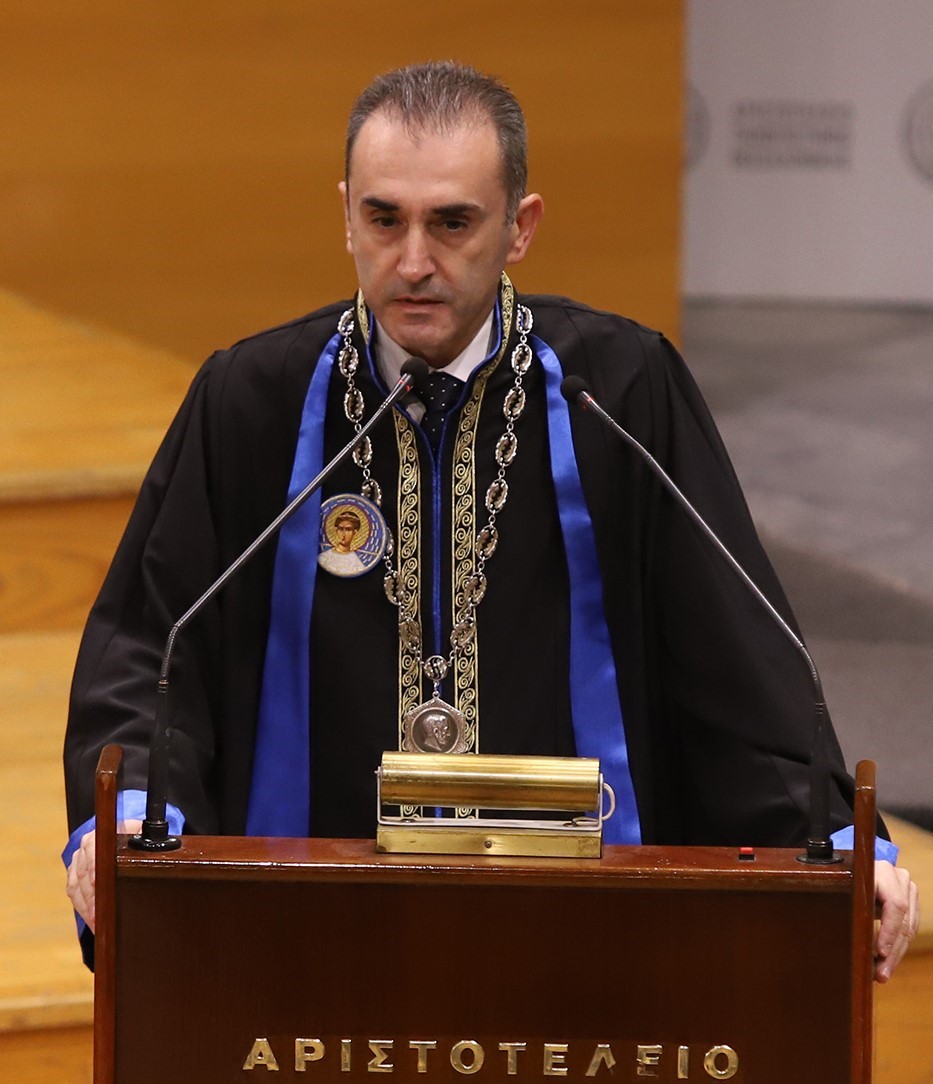
Nikolaos Kantiranis
D.A.: In addition to your expertise in this specific field, which we mentioned earlier, you have also made significant contributions and left a strong research legacy in other types of industrial minerals, in the effects of airborne particles on the human body, and in the production of modern biodegradable materials. The economy of our country, as well as the global economy, is in the process of transitioning toward a green future. What will the future hold, and what will be the implications for mining materials in tomorrow’s industry? Will oil ever cease to be the “father of wars,” energy, and development in the global economy?
N.K.: The green transition does not mean the end of mining. It means a shift in priorities. The transition to clean energy requires even more raw materials: critical metals, industrial minerals, rare earth elements, and new high-tech materials. Therefore, the geosciences are not only holding their ground but are becoming even more important. As for oil, I believe it will continue to be a significant part of the global energy mix for several more decades. It is not used solely as a fuel. It is the basis for thousands of everyday products, from medicines to composite materials and advanced technologies. On a personal note, we could ask you why you chose this career path? How fascinating is it to search for forms of energy deep within the earth? How many unexplored treasures can we still expect from the earth? Could we one day bring relevant materials from other planets into the future? The goal, therefore, is not an abrupt phase-out of oil, but a gradual reduction in our dependence on it, alongside the development of cleaner technologies, greater energy efficiency, and responsible management of natural resources.
D.A.: On a personal note, could we ask you why you chose this career path? How fascinating is it to search for forms of energy deep within the earth? How many unexplored treasures can we still expect to find in the earth? Could we bring relevant materials from other planets into the future?
N.K.: Geology is the science that allows us to “read” the history of the Earth. Every rock, every fossil, every geological structure is a piece of a vast puzzle that tells the story of our planet’s evolution. I’ve always found this particularly fascinating. The search for natural resources isn’t merely an economic activity. It is a process of scientific discovery that combines observation, technology, imagination, and the continuous verification of hypotheses through real data. The Earth still holds many secrets. Advances in the geosciences, through the integration of artificial intelligence and new imaging methods, now allow us to understand subsurface structures that, just a few decades ago, were impossible to characterize in detail. As for the extraction of materials from other planets or asteroids, this remains a distant research goal at present. I do not rule out, however, that in the coming decades certain efforts and hypotheses will move from theory to practice. The history of science has taught us that today’s dreams often become tomorrow’s technology.
The program is a collaboration among four leading Greek universities, which is unique in Greece. The program features professors from various academic disciplines as well as executives from the international industry, and students are trained in specialized software of significant commercial value that is used daily by the largest companies in the sector.
D.A.: Is it more profitable today to focus on the surface or on the subsurface? What do you think will happen in the future? Would you like to share with us images from works of art or science fiction that you believe have inspired scientists—and perhaps you as well?
N.K.: Today, there is no longer a distinction between the above-ground and underground worlds. The above-ground and underground worlds constitute a single natural system. Environmental protection, addressing climate change, energy security, and sustainable development all require an understanding of both. The future will require scientists who can integrate knowledge of natural resources with new technologies. Hydrocarbon exploration, geological modeling, the utilization of mineral resources, and environmental protection will be interrelated fields. When it comes to inspiration, science and art intersect much more often than we realize. From the novels of Jules Verne to modern science fiction, many ideas that were once considered impossible later became the subject of actual scientific research. Science requires knowledge, but it also requires imagination. And perhaps it is this creative balance that drives every great discovery. Ultimately, the greatest challenge of the future is not only to discover new resources, but to learn how to use them in a way that ensures development and harmony with the natural environment.




Leave A Comment