
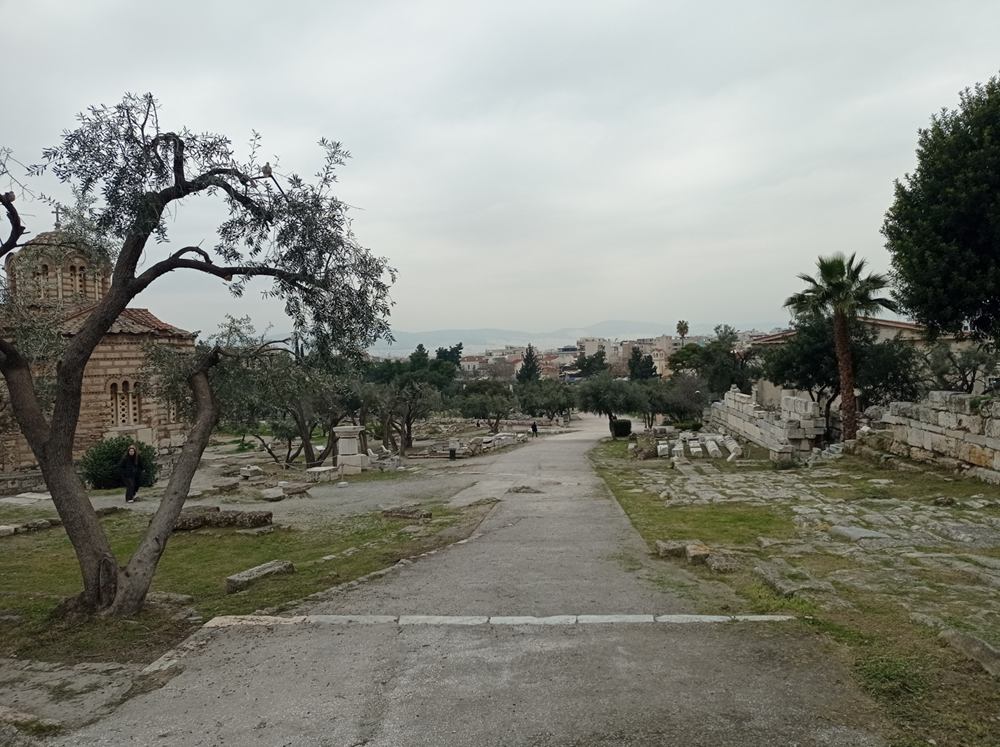
The Ministry of Culture is proceeding with the restoration and enhancement of the southeastern temple at the archaeological site of the Ancient Agora of Athens.
The project is part of the overall effort to highlight the archaeological site and improve accessibility infrastructure at the Ancient Agora, and involves work on both the temple itself and the Panathenaic Way, with the aim of restoring historical continuity and enhancing the monument’s visibility. The project, which is being carried out in the Ancient Agora, is part of the Ministry’s overall strategy to improve accessibility and enhance the visitor experience at the capital’s iconic archaeological sites.
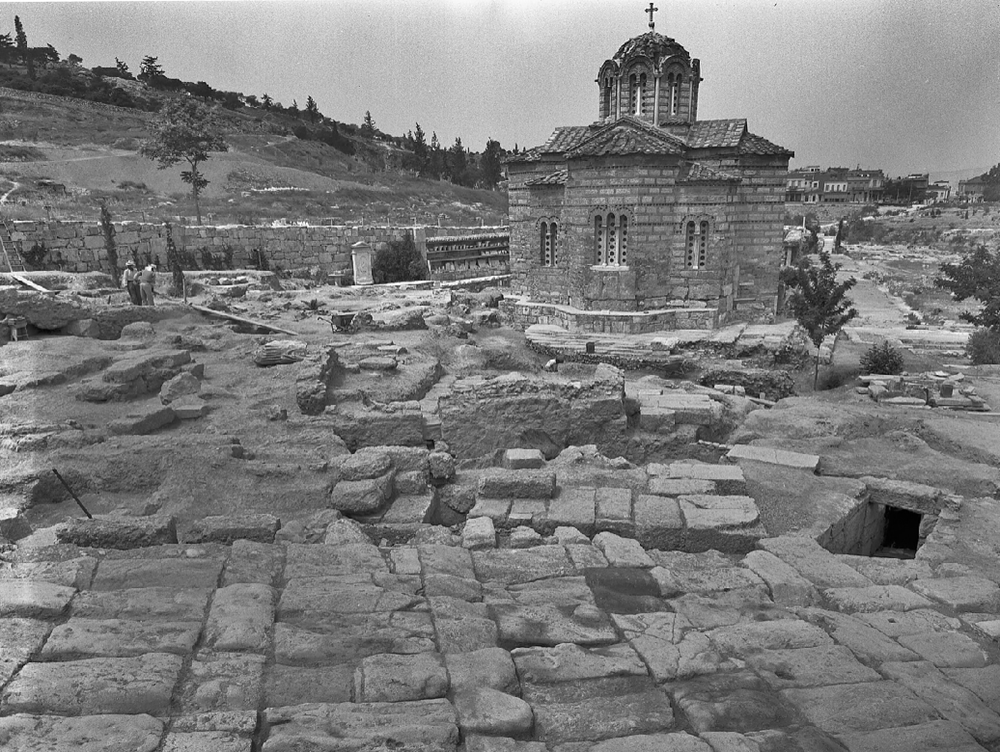
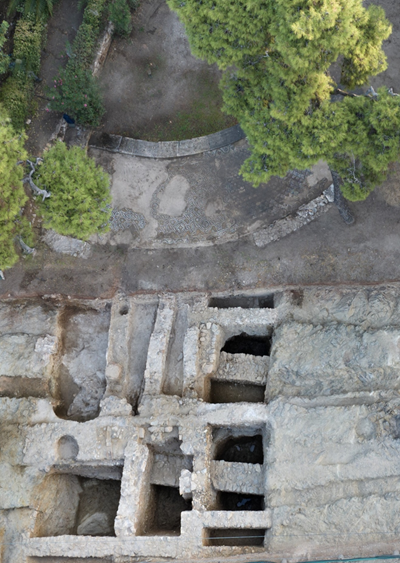
The southeastern temple was uncovered in 1959 during work to landscape the southern entrance to the archaeological site, with the aim of connecting it to the Acropolis via the ancient Panathenaic Way. In the second half of the 2nd century AD, a Nymphaeum was erected to the west of the temple. Despite the damage the temple sustained from later constructions, the surviving sections of its foundations allow for the reliable reconstruction of its floor plan, while the architectural members found at the archaeological site provide sufficient information about its superstructure. Architect William Dinsmoor Jr. attributed to the southeastern temple a series of architectural elements made of Agrileza quarry marble, which originated from the Classical temple of Athena at Sounion, dating to the first half of the 5th century BC, and were found embedded in the Late Roman wall or in later archaeological strata in the wider area. These columns were transported from Sounion to the Agora around the middle of the 2nd century A.D. Of the 23 columns of the classical temple of Athena at Sounion, at least 12 were reused in the southeastern temple.
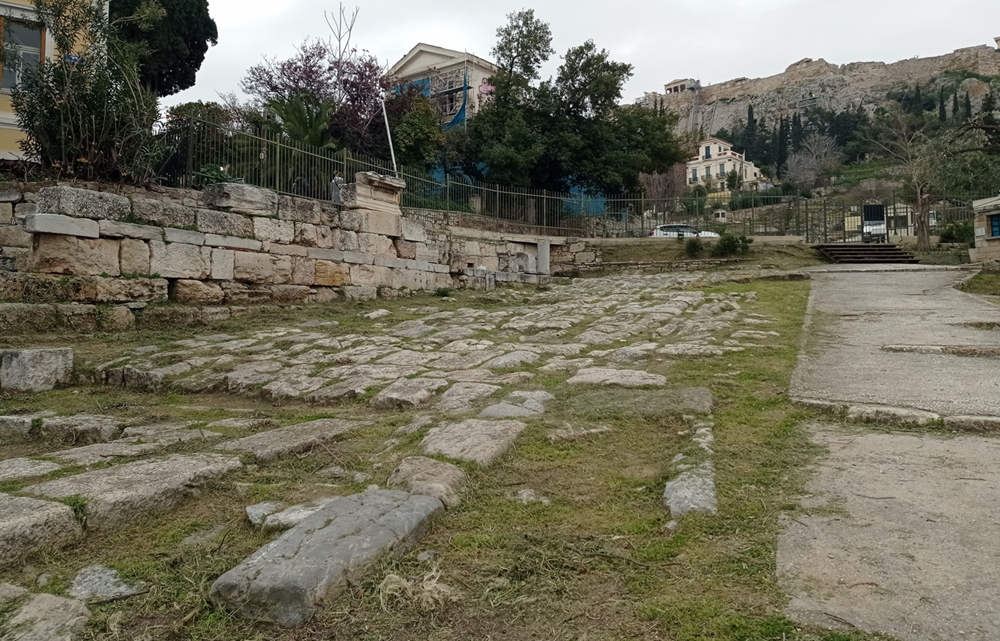
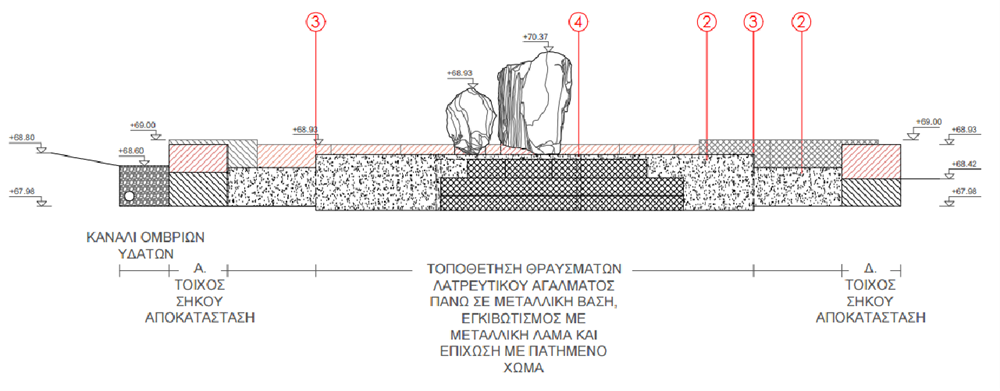
Based on the current layout of the archaeological site, the temple presents significant problems regarding its visibility and accessibility, as part of it is obscured by the visitor path, while its floor plan remains unclear due to the remains being distributed across different levels. The architectural elements and fragments of the cult statue are scattered, detracting from the monument’s appearance and making it difficult to understand its relationship with the Panathenaic Way and neighboring monuments. At the same time, damage to the cobblestone pavement makes passage difficult, while the accumulation of materials and the different construction phases complicate the interpretation of the historical trajectory.
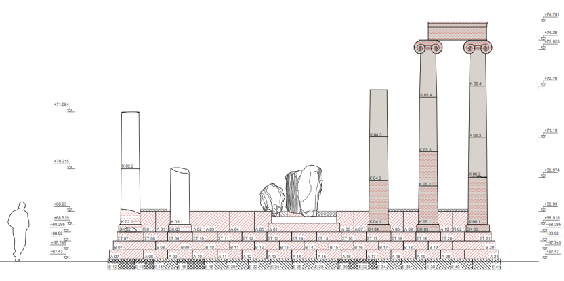
The ongoing interventions include the reconstruction of the plinth, the filling in of the walls of the cella up to a specific level, and the restoration of selected columns, using both authentic ancient elements and new materials. The structural analysis supports these interventions, with the aim of restoring the monument’s form and understanding its relationship with the surrounding area. The main objectives of the project are to highlight the architectural elements, reestablish the connection with Panathenaic Way, and improve accessibility.
The project is planned to be carried out in two phases. The first phase includes basic restoration and enhancement work, while the second phase involves the further restoration of the portico and the enhancement of the monument’s three-dimensional appearance. At the same time, improvements are planned for Panathinaikon Street to highlight its cobblestone sections.



Leave A Comment