
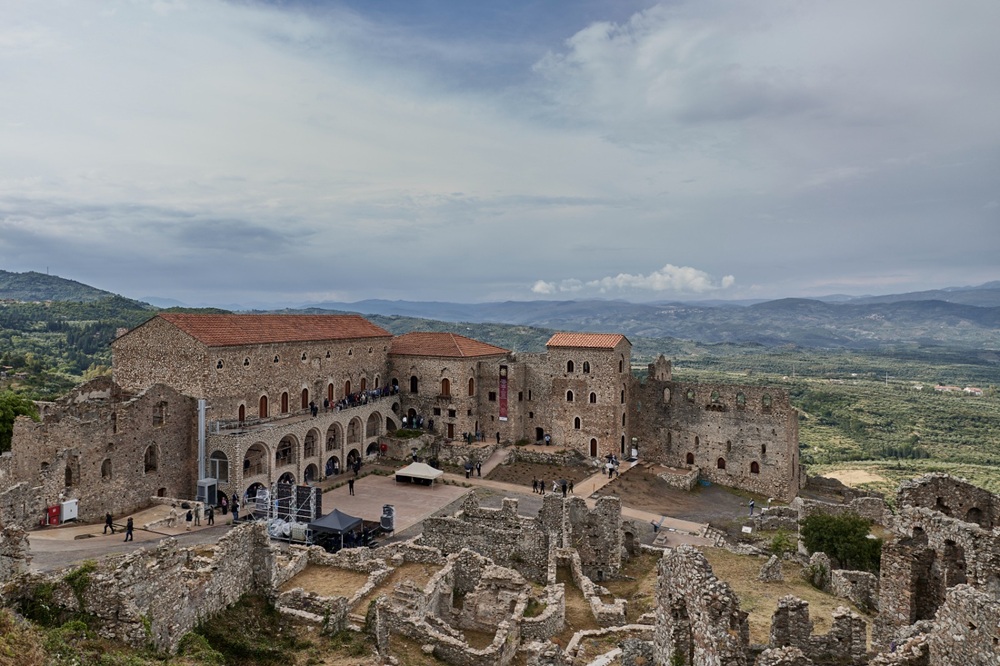
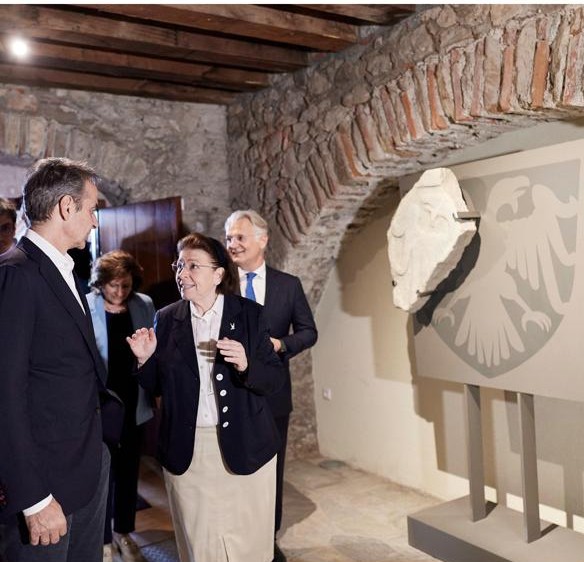
Prime Minister Kyriakos Mitsotakis inaugurated the projects to preserve and showcase the Castle Town of Mystras and the museum exhibitions at the Palace of the Despots, in the presence of Minister of Culture Lina Mendoni. The projects involve upgrading visitor routes to ensure maximum accessibility for people with disabilities, protecting the monument from the risk of fire through the installation of a modern water supply and fire suppression system, the comprehensive protection of important churches through systematic maintenance of their structural elements and painted decorations, marking the completion of a pivotal, long-term investment in the cultural heritage of Laconia.
In her speech, Minister of Culture Lina Mendoni noted: “Today is a day of special significance for Laconia and the Peloponnese, as we are not merely inaugurating yet another restoration project. A place of national historical memory and identity, a cultural asset of universal value, and a timeless cultural hub is being returned to society,” and added that “the project we are undertaking today concerns the reintegration of a premier site of Byzantine heritage into the contemporary cultural and tourist landscape of the country and of Europe. It concerns the fully enhanced opportunity for Greek and foreign visitors to experience history firsthand and recognize the timeless significance of Greek culture and the historical continuity of Hellenism.”
The Minister of Culture emphasized that the Palace of the Despots is, in fact, the 30th new or radically renovated museum space that the Ministry of Culture has delivered during the seven years of Kyriakos Mitsotakis’ administration, adding that “This demonstrates in practice that our government remains steadfastly committed to the view that culture is not a static concept, limited to preserving the past, but a critical strategic resource and a dynamic multiplier of value for society and development. With this strategic vision, we are implementing the largest and most comprehensive cultural investment policy the country has ever seen, which creates jobs and strengthens local entrepreneurship.”
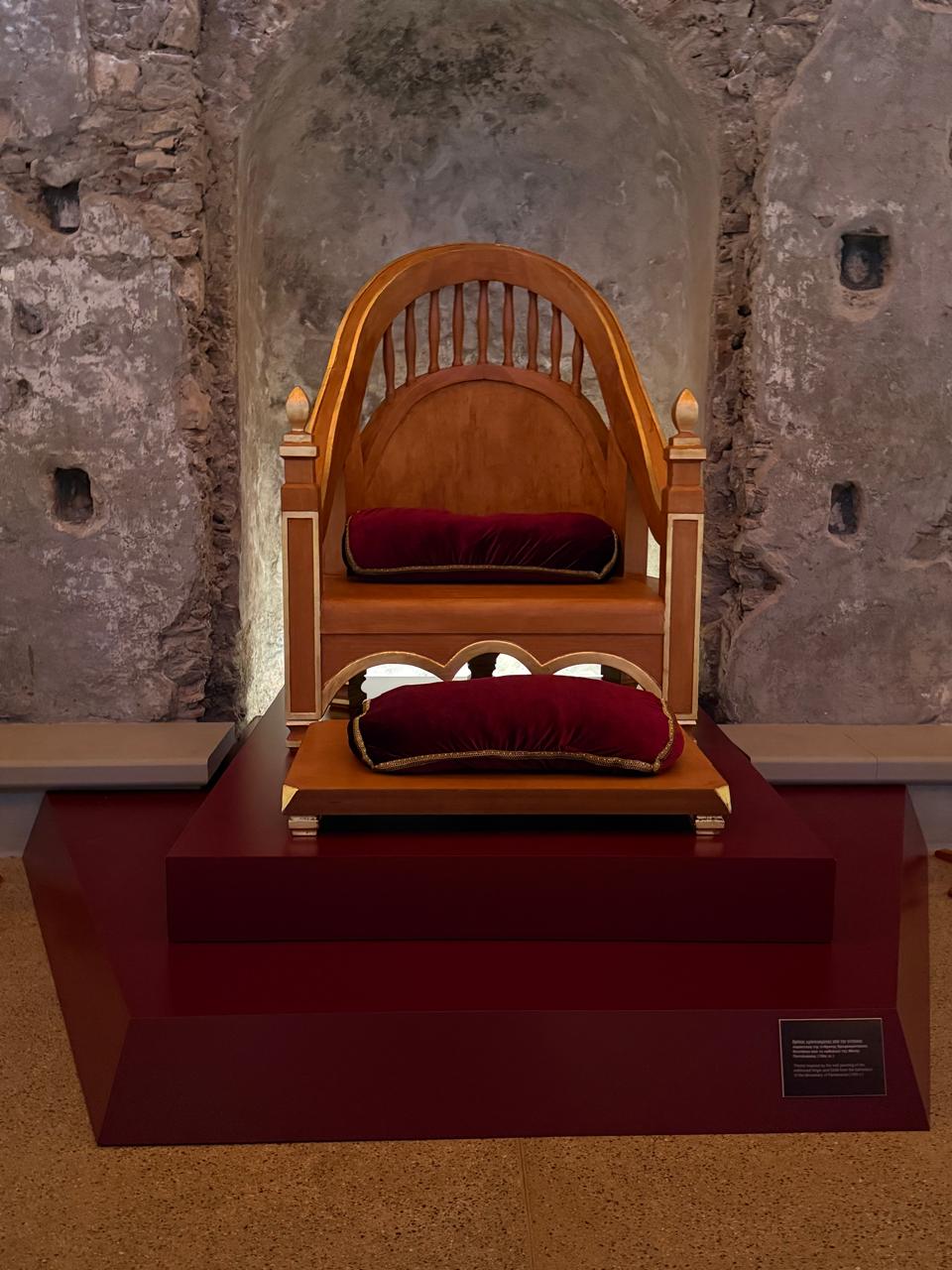
The Minister of Culture then turned her attention to the crowning achievement of the projects: the restoration of the Palace of the Despots. “Today, the only surviving Byzantine palace complex in Greece reopens its gates, restored, legible, and fully functional as an exhibition space. The Palace is the most important secular monument of the Castle City. Its complex architectural history vividly reflects the transition from Frankish to Byzantine rule and the evolution of the Despotate of Morea. The wings of the Kantakouzenos and Palaiologos families, the administrative quarters, and the imposing Throne Room form an exceptional architectural ensemble that reflects the functional hierarchy of power within the late Byzantine aristocracy.”
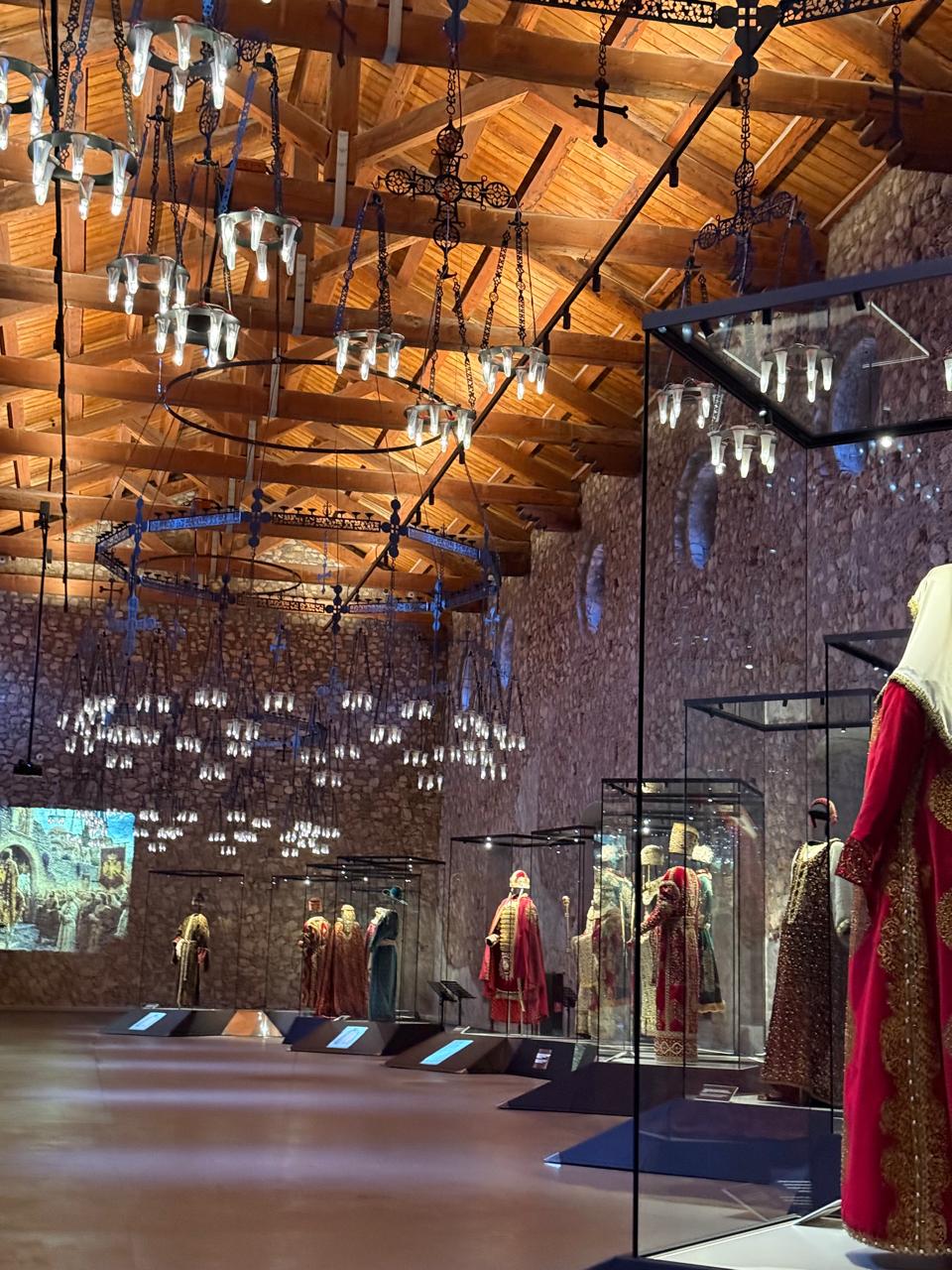
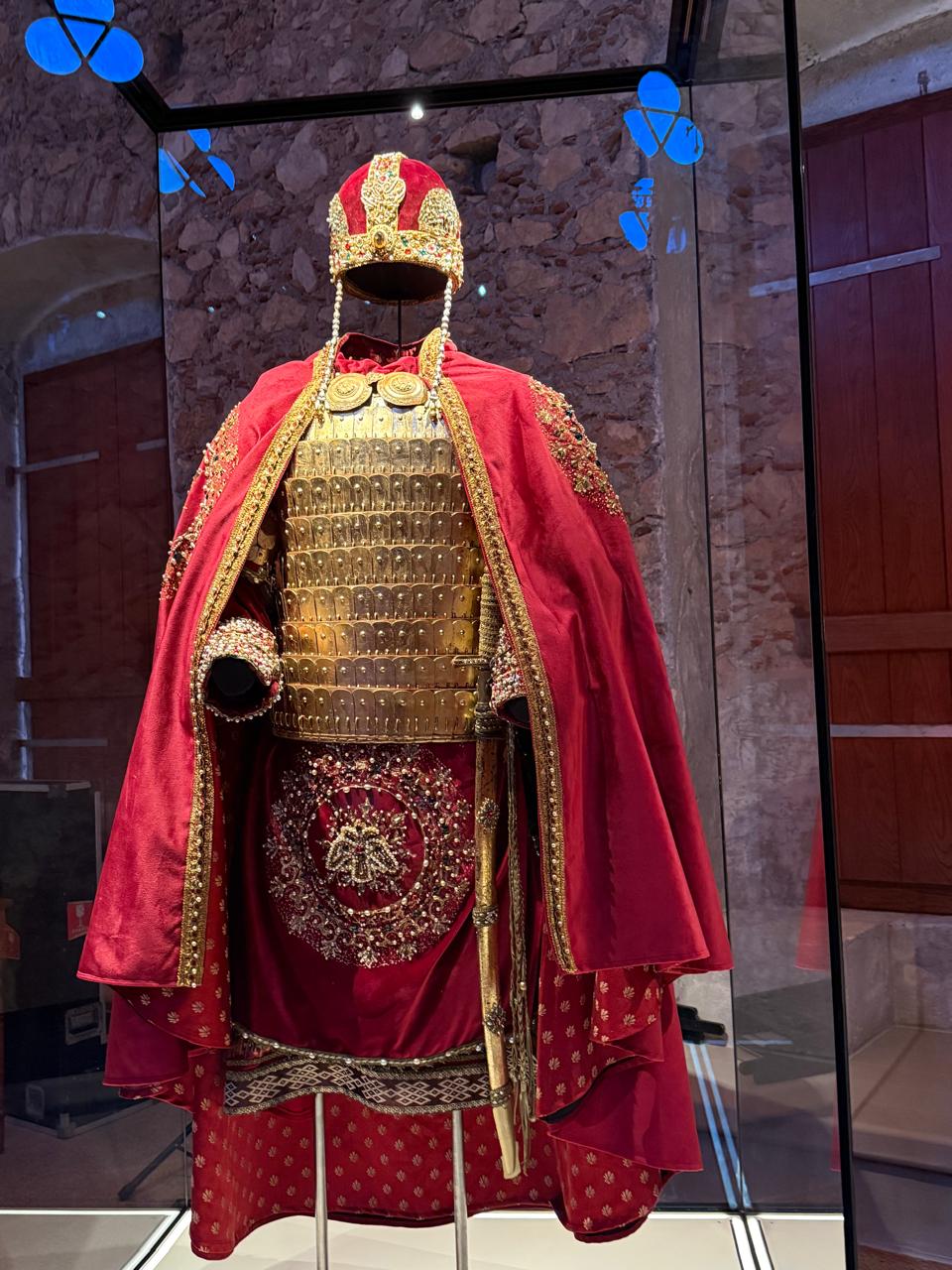
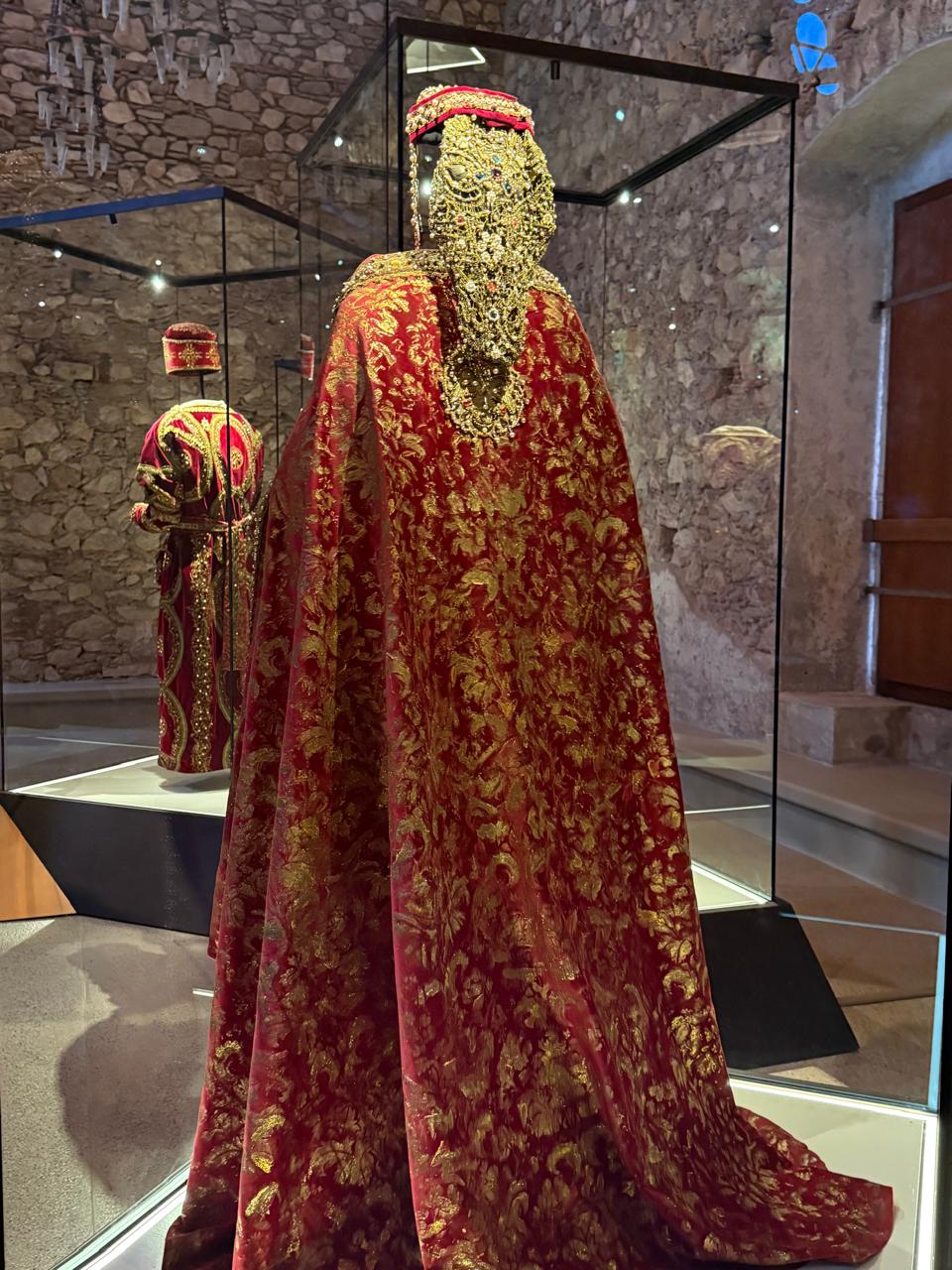
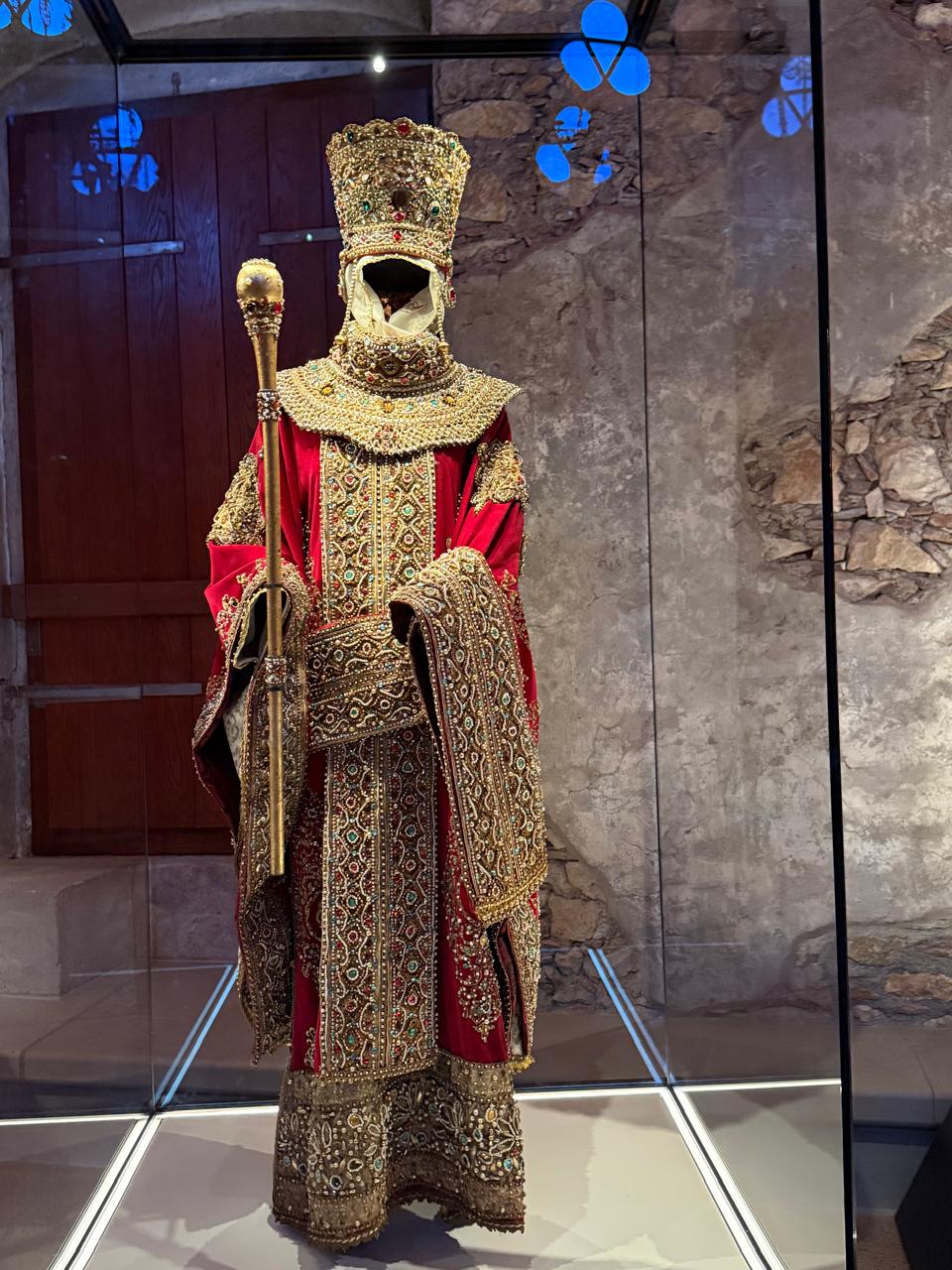
Finally, Lina Mendoni noted: “Today, the Palace is presented to the public as a living space of history, knowledge, and experience. This new approach includes the permanent exhibition titled ‘Hegemonic Narratives,’ as well as two other significant exhibitions. The first, ‘In the Saraya of the Princess,’ sheds light on the European intellectual elite’s enduring perception of Mystras. The second, ‘In the Light of the Court. Reflection of Glorious Attire” in the Throne Room, focuses on clothing as a vehicle for symbols of power. Through an experiential approach enhanced by technological means, the sartorial richness of late Byzantium and the atmosphere of the Byzantine court are brought to life.
The Palace of the Despots, the only surviving Byzantine palace complex in mainland Greece, is opening its gates—after 42 years of restoration and conservation work—to the Greek and international public, fully restored. The Palace is the 30th museum and exhibition space inaugurated by the Ministry of Culture in 2019, strengthening the connection between our leading monuments and society and sustainable development. Since 2019, the Ministry of Culture has designed and implemented a holistic strategic plan for the permanent protection and preservation of the UNESCO World Heritage Site, focusing on three key areas: protection from the climate crisis, universal accessibility, and the integration of smart digital technologies.
As part of efforts to make the area resilient to climate change, a modern firefighting network was completed in Ano and Kato Chora, with funding from the Recovery and Resilience Facility. At the same time, to ensure universal accessibility, the Central Cobblestone Road connecting Kato with Ano Chora was restored, facilitating visitor movement and allowing access for emergency vehicles. To ensure equal access to the Palace of the Despots, a modern outdoor ramp for people with disabilities was installed in the southwestern wing of the Palaiologos Palace. Since 2022, Mystras has been part of the innovative “Biodiversity and Archaeological Sites” program, highlighting the natural environment as an integral part of the historical landscape. This new holistic approach transforms the Palace from a static architectural relic into a vibrant space for experiential learning and discovery.
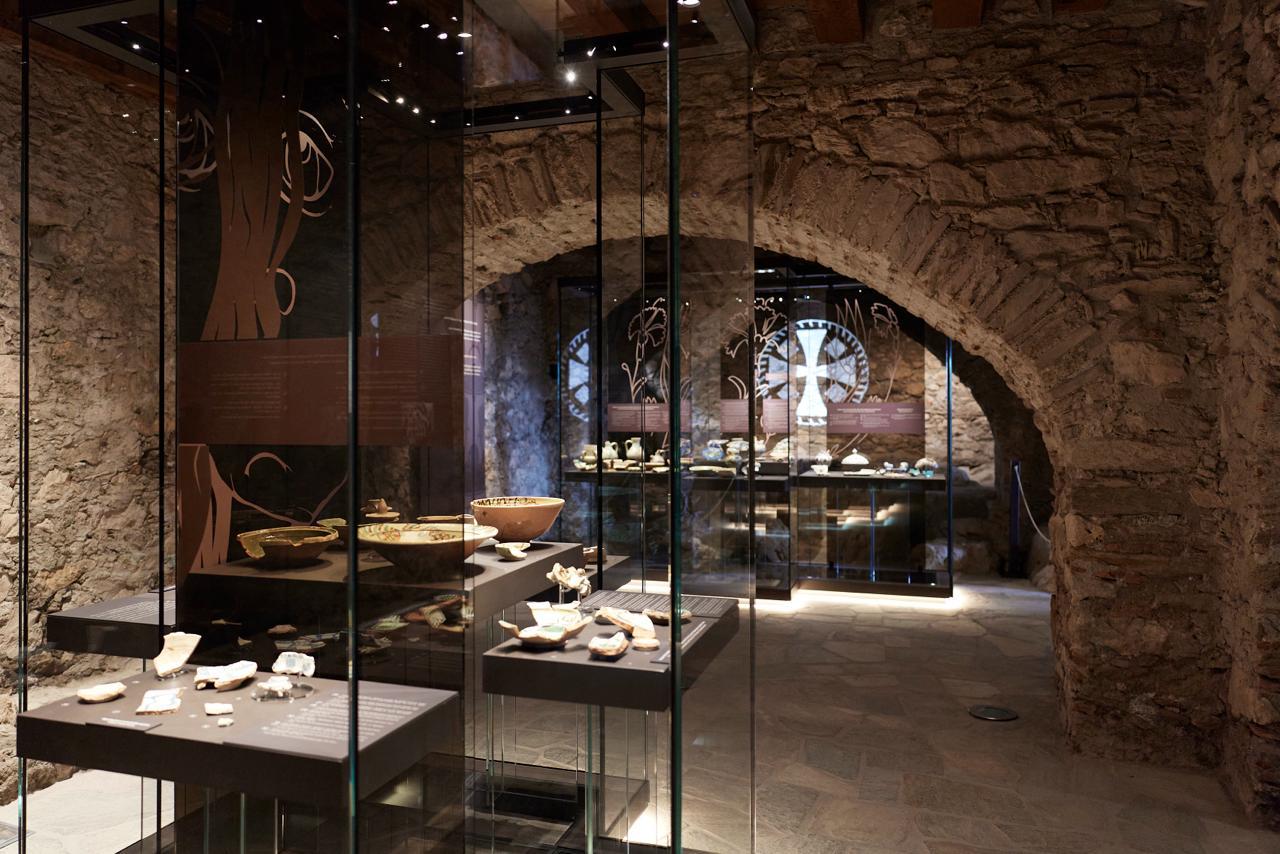
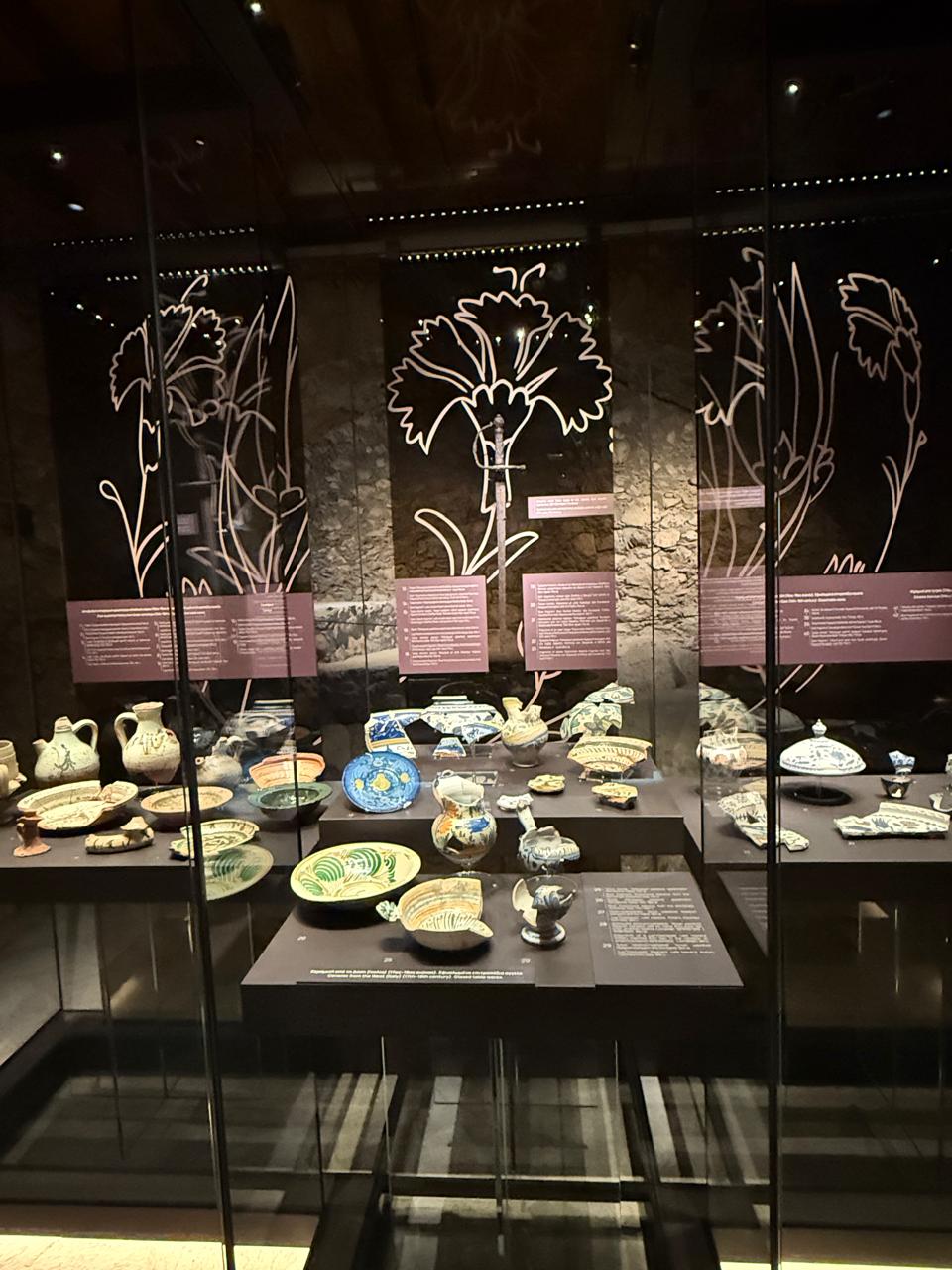
The permanent physical and digital exhibition “Dominant Narratives” provides a coherent interpretive framework, highlighting, across time, the role of imperial families in the administration and intellectual flourishing of Mystras.
The tour is complemented by two temporary exhibitions. The first, titled “In the Saraya of the Princess,” sheds light on the enduring appeal and fascination that Mystras held for European intellectuals from the 15th to the early 20th century. The second, titled “Reflection of Glorious Attire,” is housed in the imposing Throne Room and focuses on clothing as a symbol of power and social identity. This exhibition features handmade costumes from the Palaiologos court, inspired by Byzantine iconography, which were created by the monastic sisterhood of Pantanassa, with the invaluable assistance of the costume department of the Greek National Opera.
The ceremony was attended by His Eminence Eustathios, Metropolitan of Monemvasia and Sparta; His Eminence Chrysostomos, Metropolitan of Mani; Athanasios Davakis, Deputy Minister of National Defense; MPs Neoklis Kritikos and Panagiota Grigorakou, Peloponnese Regional Governor Dimitris Ptochos, Mayor of Sparta Michael Vakalopoulos, officials from the Ministry of Culture, and a large crowd.


Leave A Comment