The National Inventory of Intangible Cultural Heritage of Greece has been expanded with the addition of 10 new entries and one example of Good Practice. The Ministry of Culture, in implementation of the UNESCO Convention (2003) since 2006, has selected the new additions to the National Inventory—which now totals 174 entries—following systematic review by the Directorate of Modern Cultural Heritage and the relevant National Scientific Committee.
Below are the ten new entries added to the National Register of Intangible Cultural Heritage of Greece and the recognition of Best Practice.
Granny’s Day – Livadia, Serres
On January 8, the feast day of Saint Dominica, starting early in the morning, the women of the village (Livadia, Serres) pay tribute to the “bambo.” Today, the bambo is an elderly woman (in the past, she was the village midwife), in whose honor a series of ritual acts are performed (offerings, the women washing her hands, serving a meal). The bambo accepts the honors and wishes for fertility. Accompanied by the bambo, the women visit the village cafes, where they are treated to refreshments. Men do not play an active role in the custom. They are present as spectators (whereas in the past their presence was forbidden). A celebration follows in the evening.
The Good Weather Custom in Alagonia, Messinia
This is a surviving ancient custom of the village of Alagonia in Messinia, which celebrates the end of summer (a farewell to the warm weather) and takes place every year on August 29 (the feast of the Beheading of St. John the Baptist, also known as St. John the Forerunner). At this festival, a tray is placed with all the seasonal fruits, and the priest offers a prayer; the village elder lights the fire, stirs it, jumps over it first, and then everyone else jumps, especially the children; later, they eat seasonal Lenten foods together (baked giant beans, briam, salads, etc.) and drink tsipouro and wine. Later, the singing begins, and the celebration lasts until dawn.
“T’ Ai Gianniou”: The celebration of St. John the Baptist in Lefkopigi, Kozani
The traditional festivities celebrating Saint John the Baptist, patron saint of the community of Lefkopigi, are held every year, combining religious and secular rituals. They begin on the day of the feast with the Divine Liturgy and a ritual dance held in the courtyard of the celebrating church. They continue with dances and songs in the streets and homes of the community and conclude, after Vespers, with a communal meal and celebration at Agios Ioannis, in which all members participate, with the newlywed couples taking center stage.
The “Kapetanía” of Serifos
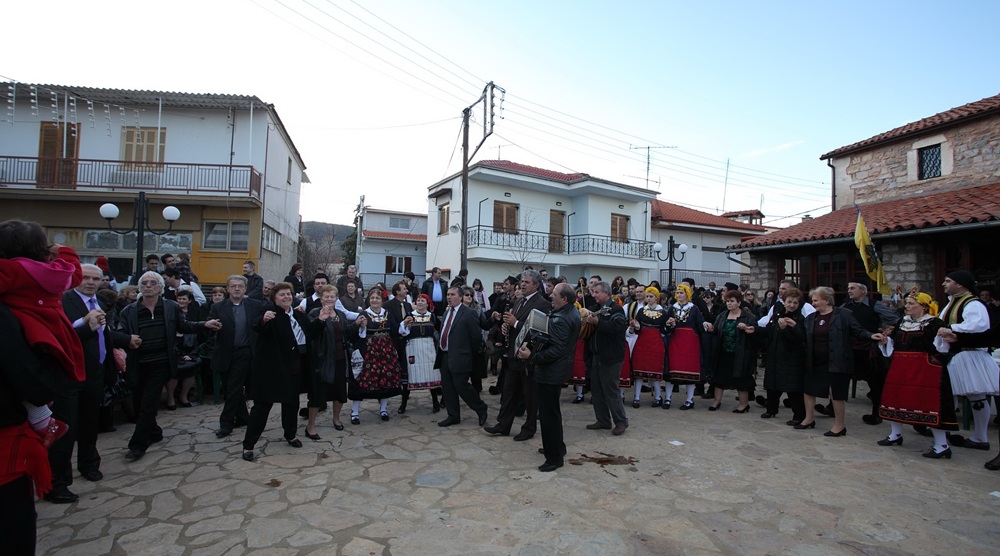
The “Kapetanía” is a Carnival custom in Serifos that begins on Carnival Sunday and continues until the early hours of Clean Monday. Two groups of young people, led by their “Captain” and accompanied by musicians and other revelers, parade through the villages of the northeastern part of the island, dancing, sing, and exchange playful verses (“kotsakia”) in their squares; they clash with one another in a “mock battle” with the goal of one group snatching the other’s flag, and they end up celebrating together. The celebration includes carnival songs and traditional dances, in which both residents and visitors to the island participate.
Tsakonian weaving on a vertical loom
Tsakonian weaving is a unique traditional art form involving the creation of double-sided handmade tapestries, woven from cotton warp and woolen threads exclusively by hand on a vertical wooden loom. This technique, which developed in Tsakonia in the 19th century, allows for the creation of intricate designs without a weft, making both sides of the fabric identical. Today, the art is practiced in Leonidio, Tyros, and Melana, with the Tsouchlou Mansion serving as a hands-on learning center. Knowledge is passed down orally from older weavers to younger ones, transforming the art from a cottage industry into a modern educational and livelihood tool that preserves local identity.
The Art of Immortelle Lace in Kefalonia
Immortelle lace is woven using thread produced from the immortelle plant (also known as agave). The thread is extracted from specific leaves of the plant (the third row of leaves, counting from the ground). Each leaf is soaked in water for several days until its flesh softens, and then undergoes a special and time-consuming process. The strongest fibers are carefully selected and joined in pairs with a simple knot, creating the skein intended for weaving. Particular attention is paid to the selection of patterns, as they depend on what can be woven due to the unevenness of the fiber.
The Easter Swing, in Chora, Kythnos
On Easter Sunday, in Chora, Kythnos, young people and members of the Chora Cultural Association set up a flower-decorated swing for boys and girls in a large square. On the second day of Easter, accompanied by local musical instruments—the violin and the lute—members of the Cultural Association, dressed in traditional costumes, swing in pairs while singing the songs of the Swing. Afterward, couples from the audience join in the dancing. In the past, the rocking and swaying—known in the local dialect as “mamouni”—served as a means of communication and courtship between young men and women and committed the couple to marriage. This is followed by a celebration featuring traditional Therma dances in which all attendees participate.
Lefkada Textiles or the Art of Lefkada Weaving
The art of Lefkada weaving produces clothing and home textiles made entirely on the loom. The looms of Lefkada are narrow, and among the techniques that stand out—especially for older textiles—is hand-embroidery on the loom, with much less use of the shuttle. We have textiles made with woolen warps intended for home furnishings, such as rugs, blankets, bedspreads, tablecloths, and mattress covers, as well as woolen textiles made exclusively for clothing (konteia). Linen fabrics are also woven on the loom and used for sheets, towels, and bedspreads, as well as for women’s and men’s shirts.
Folk Tales of Archangelos, Rhodes
Many residents of the Archangelos community in Rhodes continue to this day to recount folk tales in the local dialect, specifically tales featuring animals, magical, religious, or explanatory tales and novellas, which draw their themes from traditions, legends, and amusing anecdotes. Thanks to the older generations’ love of storytelling and their commitment to passing on these tales to the younger generation, this cultural heritage of Archangelos, Rhodes, remains alive. Different narrative genres are found in the storytelling of both older and younger members of the community. It is encouraging, and also indicative, that children also tell fairy tales when given the opportunity—whether among themselves in a group, as part of the educational process, or on other occasions of social interaction.
Kythnos Grated Cheese
Grated cheese is the most characteristic type of cheese from Kythnos, known since ancient times as “Kythnos cheese.” It is linked to the island’s history and its productive identity, as the cheese has long been a staple local product. It is made from sheep’s and goat’s milk, which is not boiled but curdled with rennet and salted, a cheese-making practice that remains alive to this day. It is white, soft, and slightly sour in taste and is eaten during meals, while it is also used in many recipes, such as pies or the traditional Thermian spongata.
Cultural School (Best Practice)
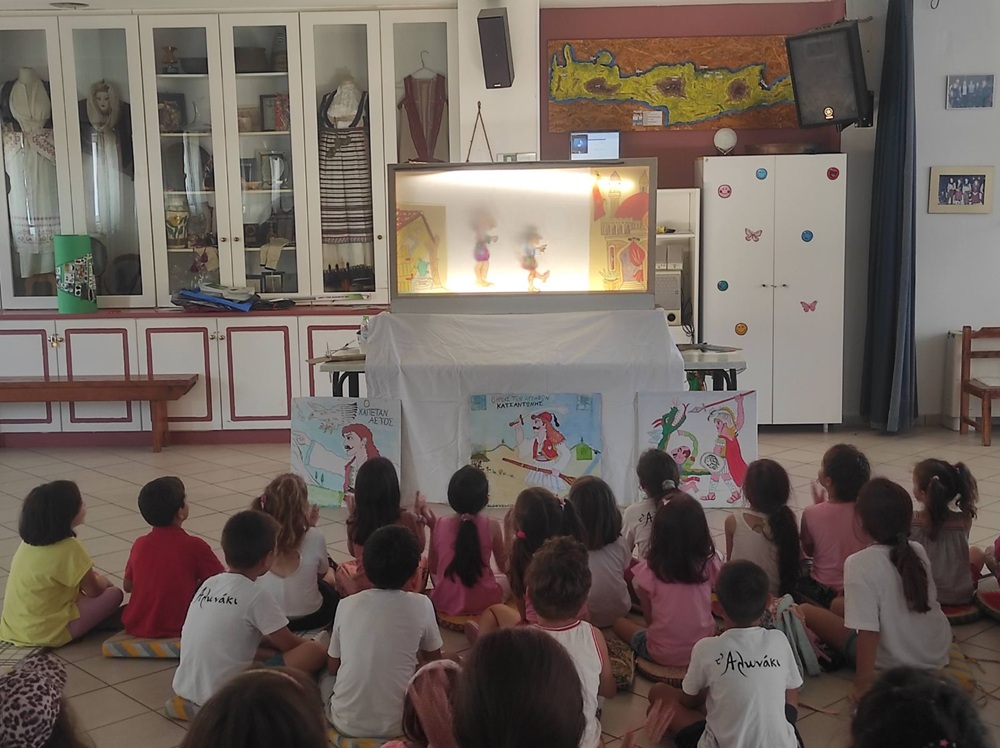
The Cultural School was founded in 2017 by teachers (PE70) Dimitris Lianostathis and Ioanna Halepa. It has been in operation for six consecutive years. It is located in Chalkida and is housed in the facilities of the Chalkida Association of Greek Cultural Tradition “To Alonaki.” It is a non-formal learning environment aimed at school-age students. The program runs for three weeks every July and welcomes a total of 35–40 students. By drawing on elements of culture and tradition as well as new technologies, it offers a wide range of educational activities, such as folk tales, making musical instruments from recycled materials, music and movement education, an animation workshop, podcast creation, theatrical improvisation, creative writing, making board games, sports activities, learning about traditional clothing of various peoples, crafts, contemporary art, and cooking—through which the the reciprocal relationship between culture and education.





Leave A Comment