By Venia Pastaka
Art Historian
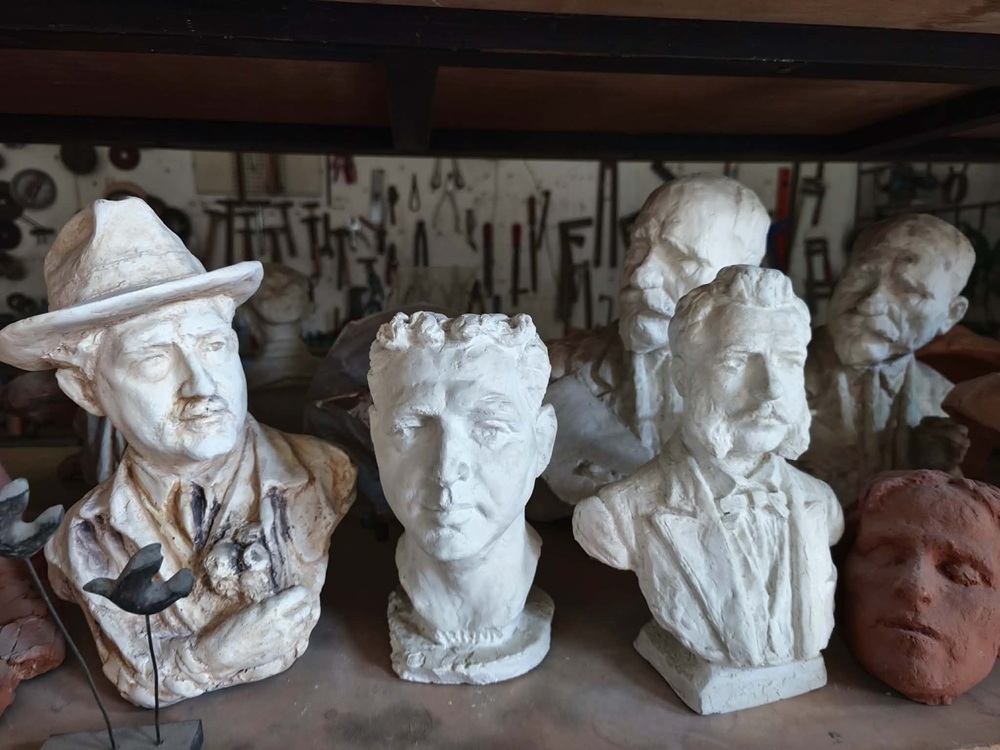
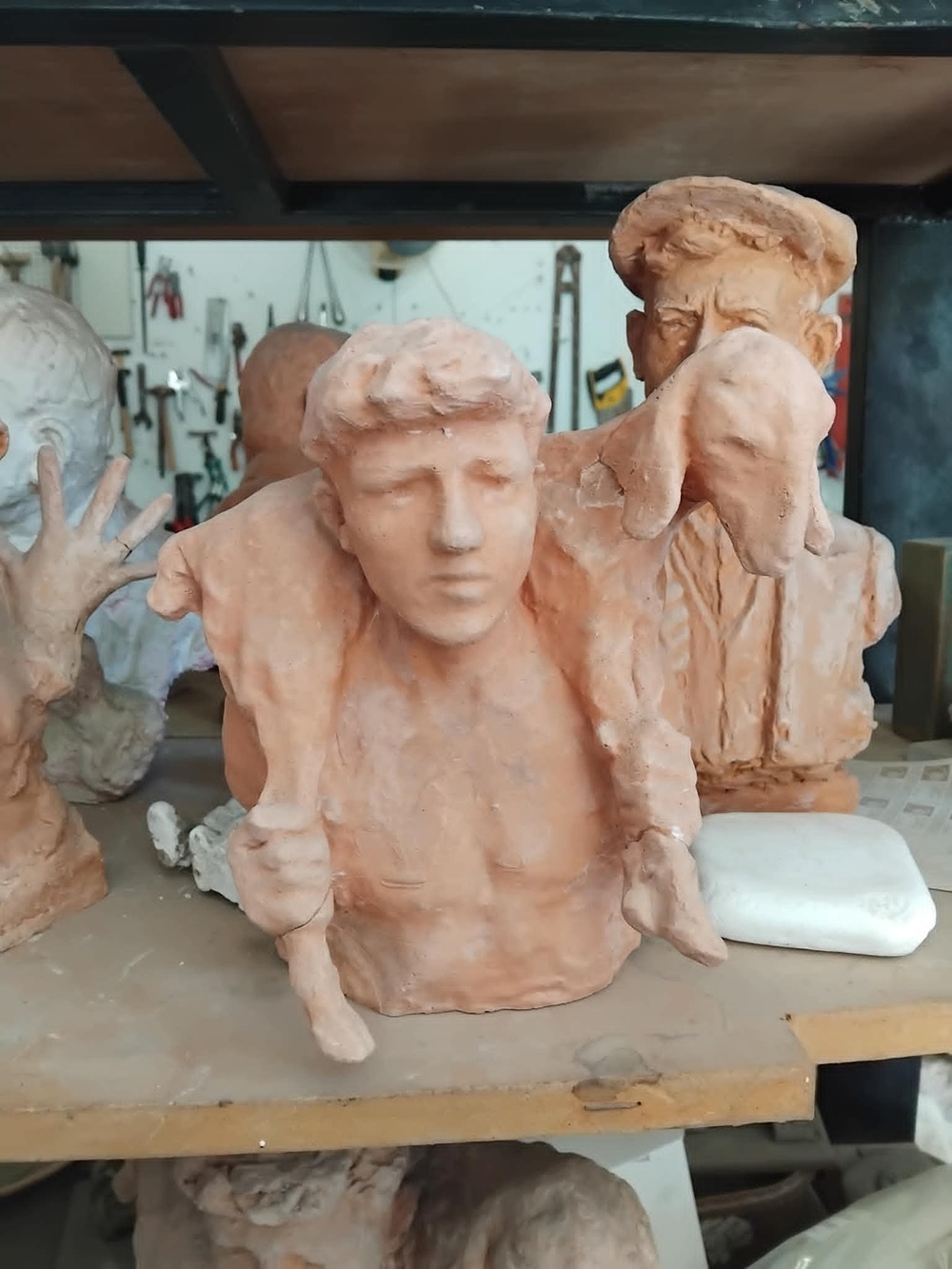
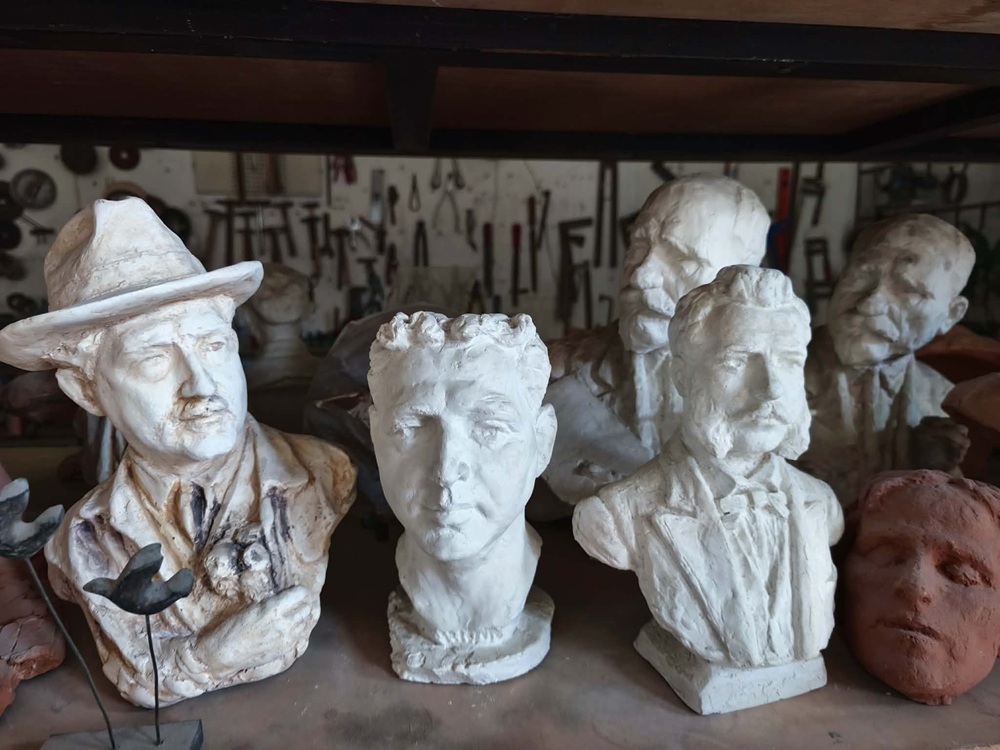
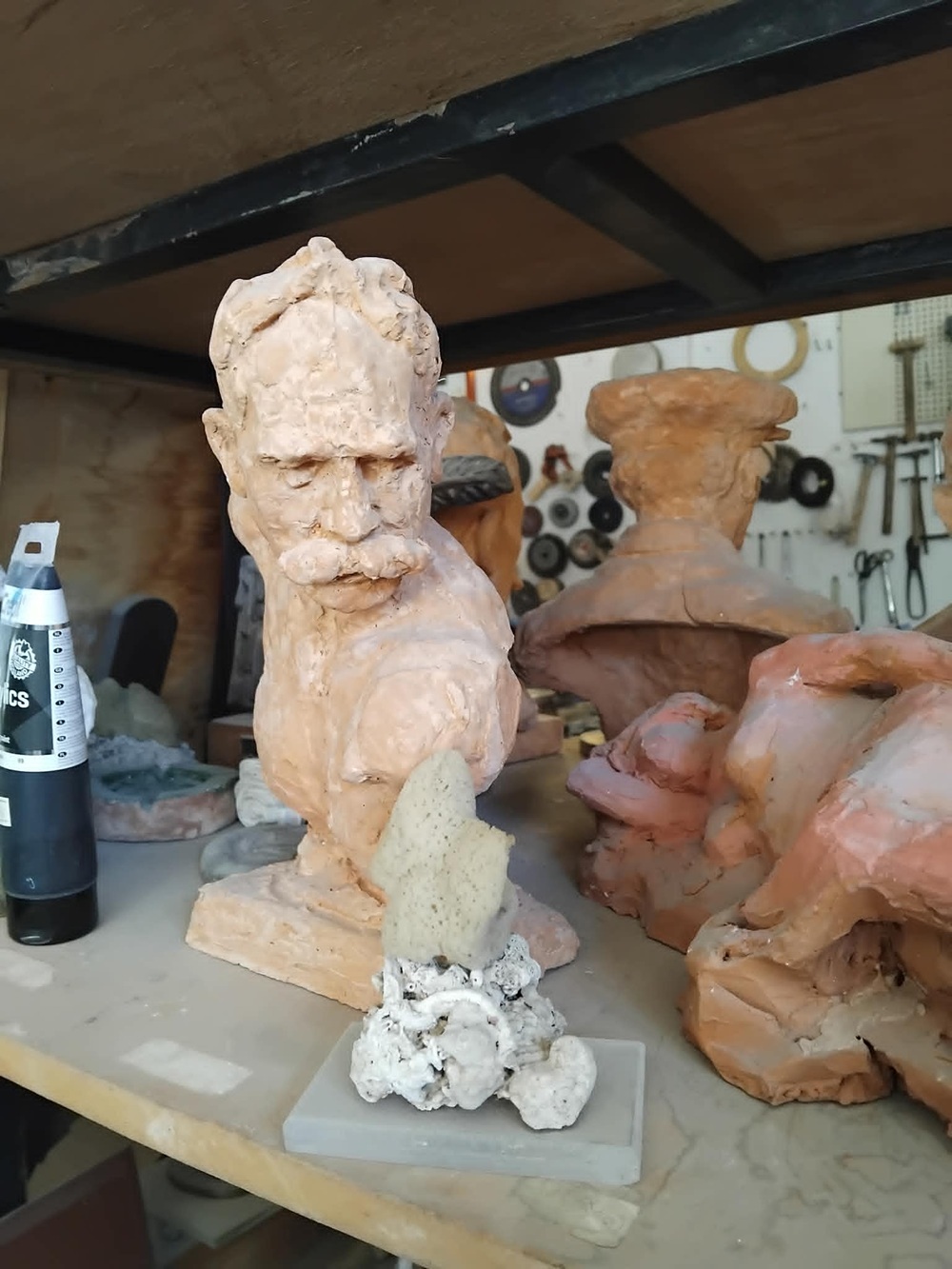
Few people are familiar with the sculptor Sakellaris Galouzis—the man who served as Rodin’s assistant and worked alongside him for twelve years. His work remains unknown to the general public to this day, a fact that makes a systematic study of it all the more urgent.
He was born in Kalymnos in 1875. The son of a sponge diver, at the age of sixteen, after finishing school, he followed his father to Odessa, where there was a strong Greek community. There, his father opened a small workshop producing slippers and took his son on as an assistant.
It was a professor at the Odessa School of Fine Arts who noticed Galouzis’s talent for drawing and encouraged him to pursue art. Before long, the young man found himself studying sculpture at the local School of Fine Arts, graduating with honors. At that time, the mayor of Odessa was the Greek merchant, Gregory Maraslis (1831–1907). With a scholarship of his own, the artist went to the Academy of Fine Arts in St. Petersburg for further studies. There, too, his work consistently stood out, earning praise and top prizes. Upon graduation, Galouzis found himself in the major artistic hub of the time, Paris. Within a short time, he became an assistant in the studio of the renowned sculptor Auguste Rodin (1840–1917).
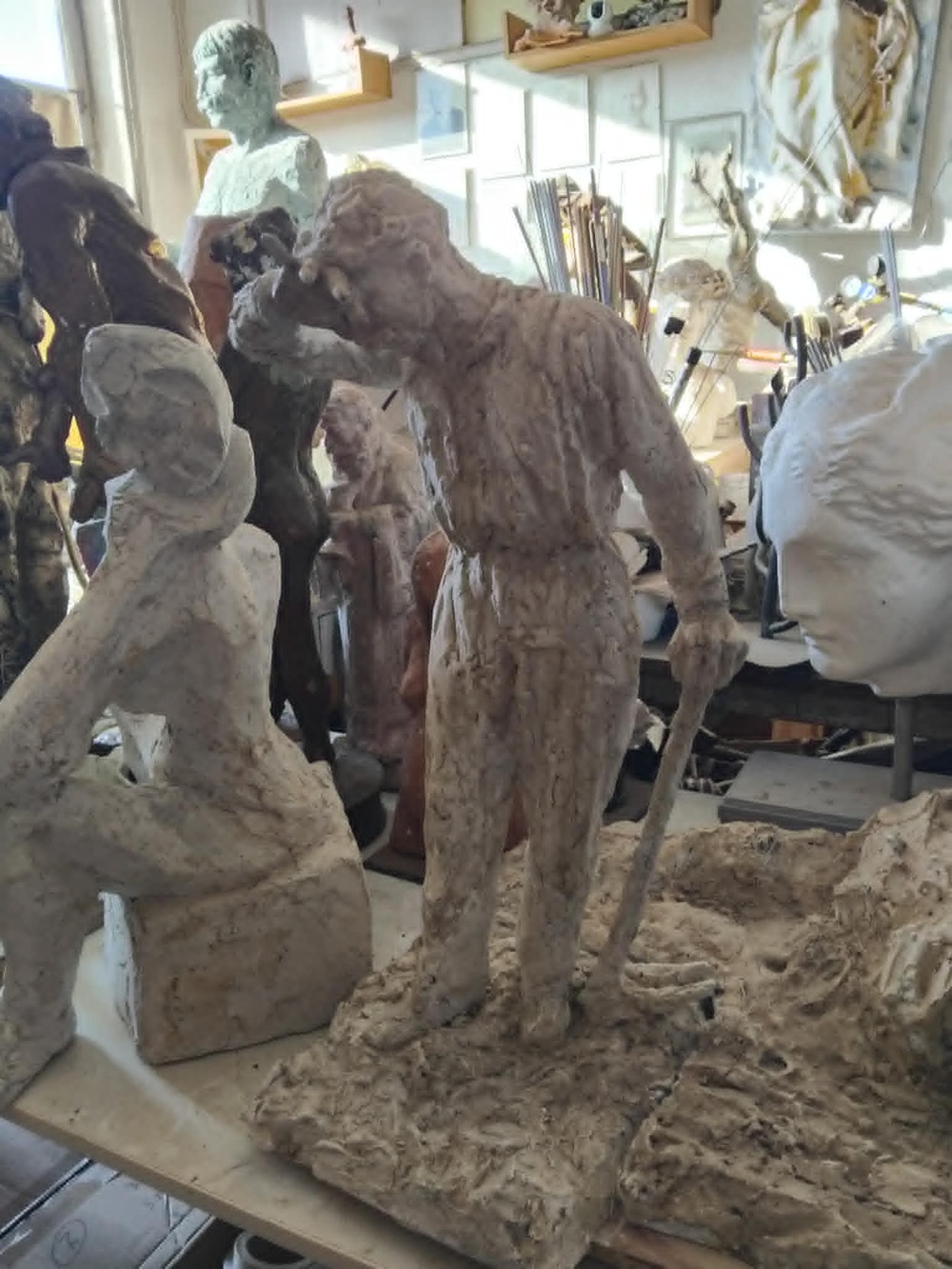
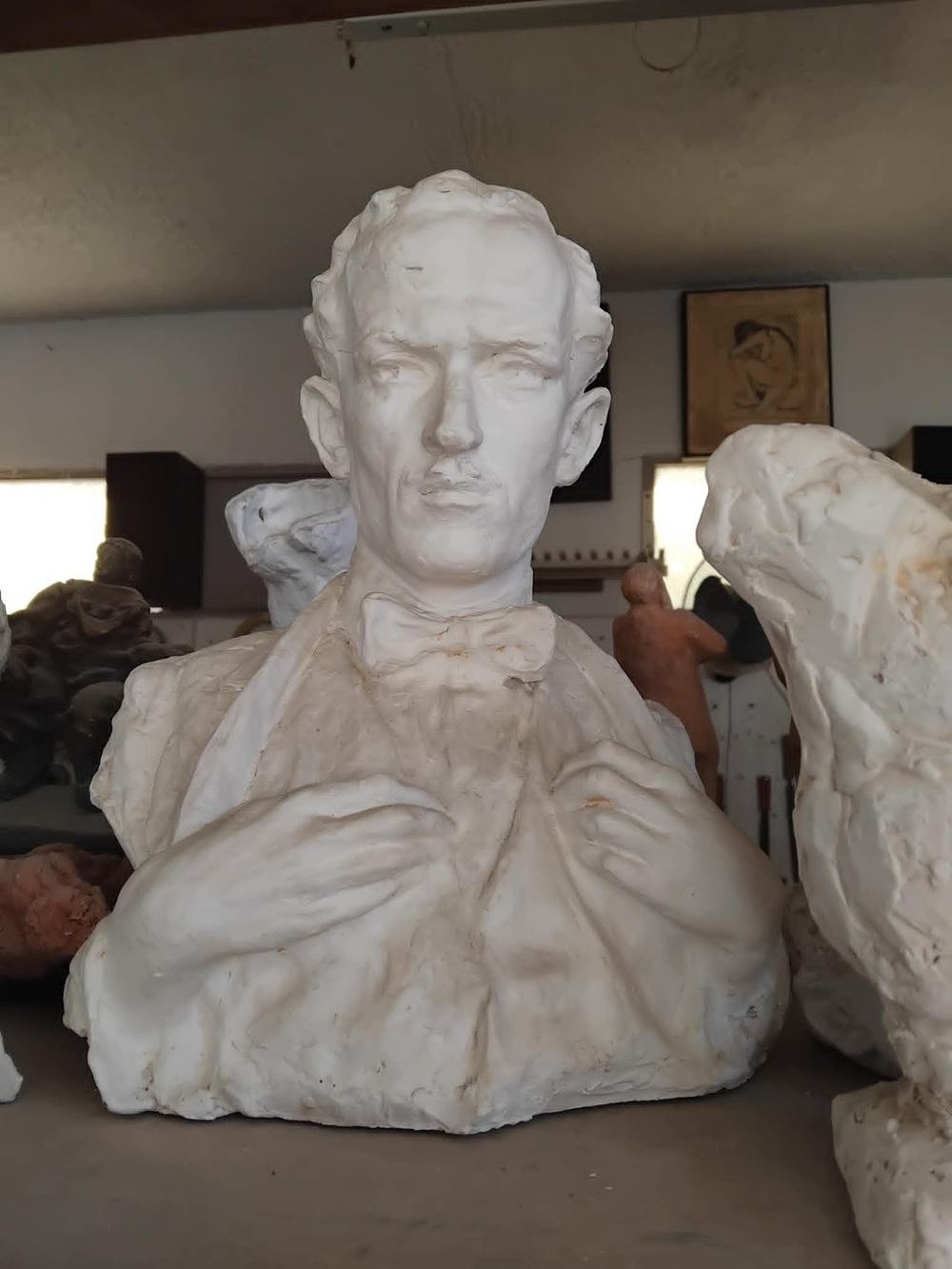
In Rodin’s studio, the artist from Kalymnos found himself casting his master’s models in marble or bronze. The influence of this important sculptor is evident in Galouzis’s works. Elements of naturalism, the need to capture the inner power of his subjects, dynamic sculpture, strength, and expressiveness are all evident in his sculptures. However, the pressure of the work, Rodin’s explosive and difficult temperament, as well as his alienation from the studio—which did not allow him to create independently and develop as he wished—led to a breakdown of his nervous system.
He left Paris and returned to his island, where he spent his early years in complete isolation. Years later, Galouzis began creating small clay sculptures again. His models were the young children of the island, whom he rewarded with fruit and by reading books to them. During the Italian Occupation, he gave his works to the Italians in exchange for food. Thus, many of his works are now in Italy and require further investigation. He died on his island in 1947 at the age of 72 and remains one of the least studied figures in modern Greek art.
It is worth examining the comparison between the cases of Yiannoulis Halepas and Sakellaris Galouzis. These are two artists with different starting points and career paths, who nevertheless converge at a critical juncture: the emotional ordeal caused by the dashed hopes and the sense of powerlessness over their artistic development.
This comparative analysis not only helps to restore lesser-known forms of modern Greek sculpture, but also to understand the profoundly human dimension of creation, where genius is measured against fragility and the limits of mental endurance.


Leave A Comment