
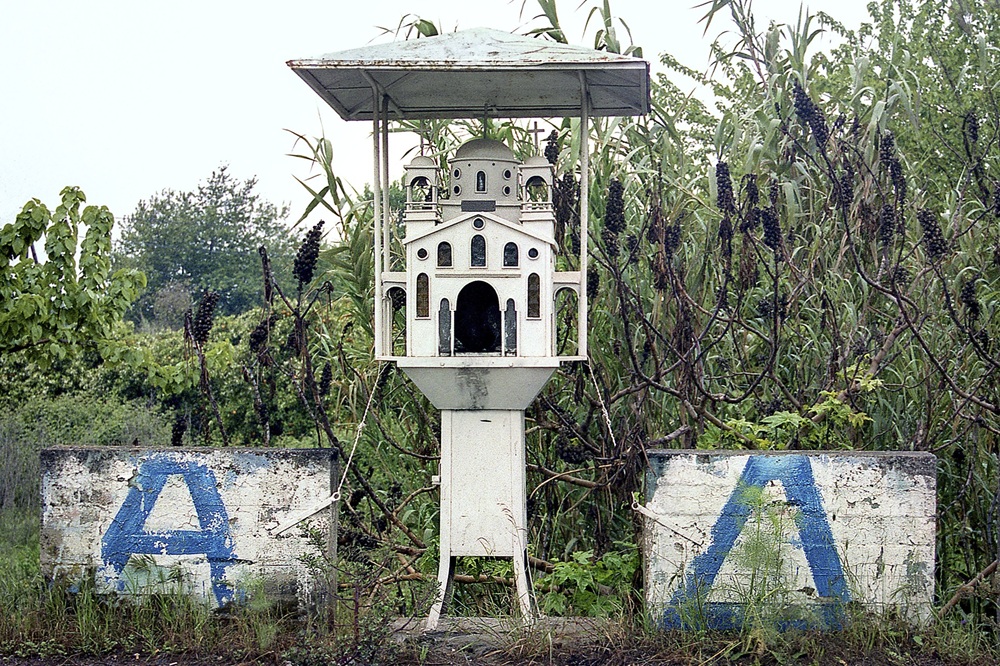
On Thursday, April 2, from 7:00 p.m. to 9:00 p.m., the solo exhibition by Eugenia Grigoraki will open at the Ileana Tounta Center Contemporary Art Center.
The exhibition will run through May 9, 2026.
The Ileana Tounta Contemporary Art Center presents a photography exhibition by Evgenia Grigoraki, focusing on the roadside shrines that dot the country’s roads and are a quintessentially Greek sight.
With a background in studies at the Athens School of Fine Arts and the Vakalo School, and with many years of professional experience in graphic design, Grigoraki has cultivated a keen eye for form, composition, and the aesthetic presence of an image. Her relationship with photography began in the early 1970s, when she lived in Africa for about two years. There, she began systematically photographing her surroundings and experimenting with printing her photographs in a makeshift darkroom. Since then, photography has become a personal way of observing the world, through which Grigoraki seeks out the beauty of the landscape and the small, unexpected moments of human presence within it.
The series “Icon Shrines and tamata” came about almost by chance, during her many road trips throughout Greece. A small shrine to Saint George, in the middle of nowhere, on the road to Mount Falakro in Drama, was the catalyst that prompted her to begin observing these unique structures more closely. From that moment on, every wayside shrine she encountered on her travels became a reason to stop and take a photograph, thus documenting the variety, imagination, and often bizarre forms of these unique structures.
For Greeks, shrines are small places of faith and remembrance: they may be votive offerings, expressions of gratitude, memorials to human loss, or silent pleas for protection and prosperity. At the same time, however, they possess a strong aesthetic dimension that makes them interesting even to a casual observer, whether Greek or foreign. These structures are often classified as folk art; their form was once shaped freely, without rules, by the craftsman’s imagination and often from surplus materials. Today, of course, these practices have been largely replaced by standardized, prefabricated forms.
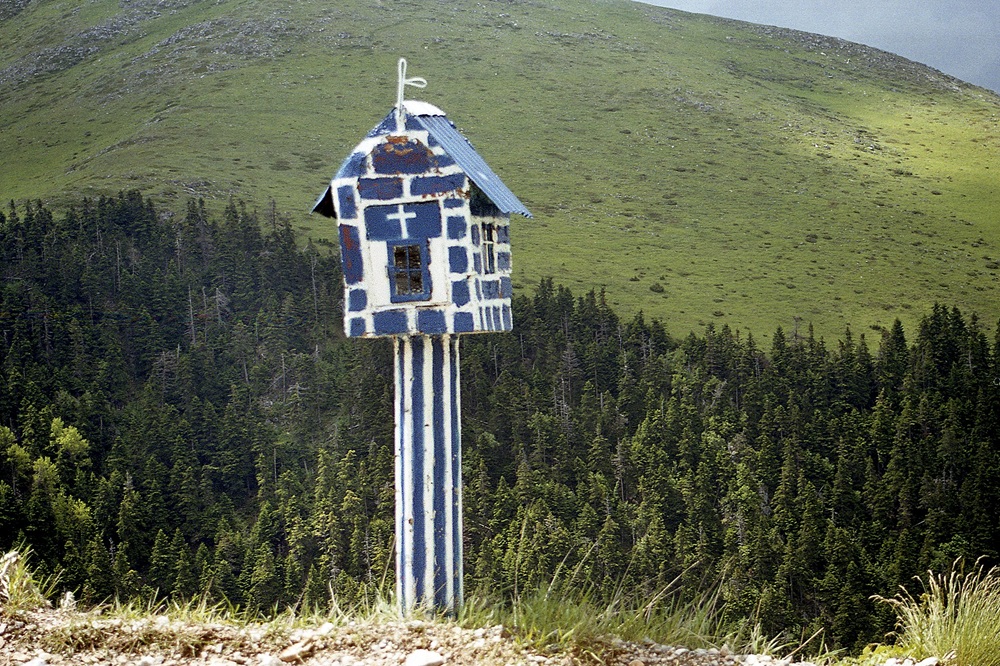
Evgenia Grigoraki, Mount Olympus, outside the military camp, 1995–2005, Fine art print on Hahnemühle Matte Fibre paper, 27.7 × 42 cm
Grigoraki’s photographs, taken with a simple camera and without digital editing, serve as a subtle yet meaningful record of an element of the Greek cultural landscape that is gradually changing. Many of the shrines she captured no longer exist. Thus, her work also takes on the dimension of a visual memory: a retrospective journey through places, routes, and travels, where personal experience meets a collective, deeply rooted folk custom.
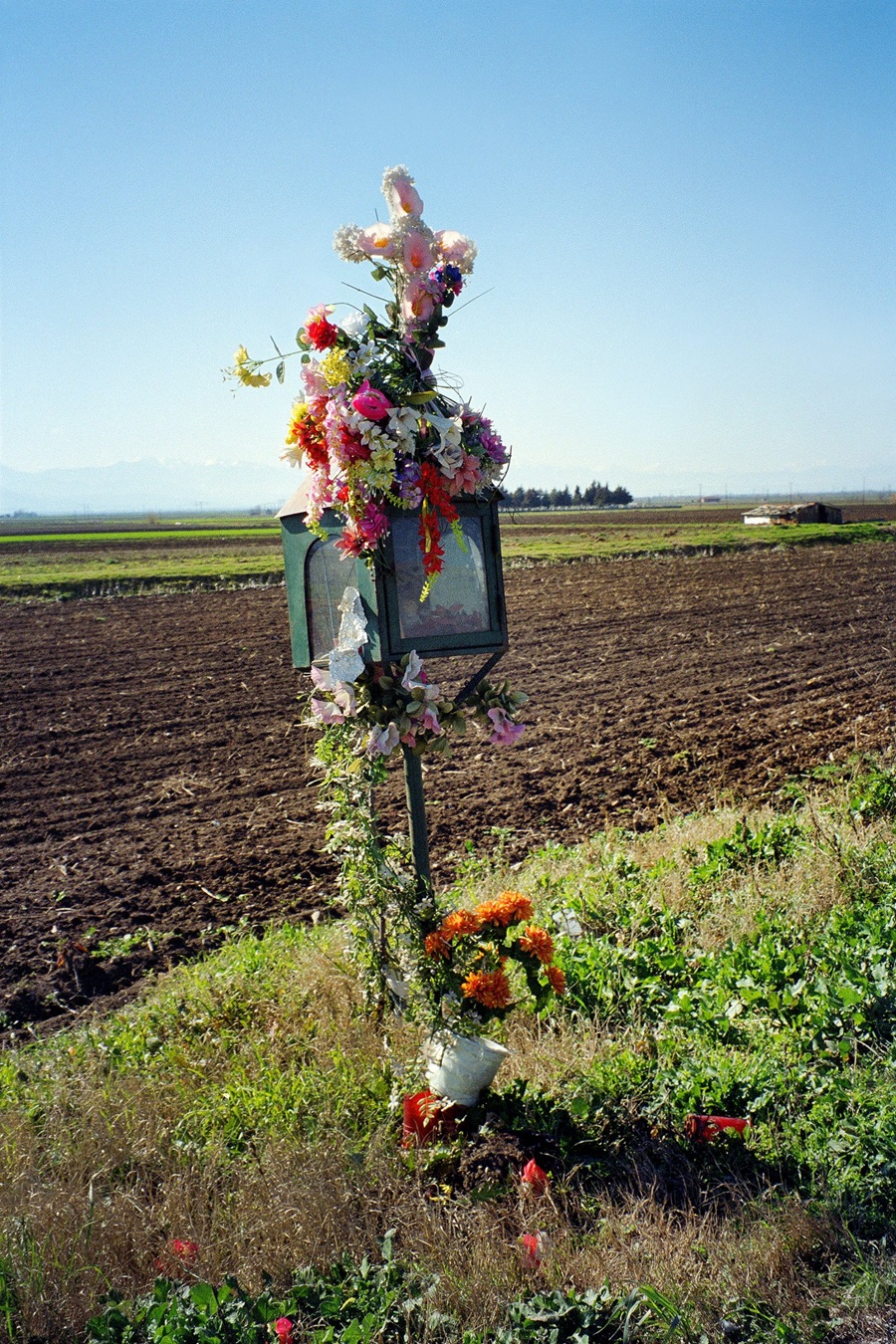
Evgenia Grigoraki, Neo Monastiri, Phthiotis, 1995–2005, Fine art print on Hahnemühle Matte Fibre paper,59.5 × 42 cm
It is worth mentioning Ileana Tounta’s personal note about this exhibition: “A good old friend of mine, Eugenia, showed me years ago a small publication with her photographs from the road trips she took with Stavros throughout Greece, focusing on wayside shrines and votive offerings (tamata). Her work impressed me with the sensitivity with which she connected the subject to the natural environment. From my perspective, her photographs form two sections: one features the shrines and votive offerings she chose to photograph for their relationship to the landscape, and the other showcases the imaginative, bizarre, and borderline kitsch structures that caught her eye. A few years later, Marilia Fotopoulou, a younger artist with a background in photography, presented me with a series of works on the same theme. This coincidence sparked my desire to exhibit their work simultaneously, as I was particularly interested in the encounter between an older amateur photographer and a young professional photographer through this very special Greek custom. And what better time for these exhibitions than the Easter season, when Greek customs and the springtime landscape further highlight the presence of the iconostases within the scenery.”



Leave A Comment