With the addition of Euripides’ *The Bacchae*, which will be performed on July 10 and 11 at the Ancient Theater of Epidaurus, this year’s artistic program at the ancient theater comes to a close. This is a major co-production of the Athens & Epidaurus Festival with the Ivan Vazov National Theater of Bulgaria, in collaboration with the National Theater of Northern Greece. The production is directed by Javor Gardev, with Leonid Yovchev in the role of Dionysus and featuring a mixed cast of Greek and Bulgarian actors.
In a rare gathering at Epidaurus, the place where music and drama continue to resonate through the ages, *The Bacchae*, directed by the distinguished artist, Javor Gardev, are presented at the ancient theater as a staged reading that reimagines the eternal conflict between two fundamental principles—the radiant figure of Apollo and the chaotic allure of Dionysus.
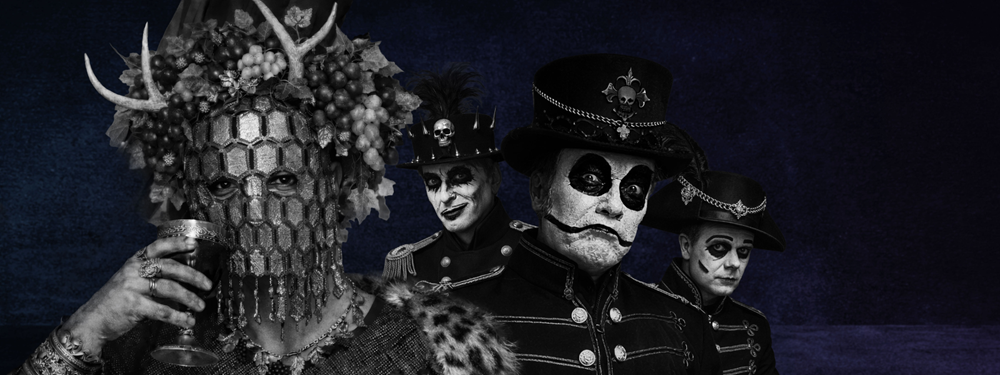
The god Dionysus is portrayed by Bulgarian actor Leonid Yovchev, one of the most charismatic and daring leading actors of his generation, known for his riveting performances and dubbed the “enfant terrible” of Bulgarian theater, while Agave is played by Loukia Michalopoulou.
The music is composed and performed live on stage by The Tiger Lillies, the internationally renowned British band, who also take part in the action as dark troubadours, their characters drawn from the Dionysian universe. From this collaboration of organizations, bodies, and live music emerges a performance that shakes the certainty of logic.
In Gardev’s Bacchae, a crucial question is raised regarding society’s tolerance of destabilization. How does an event transform within the collective organism—intellectually, psychologically, politically—before it becomes a trauma? The play functions as a confrontation with the limits of order, testing the resilience of rules and institutions. In Euripides, Dionysian frenzy is not an innocent celebration but a test of the very idea of civilization, which pushes to the extreme the maintenance of control, morals/ethics, laws, and our self-image.
As the director himself notes: “The Bacchae is the tragedy that goes further than any other in its exploration of irrational impulses and madness. So far, in fact, that it proves dangerous and reckless even for the audience, who are called upon to confront their deepest and most powerful fears.”
The primal fear of the collapse of civilization does not reside solely in individuals; it lurks in the collective unconscious, where the community weaves myths to protect itself. From this realm, an analogy is drawn with the experience of Balkan nationalisms, where intolerance—as a political manifestation of the fear of the “other”—makes it a threat that must be repelled, contained, or assimilated.
The tragedy is built upon the delusion and hubris of the certainty that whatever does not fit into language and law can simply be banished. Except that when man denies his dark kinship with the horse, he does not make it disappear but pushes it into the depths, from where it almost always returns more ferocious.


Leave A Comment