“Hélène Glykatzi-Ahrweiler was not merely the President of the European Cultural Delphi Centre; she was the very embodiment of the Center.”
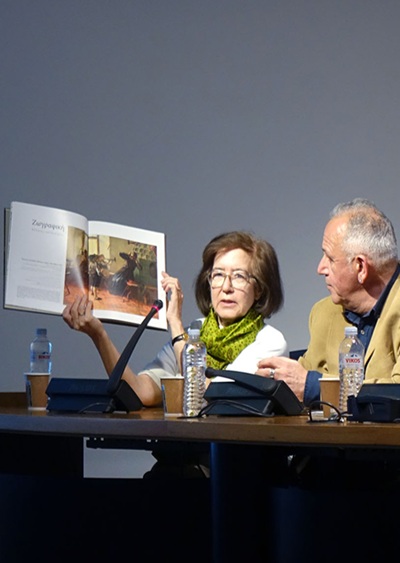
The internationally renowned scholar and memorable historian Hélène Glykatzi-Ahrweiler, a role model for women in the arts and sciences, passed away at the age of 99. The first female chair of the History Department at the University of Sorbonne and its first female rector, she tirelessly championed Greek identity and universality through her multifaceted work, as evidenced by yet another of her countless roles and capacities, her long-standing presidency and contribution to the European Cultural Delphi Centre.
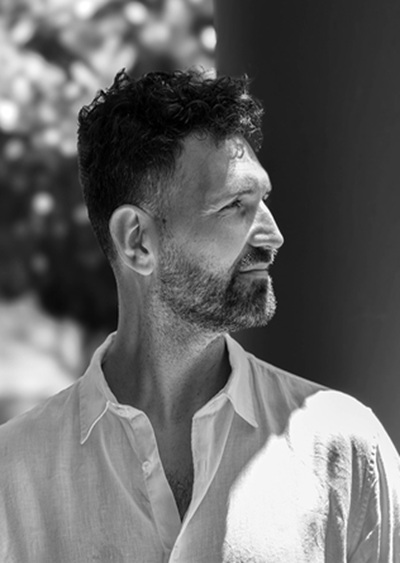
The Director of the European Cultural Delphi Centre, Dr. Andreas Gofas, Professor of Theory and Epistemology of International Relations at Panteion University, shares with Days of Art in Greece his experience of his long-standing collaboration with the Centre, its vision and approach, and introduces us to the Centre’s new direction and future plans, building on its legacy.
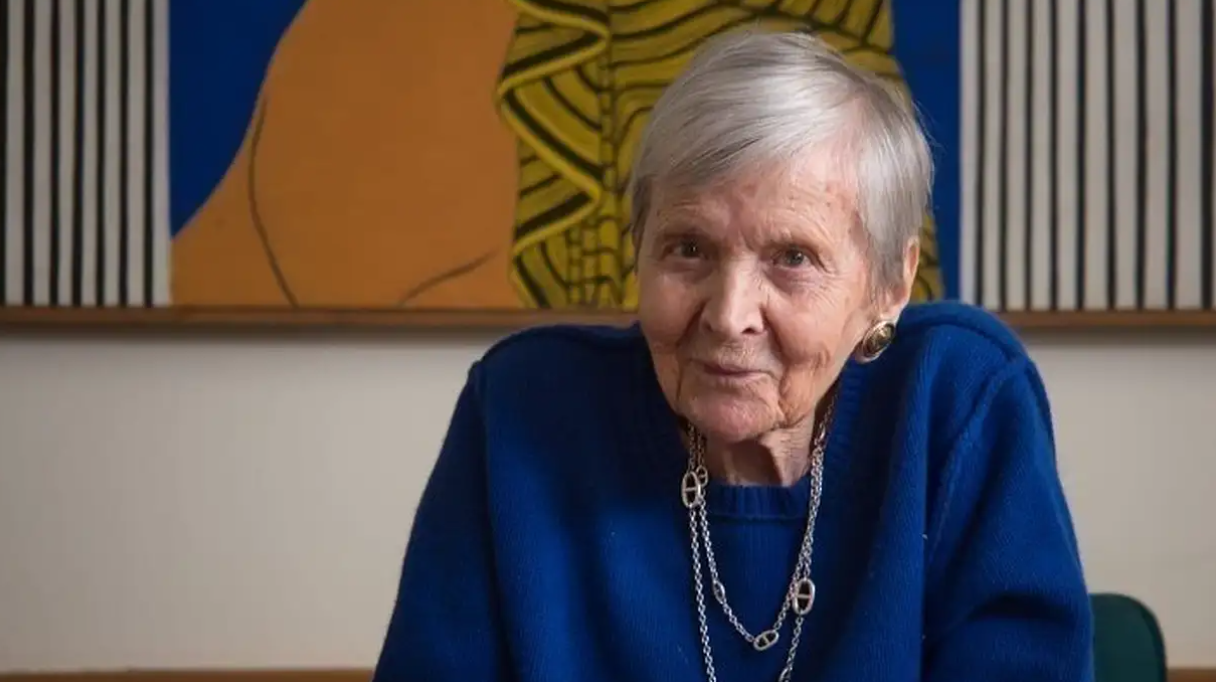
“For Hélène Glykatzi-Ahrweiler, Hellenism was not a succession of eras, but a single intellectual journey.”
Days of Art in Greece. Dear Mr. Gofas, the European Cultural Delphi Centre, a centre for the study and exploration of the sciences and arts with an international reach, has experienced the loss of its president of nearly thirty consecutive years, Dr. Hélène Glykatzi-Ahrweiler. As director of the European Cultural Delphi Centre, based on your long-standing collaboration with her, how would you describe the role of the iconic academic and intellectual Hélène Glykatzi – Ahrweiler in the development of the European Cultural Delphi Centre and in establishing its international character as a dynamic space for intellectual discourse?
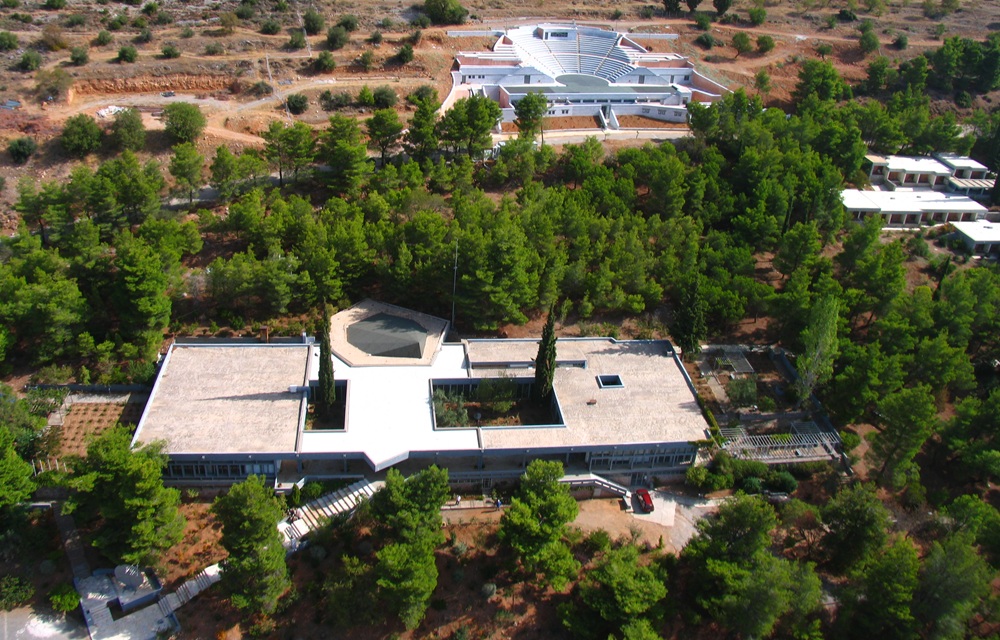
Andreas Gofas. Hélène Glykatzi – Ahrweiler was not merely President of the European Cultural Delphi Centre for nearly three decades. For those of us who had the good fortune to work with her, she was the heart and soul of the Centre. She saw Delphi not only as a place of historical memory, but as a living space for thought—a place where people from different countries and traditions can meet and think together.
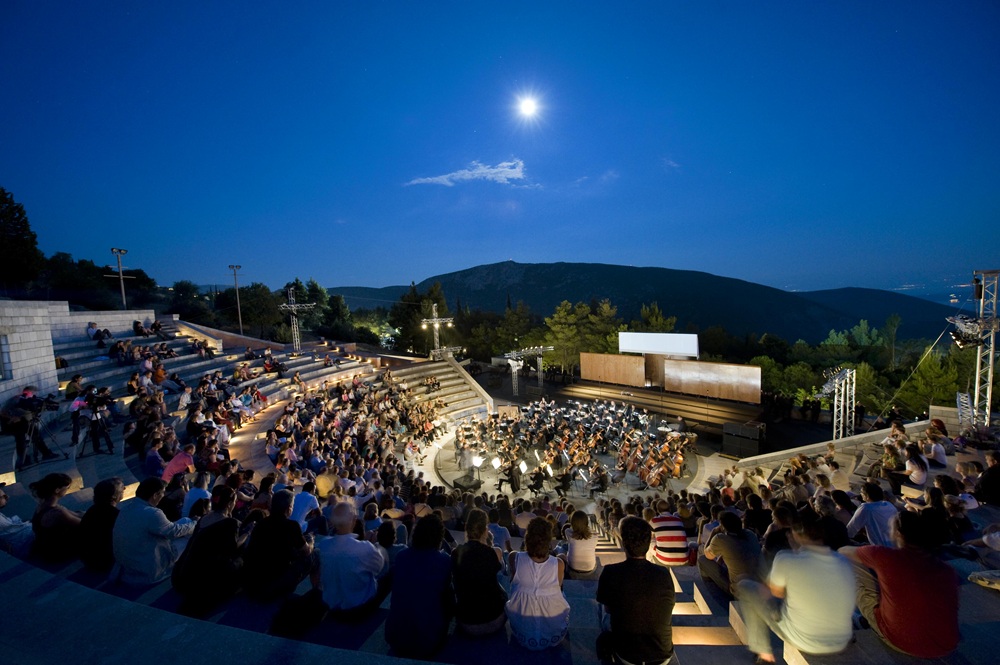
Anyone who has spent even a few days at a meeting of the Centre knows that Delphi is not merely a backdrop. The landscape itself, the history of the place, and the presence of people from diverse fields create a unique setting for dialogue. Ms. Ahrweiler believed deeply in this power of the place.
With her international prestige, she decisively strengthened the Centre’s presence on the global map of intellectual discourse. But what I personally consider decisive is that she shaped an ethos: that culture is not about managing the past; it is a proposal for the future.
“In Delphi, one often sees people conversing who, under different circumstances, might never have met—scientists, artists, students, and creators from different countries. This encounter is not accidental; it is the result of a conscious vision that she herself cultivated.”
D.A. How did she envision the connection between the culture of ancient Greece and Byzantine history, and how did she foster a dialogue between them—always in relation to modern Europe and the world?
A.G. For Hélène Glykatzi-Ahrweiler, Hellenism was not a succession of eras, but a unified intellectual journey. Antiquity, Byzantium, and modern Greece were not distinct chapters, but different expressions of an enduring question: how does a tradition remain alive through dialogue and creative renewal?
Byzantium, as he emphasized, was the place where Greek thought was transformed into a universal discourse, bridging civilizations and eras. In Delphi, he sought to transform this continuity into a living experience of encounter with contemporary Europe and the world. And indeed, in the discussions taking place here, history is not presented as a distant past but as an active dialogue.
D.A. What do you consider to be the most significant innovations she introduced during her presidency to transform the Centre into a dynamic hub for science and the arts, an international center of culture and thought?
A.G. If I had to single out one thing, it would not be an action but an attitude. Hélène Glykatzi-Ahrweiler believed that Delphi ought to be a meeting place—not only for the sciences but also for the arts, ideas, and cultural experiences.
In Delphi, one often sees people conversing who, under other circumstances, might never have met—scientists, artists, students, creators from different countries. This encounter is not accidental; it is the result of a conscious vision she cultivated herself.
She did not merely build institutions; she shaped an attractive intellectual environment. This culture of dialogue, marked by rigor and moderation, was her most substantial legacy.
“As we approach 2027—fifty years since the Centre’s founding—we are working on two parallel tracks. The first involves strengthening the Centre’s international initiatives and partnerships. The second involves upgrading the infrastructure and surrounding area so that the Delphic landscape and modern cultural facilities function as a unified creative environment.”
D.A. How does the Centre, under the chairmanship of Dr. Panagiotis Roilos and your leadership as general director, define its role from now on? Obviously, by continuing to link Greek cultural heritage with the international European values envisioned by Dr. Glykatzi-Ahrweiler. What new initiatives and activities are planned?
A.G. Continuing her work is not merely a formal obligation for us, but a conscious responsibility. The Centre is moving on to the next chapter of its journey, with her intellectual legacy as a constant point of reference.
Many of the experienced staff members who have worked with her for decades continue to serve the Centre, passing on knowledge and institutional memory, while at the same time new generations of researchers and creators are joining the ranks. This convergence of experience and renewal is one of the most promising aspects of the present moment.
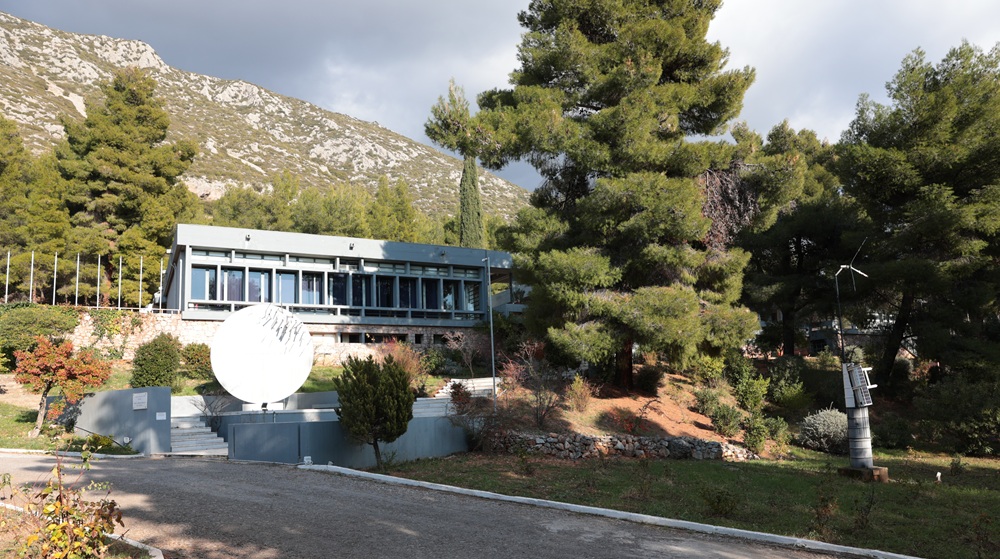
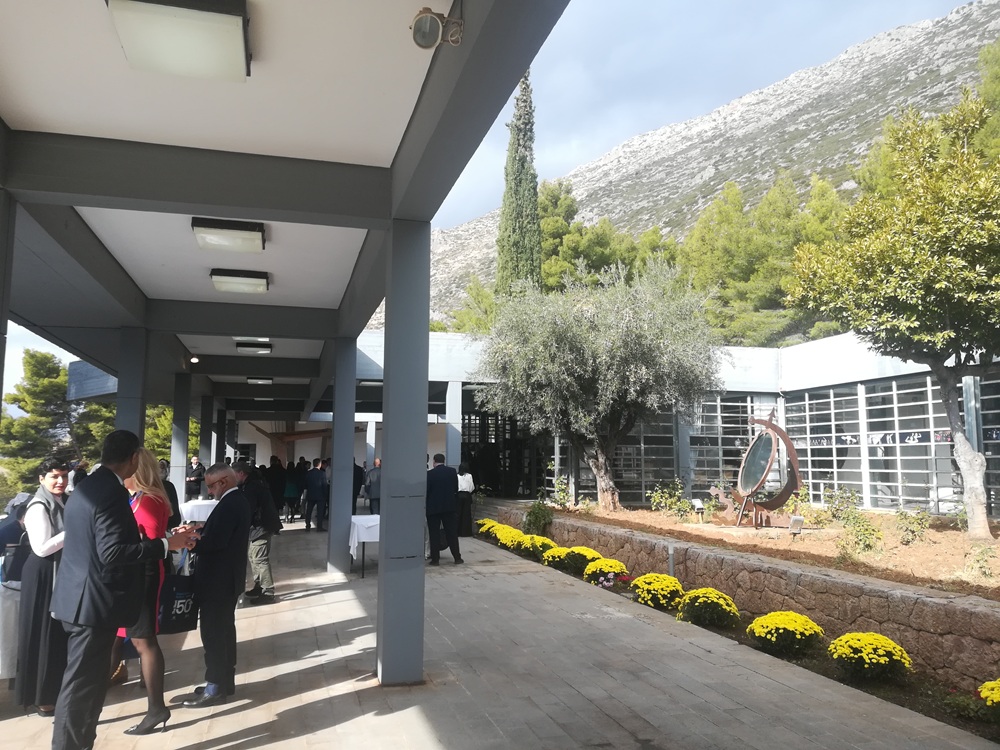
As we approach 2027—fifty years since the Center’s founding—we are working on two parallel tracks. The first involves strengthening the Centre’s international initiatives and collaborations. The second involves upgrading the infrastructure and surrounding area so that the Delphic landscape and modern cultural facilities function as a unified creative environment.
Something special happens in Delphi: the interplay between the landscape and the cultural infrastructure creates a unique sense of time. Many of those who stay here—scientists, artists, students—say that for a few days they step away from the usual rhythm of daily life and find the space for more meaningful reflection. This is what we want to preserve and strengthen.
Some of the initiatives we are planning will be announced in the coming weeks. Our goal is for Delphi to remain a vibrant place of creation and exchange of ideas—a place where cultural heritage becomes the starting point for new thinking.


Leave A Comment