
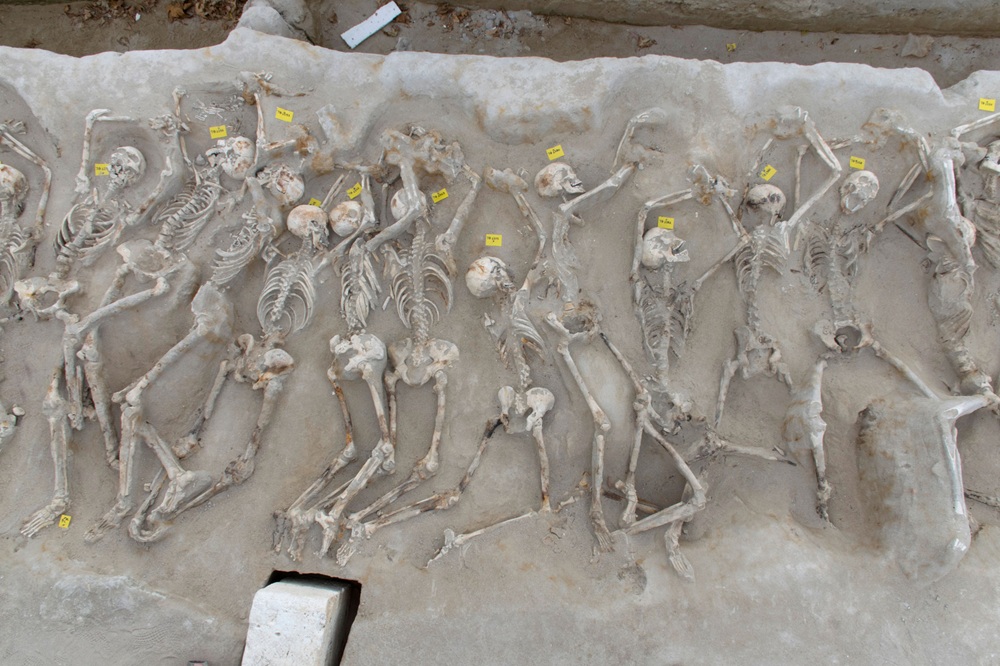
The restoration of the unique archaeological find of the “Prisoners” within a specially designed, enclosed space for protection and display, in the museum shell under construction at the site where the antiquities were found, in the Esplanade of Faliron, is being carried out by the Ministry of Culture.
The project to protect and showcase the “Prisoners” within a museum setting is progressing on schedule, with a budget of €7,500,000, funded by the Recovery Fund and the National Development Program of the Ministry of Culture. The study, which received unanimous approval from the Central Archaeological Council, presents in detail the restoration method that will be used to transport and install the findings from the mass grave of the “Prisoners” near the Stavros Niarchos Foundation Cultural Center. According to the excavators, the find dates back to the turbulent period of the second half of the 7th century BC and is an archaeological find of global interest.
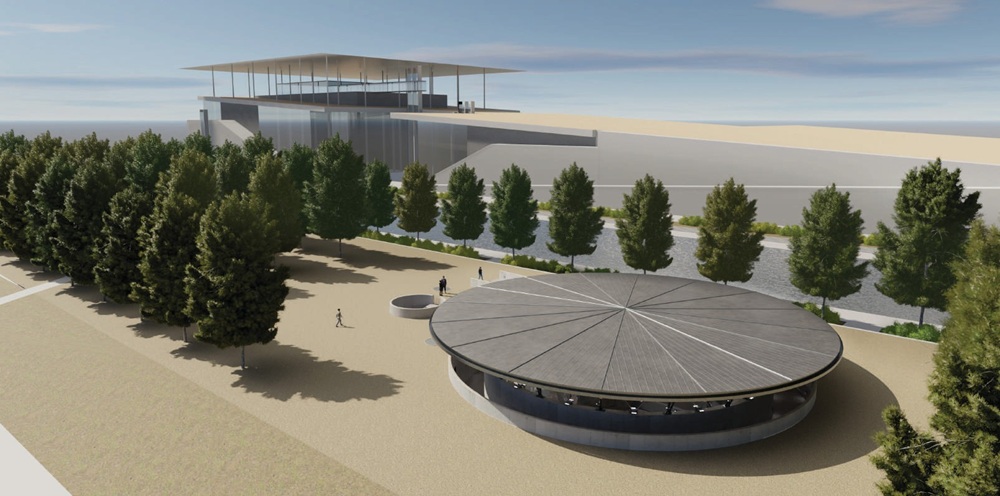
Exterior view towards the southwest
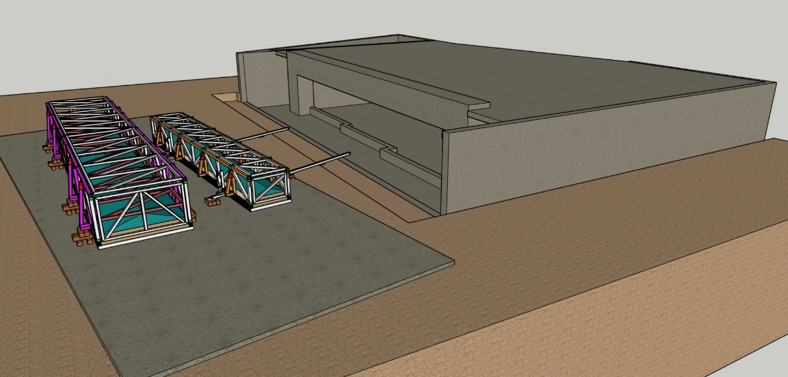
The Minister of Culture, Lina Mendoni, stated: “The important discovery of the ‘Prisoners’ of Falliron concerns the mass burial of men, which was located in March 2016, as part of the construction project for the Stavros Niarchos Foundation Cultural Center. In order to construct the protective shell and showcase the discovery of the human skeletons, the ancient bones from the mass grave were first removed and transported to an adjacent location. The removal of the find was completed in March 2023, and since then it has been kept in a closed prefabricated space under the supervision of the Ephorate of Antiquities of Piraeus and the Islands. The process of returning the find will be carried out with the utmost care and in successive stages to ensure the integrity of the finds and the maintenance of the required climatic conditions. The permanent shell incorporates an underground space for the storage of the “Prisoners,” providing complete protection for the find while allowing visitors to view and understand it in the best possible way. Once the work is complete, the clusters will be visible to visitors via a specially designed corridor, offering a unique experience of showcasing an important archaeological find, as provided for in the approved museological and museographic study. The first phase involves completing the protective space with a special opening for inserting the clusters, while the second phase involves closing the opening and finalizing the building’s configuration. The same method used for removal is followed for the restoration of the skeletal remains clusters. The clusters are lifted with hydraulic jacks and moved by sliding them along metal tracks. Due to the shape of the building and the layout of the opening for inserting the clusters into the protective space, they will have to be moved in at least two directions, while a vertical lowering is also required so that they can pass under the basement ceiling beam and enter the space. They are then moved to their final position, where they will be placed at the same height as where they were discovered. The bone clusters will be placed in a closed, protected space with controlled conditions, where they will be preserved. After the completion of the second phase of construction, the clusters will be encased, the backfilling will be completed, the space will be organized, and it will be sealed.
The impressive discovery of 79 “Prisoners” in the Esplanade came to light in 2016 during excavations for the construction of the Stavros Niarchos Foundation Cultural Center (SNFCC) on the site of the old hippodrome. These are men bound in iron chains, laid out in three rows, some tied hand and foot and others tied together, having suffered a fatal blow to the head. The excavator links their execution to the period of political unrest that began in the early 7th century BC and lasted until the 6th century BC. In 2016, it was decided to preserve and showcase the finds in situ and to construct a protective shell. In 2020, as significant problems were identified in the state of preservation of the find, the temporary and conditional removal and relocation of the find was approved, due to the deteriorating state of preservation and damage to the remains, caused by the particular geological substrate. From 2020 to 2023, the necessary studies were approved for the construction of a permanent protection and exhibition space for the polyandrium antiquities in the Esplanade. The construction of the museum shell will be completed within the first half of 2026.


Leave A Comment