In 2025, the Systematic Underwater Archaeological Survey of the Ephorate of Underwater Antiquities continued at the historic MENTOR shipwreck, under the direction of archaeologist, Dr. Dimitrios Kourkoumelis-Rodostamos, Deputy Director of the Service.
The brig MENTOR, which sank in September 1802 off the port of Avlemonas in the southeast of Kythira, was one of Lord Elgin’s privately owned ships, which had been used to transport antiquities, including part of the sculptural architectural decoration of the Acropolis monuments. During this year’s excavation season, areas west and north of the ship’s surviving hull were investigated.
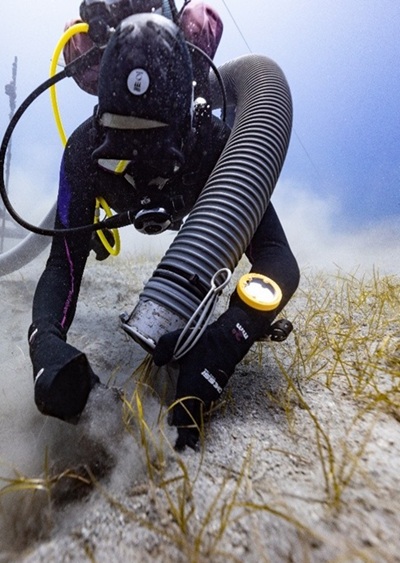
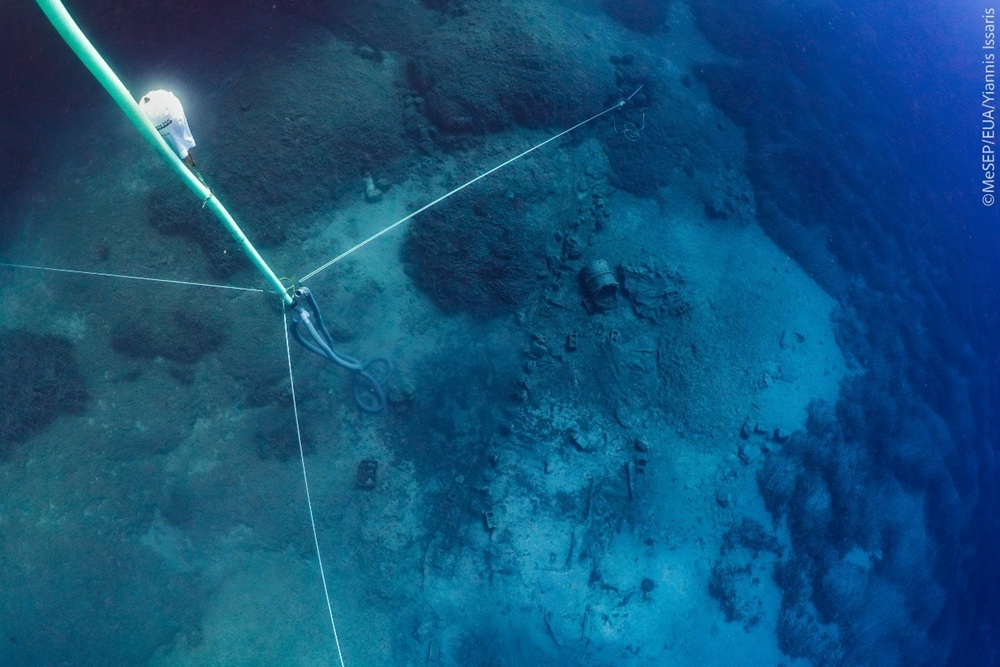
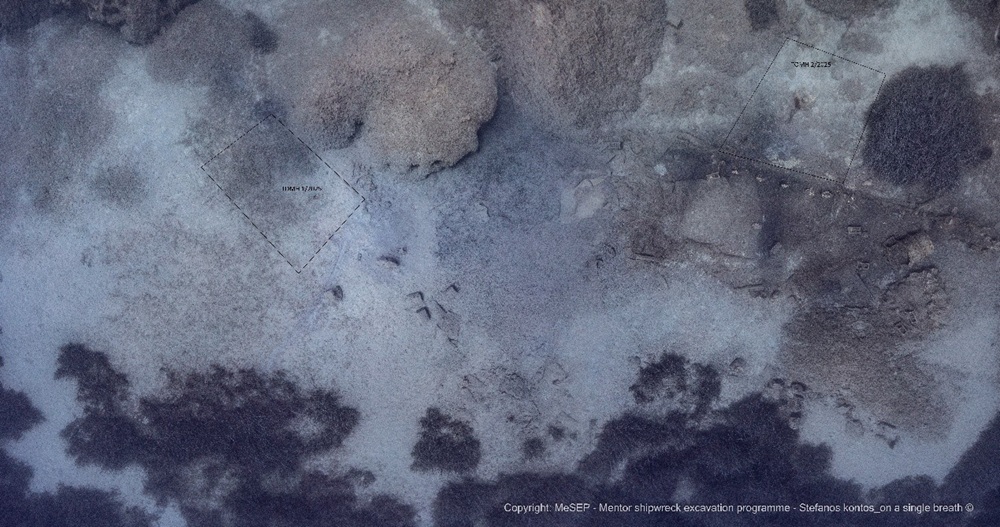
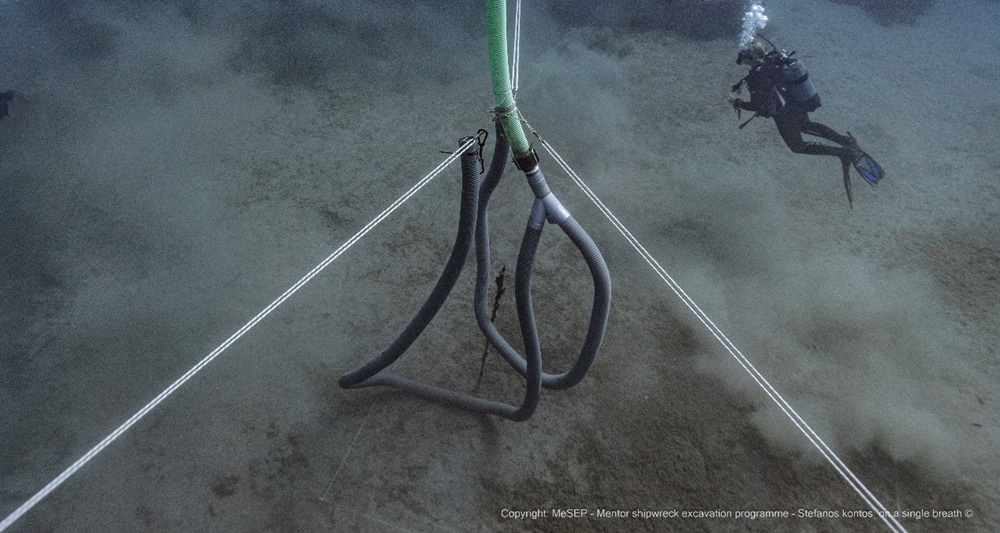
Initially, an excavation trench was established, conventionally designated Trench 1/2025, approximately five meters west of the preserved shipwreck. The purpose of the trench at this location was to investigate whether any remains of the ship’s hull had been preserved. During the excavation of the trench, no traces of the ship were found, a fact that likely confirms the hypothesis that the ship’s hull, after sinking, remained exposed on the seabed for a considerable period, resulting in its complete and relatively rapid disintegration. A decisive factor in this was the first salvage operation of the cargo in 1802, when the sponge divers who had undertaken the salvage, due to the difficulty of accessing the interior, were led to cut an opening into the hold from the ship’s hull. This is the spot where water had entered when the ship struck the rocks, as described, moreover, in the letters of Lord Elgin’s secretary, William Hamilton, who, on his orders, coordinated the entire process of salvaging the cargo. This process contributed to the complete destruction of the majority of the ship’s hull. The excavation of trench 1/2025 was completed to a depth of approximately -1 m from the seabed (-21.9 m from sea level), with no traces of the ship’s hull found.
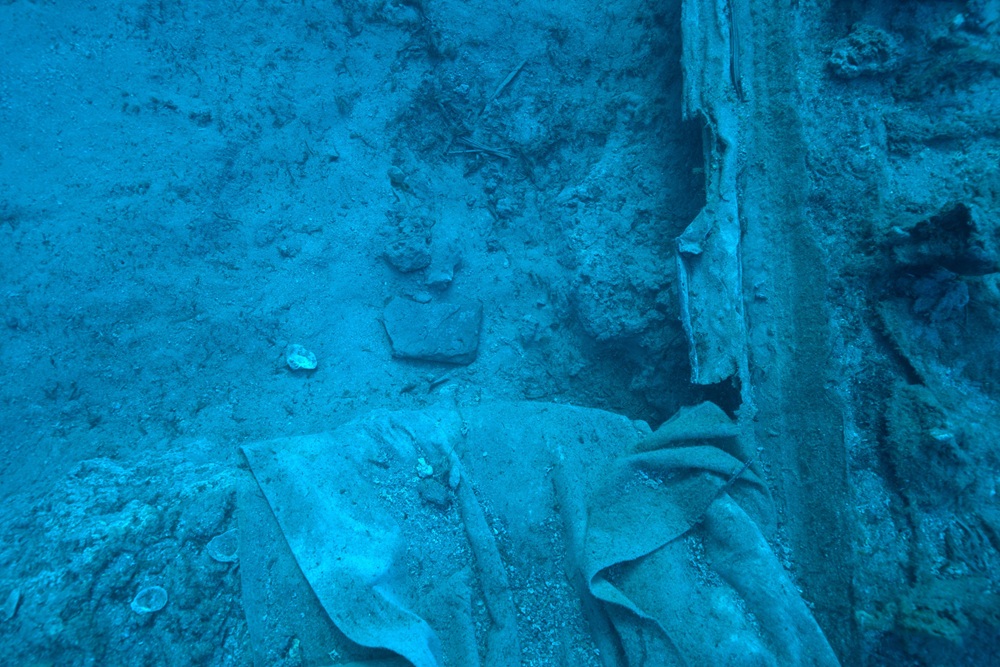
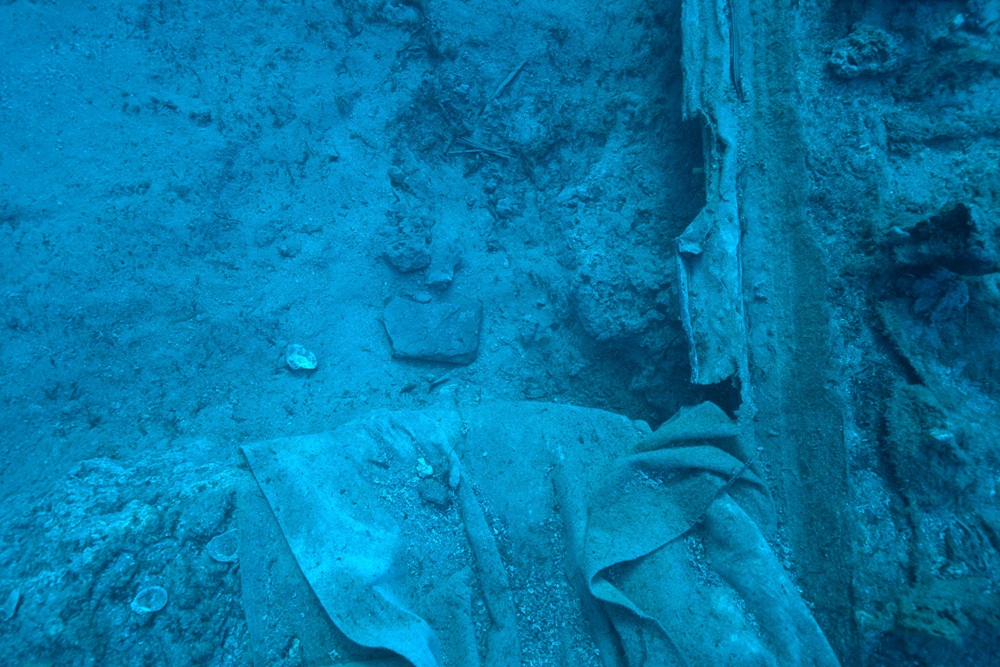
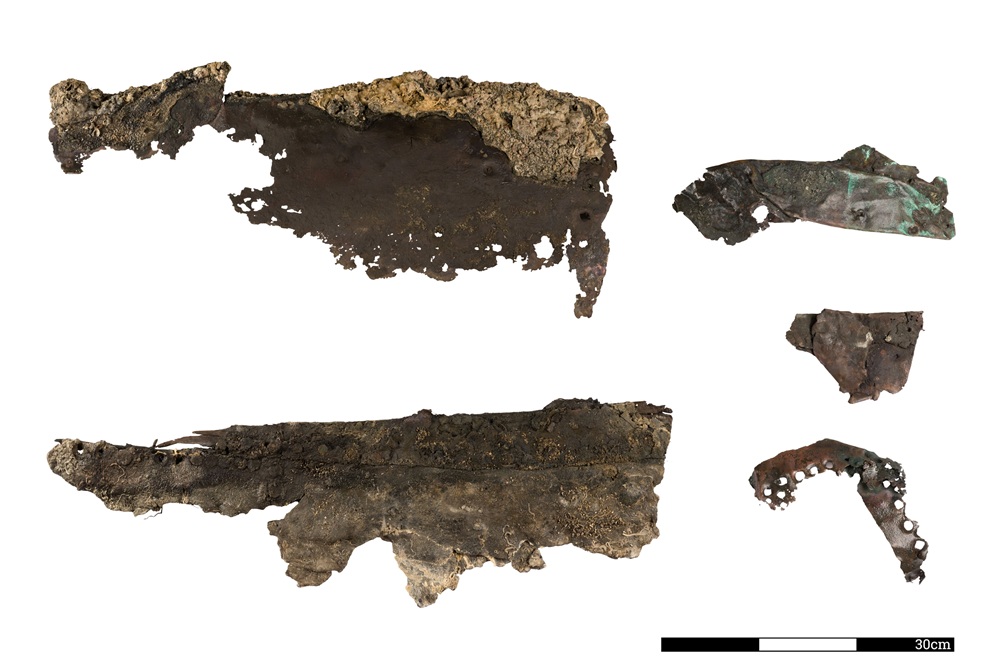
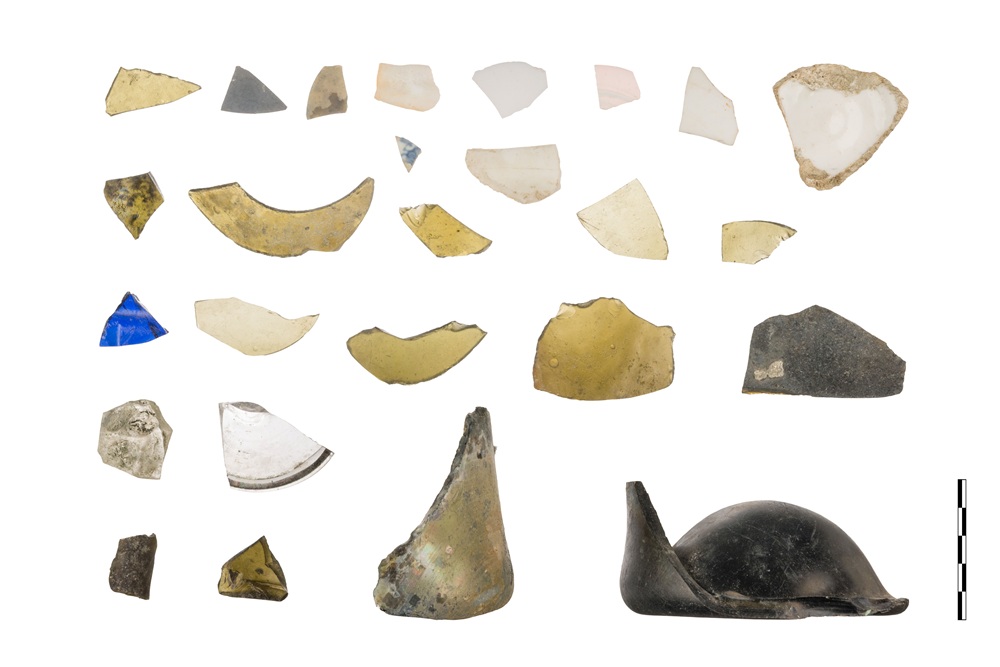
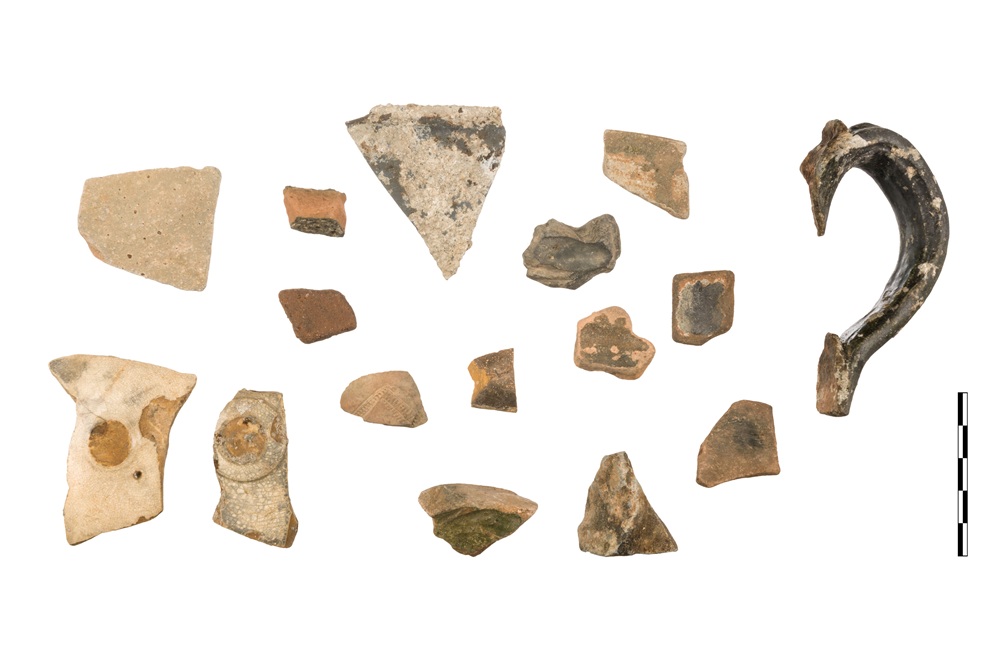
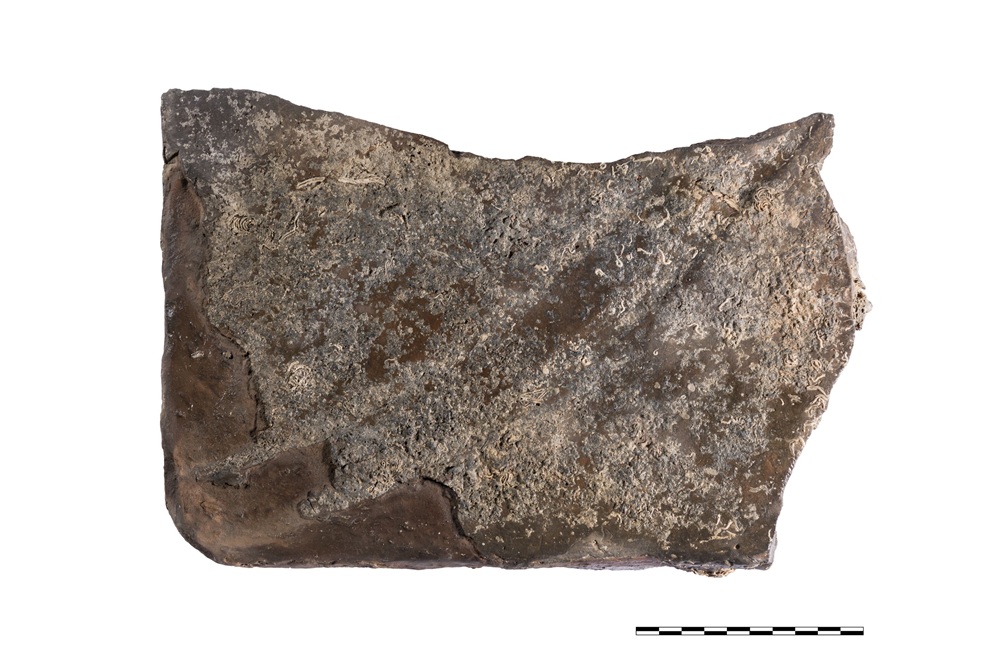
The second excavation trench was carried out north of the preserved section of the ship’s stern (Trench 2/2025), with the aim of determining whether any remains of the hull had been dispersed into this area. Although no fragments of the ship’s hull plating were found during the excavation of the trench, objects from the ship’s fittings were discovered, as well as fragments of everyday utensils. Fragments from the ship’s outer copper plating were also found. The copper plating protected the hull sections, while it appears that the lower part of the hull, and especially the keel, was additionally reinforced with lead sheets. Of particular interest is a section of the copper plating, which is located precisely at the point where the copper sheets join the lead sheets. Among the other finds, a section of a clay slab stands out, which is likely related to the insulation of the ship’s hearth. The slab was located a short distance from the ship’s stern.
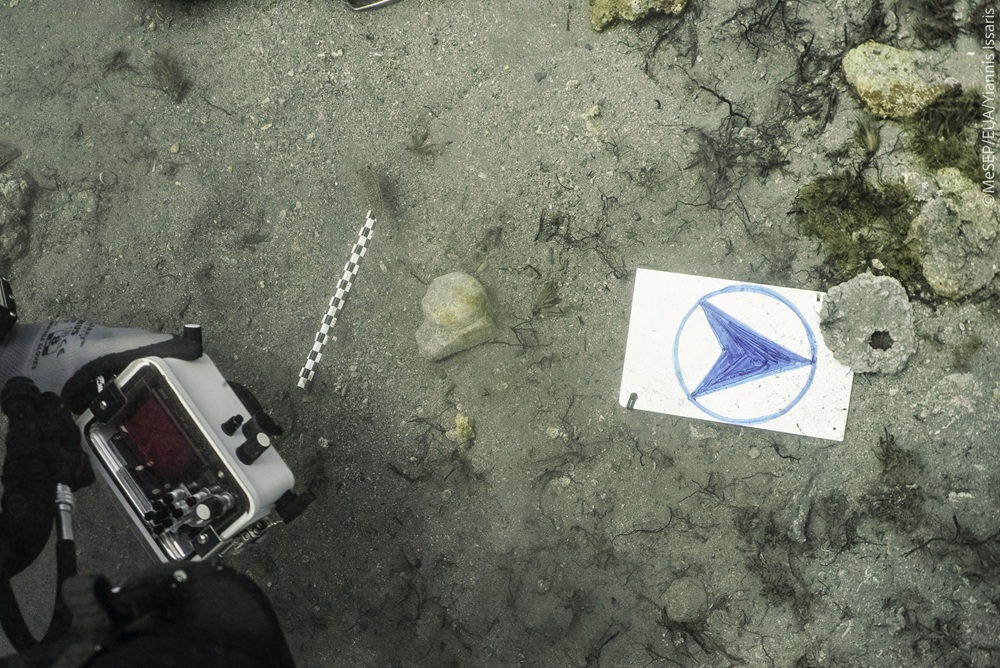
Finally, special mention should be made of the discovery of a marble decorative element. It is a fragment of a marble slab featuring a decorative drop, which belonged either to an epistyle column or to a cornice corbel. The fragment measures 9.3 cm (length) x 4.7 cm (width), while the droplet has a diameter of 6.51 cm and a height of 2.2 cm. The dimensions of the drop can be compared to the measurements provided by An. Orlandos regarding the decorative drops of the Parthenon entablature. This is the first time a fragment of decorative sculpture has been identified as originating from the valuable cargo carried by the brig MENTOR, the majority of which was salvaged during the first salvage operation of 1802. The completion of conservation work and further study will provide more information about the monument from which it originates.
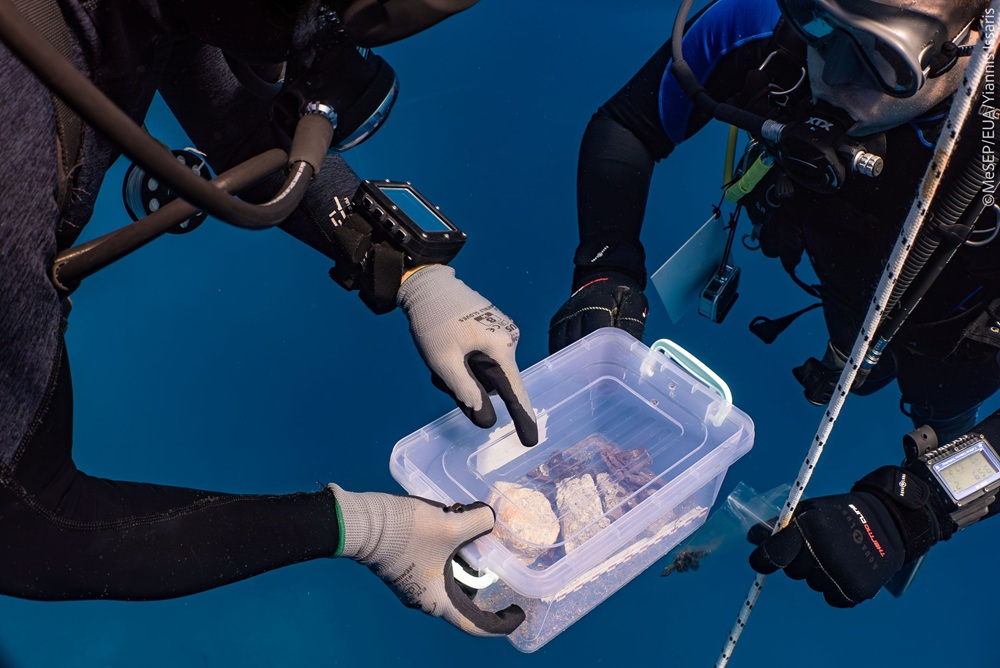
The 2025 underwater excavation season involved scientists from various disciplines and fields of expertise, including archaeologists, marine biologists, diving instructors, underwater photographers, conservators of antiquities, and underwater technicians, specifically: Dr. Alexandros Tourtas, Dr. Elena Bonelou, Aris Michael, Dr. Giannis Issaris, Dr. Elpida Karadimou, Vasilis Tsiairis (MA), Chrysa Fouseki, Irini Mallou, Spyros Moureas, Giorgos Bouzalakos, Stefanos Kontos, Manouil Kourkoumelis, Maria Tsokla.


Leave A Comment