In the heart of the capital, in the historic center of Athens, in the landmark building at 134-136 Ermou Street and Evvoulo Street, in Kerameikos, the Hellenic Foundation for Books and Culture (HFBC) is being established.
The building, owned by the Ministry of Culture, has been granted to HFBC by decision of the Minister of Culture, Lina Mendoni, to house its operations and develop its activities. The property had been granted to the Association of Greek Archaeologists in 1986 by decision of Melina Mercouri. The concession was revoked in 2023 by decision of Lina Mendoni due to non-compliance with the terms of the concession of the building-monument.
The Minister of Culture, Lina Mendoni, stated : “The decision to grant the use of this property to the Hellenic Foundation for Books and Culture—an organization supervised by the Ministry of Culture—fully serves the needs of the Foundation but also the policy of the Ministry, which wants books to be at the heart of cities, in the center of Athens, so that citizens can easily and actively participate in the actions and activities of HFBC. In an age dominated by technology, the experience of books remains unique. Each of us has an experiential relationship with books, a relationship of experience and memory. The building, located on the sidewalk of Ermou Street, a stone’s throw from the Ancient Agora of Athens and adjacent to the archaeological site of Kerameikos, has the appropriate spaces to comfortably host events related to books and reading, while the surrounding garden is ideal for cultural events related to the work of HFBC. The Ministry of Culture, through the competent Service of Modern Monuments and Technical Works of Attica, has completely restored the building-monument, which in recent years had fallen into complete disrepair. Its new use will upgrade the wider area, in combination with the new face of the neighbouring archaeological site of Kerameikos, with the completion of the works carried out by the Ephorate of Antiquities of the City of Athens.
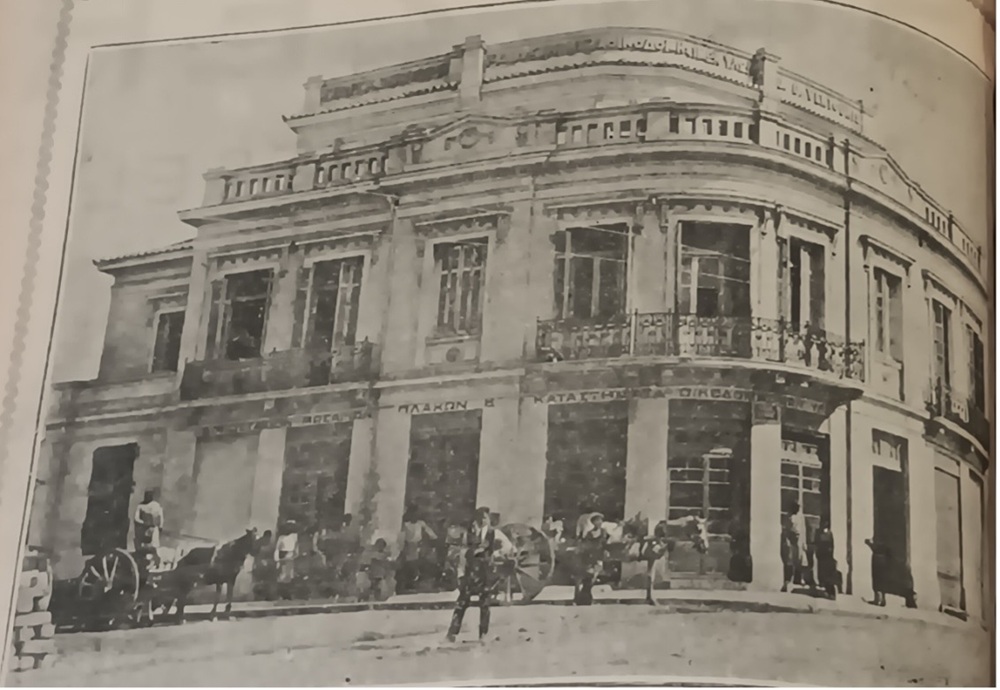
The property was expropriated for archaeological purposes by the Greek State-Ministry of Culture, by decision of 1973. The building was constructed at the dawn of the 20th century (early 1900s) and was used as a sales outlet for “building materials” by Georgios K. Ventouris. A few years later, in 1916, G. Ventouris’ company was included in the entry “Construction Companies of Athens” in N. Inglesis’ “Guide to Greece,” while in the 1923-1926 volume, the Guide includes a two-page tribute to G. K. Ventouris’ “Commercial and Industrial House.” In 1994, the building was designated a work of art by the Ministry of Culture, along with its courtyard, and is therefore subject to the protective provisions of Law 4858/2021. In 1993, it was designated a listed building by the Ministry of Environment and Energy.
This is a large-scale urban property which, in its current form, comprises a mainly neoclassical mixed-use building (shop on the ground floor – residence on the upper floor), an auxiliary stone-built structure in the courtyard, and a garden. During the same period, buildings were constructed on the commercial streets in the center of Athens in a way that met the practical needs of their location. According to Manos Biris, “The ground floor of these buildings has large spaces for professional use, with a clear height of 6m (…). Thus, at least on the commercial streets of Athens, a distinctive image of structured space is created (…) formed by shop windows or entrances to shops, cafes, and pastry shops (…). In contrast, on the upper floors of the buildings, we see no significant difference from the familiar facade and floor plan of large urban residences.”
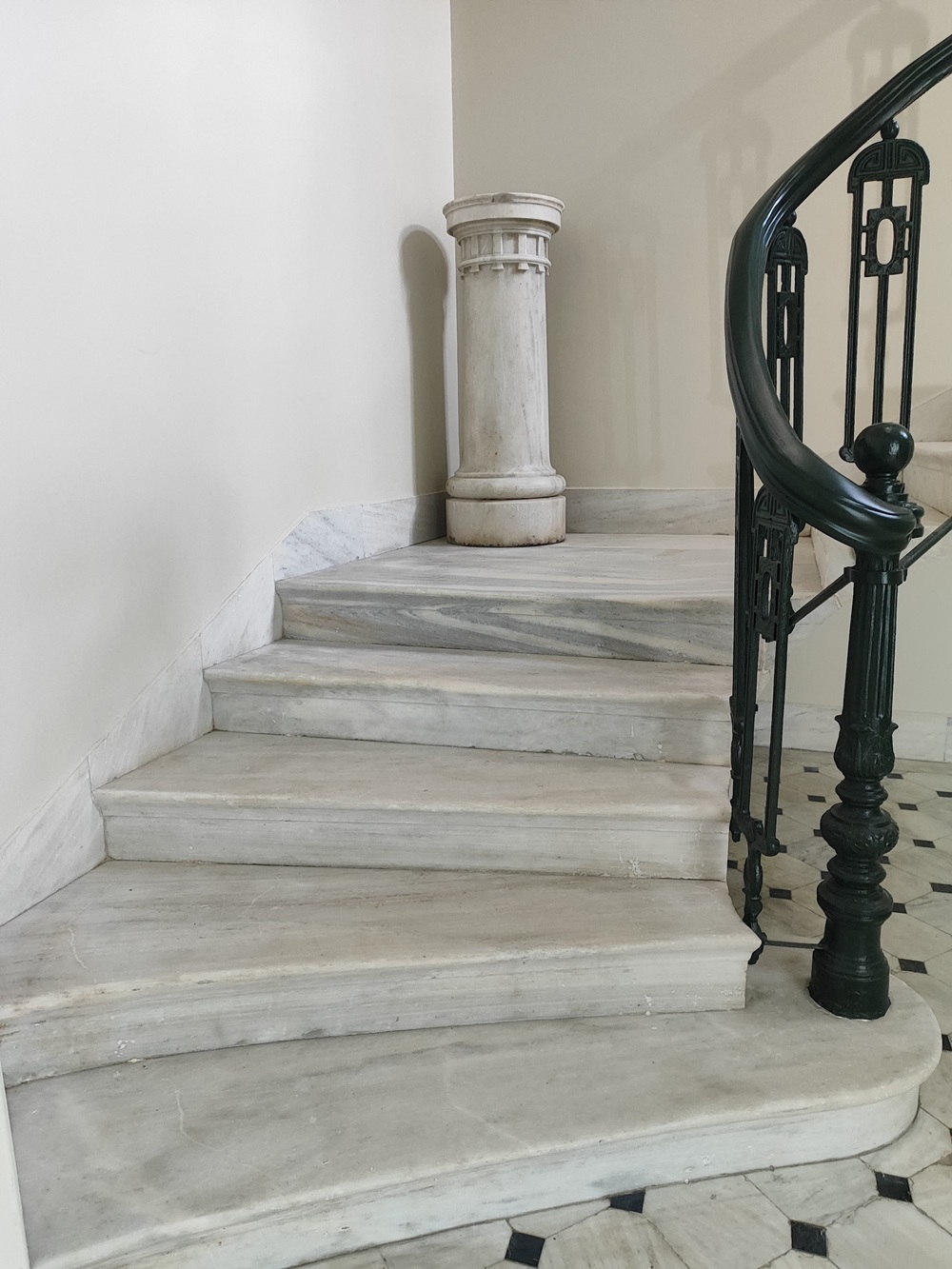
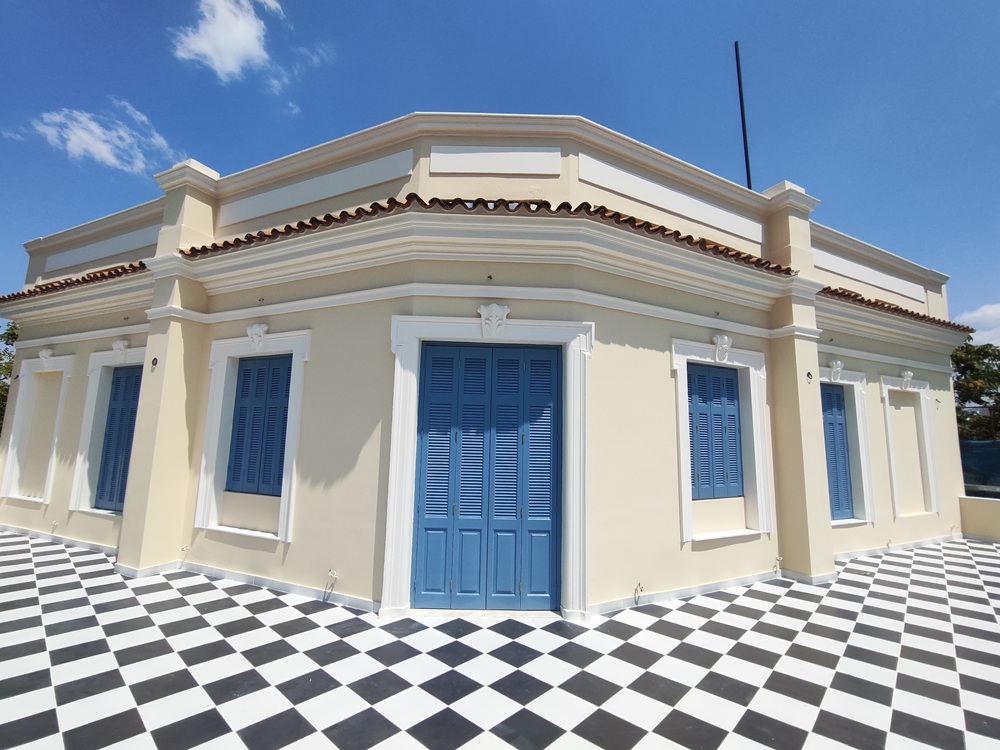
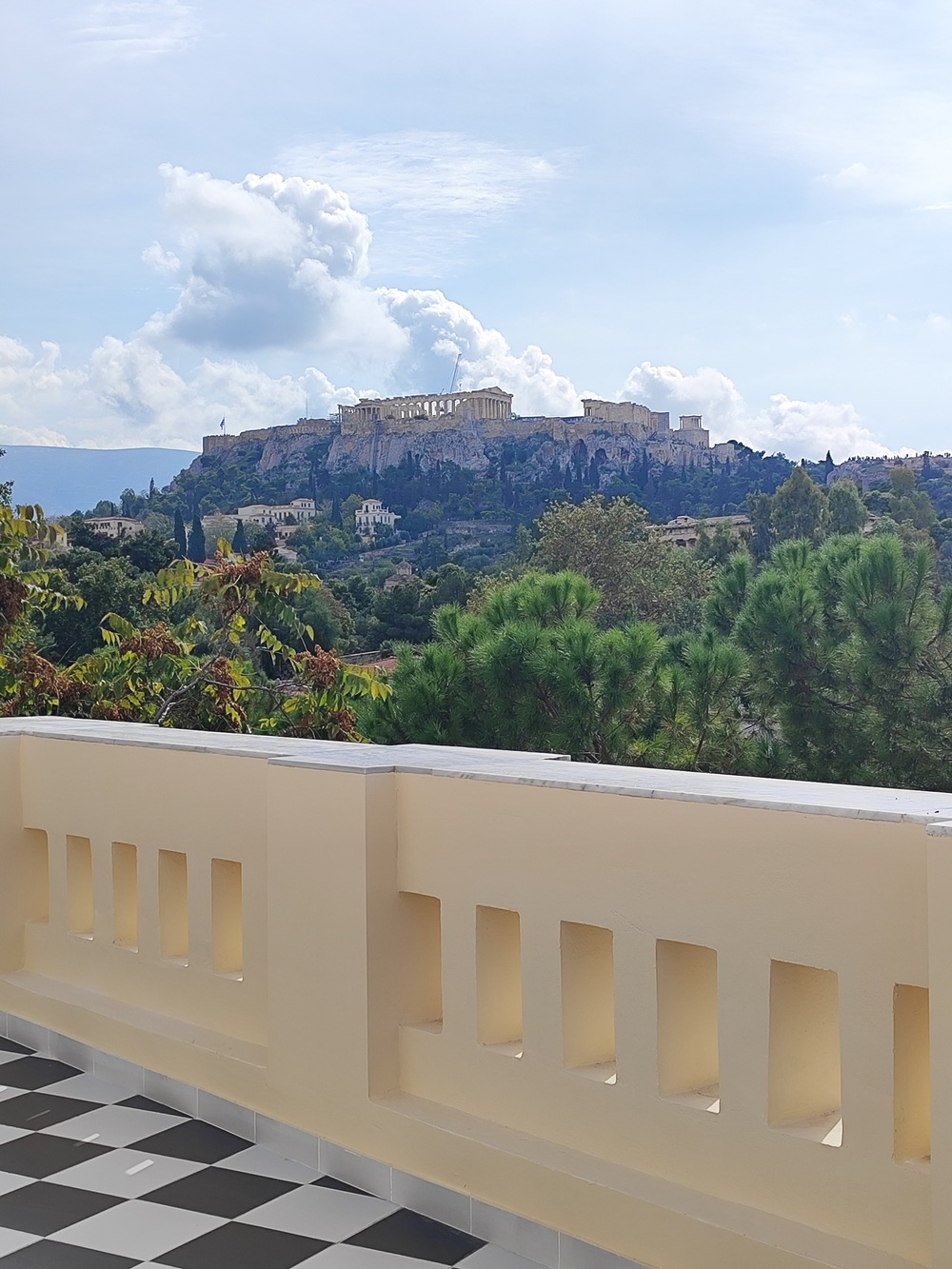
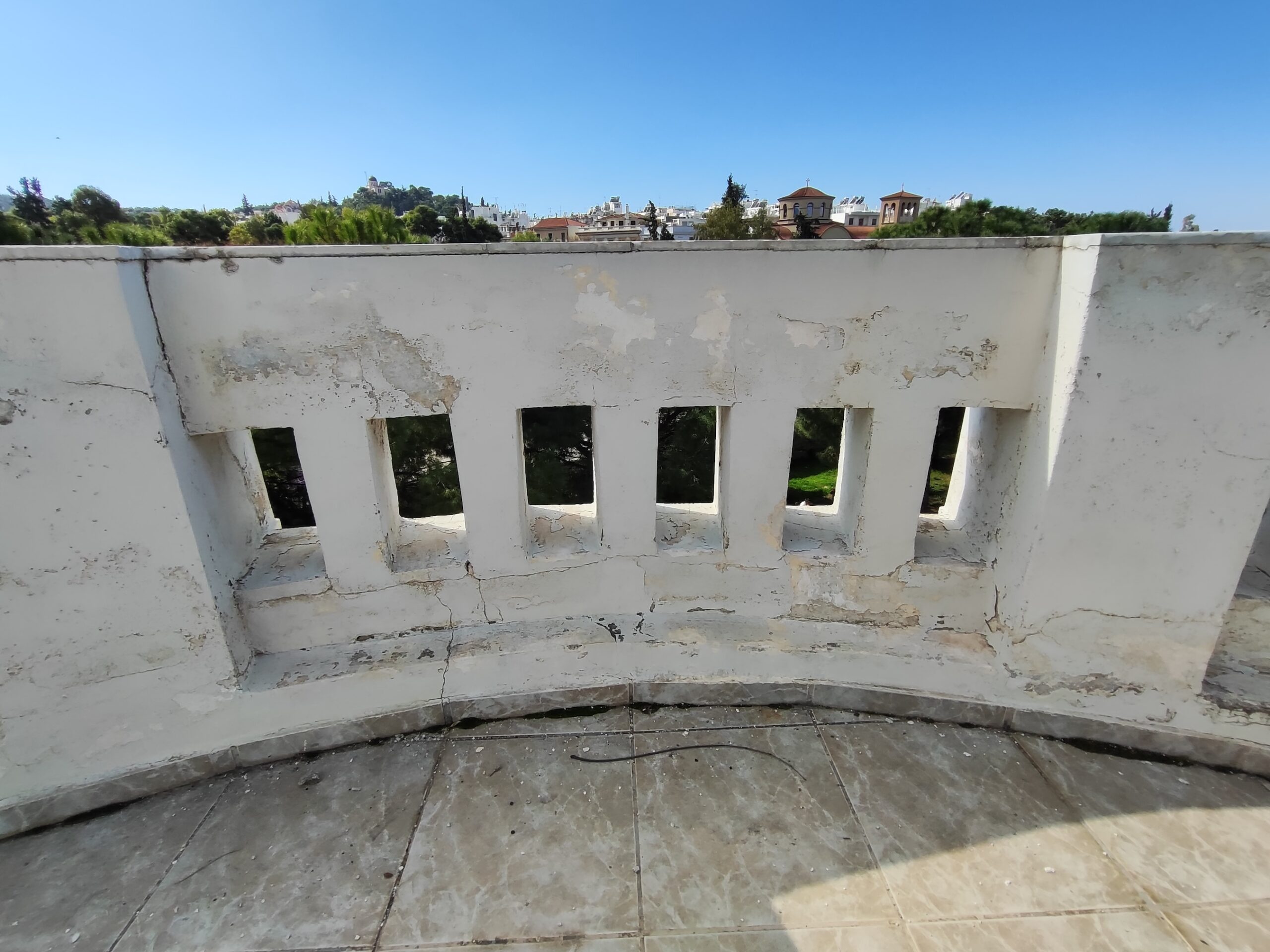
The building has four floors. The ground floor rooms are open plan and simple, without any decorative moldings. The first floor housed the main residence. The ceilings of the main, protruding rooms feature sculptural decoration, which is more simplified in the entrance hall and more elaborate with plant motifs in the main rooms facing Ermou Street. The second floor includes a large terrace with a built parapet overlooking Plaka and the Acropolis. Over time, the building has undergone interventions. In 1994, extensive restoration work was carried out by the Ministry of Culture. In 2024, the Ministry of Culture, through the Service of Modern Monuments and Technical Works of Attica, proceeded with works to remove hazards and completely restore the building, with a budget of approximately €750,000, funded by the Ministry of Culture’s National Development Program. In this context, in addition to the stabilization and restoration of all surviving elements of the building, the original colors of the facades and interior were also investigated. The original appearance of the building was documented from the surviving elements and then restored. At the same time, functional upgrades and accessibility improvements for people with disabilities and other mobility issues were also carried out.



Leave A Comment