
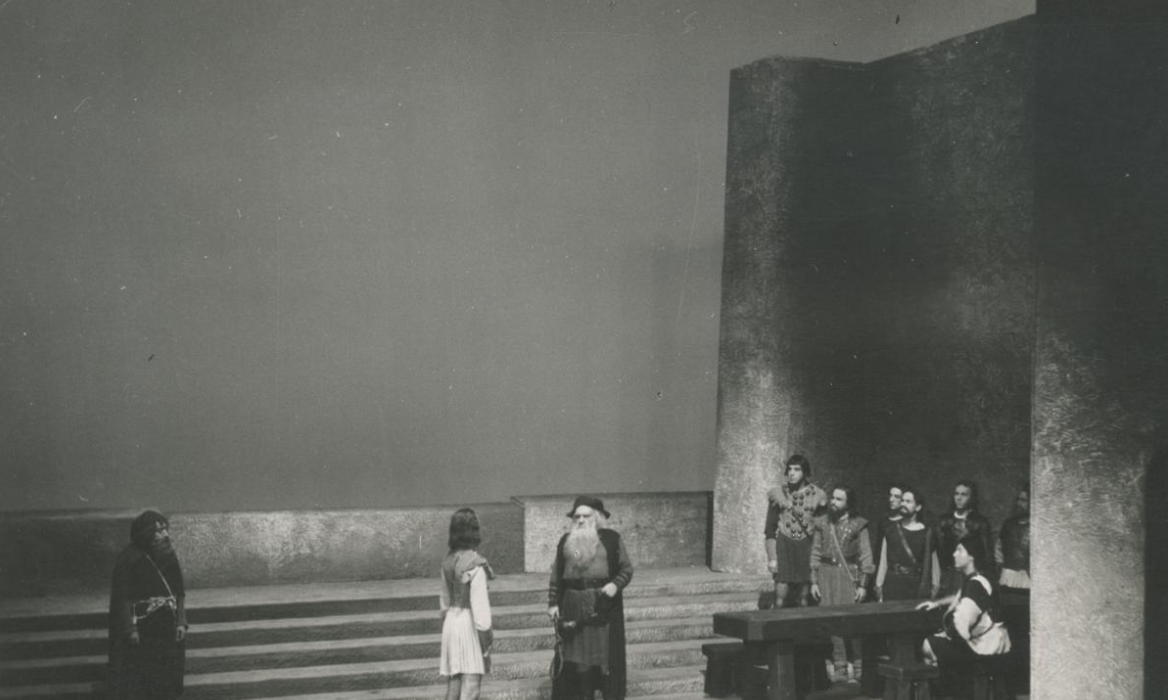
Read on this book, / That show of such an exercise may colour / Your loneliness
(HAMLET, ACT III, SCENE 1)
Undoubtedly, the entire body of work by William Shakespeare (1565-1616) stands proudly alongside the ancient classic tragedies and holds a special place in the hearts of every book lover and theatergoer, who rush to fill the large theaters from London and New York to Athens and Los Angeles with each new stage “adaptations” of his masterpieces.
As far as the Greek reception of Shakespeare is concerned, Ellinika Grammata has reserved one of the most important publishing events of recent years, proceeding with the reissue of the complete works of the Elizabethan writer through the immortal Greek translations of Vasilis Rotas and Voula Damianakou. Out of print for many years, they can now be enjoyed either individually or by purchasing the box set containing all 39 books in the series.
For those who wish to treat themselves or their loved ones to one of William Shakespeare’s “jewels,” Days of Art in Greece focuses on some of the most monumental works in the series.

From the Archive of the Greek Art Theatre-Karolos Koun | Measure for Measure, 1968-1969, directed by Karolos Koun
Hamlet (translated in Greek by Vasilis Rotas)
The tragedy of Denmark’s most famous literary king, Hamlet (1600-1601), was translated by Vasilis Rotas in 1937 on behalf of the National Theater. Maintaining the high style of the original, and the ironic barbs about the ways of the Royal Court, the important translator, according to the most authoritative literary critics, delivers an “insurmountable” translation that navigates the great pitfalls of Renaissance English to recreate Hamlet’s universe for the enjoyment of the Greek-speaking audience. According to the translator himself, in a work that poses the ontological question “To be or not to be, that is the question”: … “Shakespeare, presenting the image of his era with its worldview, which is still entirely religious, surrounds it with awe and reverence and faith in a higher order that guides its paths and fulfills its purposes, regulating the secular hierarchy of values.”
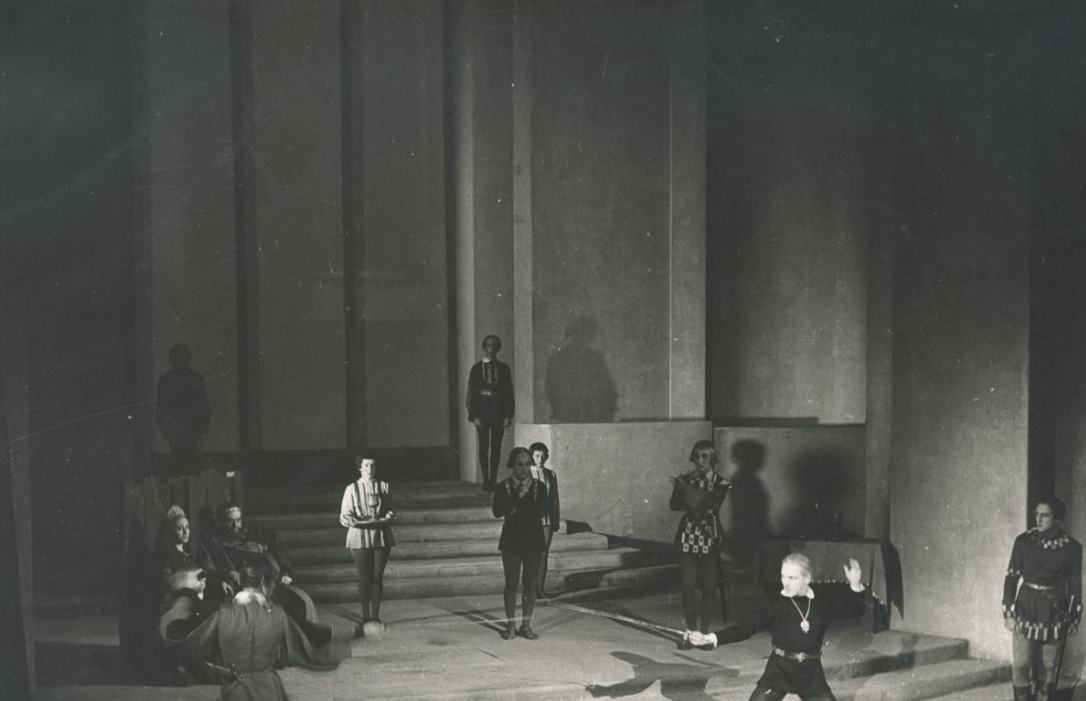
From the National Theatre Greece Archives | Hamlet, Main Stage, directed by Dimitris Rontiris, 1937.
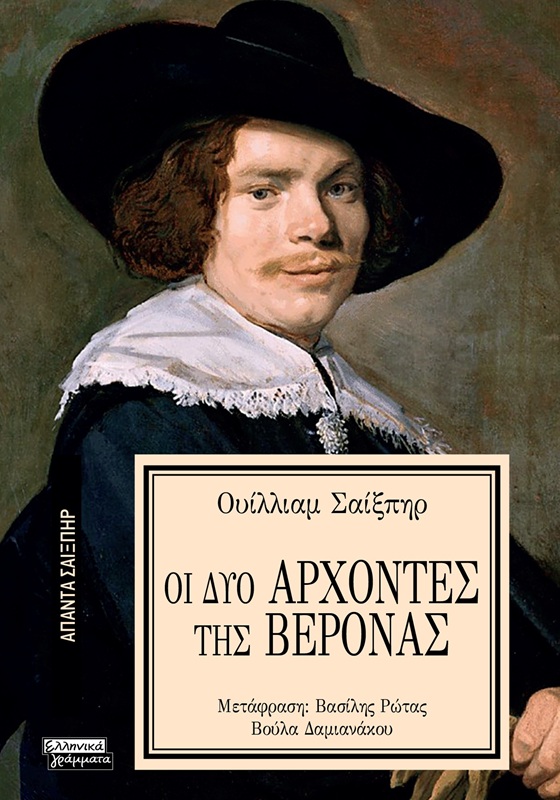
The Two Gentlemen of Verona (translated in Greek by: Vasilis Rotas, Voula Damianakou)
Although an early work by Shakespeare, “The Two Gentlemen of Verona” (1593-1594), translated by Rotas and Damianakou, sparkles in every word, bringing joy to those who would like to turn to a more comical, less conventional masterpiece by the great poet. With the scene set sometimes in Verona, sometimes in Milan, and sometimes in Mantua, this comedy, which we rarely see staged in Greece, revolves around the concept of friendship, with the faithful Valentine and the unfaithful Proteus as the central characters. Although, according to the translators, the play has some dramatic weaknesses—a sign of the author’s still immature age— “his observations, his frequent humor, his double entendres, his puns, and the philosophical words scattered throughout the play are harbingers of the blossoming that would follow in his great comedies and tragedies.”
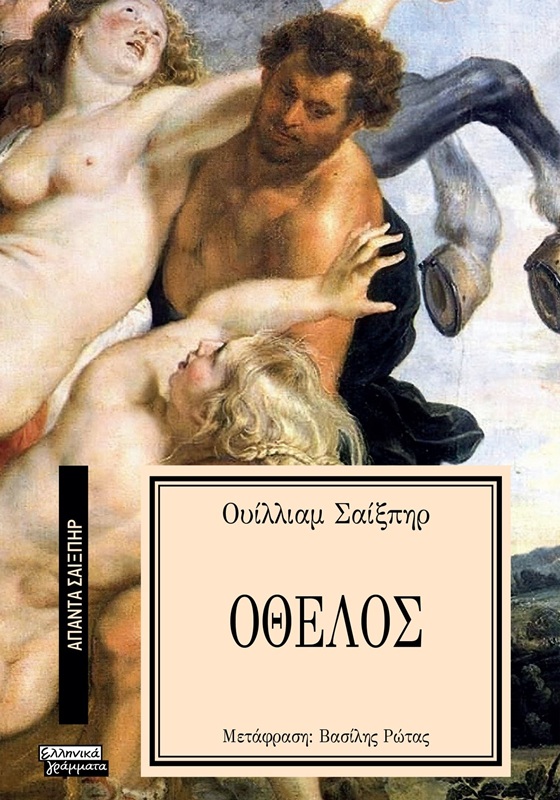
Othello (translated in Greek by: Vasilis Rotas)
Having already written major works such as Romeo and Juliet, Julius Caesar, and Twelfth Night, the Bard experienced one of his greatest theatrical successes in 1604-1605 with the presentation of his tragedy Othello. A work with strong characters and a central dichotomy between Othello and Iago, it lends itself to bold interpretations by important leading actors and always moves the audience with its treatment of the concepts of jealousy, high ideals, and racial identity, without ever losing its poetic quality. One of the pinnacles of William Shakespeare’s dramaturgy, the motifs of downfall found here are often compared to those of Sophocles’ Oedipus Rex.
Measure for Measure (translated in Greek by Vasilis Rotas)
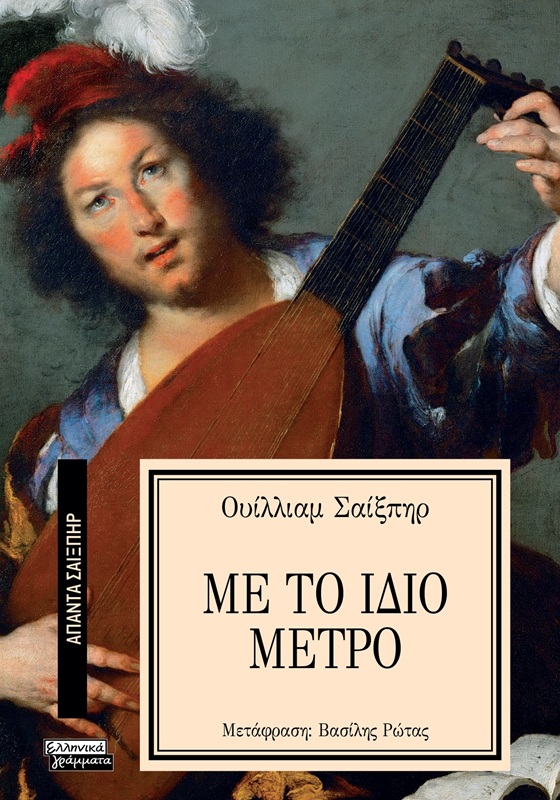
In Measure for Measure (1604-1605), a peculiar work that balances between comic absurdity and melodramatic frenzy, William Shakespeare transports us to Vienna. A Vienna full of dukes, nuns, crazy policemen, prostitutes, and a central story that, in an almost Menanderian way, places an incident of sexual misconduct at the heart of the drama. An unexpectedly timeless work, rarely performed on stage, it is happily translated by Vasilis Rotas, who also provided the material for the Greek Art Theatre-Karolos Koun in its 1968 production. Explaining his working method, the inimitable translator concludes with some instructions for sailors: “The director who wants to stage this play should, we think, take it rather lightly and emphasize just that, how ‘we are all sinners’. That way, the comedy remains a comedy.”
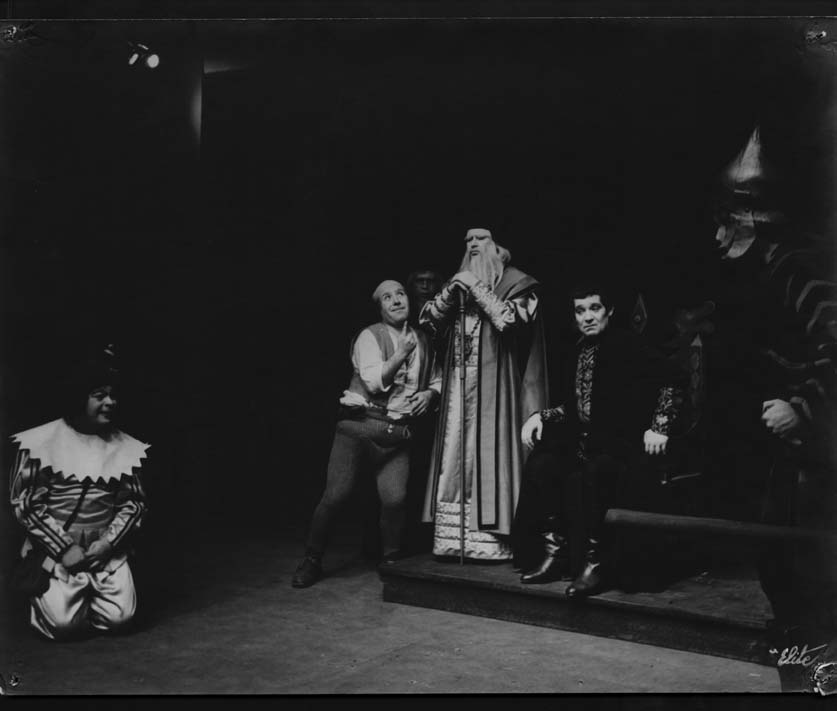
From the Archive of the Greek Art Theatre-Karolos Koun | Measure for Measure, 1968-1969, directed by Karolos Koun
King Lear (translated in Greek by Vasilis Rotas)
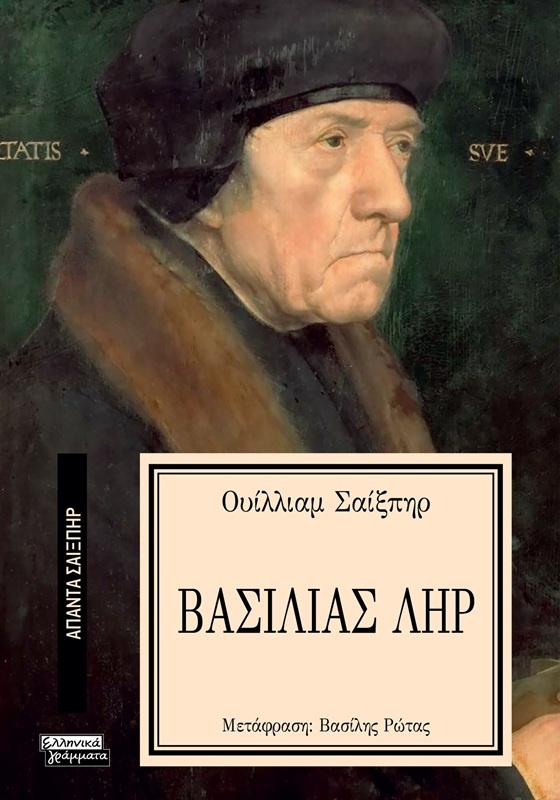
December 26, 1606. Shakespeare’s tragedy King Lear is performed before King Jacob and once again changes the landscape of Elizabethan theater. A bitter work, but perhaps the most compact in terms of the delineation of its main characters, King Lear presents a medieval world in decay and a protagonist whose mind is clouded by his egoism and monomania. Vasilis Rotas characterizes this tragedy—not unjustly—as “one of the most beautiful creations of man,” and indeed, apart from its Aristotelian logic of dramaturgy, the play presents a multitude of characters, from Lear’s three daughters and the iconic madman, to courtiers, dukes, and especially Nature itself as an inevitable common meeting point and realization through its power, of the finiteness of human life and the limited capabilities of our perceptive senses as mortals. “When we are sick in fortune—often the surfeits / Of our own behavior—we make guilty of our disasters / The sun, the moon, and stars, as if we were villains on necessity; / Fools by heavenly compulsion; knaves, / Thieves, and treachers by spherical predominance; / Drunkards, liars, and adulterers by an enforced / Obedience of planetary influence; / And all that we are evil in, by a divine thrusting on. / An admirable evasion of whoremaster man, to lay / His goatish disposition on the charge of a star.”
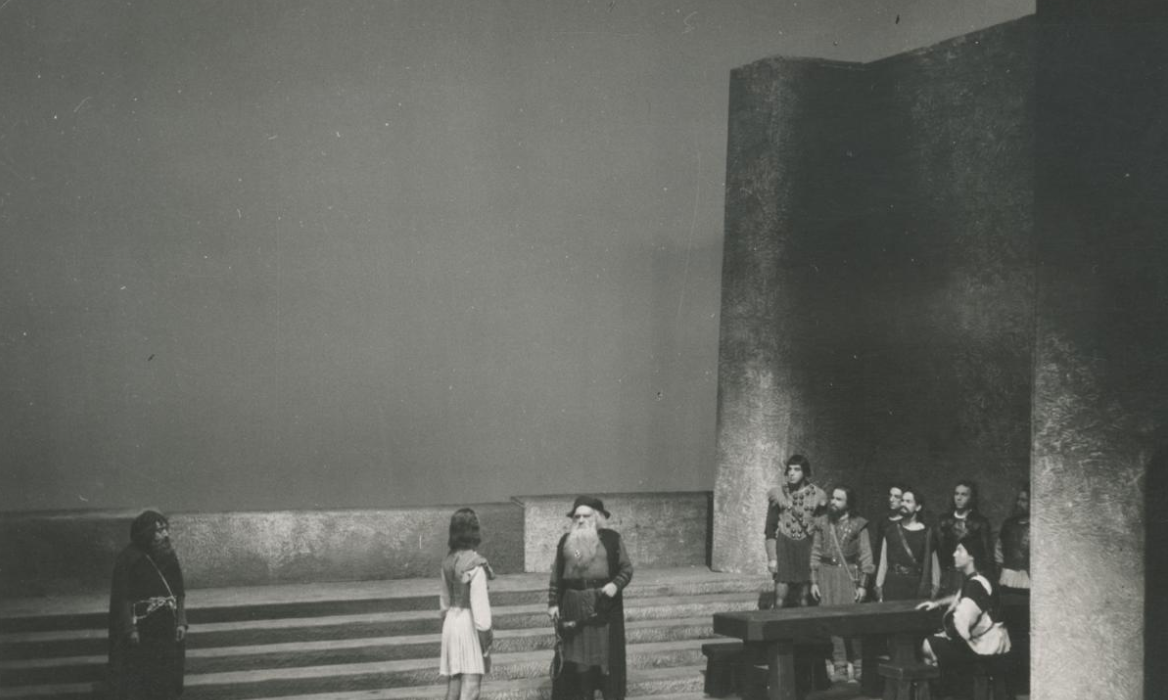
From the National Theatre Greece Archives | King Lear, Main Stage, directed by Dimitris Rontiris, 1938. Emilios Veakis as King Lear
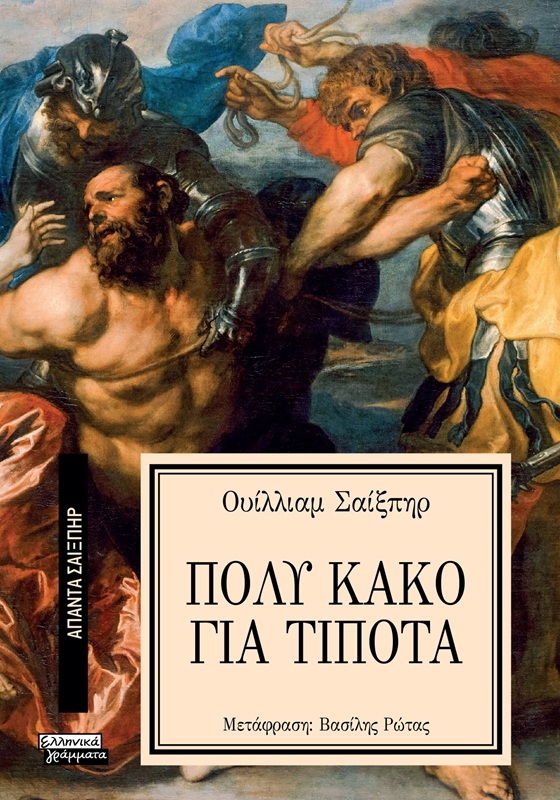
Much Ado About Nothing (translated in Greek by Vasilis Rotas)
William Shakespeare’s comedies reveal, with every reading or performance, a poet of great stature who handles historical dramas and profound psychological portraits (King Henry VI, King Richard III) and to construct from scratch the imaginary worlds of love and popular entertainment, as in Much Ado About Nothing. Comic characters—echoes from the depths of the centuries (Dogberry, Verges)—matchmaking, young misogynists, and misunderstandings tightly intertwined but ready to collapse in the finale, before glorifying divine love and giving the reader the euphoria they so desire in this genre.
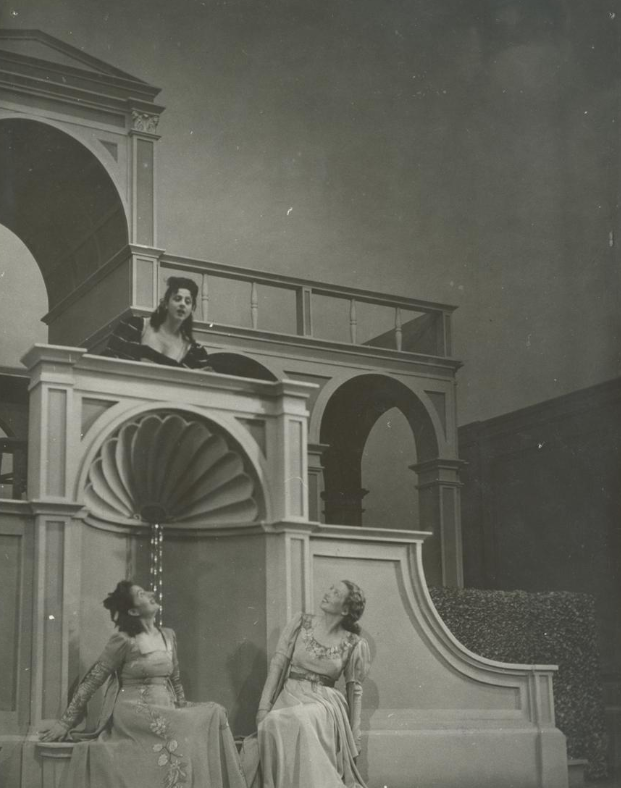
From the National Theatre Greece Archives | Much Ado About Nothing, Main Stage, directed by Dimitris Rontiris, 1946.
“If it prove so, then loving goes by haps: / Some Cupid kills with arrows, some with traps.”







Leave A Comment