Gagosian announces the exhibition Tom Wesselmann: Seascapes, Still Lifes, and Nudes, opening on March 17, 2026. The exhibition presents iconic paintings and drawings from throughout Wesselmann’s career and marks his first solo exhibition in Greece.
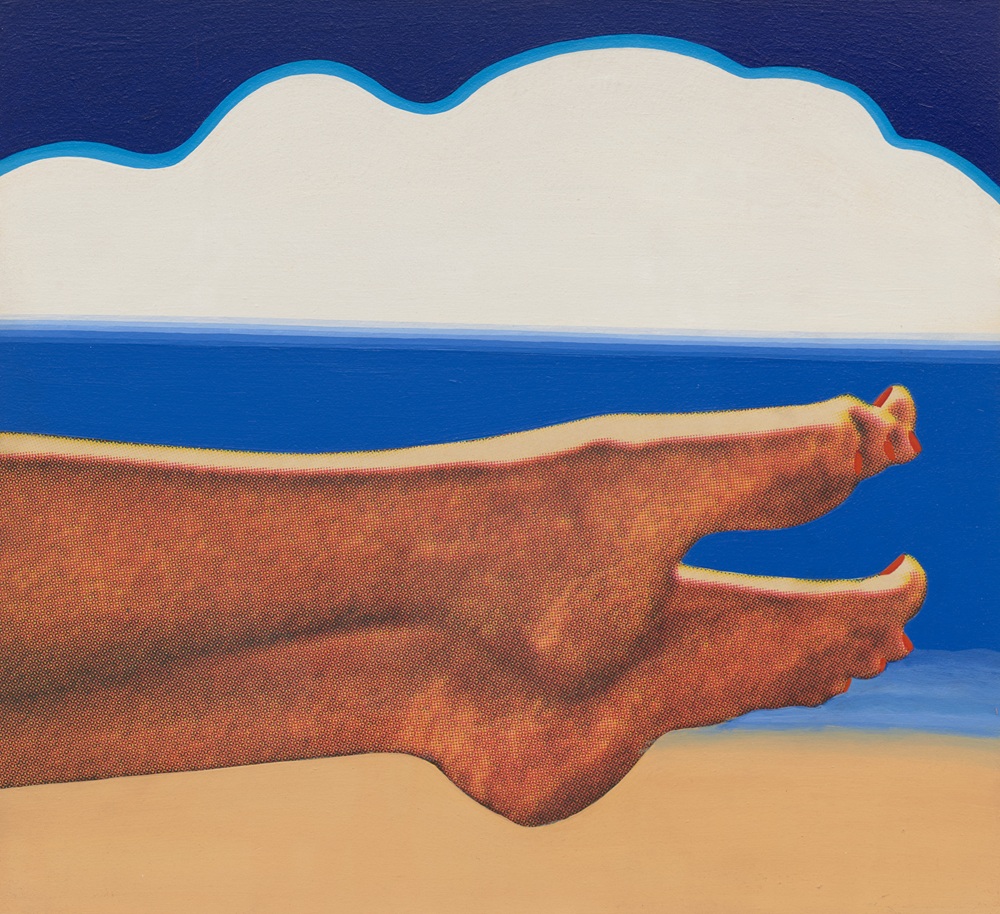
Tom Wesselmann
Little Seascape #3, 1965–68
Mixed media and collage on board
21 3/4 x 23 1/2 inches (55.2 x 59.7 cm)
© The Estate of Tom Wesselmann/Licensed by ARS/VAGA, New York
Photo: Owen Conway
Courtesy Gagosian
A pioneer and maverick, Tom Wesselmann (1931–2004) established himself in the early 1960s as one of the founders of the Pop Art movement. Drawing inspiration from traditional visual genres, he created mixed-media works—interiors, landscapes, nudes, and still lifes—combining the representational painting of modernism with references to mass culture. At a time of intense social and cultural change, when consumption, representation, and sexuality were being radically reexamined, Wesselmann redefined artistic iconography through an abstract, contemporary, and distinctly American lens, guided by what the artist himself called “erotic simplification.”
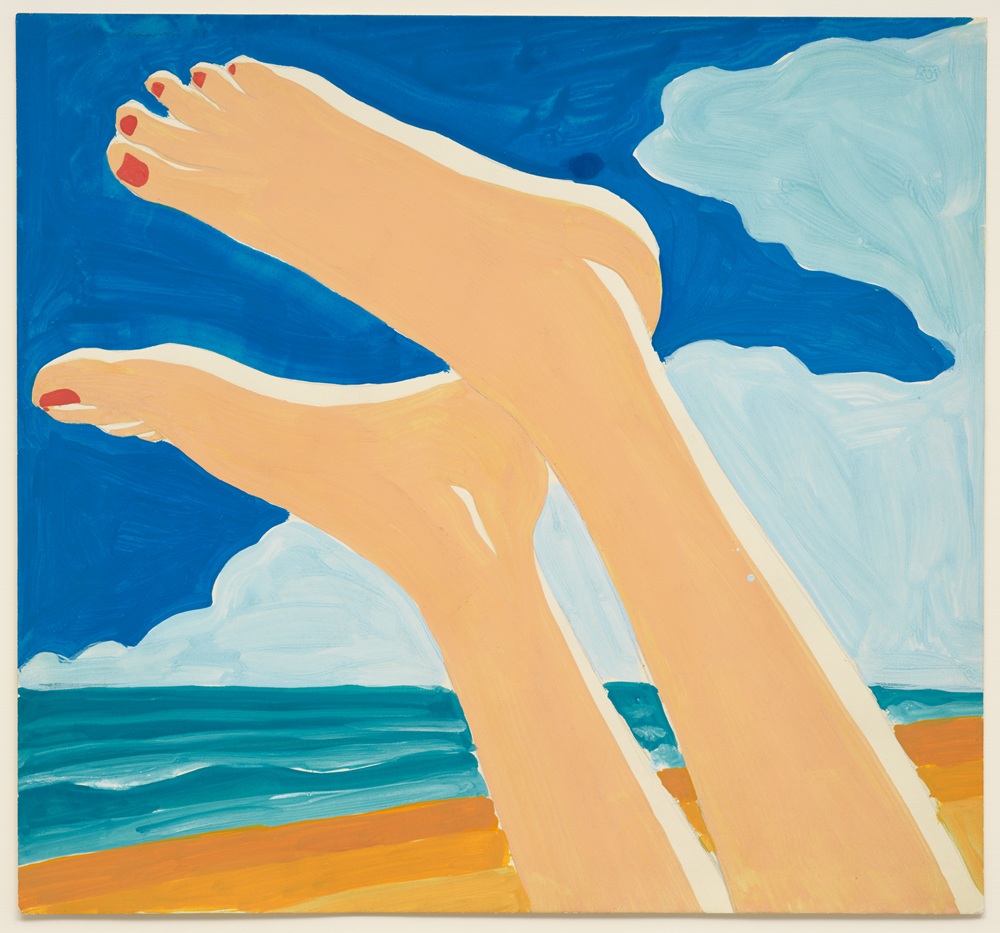
Tom Wesselmann
Seascape (Two Feet), 1965
Pencil and Liquitex on paper
13 3/4 x 14 3/4 inches (34.9 x 37.5 cm)
© The Estate of Tom Wesselmann/Licensed by ARS/VAGA, New York
Photo: Owen Conway
Courtesy Gagosian
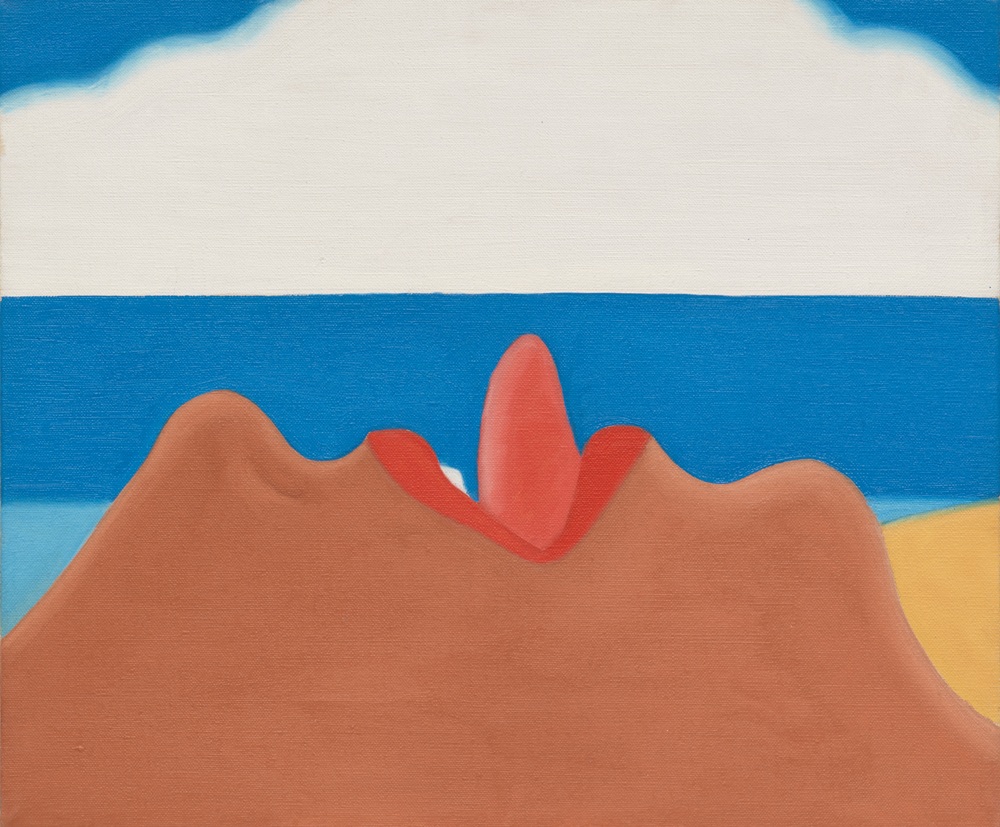
An important work in the exhibition is Great American Nude #1 (1961), which began a series of one hundred numbered works that continued until 1973. A naked female body is reclining in the upper half of the composition; the flat colors, flat forms, and simple curved lines dialogue with the stylistic tradition inaugurated by Henri Matisse. Behind the figure is a collage of hills and a view of the sea, the tricolor of the French flag, and a star pattern reminiscent of the American flag—elements that suggest Wesselmann’s artistic influences. From 1965 onwards, Wesselmann began creating a series of seascapes and collages depicting fragmentary parts of the human body—feet, breasts, or profiles of faces—placed in front of intense bands of color reminiscent of the sky, waves, and sand. The artist continued to explore this theme in works that juxtapose the human body with the natural landscape.
In Seascape #24 (1967–71), the female breast is implied through its absence. “As can happen on a sunny beach,” he wrote, “the flesh is lost in that moment of awareness when the gaze turns to the depths, toward the sun; yet the nipple remains an element of the composition thanks to its color, form, and significance as a focal point.” Other paintings and drawings document Wesselmann’s experimentation with style and form throughout his career.
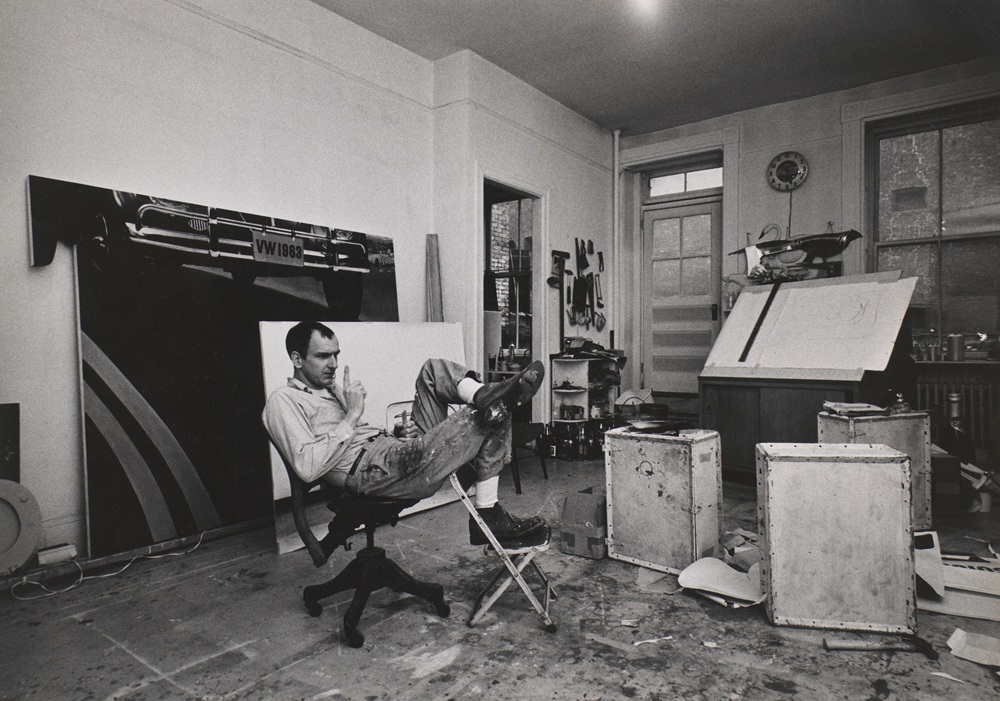
Tom Wesselmann
Seascape (Two Feet), 1965
Pencil and Liquitex on paper
13 3/4 x 14 3/4 inches (34.9 x 37.5 cm)
© The Estate of Tom Wesselmann/Licensed by ARS/VAGA, New York
Photo: Owen Conway
Courtesy Gagosian
Second studio 157 Bleecker Street Studio, 1963-1965
Still Life with Daffodil, Rose and Green Plate (1985) and Country Bouquet with Hibiscus (1989) employ a process in which linear drawings were transformed into interconnected pieces of laser-cut steel, which the artist then painted. Works such as Still Life with Blonde and Two Goldfish (1999) and Blue Nude #8 (2000) testify to his ongoing interest in abstraction, bright color, and the themes of the nude and still life.
TOM WESSELMANN
Seascapes, Still Lifes, and Nudes
Opening: Tuesday, 17 March, 18.00 – 20.00 17 March– 30 May 2026
Anapiron Polemou 22, Athens


Leave A Comment