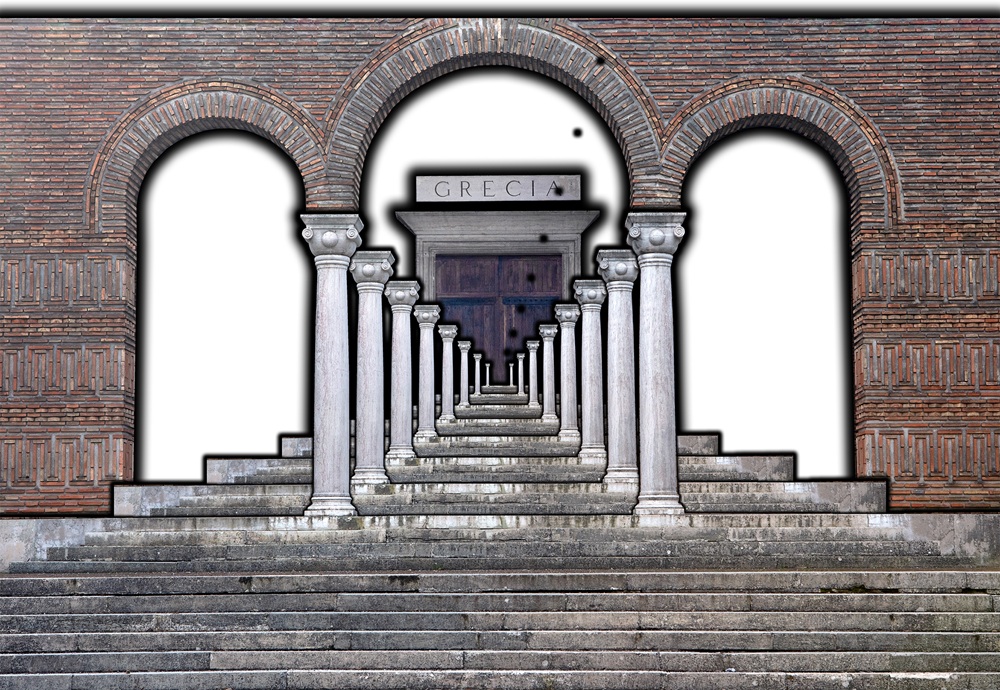
The Greek Pavilion in the Giardini of Venice is transformed into a contemporary Platonic Cave by Andreas Angelidakis, the visual artist and architect representing Greece at the 61st International Art Exhibition – La Biennale di Venezia with the work “Escape Room,” from May 9 to November 22, 2026.
The iconic Platonic allegory is reactivated as an immersive, habitable environment situated in the era of post-truth and the rise of nationalist populism in the work of this internationally acclaimed artist. The curator of the Greek participation is Giorgos Bekirakis.
Andreas Angelidakis notes: “The National Pavilions in the Giardini were designed to convey the political convictions of the governments that built them at that historic juncture. Today they stand as Frozen Fascist and/or Colonial Caves, trapped in an environment that has become synonymous with the exploration of political choices and their consequences, as well as their subsequent transformation into art. Each Pavilion constitutes a mechanism of truth—just like the mechanisms in Plato’s allegory of the cave—which today evokes a Phantasmagoria of Global Trumpism: if we replace the Cave with the Screen, what remains is every manifestation of MAGA (Make America Great Again) as a staging of fascism in the year 2025.”
The Greek Pavilion, as an escape room, embodies a reality that resembles a game, while on a symbolic level it embodies the paradox of a building attempting to escape from its “self” and thus from its own history. Through a deep dive into its own past, the Greek Pavilion encounters a “selfie taken in the bathroom,” where the mirror is forever stuck in Year Zero (1934): the year the Nazis began their persecution of homosexuals, Hitler and Mussolini met for the first time in Venice in the aftermath of their sweeping electoral victories, and in the same year, the Greek and Austrian Pavilions were inaugurated.
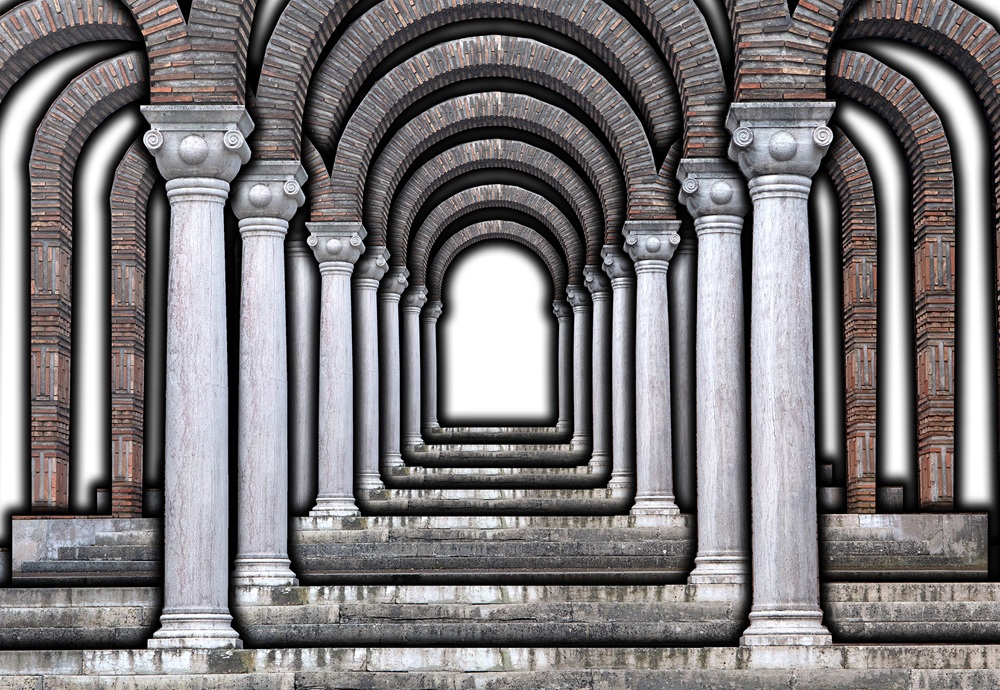
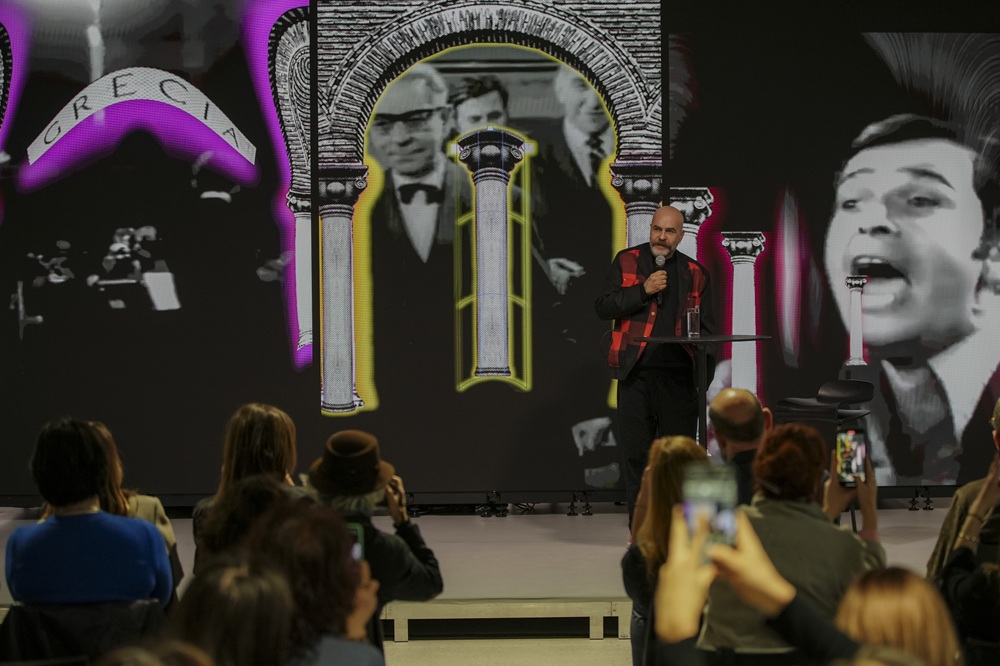
“By exploring the ‘life’ of the kiosk in relation to the political climate of the era in which it was born—namely, fascism—Angelidakis traces historical developments in Greece and Italy through small stories and anecdotes connected to the space,” notes Giorgos Bekirakis, curator of the Greek Pavilion “Escape Room.” “ The Pavilion is transformed into a capsule where historical versions of Greekness are placed alongside its urban, lived expressions, reminding us of the tension between reality and cultural fixations. GRECIA is transformed into a psychoanalytic subject; a metaphor that reflects the spectrum of Greekness and its interdependence with authoritarianism. Its “queer” body narrates the persistent enigmas between the past and contemporary versions of European identity. “Angelidakis’s sculptures function as fragmentary elements, as traces that suggest the multiplicities that constitute a nationality and the stories that never became official History,” the curator adds.
Andreas Angelidakis’s visual installations often approach history through shifts, distortions, subvertions, and humor, creating alternative frameworks for interpreting reality, identity, and cultural memory. As a narrative vehicle, fiction lies firmly at the core of his methodology, while through the dynamics of queering and the destabilization of the mechanisms that define the concepts of truth and authenticity, he explores the architecture of our perception, of culture in the making, and of selfhood.
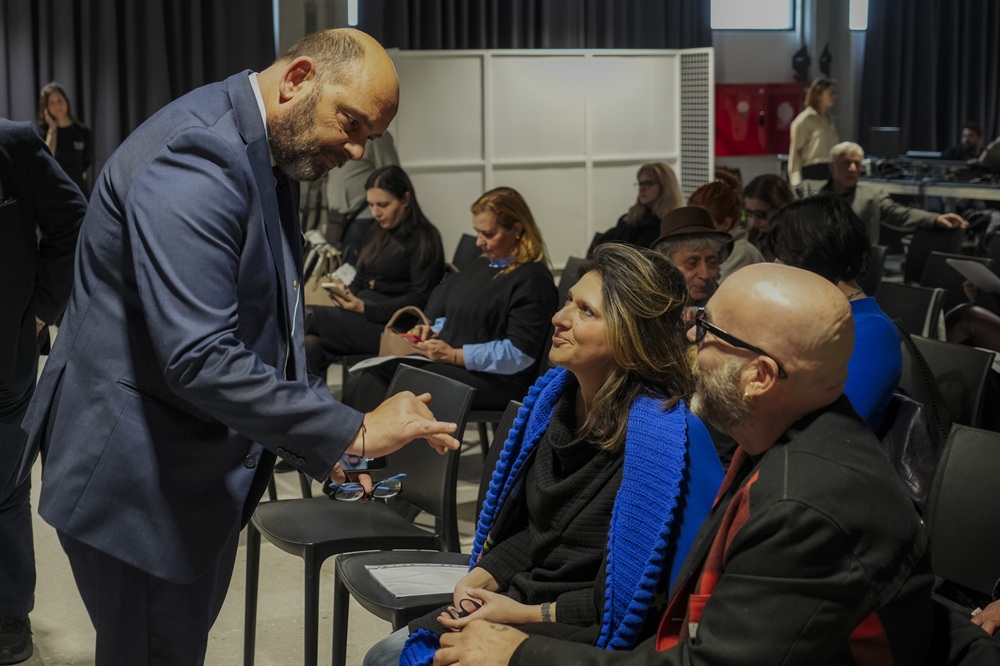
Iasonas Fotilas, Deputy Minister of Culture responsible for Contemporary Culture, states: “I believe deeply in art’s right to provoke. To challenge. To disturb. As a substantive act, it is the only one that can still open cracks where everything appears smooth and orderly. The conflict that matters is not self-referential; it is not the fulfillment of an obligation within the framework of an expected repertoire of protest. It is the conflict that sees something concrete, true, and urgent, and refuses to reconcile with it uncritically. That points out, that overturns, that awakens. The Greek participation in the 61st International Art Exhibition – La Biennale di Venezia operates in this spirit. It comes to pose questions, boldly, precisely, with art that has something to say and knows why it says it.”
Fani Tsatsaia, General Director of the Thessaloniki Metropolitan Organization of Visual Arts Museums (MOMUS), notes: “The Greek Pavilion in the Giardini, at the 61st International Art Exhibition – La Biennale di Venezia, has a long and particularly significant history, with a continuous presence since the 1930s. For more than nine decades, it has hosted significant moments in contemporary Greek artistic production, and today it serves as a venue for presenting works that engage with international artistic trends and contemporary social, political, and cultural issues. For 2026, Greece is represented by artist Andreas Angelidakis with the installation “Escape Room,” an interactive experiential space that will be presented in the specially designed interior of the Greek Pavilion, curated by Giorgos Bekirakis. MOMUS actively supports the preparation and implementation of the Greek presence, strengthening the international visibility of contemporary Greek creativity.
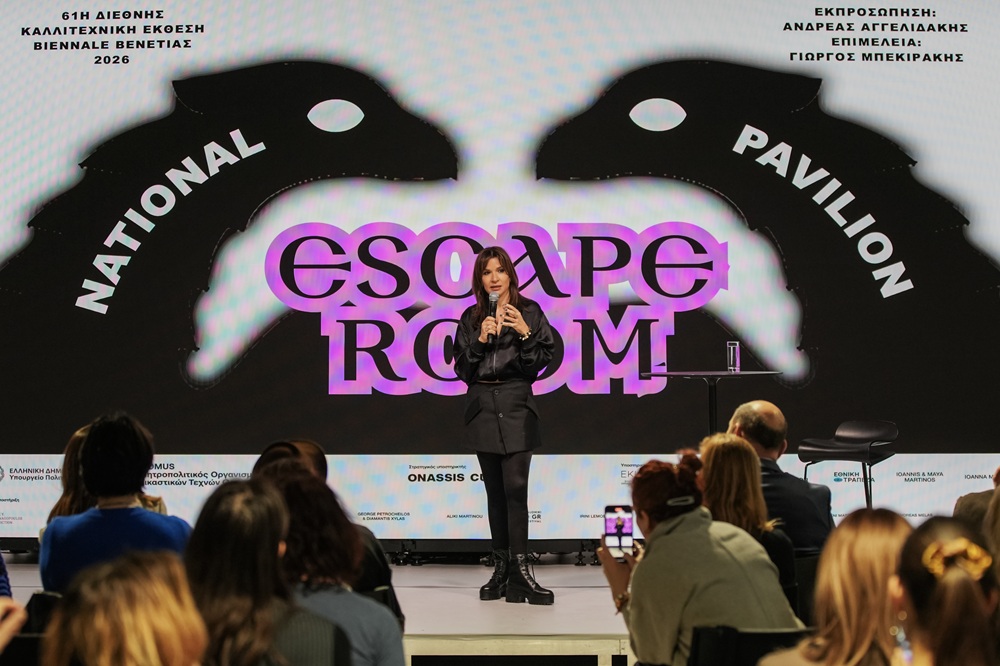
Aphrodite Panagiotakou, Artistic Director and member of the Board of Directors of the Onassis Foundation, states: “Our presence as a strategic supporter of ‘Escape Room’ stems from our long-standing collaboration with Andreas Angelidakis, a creator who reimagines Greek identity and plays with stereotypes, crafting a world where pretentiousness is absent and the essence emerges. With this particular project, national participation plays with its very definition. What does “national” mean? And how do we participate in it? We are eagerly awaiting this project, especially now that nationalism and populism are sweeping through modern democracies.”



Leave A Comment