Maria Papandreou, professor in the School of Early Childhood Education at Aristotle University of Thessaloniki (AUTH), stands out as a leading voice in contemporary pedagogical approaches for young children. She holds a PhD in Education from the University of Patras (2002) and directs the postgraduate program “Educational Sciences: Research and Praxis in Changing Learning Environments,” focusing on participatory learning, interactions in formal, non-formal, and informal settings, and strengthening children’s autonomy and resilience.
With an emphasis on the role of the “educator-researcher,” Ms. Papandreou views education as a dynamic process that learns from contact with society and moves beyond gender stereotypes. Her personal journey, from Science to kindergarten teacher and researcher, reflects her deep love for fostering critical thinking, the quality that shapes autonomous and well-rounded citizens. Days of Art in Greece welcomes her in an interview dedicated to her work and her educational vision.
Days of Art in Greece: Mrs. Papandreou, your field of expertise concerns contemporary pedagogical approaches and preschool education programs. What does “contemporary approaches” mean today? How different is the way a child is introduced to educational issues today?
Maria Papandreou: My field of expertise encompasses two interrelated components of early childhood education. The first component involves studying theoretical approaches to teaching and learning at an early age and how these approaches interact with today’s children and their needs. The second component focuses on early childhood curricula that connect theory with practice in everyday classroom settings and in formal and non-formal educational environments for young children. This is why the title includes the word ‘contemporary’. In other words, it examines learning and teaching for young children in today’s social contexts.
Participatory approaches, for example, view the learning process as participation in various sociocultural situations and settings. These can be formal, such as the classroom; non-formal, such as a museum; or informal, such as the family environment. These approaches treat preschool-aged children as active subjects with rights, diverse experiences, abilities and knowledge. They emphasise the meaningful and active participation of each child in the learning process, aiming to empower all students by strengthening their autonomy through their actions. I should mention that these ideas are not entirely new. They were formulated by great thinkers and educators such as Dewey and Malaguzzi, but have never been widely applied in education, particularly in our country. These ideas remain relevant and are fuelled by new research. By monitoring the rapid changes in today’s world, this research contributes to the development of new theories and approaches that address the contemporary challenges facing our children and their education.
“For example, children’s rights are increasingly violated every day by wars, migration, trafficking, child labour and many other factors. These issues have been of particular concern in the field of education in recent years. Alongside the influence of the United Nations Convention on the Rights of the Child, research has continuously been fuelled, influencing curricula and gradually shaping everyday classroom practice.”
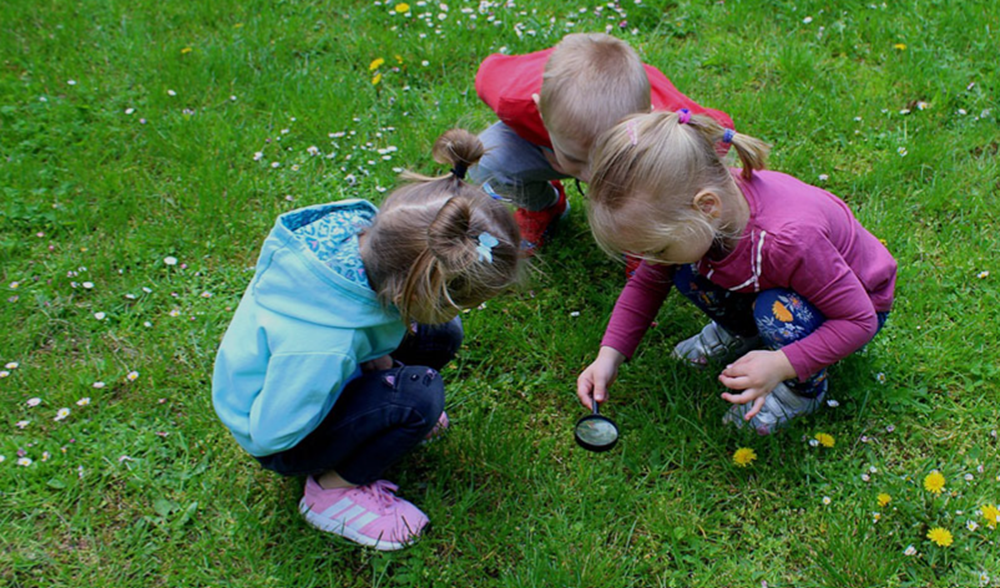
Here’s another example. Today, we live in a risk-averse society driven by fear. This makes us adults fear for our children even more and overprotect them, without allowing them to make mistakes, try things out and experience disappointment. As a result, we limit their playtime and, more generally, their ability to act independently. Ultimately, however, this prevents them from developing valuable life skills such as autonomy, self-regulation and resilience. Contemporary research in this field therefore examines the benefits to children of living and being educated in environments that encourage autonomous action and the taking and evaluation of various risks. This approach is reflected in modern educational methods such as forest schools, loose parts and adventure play.
D.A.: When did the turning point occur? Have we found the modern pace?
M.P.: Based on what I said earlier, I would argue that there is no turning point in education. The world is constantly changing and education must keep up with these changes.
However, it is very difficult to implement contemporary practices in the classroom. To achieve this, we must understand that education, at every level, must be a dynamic process that closely follows the rapid changes taking place in our lives. If we consider that today’s schools in our country are very similar to those my generation attended — and I’m talking about people over 50 — then we realise that, at least in Greece, schools remain largely stagnant. This school system has nothing to offer the younger generation. Schools must ‘learn’ and change alongside society. However, this is a deeply institutional and political issue.
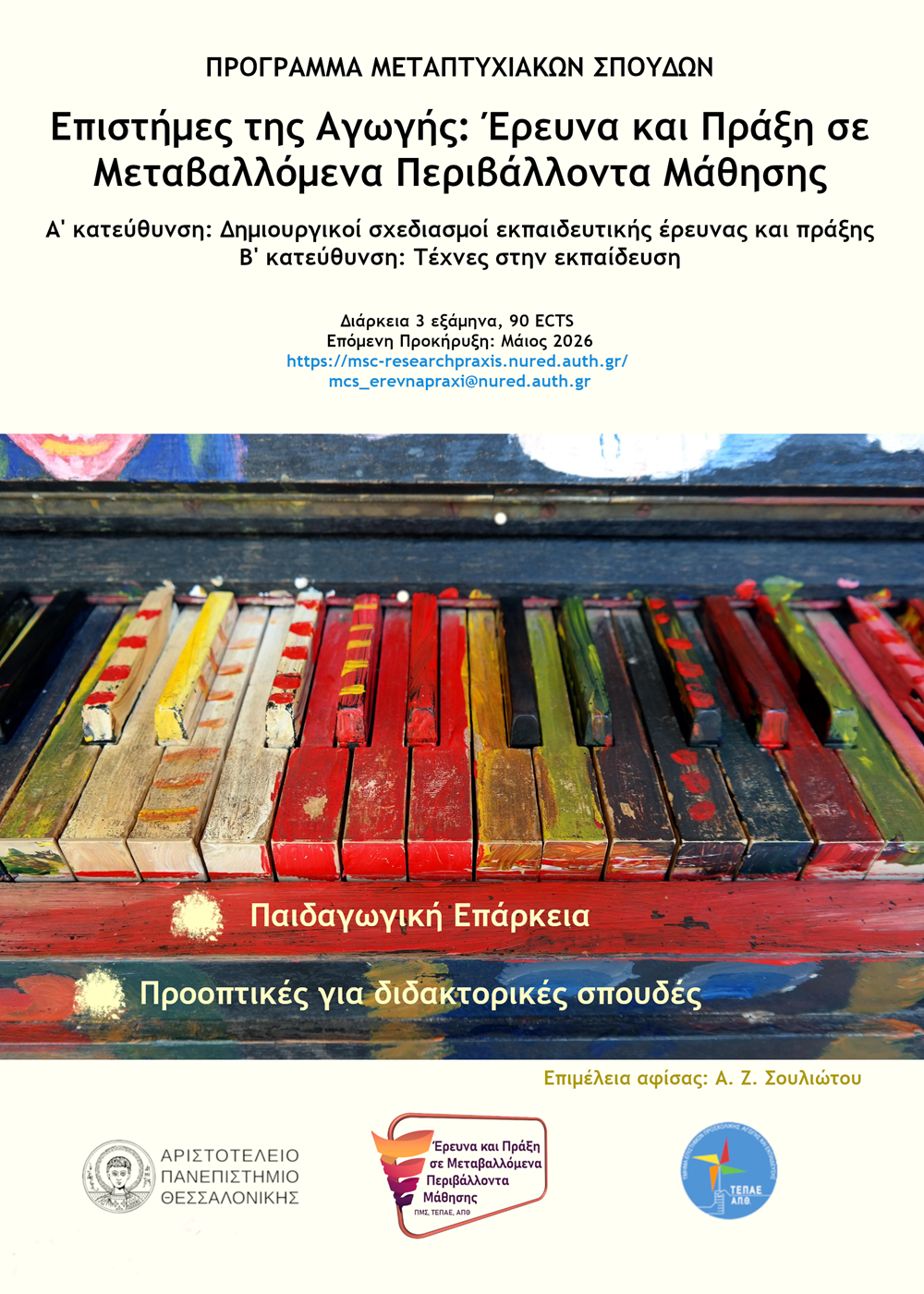
D.A.: You run the master’s program (MSc): “Educational Sciences: Research and Praxis in Changing Learning Environments.” What does “changing learning environments” mean? Who is it aimed at?
M.P.: I hope the previous examples have given you a good idea of how learning environments are changing. This MSc programme was designed with the understanding that rapid changes in science, politics, technology, the economy and culture make it imperative to constantly redefine education as a whole.
“For this reason, the programme’s main objective is to equip current and future educators, as well as other professionals working with children and education more broadly, with the tools needed to manage changes flexibly and creatively, and to develop a transformative perspective in their profession and in education research. Thus, the aim of this programme is to provide specialised knowledge that will enable participants to gain a deeper understanding of the changes and contemporary theoretical approaches that study these changes, upgrading their knowledge and skills.”
Our students are constantly challenged to reflect on traditional, established and outdated ideas and assumptions relating to today’s children. They are encouraged to critically examine contemporary teaching approaches and learning practices, so that they can design and implement appropriate programmes, actions and research in various formal and informal teaching and learning contexts. Our students strive to respond to the real and current needs of today’s children.
D.A.: How important do you consider the retraining of active teachers and kindergarten teachers to be for a new educational strategy in public education?
M.P.: Everyone now accepts the importance of continuous and lifelong learning. This is not disputed. It is an essential daily practice, not just attending a training or postgraduate programme. Teachers seek continuous professional development. However, they are now more demanding and know exactly what they want: programmes that address the issues they face in their classrooms today. They are not looking for general training.
“That is why we believe this MSc programme has been designed flexibly to respond to such needs. This programme also offers a realistic connection to contemporary research and seeks to educate not only those who wish to progress to doctoral studies, but also educators in modern methods of educational research. Our ambition with this programme is to contribute to the development of the ‘educator-researcher’ identity, because progress and development in education must come from the grassroots, especially in societies like ours where institutions and politics have largely failed.”
I would also like to point out something that you may consider self-evident, but which is probably not widely recognised today. Although this MSc programme is delivered in a ‘traditional’ way, it does not have conservative characteristics. What do I mean? Contrary to the current trend of distance learning programmes, we insist on face-to-face teaching with a relatively small number of students, aiming to provide our students with an experiential education to a large extent. Although distance learning is easier and more convenient for teachers and students alike, we consciously insist on face-to-face teaching in this postgraduate programme, as even the most specialised distance learning practices cannot replace face-to-face communication and the development of close relationships between students and between students and teachers.
D.A.: Your educational programs include the concept of inclusion. Which population groups are you referring to exactly?
M.P.: In education, the concept of inclusion refers to creating an environment in which every child, regardless of their characteristics, has equal opportunities to participate, access resources and develop. It is not just about tolerance, but active acceptance and eliminating any barriers.
While inclusion affects society as a whole, the focus is mainly on groups that have historically or socially experienced exclusion, discrimination or marginalisation. These groups include ethnic and racial minorities (such as refugees, immigrants and Roma families), the LGBTQI+ community, families with low living standards who struggle to make ends meet, people with special learning needs or disabilities, and women and the elderly.
Thus, inclusion is now used in a variety of contexts and to a large extent. Unfortunately, however, this use is often superficial, intended to lend prestige and a democratic dimension to various choices. As a result, it has begun to resemble yet another slogan in the field of education.
‘The truth is that our society lacks the infrastructure, institutions and commitment to achieve genuine inclusion in education. This is precisely because there is no unified strategy to effectively strengthen, control and defend institutions, mechanisms and infrastructure.’
We must educate teachers and future researchers on these issues because diversity in classrooms is nothing new, but we can no longer simply turn a blind eye to it. It demands our attention, urging us to take action. Therefore, this dimension could not be missing from a modern postgraduate programme. The good news is that our students are particularly interested in this field of research and study. I would say that young people today are much more sensitive to these issues and treat diversity with much greater respect.
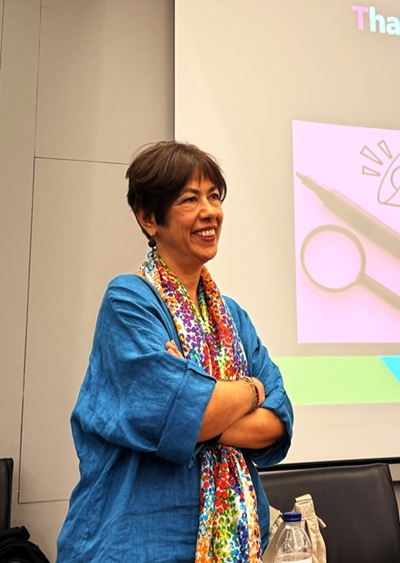
Maria Papandreou
D.A.: We would like to conclude by asking you about your own personal journey in the field of education. Why did you choose this very special and demanding scientific field?
M.P.: My decision to pursue a career in education was both conscious and intuitive, although it took some time to mature. I should mention that I did not begin my studies intending to become a teacher. I was a good student with a passion for Science an Mathematics, and I was easily accepted into one of the best schools for Science. However, I quickly realised that this wasn’t the path I wanted to take. So, my real search for ‘what I want to do in life’ started late. Somewhat intuitively, I chose to study Early Childhood Education. From there, inspired by certain individuals, I developed a passion for research in this field and continued my studies in France and later in Greece. It was my love for research in the field of education that led me to pursue higher education.
D.A.: Is gender a decisive factor in the teaching profession?
M.P.: The teaching profession has long been subject to gender stereotypes. Society generally considers women to be better suited to teaching, particularly at preschool and elementary school level. This is why women dominate the education sector, becoming more dominant the lower down the system we go (e.g. preschool). For example, even today, we often hear that teaching is a good choice for a woman for various reasons that seriously underestimate the female gender, such as the idea that a woman will be able to “take care of the house and children”, etc. For instance, it is said that a woman can “take care of the house and children”, and that she does not need to become a doctor or an engineer. Conversely, becoming a teacher is not considered an attractive prospect for men because it is unambiguously considered a low-prestige profession.
This approach undermines education and teachers themselves, who unfortunately do not enjoy much esteem in society. This is worse the lower down the education system we go. However, a society that thinks this way is deeply conservative and certainly does not recognise the paramount importance of education in addressing many of the problems that plague us daily, both personally and globally.
As far as I am concerned, gender and the stereotypes mentioned above had no bearing on my choices or my connection to education. Fortunately, I grew up in a family that never embraced such ideas.
D.A.: Which books, works of art, and your family environment influenced your choice? What is your vision? How much can a child’s early education play a decisive role in shaping a mature and well-rounded citizen?
M.P.: My family did not influence me to pursue this profession in any particular way; quite the opposite, in fact. Instead, my family and wider circle taught me to love knowledge and books, to ask questions, to think critically and seek answers for myself, to be fair and creative, to be independent and stand on my own two feet, and above all to pursue my dreams. I would argue that education should play this role from a child’s earliest years.
“A school’s purpose is not to fill children’s heads with information. School has an important role to play in encouraging children to think independently. To achieve this, all children must enjoy themselves at school and have fun while finding and pursuing their dreams.”

Leave A Comment