
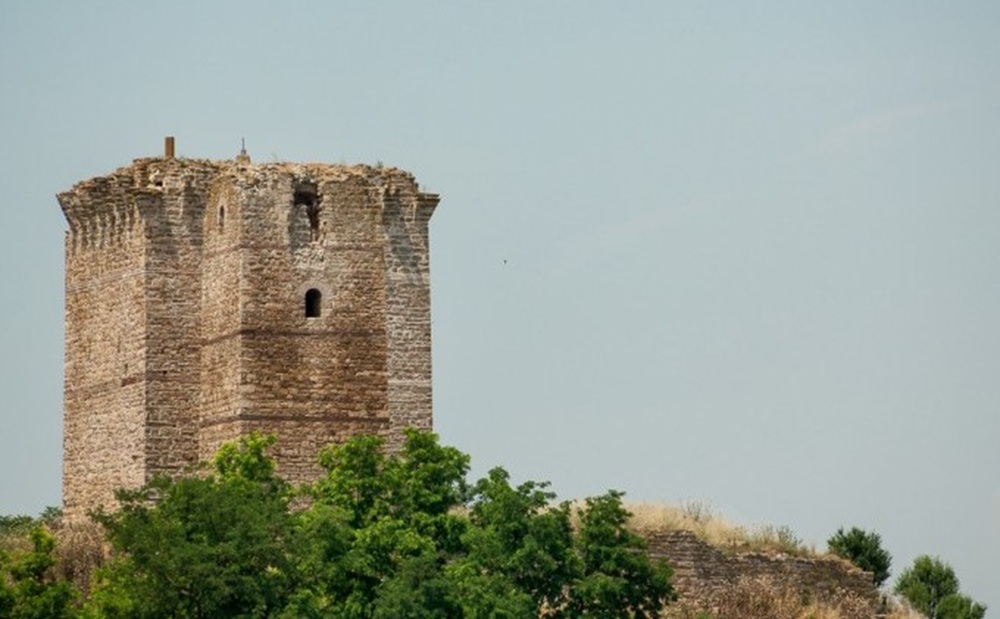
Minister of Culture Lina Mendoni conducted an on-site inspection at the Castle of Pythion, at the northernmost point of the Evros River, one of the most important and impressive monuments of the Byzantine period in Greece.
The fortification complex stands out for its monumental scale, the grandeur of its architecture, and its innovative construction techniques, serving as an exceptional testament to the high level of architectural and defensive expertise of the period. The Castle of Pythion, known in Byzantine times as Empythion, dominates a strategic location very close to the Evros River valley. Its construction dates back to the early 14th century and is associated with John VI Kantakouzenos, who used it as his personal residence, a refuge, and a treasury. The history of the monument is linked to one of the most critical periods of the Byzantine Empire, as it is set against the turbulent political backdrop of dynastic rivalries and civil war during that era.
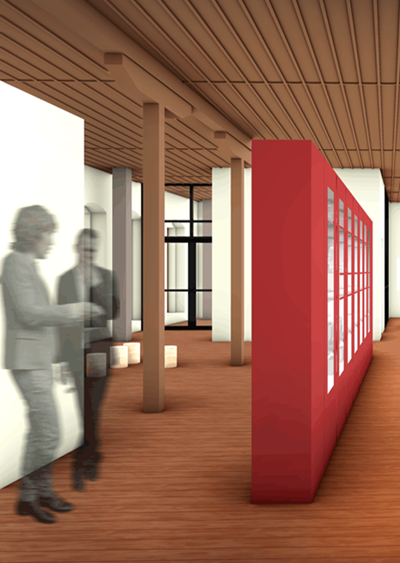
Lina Mendoni asked the relevant Archaeological Service to prepare a roadmap for the interventions by the end of this year, noting that particular emphasis should be placed on the interpretive presentation of the monument through a digital exhibition tailored to the building’s capabilities and the access restrictions on its upper floors. The use of modern technological capabilities can contribute to the creation of a suitable exhibition environment that highlights the Byzantine presence in the region.
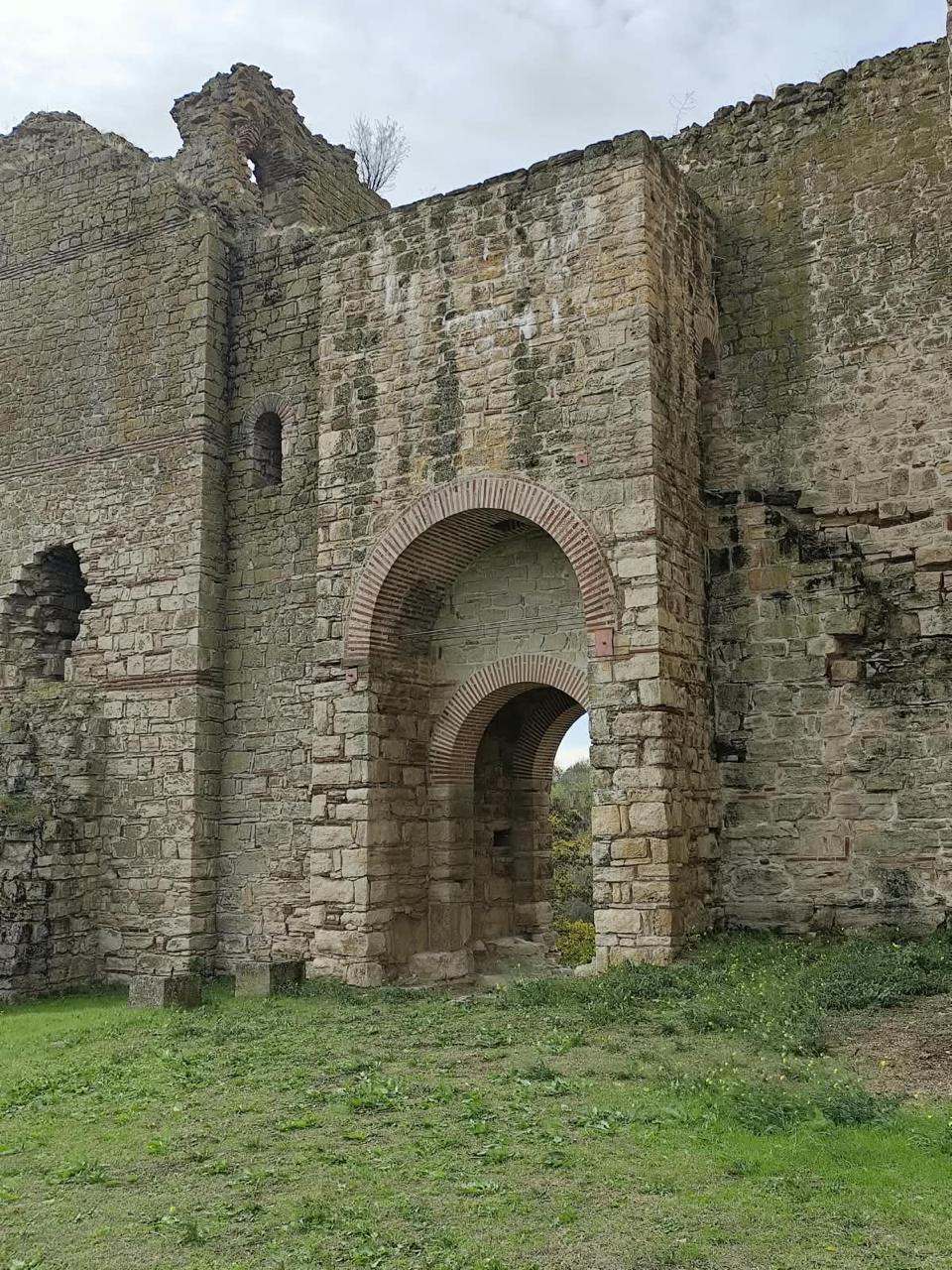
The monumental complex is distinguished by its complex fortification layout, featuring two outer walls and two imposing towers within its perimeter. The larger tower, with a nearly square floor plan, sides measuring approximately 15 meters, and three stories, was intended primarily as a residence. The second tower, with four levels and a surviving height of approximately 20 meters, reinforced the complex’s defensive function.
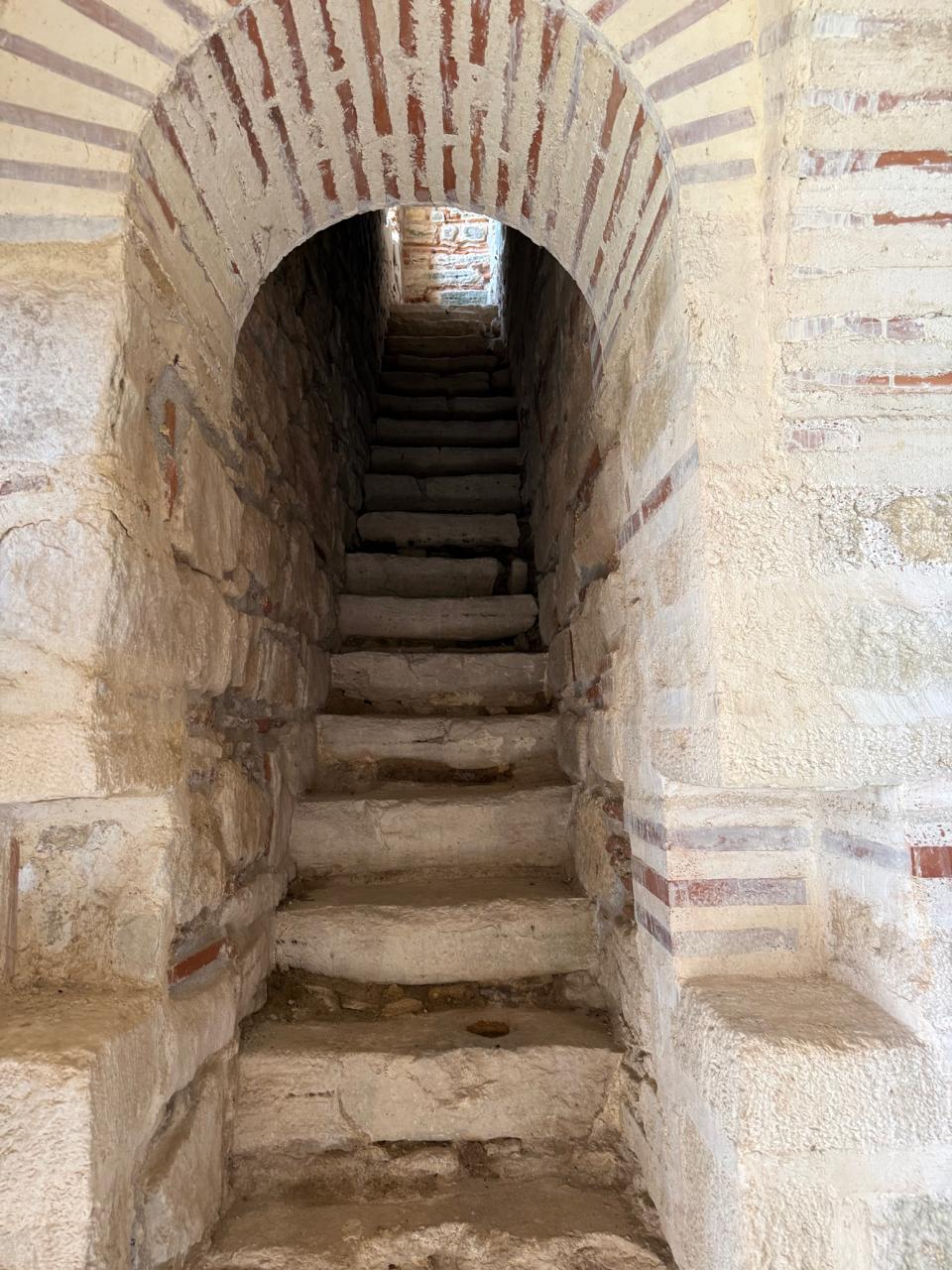
Its architectural significance lies in the unique combination of defensive and residential functions, as well as in the construction techniques that were advanced for the time. The vaulted spaces, the mudbrick vaulting, the distinctive configuration of the towers, and the stone machicolations—which allowed for the defense of the walls from above—attest to a complex and highly sophisticated design. The incorporation of architectural elements linked to Western fortification influences gives the monument a unique place in the evolution of Byzantine military architecture.
Today, the castle maintains a vibrant connection with the local community and the cultural life of Evros. During the summer months, the Evros Ephorate of Antiquities utilizes the site to host cultural events, giving the public the opportunity to explore its historical surroundings and experience the unique atmosphere of this significant Byzantine monument.
As part of her visit, the Minister also visited the cenotaph of Saint Cyril VI in Pythio, Didymoteicho. Patriarch Cyril VI of Constantinople was a native of the region and was martyred by hanging in Adrianople in 1821, at the outset of the Greek Revolution. According to local tradition, his body was thrown into the Evros River and carried by the current to the Pythio area, where it was found by village resident Christos Argyriou, who secretly buried it. The cenotaph and the shrine erected in his honor serve as a site of historical remembrance and tribute to the holy martyr, keeping alive his connection to his place of origin.
Accompanying the Minister of Culture during the on-site inspection were the Secretary General of the Ministry of Culture, Olympia Vikato; the Member of Parliament for Evros, Anastasios Dimoschakis; the Director of the Evros Ephorate of Antiquities, Domna Terzopoulou; the President of the Pythio Community, George Saridis, as well as officials from the Ministry of Culture.


Leave A Comment