What constellations and myths does the sky over Zakynthos hold? With strong student participation, an enthusiastic response, and successful creative outcomes, the educational program in Zakynthos concluded last week, thanks to a generous grant from the Ministry of Culture and Sports.
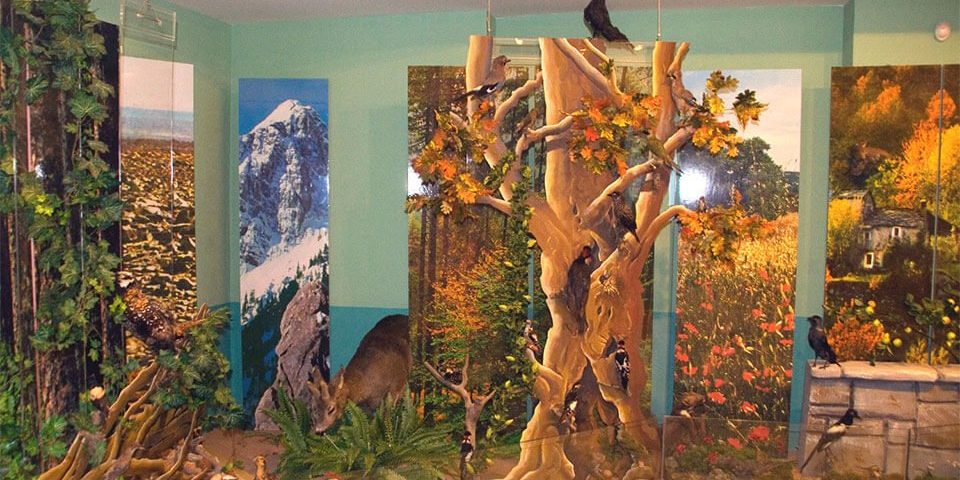
The educational event “Starry Night: A Journey from Poulia to Avgerinos,” which took place from October 19 to 23, 2026, at the Helmi Natural History Museum in Agia Maria Faya, in collaboration with the Ministry of Culture as part of the “Creative Greece 2026.”
The educational programs that took place attracted 370 elementary school students from local schools, offering a unique opportunity to explore the science of astronomy, art, mythology, and the related local cultural traditions. The response from the educational community was particularly encouraging, while the children’s active participation and the creative storytelling workshops held highlighted the quality of the hands-on educational activities at the Museum’s three levels.
Creativity, Interaction, and Active Participation
The experiences of students and teachers participating in the three educational programs were particularly positive. These programs combined the telling of the traditional Zakynthian fairy tale “Poulia and Avgerinos,” printmaking, and visual arts with an exploration of constellations, meteors, and ancient Greek mythology: The students responded with interest and enthusiasm to the activities, actively participating in role-playing games, art workshops, experiments with engraving techniques, as well as printing constellations and discovery activities. Of particular importance was the spirit of cooperation that developed, as the children had the opportunity to exchange ideas, work together, and freely express their imagination.
The creative projects and visual artworks created by museum educator Z. Nikitaki, the founder of the Meteorite Museum T. Theodosiou, painter and printmaker S. Androutsakis, and the president of the Helmis Museum, museologist K. Stoupathis—were successfully completed, confirming that an experiential approach to learning can enhance students’ participation, initiative, and creative expression in an era when the “ephemeral” nature of images and technology falls short. At the same time, direct contact with authentic meteorite specimens from the Meteorite Museum’s collection during a public exhibition gave the children the opportunity to connect theoretical knowledge with observation and personal experience, and to see how various art forms can highlight humanity’s place in celestial phenomena.
A Meaningful Educational Experience
The evaluation of the initiative highlights the importance of the museum’s connection with the school community and of utilizing cultural heritage as a learning tool within the local community. The convergence of Zakynthian tradition with astronomy, mythology and ancient fiction, geology, printmaking, and modern artificial intelligence technologies—as well as handicrafts—created a multisensory educational environment. A series of creative workshops on contemporary culture in which knowledge was presented in an accessible, enjoyable, and creative way.
Another positive aspect is that the programs, lasting 90+ minutes rather than the standard 40 minutes, are designed to cater to students of different ages and educational needs, emphasizing participation outside of school: the cultivation of imagination and collaborative learning, as the children created figures, engaged in painting and printmaking, named their creations after contemporary heroes, played a treasure hunt, and explored ancient mythology through the lens of astronomy. The variety of activities allowed the children to explore the same theme through different forms of expression, reflection on experiences and emotions, and the discovery of scientific facts or artistic skills.



Leave A Comment