

By Panos Liakos
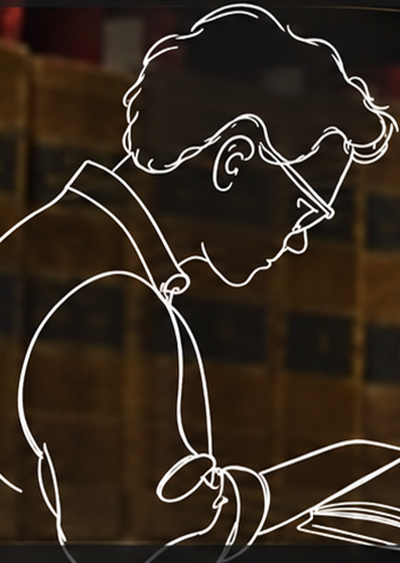
The Swedish Academy awarded the 2026 Nobel Prize in Literature to Anne Carson, one of the most influential female voices in contemporary poetry and essay writing.
At this globally critical crossroads for the future of the humanities, this particular award brings to the forefront a body of work—that of Carson—in which her background in Classics coexists with a need to preserve and creatively rework fragments of the works of Sappho, Stesichorus, and Euripides.
Indeed, among other comments, the Swedish Academy described Ann Carson’s work as “bold” and “inventive,” while noting that her “playful dialogue” with the classical tradition “has created new forms for contemporary literature.”
Born in 1950 in Toronto, Canada, Anne Carson has taught classics and comparative literature at New York University, while her writing transcends and subverts genres, blurring the lines between poetry, the essay, and the novel. With an eye for detail and an appreciation for the simplicity that makes up the big picture of life, the Nobel laureate reaffirms in her most recent statements her views on the role of poetry in this fast-paced era:
“Poetry is probably more useful than prose right now because it’s faster, and everybody is in a hurry. So basically I think it’s good because it’s brief. Except Homer. Homer’s not brief.”
For readers interested in revisiting her work, or encountering it for the first time, Patakis publishes her poetry collection Short Talks (bilingual edition, introduction and translation by Ηaris Vlavianos, 2013), The Beauty of the Husband: A Fictional Essay in 29 Tangos (translated by Eftychia Panagiotou and Dimitris Athinakis, 2023), and Autobiography of Red: A Novel in Verse (translated by Ηaris Vlavianos, 2026). In addition, Doma Editions publishes her important essay Eros the Bittersweet (translated by Androniki Meletlidou), which explores the paradox of love in the classical tradition. In this work, Carson reflects on love as an “experience of self-knowledge,” while, in the face of the futile struggle to possess the beloved, she poses the question: “Who ever desires what is not gone?”





Leave A Comment