
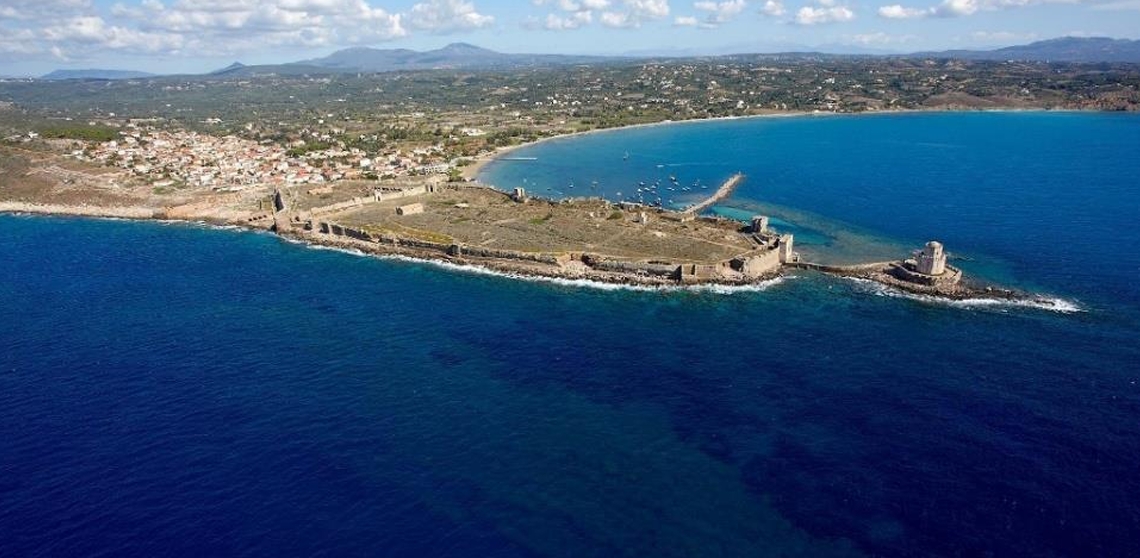
The Ministry of Culture is proceeding with the construction of the coastal protection project for the western seawall of Methoni Castle, one of the most important fortification complexes in Greece
The western sea wall dates to the 13th century, with later repairs beginning in the 15th century and continuing thereafter. It is a characteristic example of medieval fortification architecture. It features straight walls and towers and runs along the natural coastline. Its continuous exposure to intense wave action has caused significant damage, such as erosion and disintegration of stones, disruption of the core of the stonework, and cracks and collapses in sections of the masonry. Five major craters and areas of collapse have formed in the wall; some of these are the result of bombings during World War II, while others were caused by a combination of heavy rainfall and wave action.
The coastal engineering study calls for the construction of a continuous, reinforced breakwater approximately 485 m long, which will be located at a distance from the shore and at a suitable depth to reduce the intensity of the waves before they strike the wall. The vulnerable section of the fortifications, between the northernmost and southernmost towers, is protected. A key design parameter is the protection of the monument without altering the seaside character and appearance of the Castle. The project is designed entirely below sea level, avoiding excavations along the immediate seaward perimeter of the walls so as not to compromise the existing condition of the stonework.
During the preparation of the environmental study, particular emphasis was placed on protecting the natural environment. The project is located within a protected area of the Natura 2000 network, in the marine area of the Methoni Strait. The Special Ecological Assessment was an integral part of the environmental study. Specifically, the projects are planned to be located outside the seabed areas where seagrass beds of the protected species Posidonia oceanica have been recorded, thereby ensuring that direct impacts on one of the most important ecosystems in the marine area are avoided.


Leave A Comment