
By Panos Liakos
Classicist, Translator, Film Historian
Western civilization’s enduring need to return to the The Odyssey demonstrates, on the one hand, its leading position within the literary canon, but also those timeless thematic themes and questions that we all ponder from time to time: what is “nostos”? Why are we captivated by the danger of “adventure”? Is there, after all, someone waiting for us back home?
The adventures of Odysseus have captivated humanity since the time of Homer—with rhapsodists setting the rhythm by “beating” their staffs at banquets and gatherings—through Renaissance painting, modern Greek poetry (C. P. Cavafy), and the rebirth of literature with James Joyce’s modernism (“Ulysses”).
More recently, English translations of The Odyssey shot to the top of the bestseller lists in the U.S. and the U.K., following the release of Christopher Nolan’s cinematic adaptation of the Homeric epic. The British filmmaker achieved what is considered impossible in screenwriting: remaining faithful to the three-part structure of the Odyssey (Telemachy—Apologos, or Apologoi—Mnesterophonia), masterfully rendering the episodes of the Cyclops and the Laestrygonians while simultaneously attempting to delve into the psychology of this highly complex—and therefore always modern—hero.

A still from the recent film adaptation of the Homeric epic.
Comparative literature has often focused on “secret paths” that link seminal texts of humanity as communicating vessels. If the Odyssey is the oldest epic narrative to which, according to BBC research, we refer time and again, then the much older “Epic of Gilgamesh,” from the region of Babylonia, is considered by scholars to be the oldest surviving literary work. Born from the heart of Mesopotamia, this epic poem was composed in the Akkadian language, and its final form—in 12 tablets—is believed to have taken shape through an oral tradition.
However, the similarities between The Odyssey and The Epic of Gilgamesh do not seem to end there. The classical philologist Martin Litchfield West, in his work The East Face of Helicon: West Asiatic Elements in Greek Poetry and Myth (1997), highlights the title of “king” held by the two protagonists of the epics, as well as their journeys that take them to the ends of the earth. In a significant distinction between the two heroes, the Sumerian king seeks to attain immortality, while the Bronze Age hero strives to return to his homeland, Ithaca, after the fall of Troy.

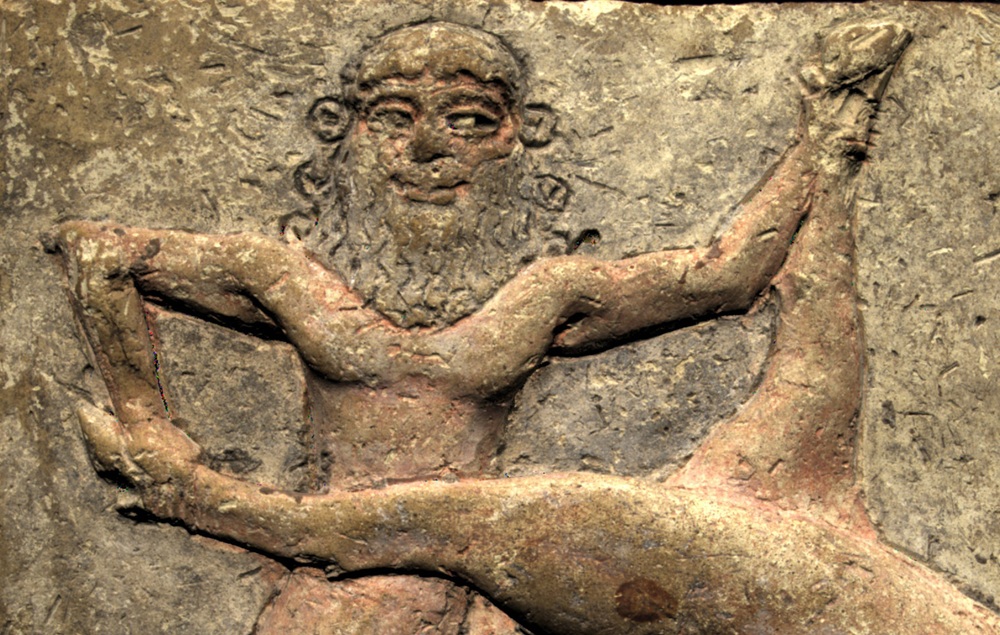
A Possible portrayal of Gilgamesh Public Domain, Jastrow (2006), https://commons.wikimedia.org/w/index.php?curid=866865
Even more striking is the convergence of the two epics in the episode depicting the descent into the underworld. In the Odyssey, Laertes’ son does not set out of his own accord toward the supernatural, but follows the instructions of Circe, a sorceress situated at the edge of the world and associated with solar and symbolic references (as the offspring of the Sun God). Similarly, in the “Epic of Gilgamesh,” the hero receives guidance from the goddess Siduri to reach the land of the dead, passing through an underground passage beneath Mount Mashu, which is also associated with the rising sun. The similarity extends not only to the geography of the myth but also to the narrative mechanism itself: the hero needs a transcendent female presence as a “bridge” to pass from the world of the living to that of knowledge, trial, and, ultimately, an encounter with the limits of fate.
Some scholars have suggested that such motifs may indicate not merely parallel narrative solutions, but also possible influences of the Mesopotamian epic tradition on Homeric poetry. Others, however, are more cautious and prefer to speak of common archetypes and cross-cultural patterns that reappear in different cultures. In any case, a comparison of the two works highlights the indomitable power of great myths to engage in dialogue with one another, even when separated by centuries, languages, and… empires.
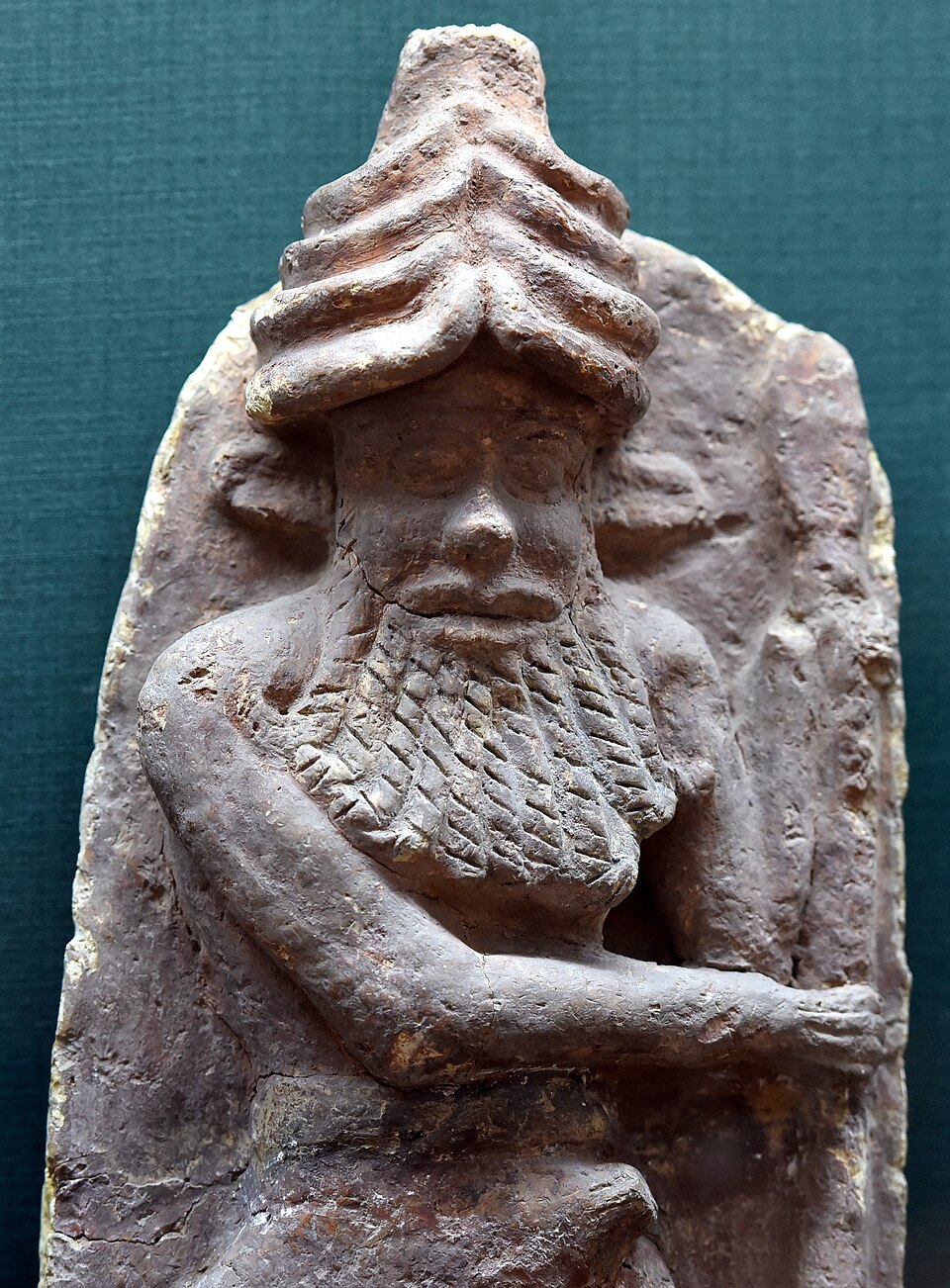
Enkidu, Gilgamesh’s companion on his adventures Wikimedia Commons: Author Osama Shukir Muhammed Amin FRCP(Glasg)
The Odyssey and the Epic of Gilgamesh have, after all, both attained that “beauty” (as Nikos Gatsos would describe it) that few have even managed to catch a glimpse of: eternity!
Selected Bibliography
West, Martin L. (1997). The East Face of Helicon: West Asiatic Elements in Greek Poetry and Myth. Clarendon Press.
Anderson, Graham (2000). Fairytale in the Ancient World. Routledge.
Konstantinopoulos, Vasileios-L. (2026). “Current Note: The Odyssey: From Mythology to Semiotics.” Published on the website of the “Parnassos” Literary Society https://lsparnas.gr/epikairo-simeioma-odysseia-apo-ti-mythologia-sti-simeiologia/




Leave A Comment