
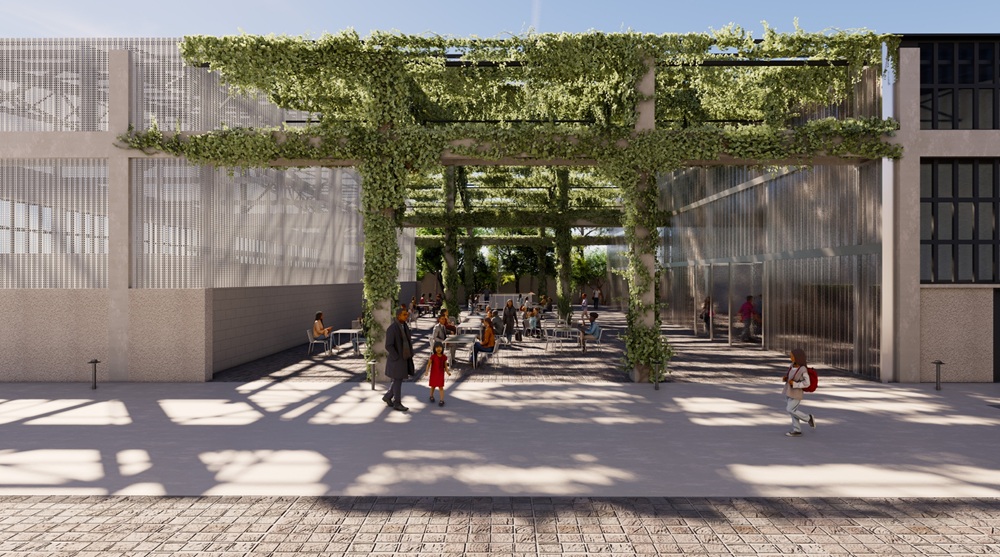
The industrial shell of the former Tsausoglou Factory, located at Peiraios 260 now owned by the Ministry of Culture and known as Building C, is being transformed into a contemporary theater space, while preserving and highlighting its authenticity, historical identity, and unique character.
The positive opinion issued by the Central Council for Modern Monuments regarding the study for the restoration and adaptive reuse of a section of the site, the landscaping of the outdoor spaces, and the necessary mechanical infrastructure, marks a milestone in the Ministry of Culture’s broader plan for the comprehensive revitalization of Peiraios 260 as an open, accessible, and vibrant cultural destination in the capital.
Peiraios 260, a complex of ten independent industrial buildings—of which Buildings A, B, and D are designated as historic monuments—is a landmark of 20th-century industrial development. The preparation of all necessary studies for the restoration and adaptive reuse of the former “Tsaousoglou” metalworking and furniture manufacturing industrial complex, covering an area of 28 stremmata and with existing buildings totaling 27,000 square meters, is being carried out under a donation agreement worth 1,000,000 euros signed by the Ministry of Culture and Piraeus Bank.
Most of the buildings are constructed of reinforced concrete with metal elements and have undergone successive expansions or modifications to meet the complex’s operational needs. Building C, designated in part as a modern monument, is a characteristic example of postwar Greek industrial architecture. It is the third building in the complex, which, together with Building A, formed the factory’s facade facing Sp. Polykratis Street. Constructed in two phases, it comprises a single-level ground floor space and a later mezzanine, which serves the needs of the Hellenic Festival. Functionally, it is connected to Building D, serving as backstage areas, offices, and auxiliary spaces, which dates from 1971–1974 and is configured as a theater stage and audience gathering area. Buildings E, G, and H also serve the activities of the Greek Festival.
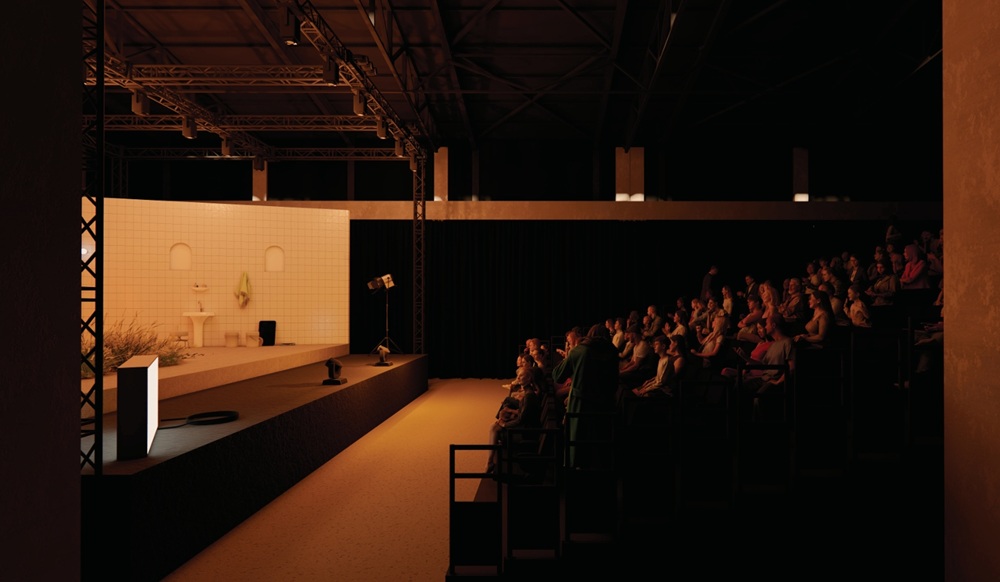
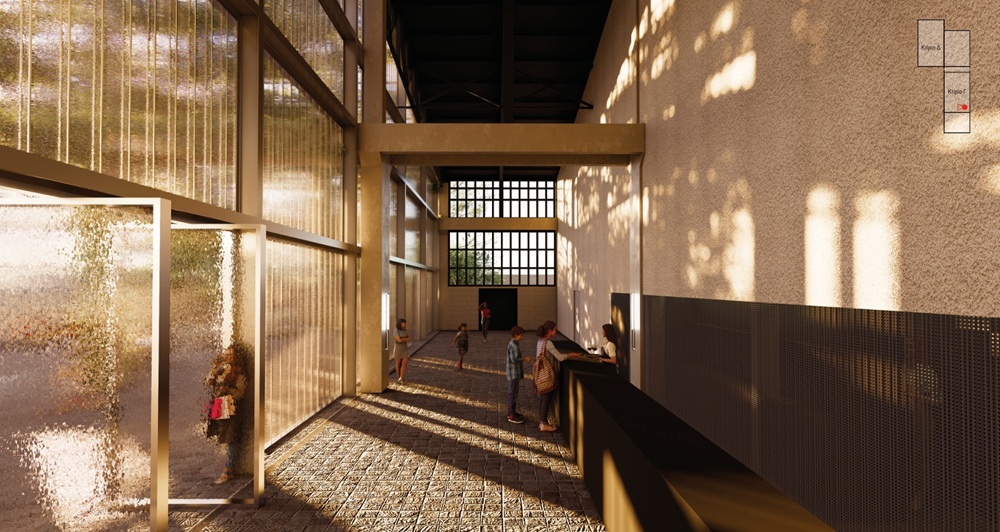
This study is based on the approved master plan for the comprehensive redevelopment of the Peiraios 260 complex. It calls for the redesign of outdoor spaces, improved accessibility, enhanced green spaces and biodiversity, and the implementation of sustainable energy solutions. The proposed project preserves and highlights the site’s historical and industrial identity while transforming Building C into a modern and fully functional theater space. The design calls for the creation of a modern stage, measuring 698 square meters and seating 342 people, complete with reception areas, dressing rooms, offices, storage areas, and all the necessary support infrastructure to meet the needs of medium-scale productions. The architectural design is based on preserving and highlighting the building’s historical and industrial identity, combined with the necessary modernization interventions. The new structures are designed with respect for the existing building envelope; they are clearly distinguished from the historic structure and utilize contemporary materials, while preserving the industrial character of the monument.
A key architectural intervention is the creation of a vertical garden in a section of Building C near Polykratous Street, which has not been designated as a historic monument. The goal is the gradual development of climbing vegetation, creating a three-dimensional, shaded outdoor space suitable for relaxation, events, or activities. This strategy aligns with contemporary urban design practices and addresses the lack of open spaces and greenery in urban centers. The study also includes significant structural restoration work, as inspections revealed extensive damage resulting from long-term use and the natural aging of the building. At the same time, the project calls for a complete energy and electromechanical modernization, including the creation of a central energy center to serve the entire complex, the utilization of renewable energy sources, infrastructure for the collection and reuse of stormwater, as well as modern fire protection and water supply systems.



Leave A Comment