
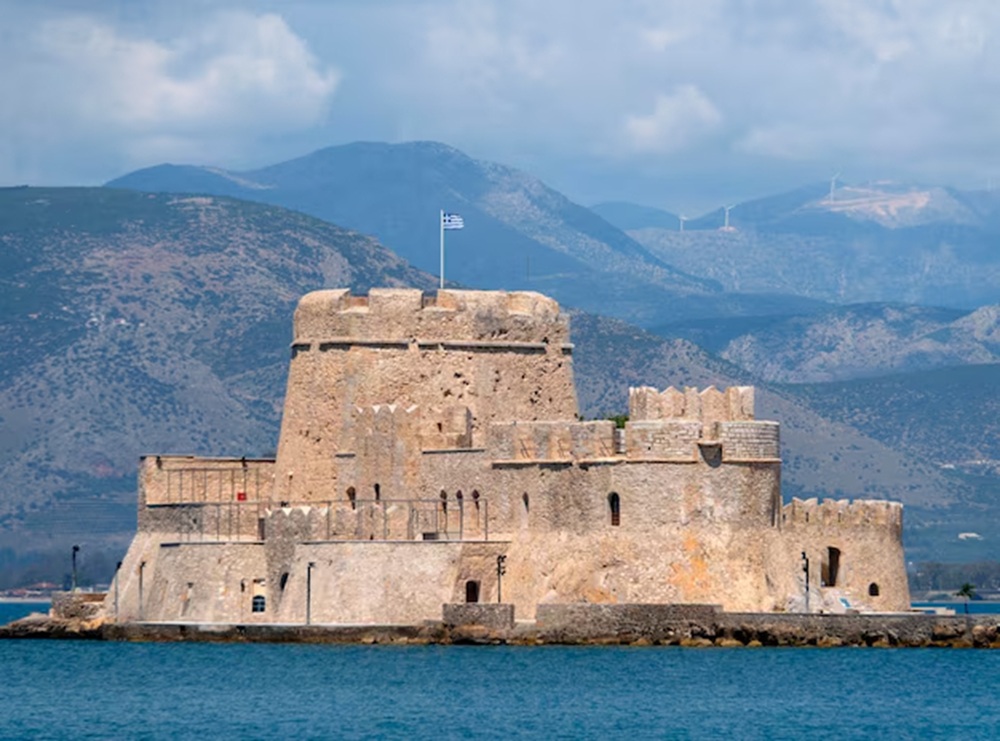
This paper examines Ottoman military strategy in the eighteenth-century Peloponnese through the lens of fortress-towns and their role in frontier governance. Rather than treating fortresses solely as static defensive structures, it approaches them as active sites of military organization, administrative control, logistical coordination, and imperial reconstruction after the Ottoman reconquest of the Morea in 1715. Focusing on key fortress-towns such as Navarino, Nafplio, Methoni, Korinth, Koroni, and Patras, it explores how the Ottoman state maintained authority through repair works, garrisoning, provisioning, labor mobilization, and the management of surrounding rural populations. It argues that Ottoman strategy in the Peloponnese depended not only on monumental fortifications, but also on the continuous adaptation of fortress landscapes to shifting military, political, and local conditions.
ΒΙΟ
Dilek Özkan Pantazis is a historian of the Ottoman Empire specializing in Ottoman borderlands, fortresses, and the political and environmental history of the Eastern Mediterranean. She received her PhD from the National and Kapodistrian University of Athens, with a dissertation on the first Ottoman-Greek borderlands in Thessaly. She recently completed a Marie Skłodowska-Curie postdoctoral fellowship at The Cyprus Institute, where she developed a project on Ottoman sea borders and fortresses in the Eastern Mediterranean. She is currently a contract lecturer in the Department of Primary Education at the National and Kapodistrian University of Athens, where she teaches Modern Greek History.






Leave A Comment