The Ministry of Culture is moving forward with the modernization of the Archaeological Museum in Vathi, Samos, based on the final architectural, structural, and electromechanical designs, following the unanimous positive recommendation of the Ministry of Culture and Council of Museums.
The project involves renovation, redesign to ensure universal accessibility, and the re-exhibition of the collection of significant antiquities. Funding for the project has been secured through its inclusion in the Regional Operational Program “North Aegean” – NSRF 2021–2027.
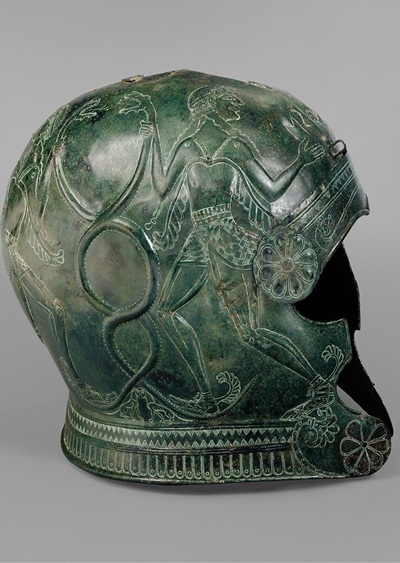
The Minister of Culture, Lina Mendoni, stated: “The Archaeological Museum in Vathi, Samos, houses a collection of exceptionally significant finds from the excavations at the Heraion, the sanctuary of Hera, at the site of her birth and her union with Zeus. The archaeological site of Heraion is included on the UNESCO World Heritage List. The modernization of the Museum in Vathi is part of the Ministry of Culture’s broader plan to highlight and promote Samos’s cultural heritage. This includes restoration and upgrading projects at significant archaeological sites and monuments, as well as the island’s museum infrastructure, to ensure they meet contemporary museum standards. In this context, the Vathi Museum, which occupies two adjacent buildings, is being fully modernized, made accessible to people with mobility impairments and disabilities, upgraded for energy efficiency, and its surrounding area is being redesigned. At the same time, its valuable collections are being re-exhibited to highlight the immense wealth of the Sanctuary of Hera, which includes some of the rarest examples of Archaic art.”
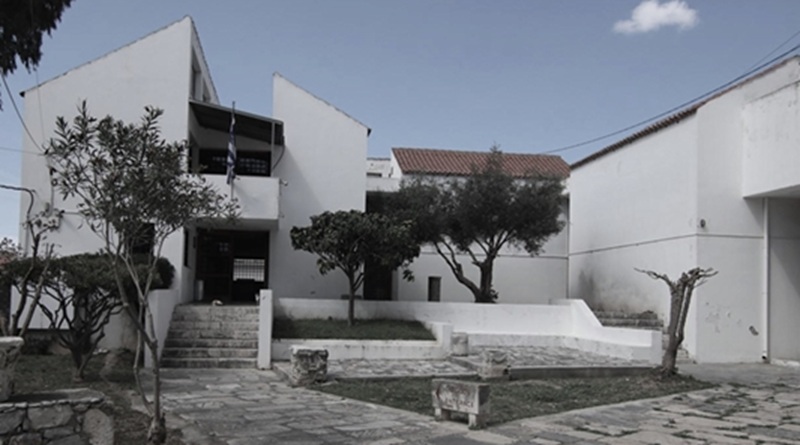
The Vathi Archaeological Museum is housed in a complex of two separate, adjacent buildings: the historic Paschaleio, dating from the early 20th century, and the newer building from the 1980s, on a plot of approximately 1,200 square meters near City Hall and the Municipal Garden. The Paschaleio is a two-story building with a rectangular floor plan, featuring simple neoclassical elements and a symmetrical interior layout with a central foyer and exhibition halls on each floor. The newer building is also two-story with a basement. Between the two buildings lies the Museum’s outdoor area, landscaped with terraces and plantings.
In the restoration of the buildings, the Museum’s spaces and functions, as well as their size and layout, were determined based on the approved architectural plan, taking into account the constraints imposed by the building structures themselves. The total net floor area of the spaces is 1,026.32 square meters, of which 571.86 square meters are allocated to spaces in the newer building. This building will house exhibition spaces, public service and administrative areas, laboratories, storage and common areas, and electrical and mechanical installations. At the Paschaleio, an external elevator for people with disabilities and a metal emergency staircase are being added. The exhibition spaces are retained, while administrative spaces are added on the upper floor. In the surrounding area, ramps for people with disabilities are being constructed, the courtyard and entrance are being redesigned, landscaping projects are being implemented, and the functional and aesthetic integration of the museum space is being ensured. Regarding structural reinforcement, work is planned to provide seismic and structural reinforcement for the building, given that the building sustained limited damage from the 2020 earthquake.


Leave A Comment