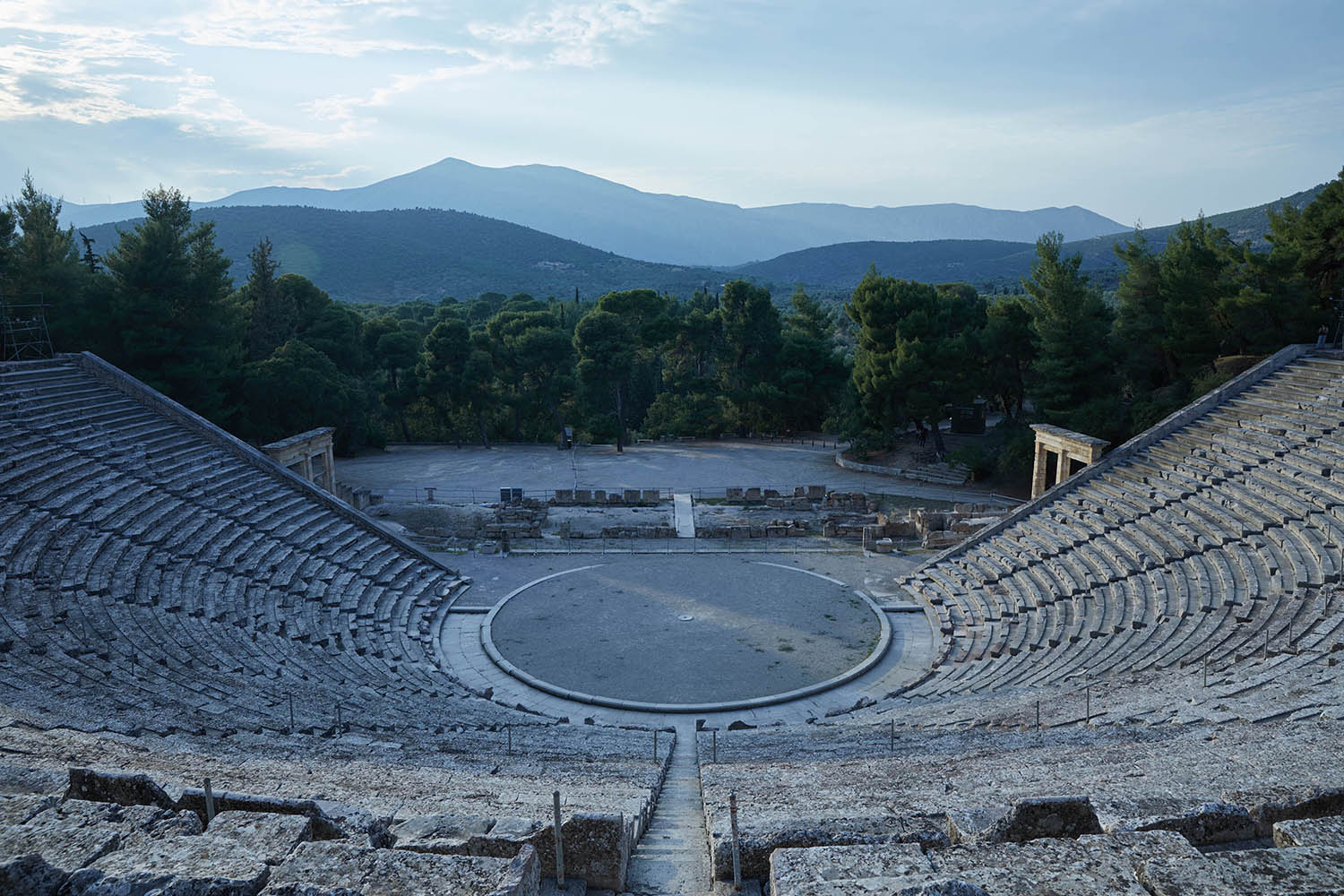
The full program for the 2026 Athens Epidaurus Festival was announced by Artistic Director Michael Marmarinos. The public will have the opportunity to enjoy a series of domestic and international productions at the Odeon of Herodes Atticus, at 260 Peiraios Street, and of course at the Ancient Theater of Epidaurus, in a program that encourages musical interventions, collaborations, and groundbreaking interpretations of classical authors. The detailed program follows.
PEIRAIOS 260
2006 – 2026
Twenty Years – Celebrations
PEIRAIOS 260 – D
29 – 31 May & 1 June
Heiner Goebbels
Schliemann III
This year marks a milestone: two decades of uninterrupted artistic life at Peiraios 260. For its inaugural event at the celebrated venue constellation, the Athens Epidaurus Festival welcomes one of the most compelling figures of the European music and theatre scene, Heiner Goebbels.
Schliemann III is an invitation to inhabit alternative sites of experience, spaces that challenge and recalibrate our perception of History itself. The work takes as its point of departure the reconstruction of a plan of Troy, with its nine unearthed strata, drawn from the diary accounts of Heinrich Schliemann during his excavation programme that took place between 1871 and 1873.
PEIRAIOS 260 – Η
30 May
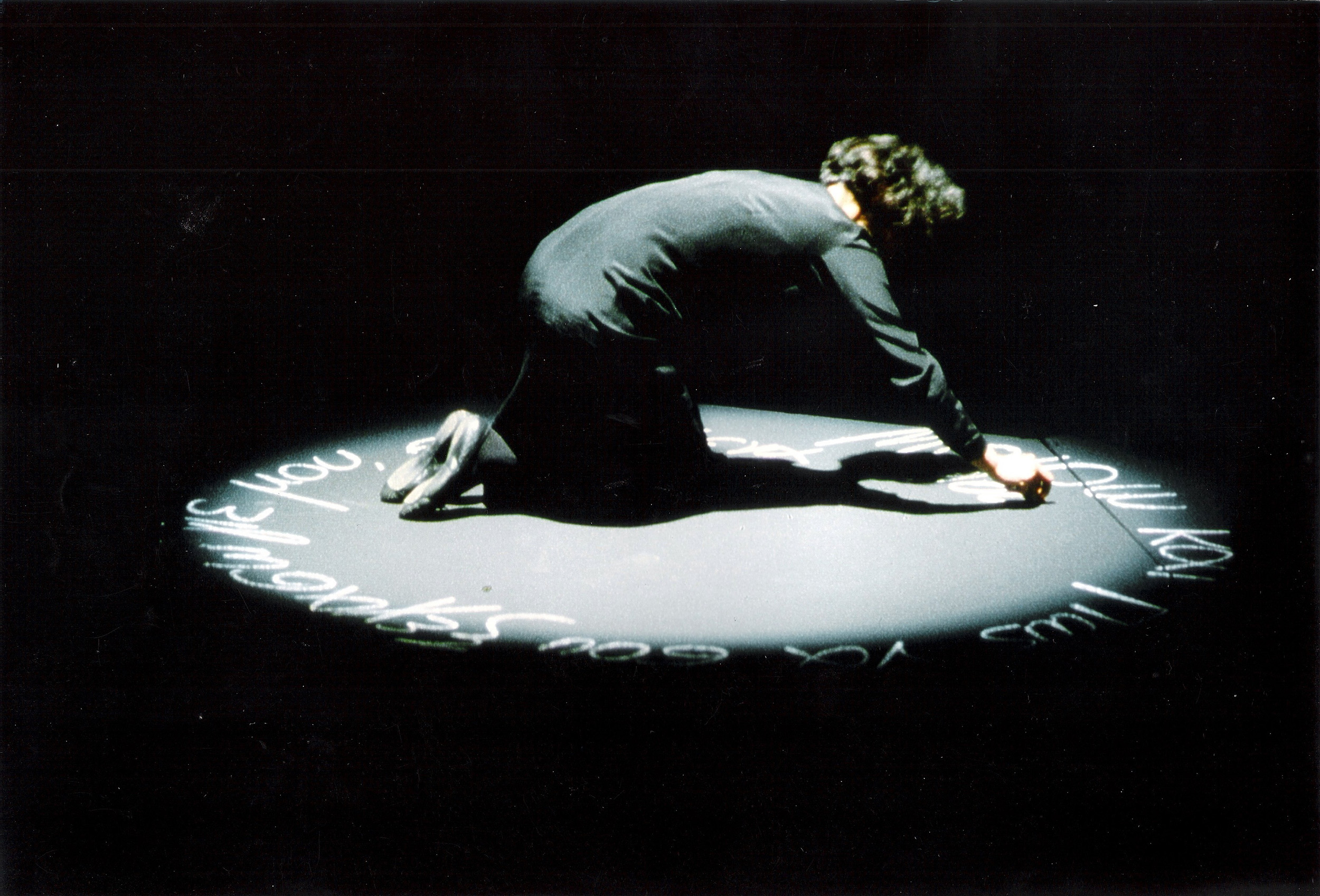
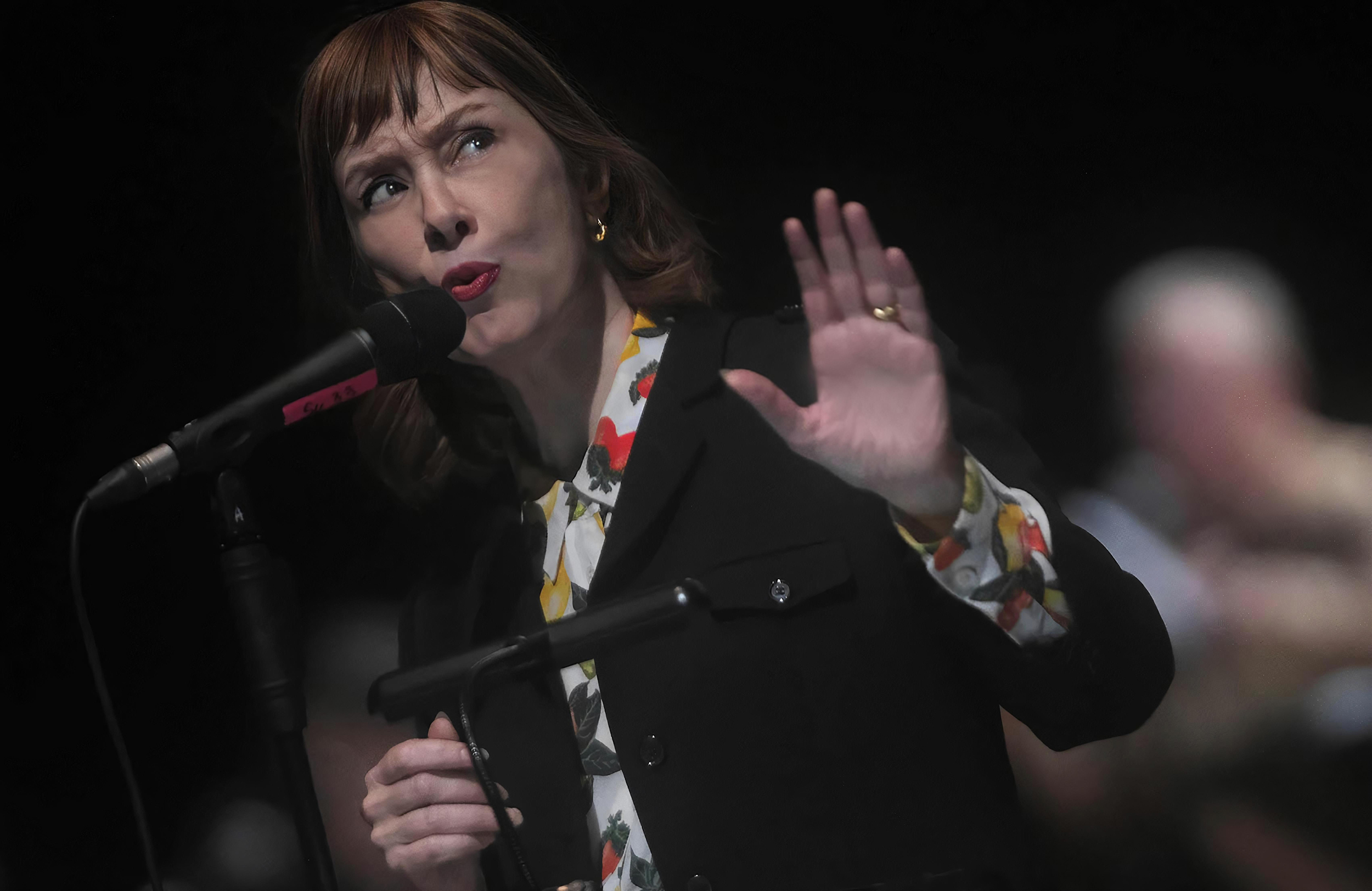
Ictus Ensemble – Suzanne Vega – Collegium Vocale Gent
Einstein on the Beach
Σε συναυλιακή εκδοχή
Based on an idea by Robert Wilson and Philip Glass
What is Einstein on the Beach, after all? Nearly half a century after its inaugural presentation by its visionary creators, Robert Wilson and Philip Glass, the work that radically redefined what opera could mean in the twentieth century remains an open-ended form of fluid and elusive meanings. One might imagine it as a transparent mechanism that lays bare its very own components and modes of operation, yet persists as a secret in plain sight. Is it, ultimately, a biographical meditation on the life and work of Albert Einstein? Or does it unfold as a broader parable, brushing against the contours of an altogether different inquiry?
At Peiraios 260, we are given the rare opportunity to experience one of its most remarkable incarnations, brought to life by the Ictus Ensemble, the Collegium Vocale Gent, and with narration by Suzanne Vega. This interpretation exalts the mathematical precision and physical transcendence demanded by the score, yielding a result that is nothing short of triumphant: a model Einstein on the Beach for the twenty-first century.
PEIRAIOS 260 – Ε
1 & 2 June
Afsaneh Mahian
The Child
by Naghmeh Samini
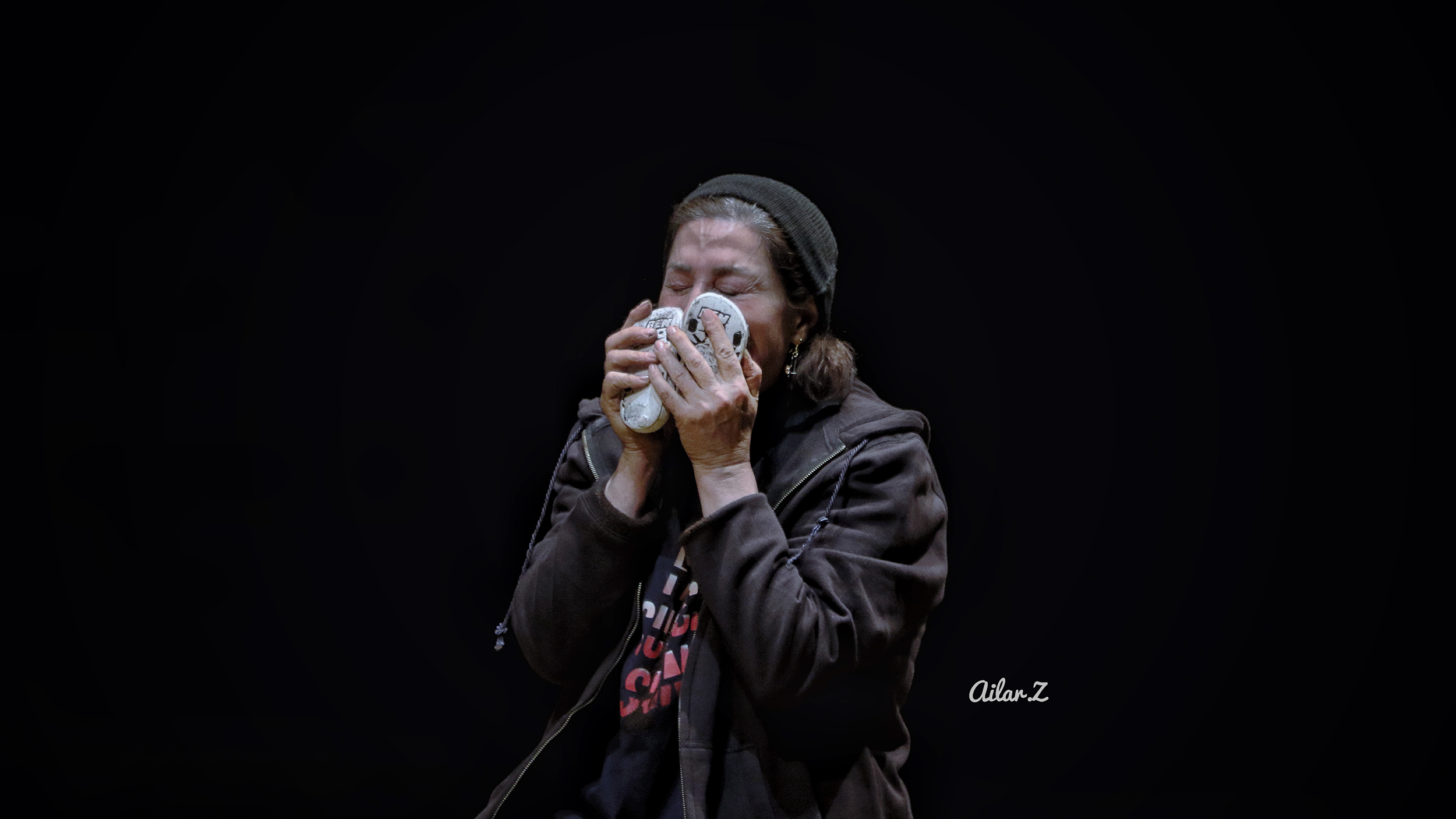
Politically charged and profoundly human in equal measure, The Child casts a piercing light on the unseen cost of displacement and the denial of the most fundamental right of all: the right to safety. On a shore in Western Europe, three women are arrested and brought before the authorities, facing interrogation and deportation. They come from Iraq, Afghanistan, and Libya, each a survivor of abuse. What binds them is not only the trauma they carry and the arduous journey that brought them to Europe, but also a newborn baby in their care.
Presented in Persian with surtitles, the production preserves the immediacy and resonance of its original voice. Eschewing spectacle, it transforms the hall into a shared locus of testimony, where our gaze is tested, and our moral position quietly laid bare. All three women are portrayed by the internationally acclaimed and award-winning Fatemeh Motamed Arya, in a riveting performance that unfolds upon a narrow strip of sand.
PEIRAIOS 260 – Η
6 & 7 June
Yannis Mavritsakis
GRAUTS
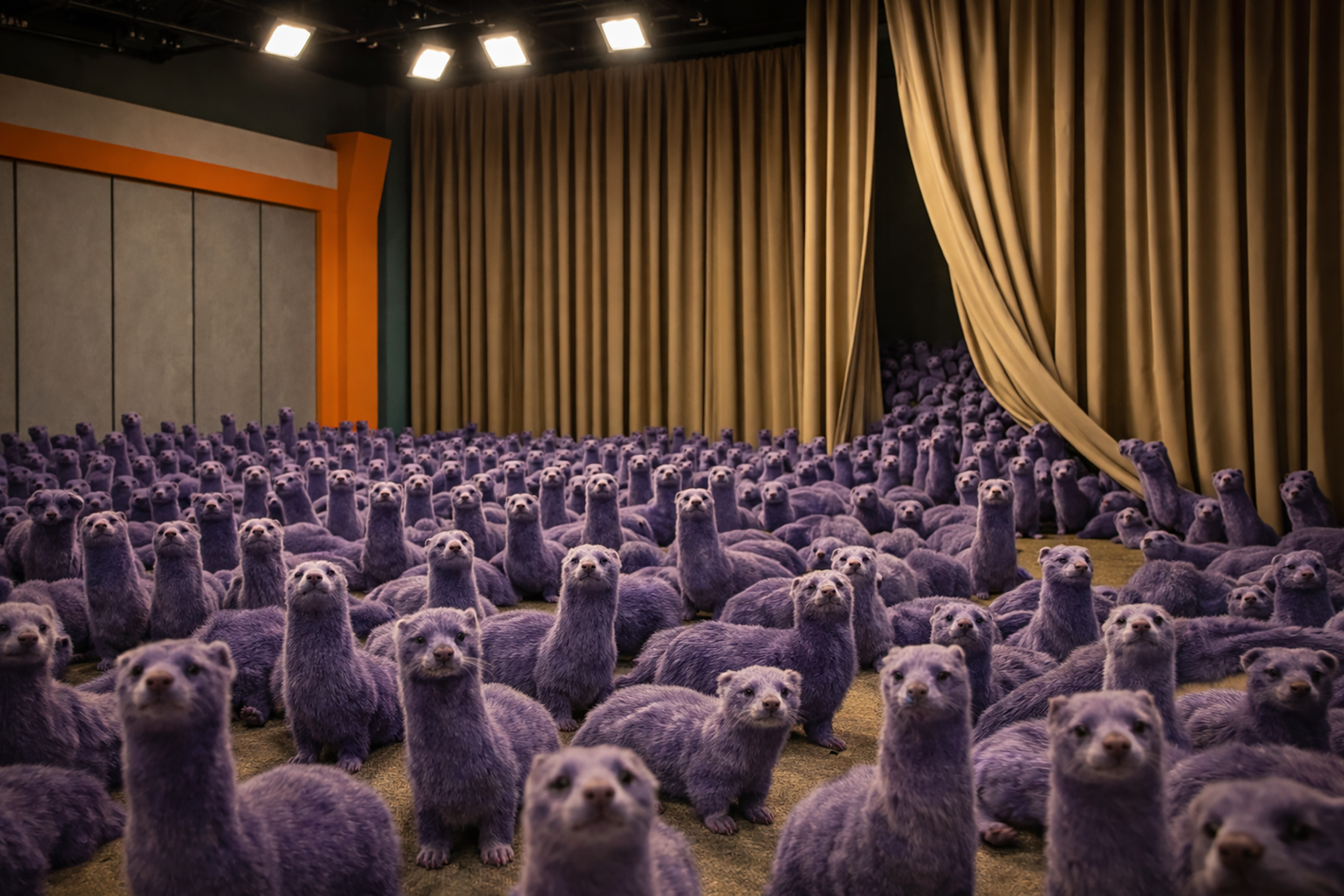
A genuine confrontation or a staged reality? The time and place of GRAUTS is the set of a televised interview at the time of the launch of the interplanetary Voyager probes. In the post-LSD aftermath of psychedelic experimentation, a staged talk show teeters between documentary, hallucination, and concert. Here, the theme of the Bacchae and the dialectical confrontation between Pentheus and Dionysus returns in an oblique and gloriously distorted form.
The title GRAUTS is a coined word, drawn from various languages, and it renders the work’s inner soundworld: a whisper, a scratch, a growl.
The show does not end in a whimper. It ends in a bang.
PEIRAIOS 260 – Β
5 June
Alexia Paramytha
CARCOMA
Based on the novel Carcoma
by Layla Martínez
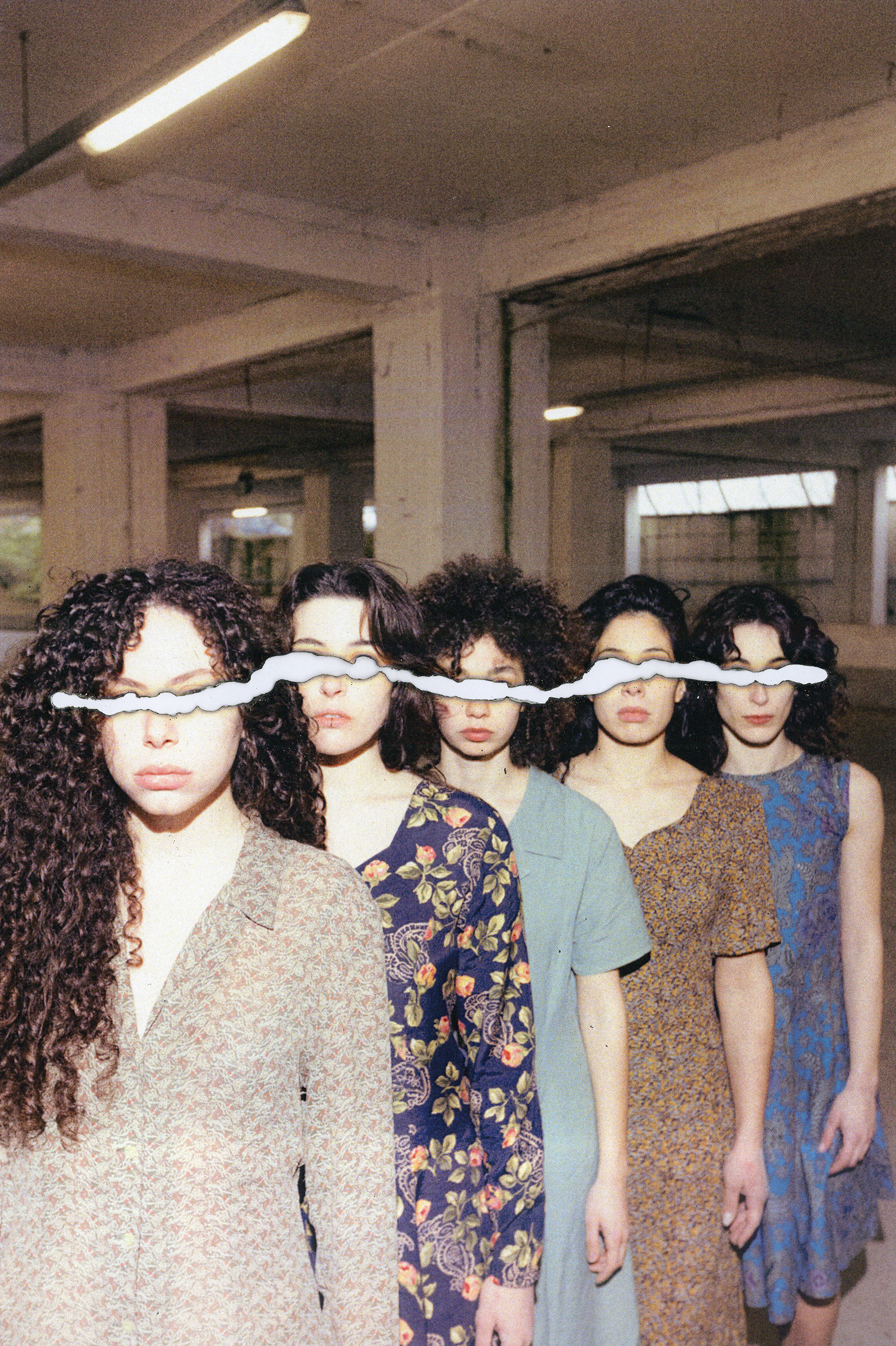
In a house thick with shadows, figures of saints, and folk superstitions, two unnamed women – a grandmother and her granddaughter – live in seclusion, as though they have inconspicuously merged with the very walls that surround them. When a child’s disappearance turns the gaze of the community and the intrusive glare of the media upon them, their confessions unravel into a familial palimpsest of silence, masculine violence, and class corrosion.
CARCOMA originates from this dark and deeply haunted universe, serving as a free stage adaptation of the novella *Carcoma* by the Spanish author Laila Martínez. The work was published in 2021 by the independent, feminist publishing house Amor de Madre and garnered significant attention, having been translated into more than fifteen languages. The performance explores how trauma is inherited, how humiliation, pain, and shame are inscribed in the body—which retains and remembers before language does. In CARCOMA, events are eroded by the poetic and the transcendent. Where words run out and only the countless tiny pinholes in the skin remain.
PEIRAIOS 260 – B
6 June
Yannis Didaskalou
Omikroniota
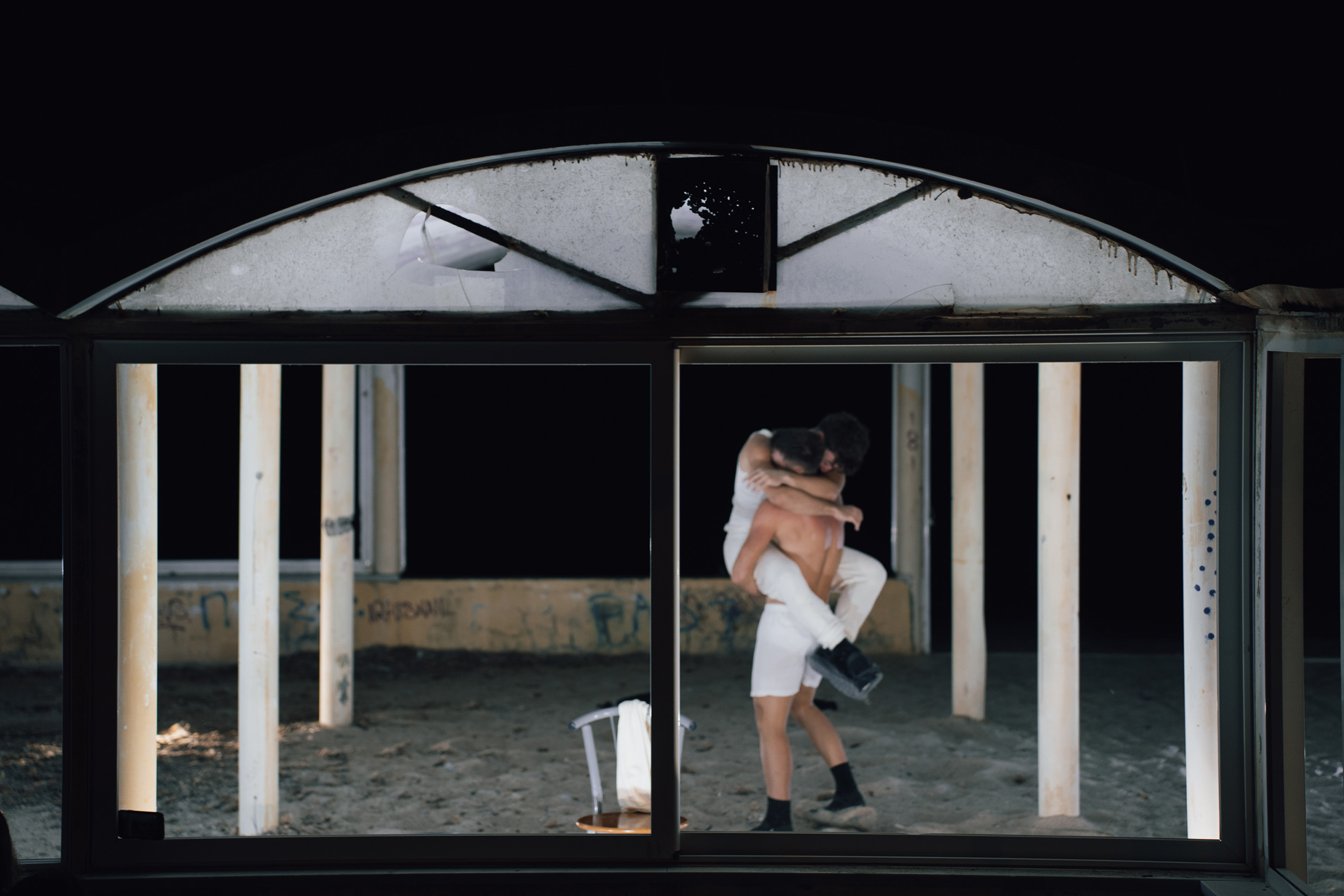
Invited, alone, unruly, innocent, hospitable, solitary, kind, funny, wounded, empty, full, in pain, soaked, hollow, emotional, respectable, strange, older, younger, ruined, rational, absurd, isolated, nostalgic, foreign, pure, dirty, clean, transparent, forgotten, seated, risk-taking, abandoned, attentive, hopeful, dying.
In Omikroniota, a fragile, tender, and absurd world is revealed – a world in which the self desperately seeks a we, or, as one of the characters remarks while – once more – awaiting their guests: “Shall we get to know each other again, just before they arrive?”
PEIRAIOS 260 – B
7 June
Aris Kakleas
The Goalie’s Anxiety at the Penalty Kick
Adaptation of the novel by Peter Handke
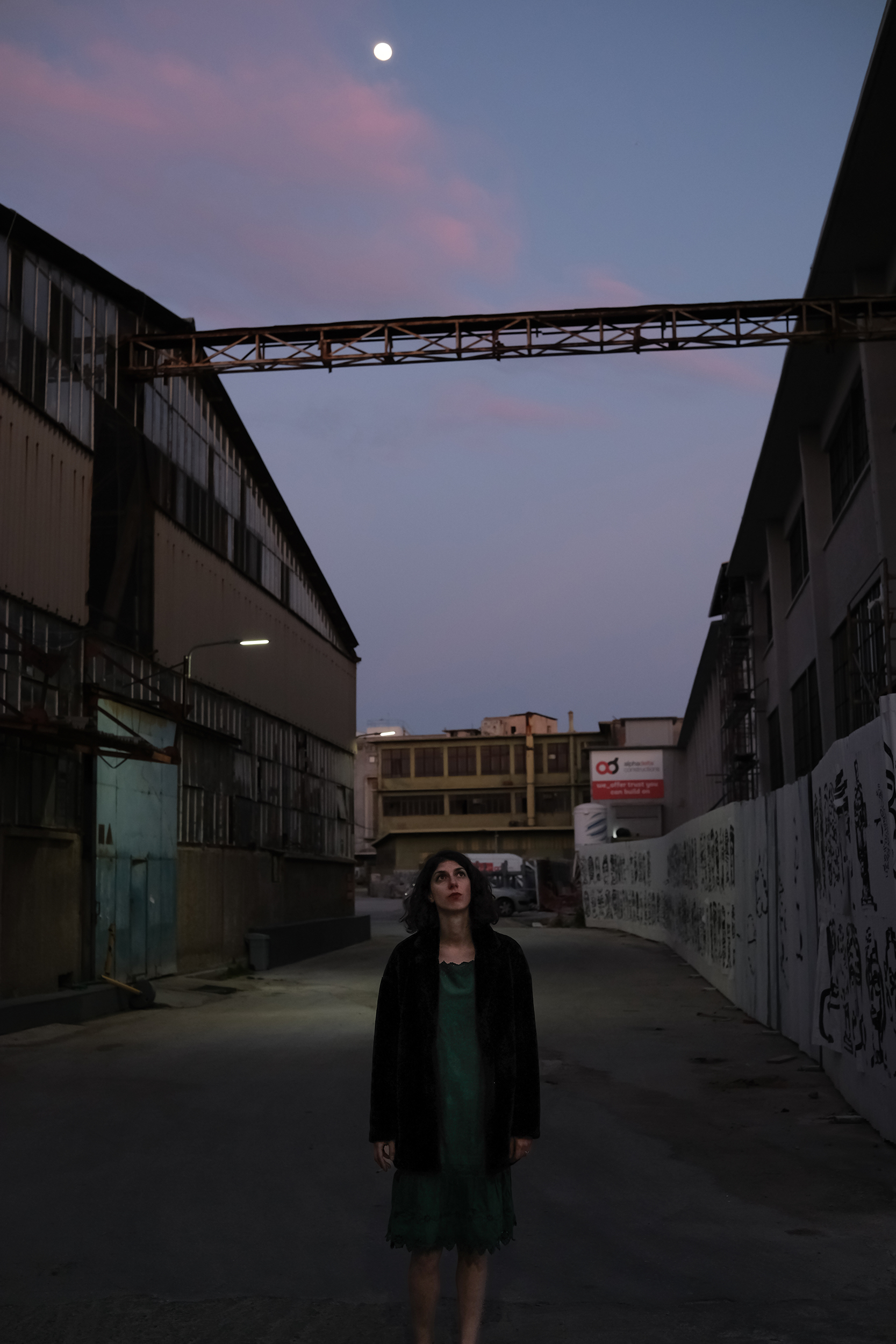
The moment before the penalty is taken. Everything stands suspended. Time, movement, certainty. Within this speck of time unfolds The Goalie’s Anxiety at the Penalty Kick, one of the most emblematic works by the German-speaking Austrian writer Peter Handke – a text that left an indelible mark on postwar European literature. Aris Kakleas brings it to the stage as an experience of estrangement, where reality splinters and meaning remains perpetually open.
Four narrators, pauses, repetitions, perceptual leaps, and the live transformation of space compose a field of constant instability, where everything resists fixation. With a stripped-back theatrical language and an emphasis on the body, the voice, and the gaze, Handke’s work is recast as a performance that foregrounds human anxiety at the threshold of an irreversible act.
PEIRAIOS 260 – Β
8 June
Aristi Tselou
How I Dwell
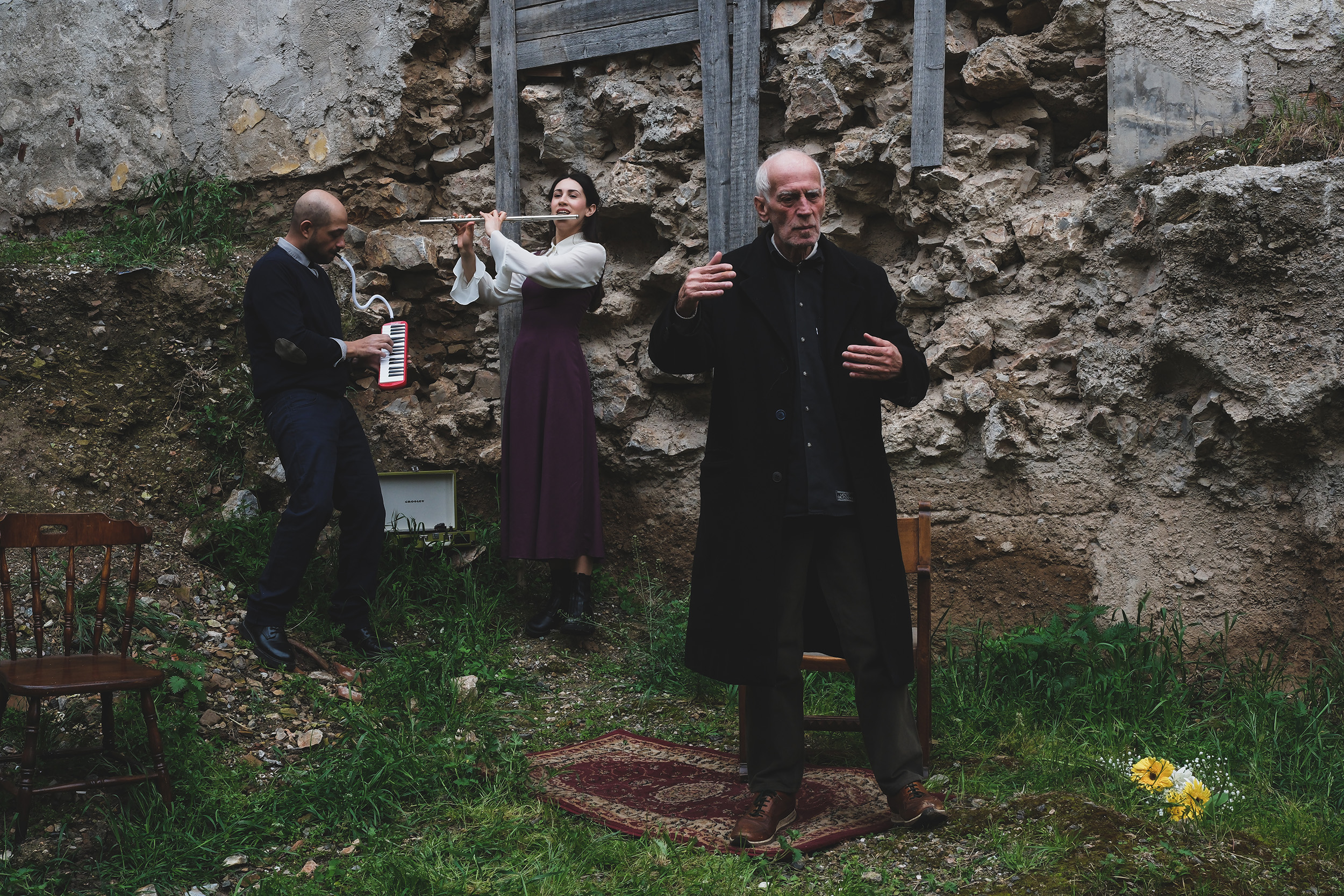
An eviction notice. Two words that cleave an elderly man’s day in two. Formal, cold, impersonal, the document is affixed to his door, foretelling an imminent foreclosure auction. The new owner is already on his way, perhaps with mud still clinging to his shoes. In that instant, memory, time, and space are violently rearranged, giving rise to a new self: the one cast out. As the old man gathers his belongings, snapshots of an entire life return to him – moments of joy, silences, losses, the hushed rituals of everyday living. A life that took root, blossomed, and bore fruit within these walls is now suddenly uprooted. A home, a shelter, comes undone.
The performance How I Dwell, which began as a diploma project, draws inspiration from the mythology of Chekhov’s The Cherry Orchard, as well as from a news story – one among many small and large tragedies unfolding in the wake of housing auctions amid an ever-worsening global housing crisis.
PEIRAIOS 260 – Β
9 June
Panos Iliopoulos
Tunnel
Based on the short story
by Friedrich Dürrenmatt
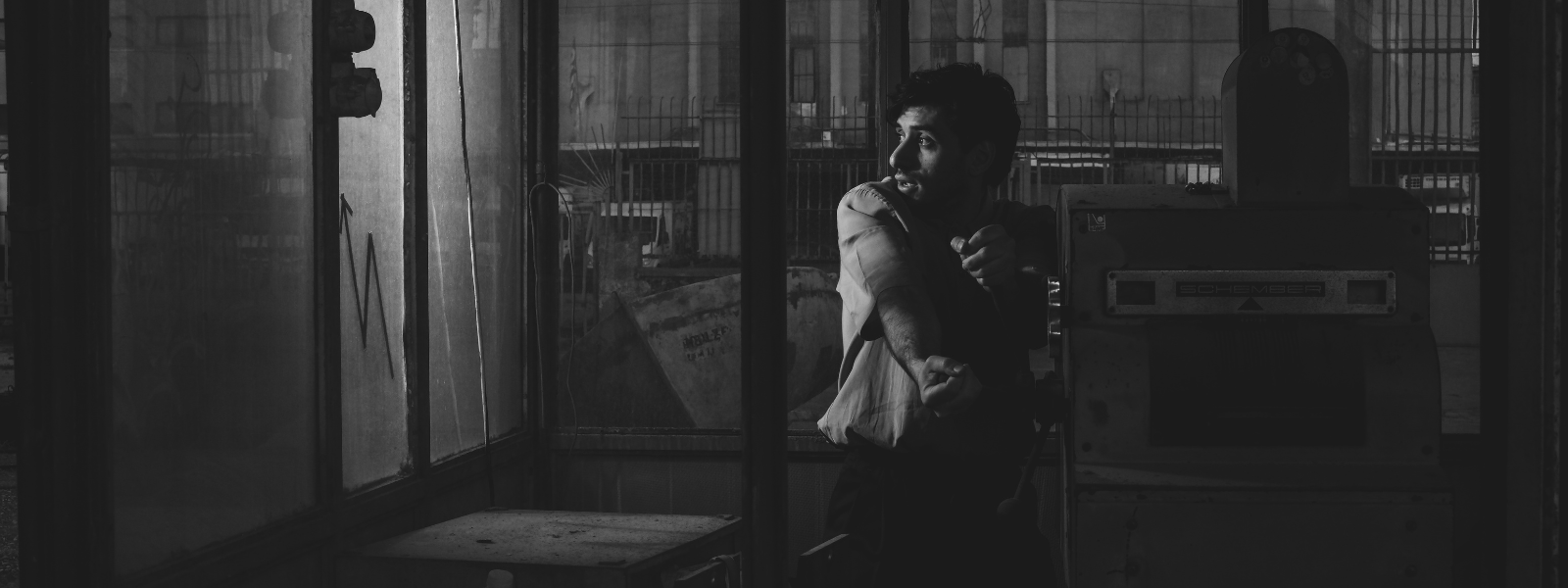
A student boards a train, as he does every day. This time, however, the train enters a tunnel with no end. As the darkness stretches on, his unease begins to grow. And yet, his fellow passengers remain unfazed, as though nothing at all were happening. Based on the allegorical short story by Friedrich Dürrenmatt, this adaptation follows that very passage into darkness, bound for an unknown destination. Or is there, in fact, no destination at all?
PEIRAIOS 260 – Β
10 June
Dimitris Tsikouras (Tsik)
The Wolves’ Tale
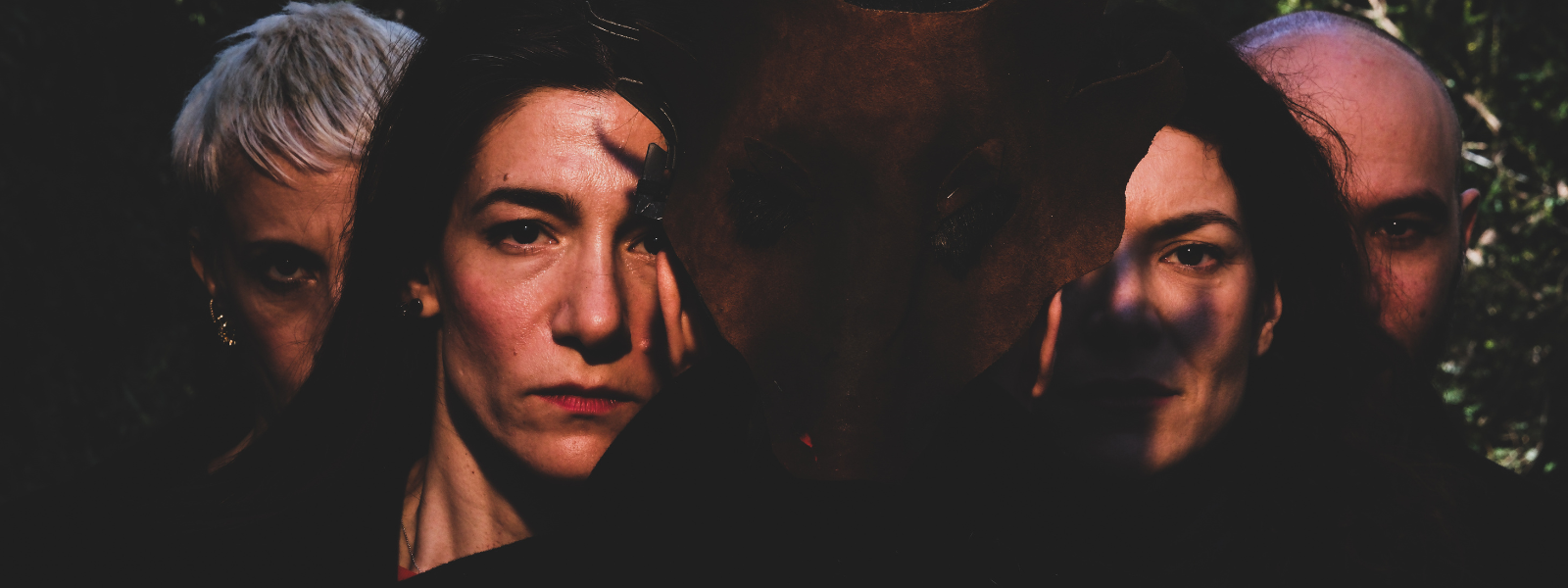
The Wolves’ Tale is the true story of a woman from Thessaly (1928-2017); it is a dream her grandson once had; it is the death of her brother during the Greek Civil War; it is an incident her son experienced; it is the folk ballad The Dead Brother’s Song; it is Heiner Müller’s Hamletmachine; it is Sophocles’ Electra. Above all, however, it is a tale about domestic violence as an aftershock of political violence, written precisely to speak of this and to pose a question: can a human being ever break the chain of violence?
PEIRAIOS 260 – Ε
8 – 11 June
Stefania Goulioti
The Murder of Isabella Molnar
Based on the short story by Dimitris Hatzis
The performance is a stage meditation on sculpture as a response to chaos; an exploration of the threshold where Art becomes an existential necessity – and, at times, a dangerous one. Once again, the writer’s words illuminate its gifts without dispelling its mystery: “And then the statue, standing complete at human scale – indeed, at human measure – is a triumph of humanity’s defiance of its own accidental nature.”

PEIRAIOS 260 – D
10 & 11 June
Teaċ Daṁsa – Michael Keegan Dolan
MÁM
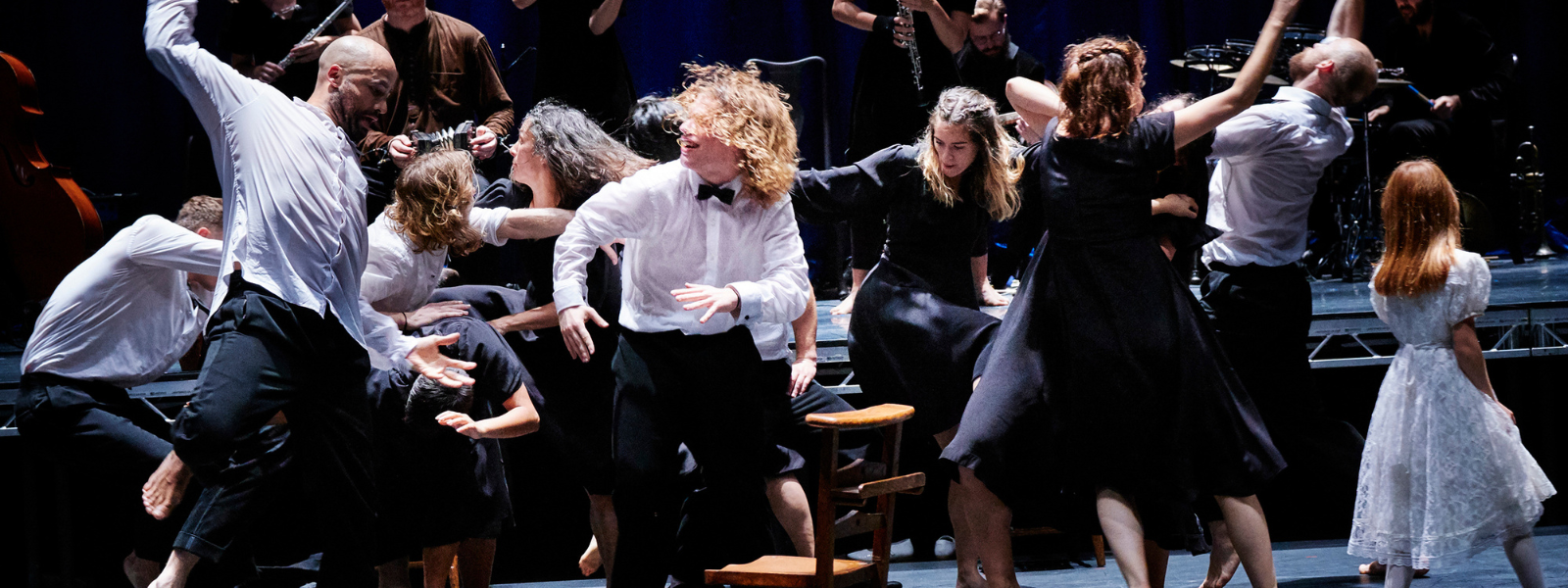
MÁM in Irish means “a pass between mountains.” It also means “an obligation.” A path not chosen, but often imposed. A route the traveller follows without necessarily knowing why.
As the dancers whirl, touch, and embrace, the distances between them dissolve. The “in-between” begins to shrink, and the stage transforms into a space of shared breath. The traditional concertina of Irish virtuoso Cormac Begley meets the sound of the European contemporary ensemble s t a r g a z e, giving rise to a work of dance and theatre that The Irish Times described as “90 minutes of ritualised ecstasy” – sweeping audiences into a haunting, otherworldly journey soaked in the landscape and culture of Ireland.
PEIRAIOS 260 – D
13 June
Elias Giannakakis
2005-2015. The Years of Loukos
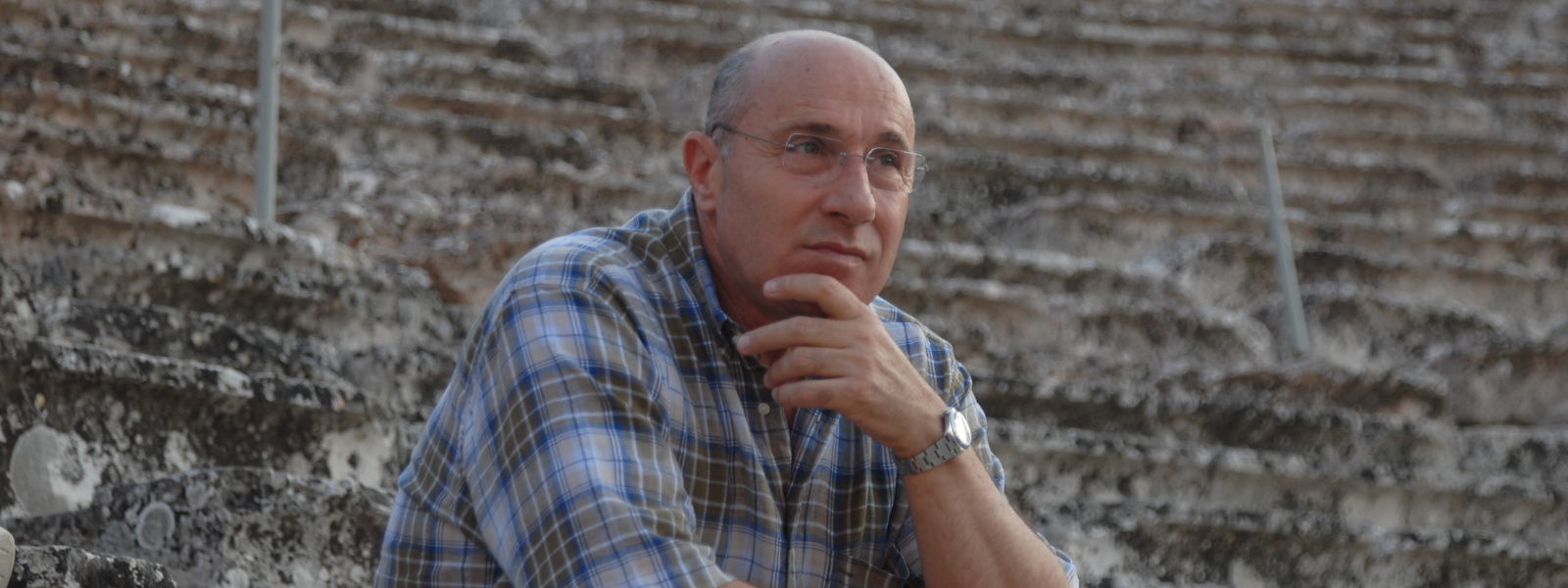
Twenty years after Loukos took over the Festival’s artistic direction, Elias Giannakakis presents his documentary as a tribute to the Athens Epidaurus Festival. A filmmaker who has created more than three hundred documentary and fiction films, he systematically recorded the Artistic Director for a whole year — from 2007 to 2008, the first years of the Festival’s ‘boom’ — gathering precious footage. Twenty years later, he gives us a documentary tracing this decade’s footprint, along with new sequences and archival footage.
PEIRAIOS 260 – GARDEN
13 June
Camper Van
Camper Van was born from an idea by Olia Lazaridou and designed by installation artist Socratis Socratous. It was a bright moving scene made of plexiglass, which in 2008 hosted Gelsomina, a play based on Federico Fellini’s movie La Strada (1954).
With Yorgos Loukos’ departure, Camper Van, this marvelous ‘gadget’ of the Festival, fell into disuse. Just before it surrenders to oblivion, it comes back to illuminate again the summer nights at Peiraios 260, aspiring to leave its limits again next year, and get on the road.

PEIRAIOS 260 – H
14 & 15 June
Yorgos Valais
Stores
Beauty, Equity, Happiness
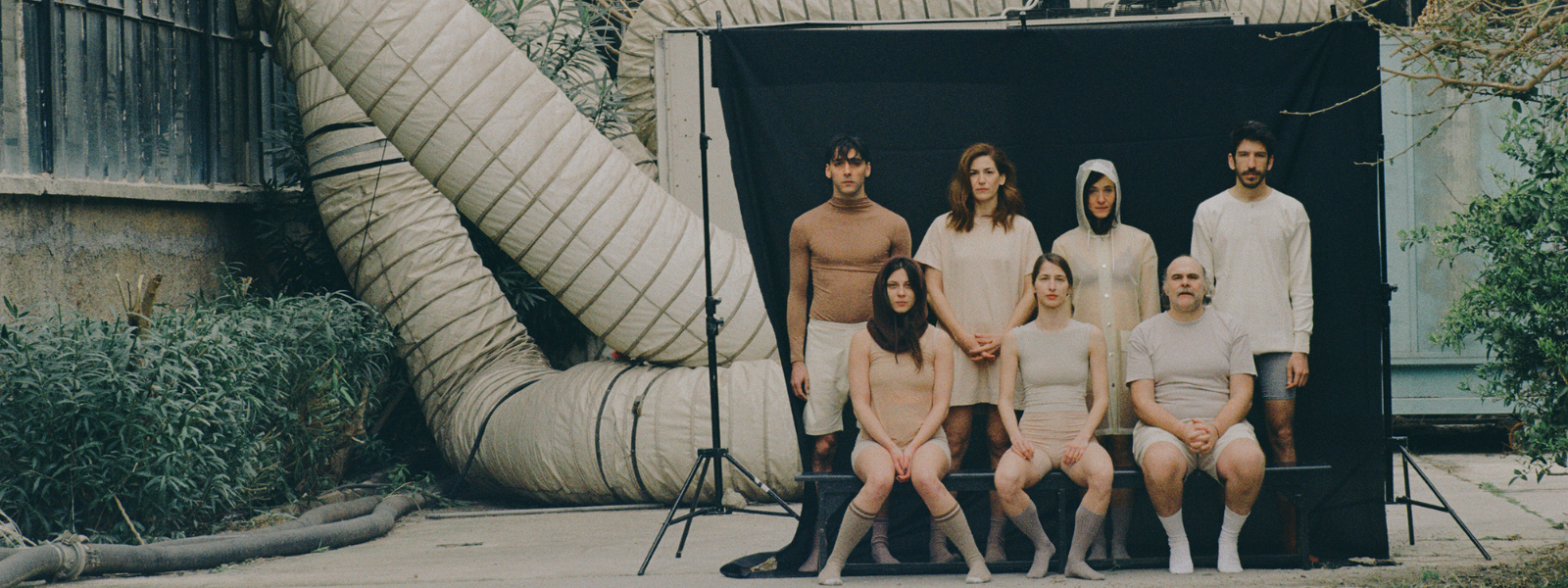
A clothing department store, unmistakably reminiscent of the retail chains of our time. Inside it, a chorus of people tries on garments, shops, queues, engages in small talk, rests, collides, undresses, begins again. They sing and deliver monologues. They dream of the future.
Within this ostensibly realistic framework, the songs act as fissures, giving voice to both the expectations and the disappointments of these consumer-subjects who shop in order to exist, composing a wide-angle portrait of life in which a secret melancholy lurks beneath the gleam of the twenty-first century.
PEIRAIOS 260 – Β
14 & 15 June
Nicoline van Harskamp
Prosodia
In Prosody, primordial patterns of speech resurface within the synthetic voices generated today through artificial intelligence, echoing the rhythmic and formal patterning of human storytelling – from ancient epic poetry to contemporary influencer content. In the process, the work also dispels many of the myths surrounding AI, particularly those propagated by the profit-driven entities that develop it.

PEIRAIOS 260 – D
16 June
Orestis Karamanlis
TEMPI
57 heartbeats & electronics
In the language of music, the term tempo denotes the pace or speed at which a piece is performed. Its plural, however – tempi – unfolds a cluster of associations that leads us, inescapably, to a painful chapter in recent Greek history: the Tempi train crash on 28 February 2023.
TEMPI is a work that cannot exist without the presence – and participation – of its audience, and it makes this condition explicit. At the same time, it illuminates a deeper truth we often overlook: that we are inextricably bound to one another, whether we recognise it or not. The fifty-seven who offer their living pulse as raw material for this collective, irregular heartbeat remind us that we are a thread of empathy running through history, a bond woven from the invisible fabric of sound.

PEIRAIOS 260 – Ε
16 & 17 June
Jaha Koo
Haribo Kimchi
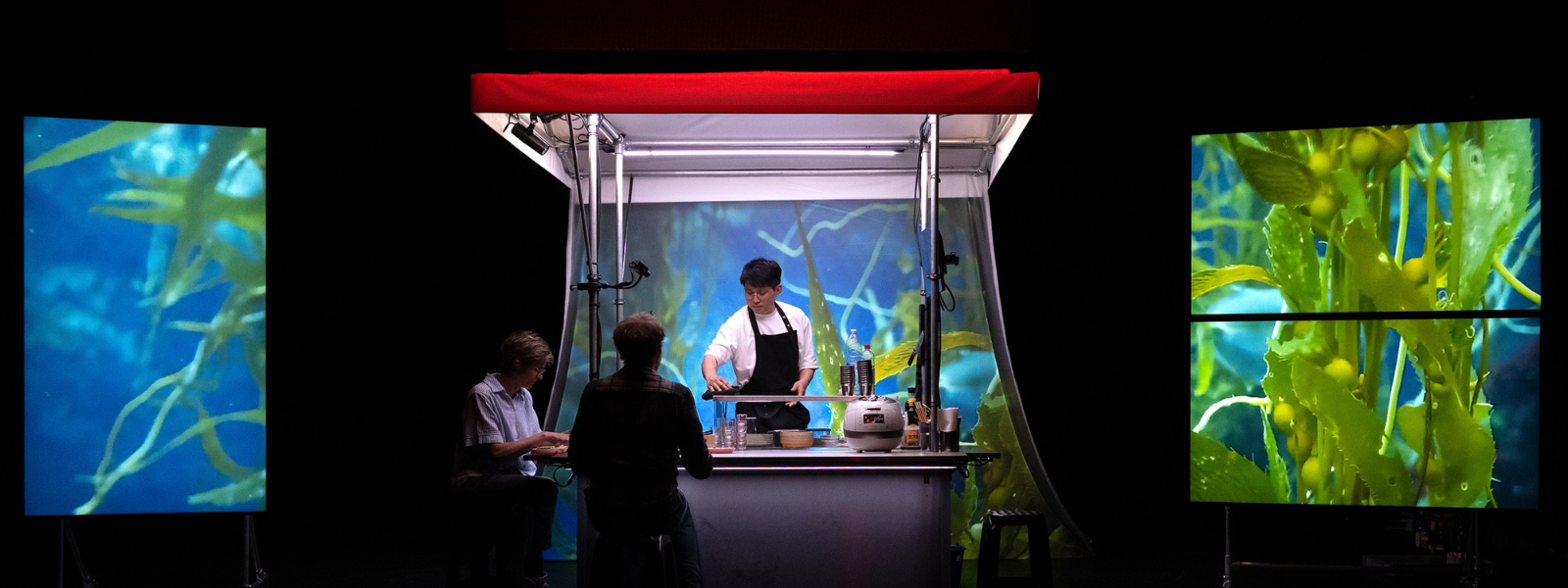
Haribo Kimchi transports us to a pojangmacha, one of the typical late-night street food stalls lining the streets of South Korea. Throughout the performance, Jaha Koo recounts intimate, bittersweet, and surreal micro-stories while preparing a meal live on stage. Armed with a boundless and visually inventive humour, he enlists us in his culinary journey, a wandering through memories and their history, for all those who feel the quiet pull of their roots.
PEIRAIOS 260 – D
20 & 21 June
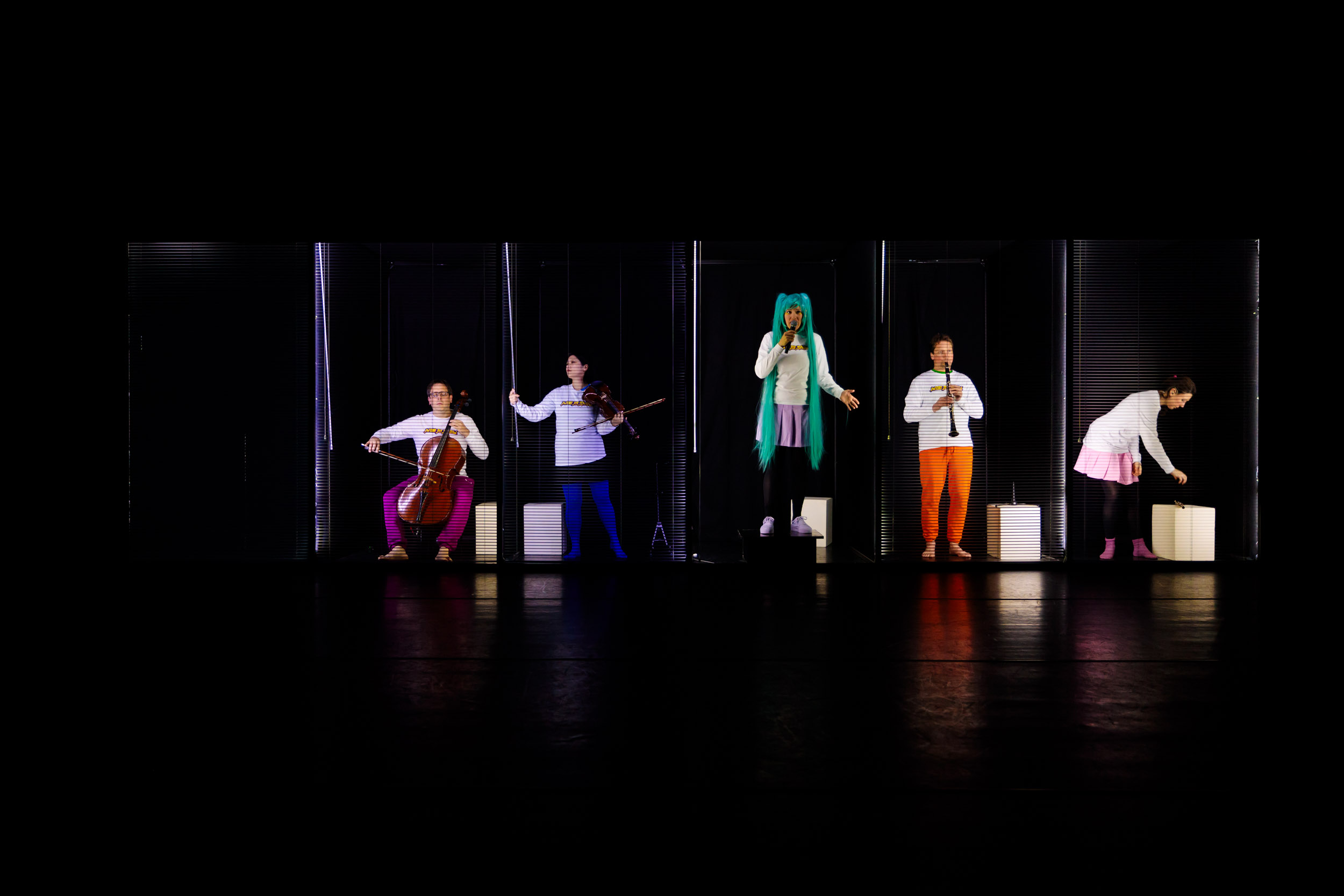
Nadar Ensemble – Michael Beil
Hide to show
In Hide to show – a work composed by the prolific German composer Michael Beil specifically for Nadar Ensemble, marking their third collaboration since 2011 – acoustic and electronic music meet video and cutting-edge technology, offering a condensed reflection on what constitutes the real today, while simultaneously sketching the topography of a world covered beneath a dense layer of virtuality.
PEIRAIOS 260 – Η
20 & 21 June
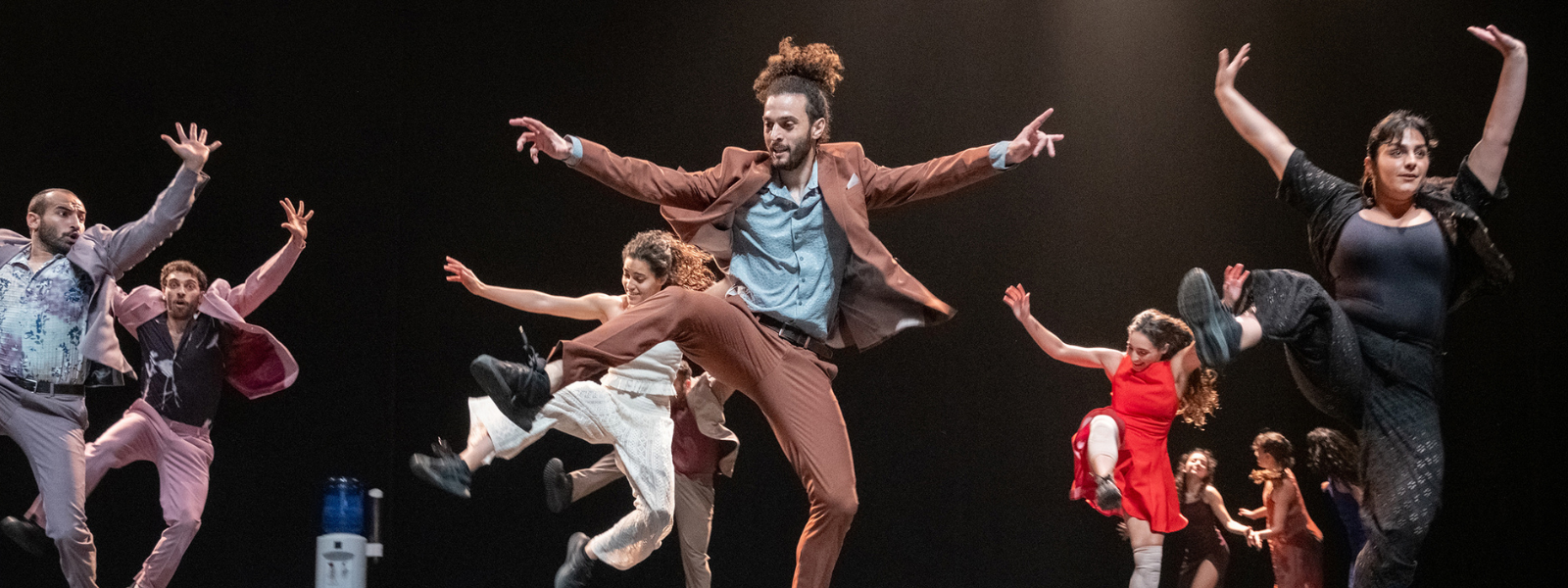
Amir Sabra – Ata Khatab
Badke(remix)
A reimagining of the dance piece originally created in 2013 by Koen Augustijnen, Rosalba Torres, and Hildegard De Vuyst, and toured internationally between 2013 and 2016, Badke(remix) by Palestinian artists Amir Sabra and Ata Khatab revisits the language of tradition and gives it a new turn, attuned to the urgencies of the present. Beyond the rigid lines of borders – geographical and cultural – it sends out signals to any willing receiver, advocating for a shared, transnational sense of belonging. The devastation of populations during recent hostilities, and its global mediation, has often fostered the impression that being Palestinian constitutes a monolithic, homogeneous identity, devoid of internal differences or tensions. This performance sets out to unsettle this misconception: individuals of distinct social backgrounds – classes, communities, regions, educational and professional trajectories – join hands and follow the familiar steps, only to immediately break, distort, and rework them. A gesture of almost “profane” devotion to tradition, pushing it to accommodate the new desires and frictions of living bodies.
PEIRAIOS 260 –PLATEA
20 & 21 June
6ο Athens Festival Urban Dance Contest
Battles
Hip Hop & All Style Battles
The AEF Urban Dance Contest, a key meeting point for the hip-hop and street dance scene, returns for its sixth edition, more dynamic than ever. Marking this anniversary, the contest unfolds across two consecutive nights of heightened intensity, filled with spectacular dance battles, explosive rhythm, and unbridled talent. Dancer and choreographer Elias Hadjigeorgiou, alongside his longtime collaborator Periklis Petrakis, curate an event that brings together some of the most outstanding Greek and international figures in hip-hop and street dance.
PEIRAIOS 260 – Β
21 & 22 June
Alexandros Vardaxoglou
NOD
Two men meet by chance. They wear the same clothes, inhabit the same body, perhaps even share the same past. Their encounter becomes the point of departure for a choreographic drift in which their synchronised movements – at times insistently repeated – begin to falter and mutate, generating a subtle disorientation; steps collapse into falls, embraces turn into struggles, gestures warp into desperate configurations. What emerges is a reckoning with the limits of proximity and distance, where even the costumes they wear become instruments in this volatile tug-of-war.
In NOD, the thorns and harsh terrain of coexistence are confronted head-on, through a choreography unafraid to tread barefoot across this merciless ground once inhabited by Cain. In doing so, it reveals something elemental: the fragile, fierce beauty at the heart of human connection.

PEIRAIOS 260 – Ε
22 – 24 June
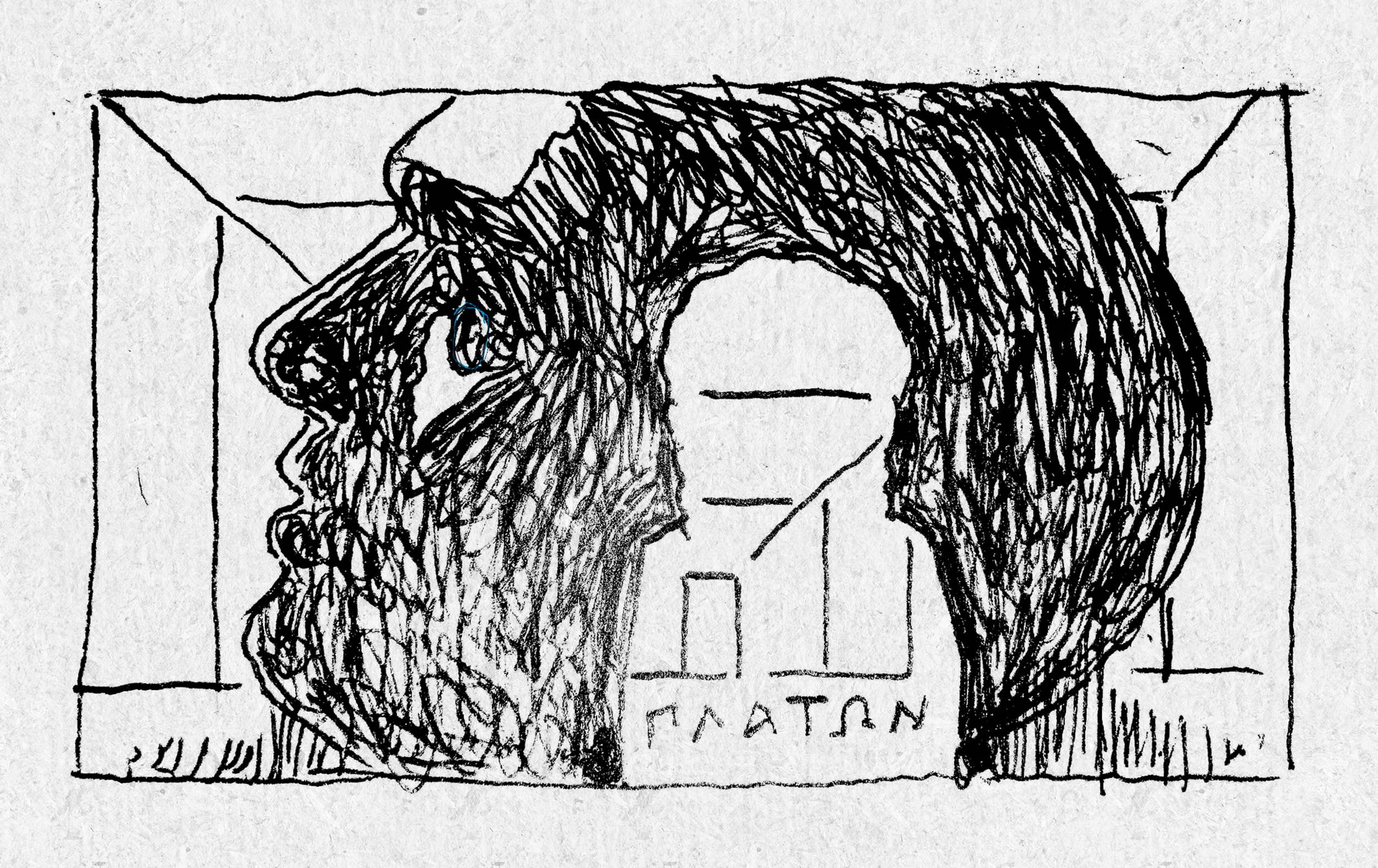
Alexandros Mistritios
The seventh letter, or The Disappointed Plato
How does one of the greatest philosophers in history choose to narrate his own life? Plato stands on stage and addresses us. Through the voice of a narrator, he returns as both an enigma and a spectre, breaking the fourth wall and collapsing the distance that separates us from him – and from the politically unstable world he inhabited.
In truth, we know remarkably little about Socrates’ student beyond his canonical dialogues. Four years before his death, Plato wrote the Seventh Letter – a kind of apologia for his life and work – addressed as both epistle and testament to the family of Dion of Syracuse, following the assassination of his dear friend. It is from this text that Alexandros Mistriotis embarks, approaching a Plato who is disarmingly human and confessional, in a performance that privileges lived experience over philosophy – a life about which we possess scarce certainties. The work unfolds through the narrator’s voice, summoning Plato to shed the many masks that populate his dialogues and to speak to us in his own person. We hear him recount his youth, including his ill-fated attempt to intervene in the political life of Syracuse. We witness him, even in early adulthood, recognising that Athens and the wider Greek world had reached a political impasse – and understanding that this very disillusionment would lead him toward philosophy.
PEIRAIOS 260 – D
23 June
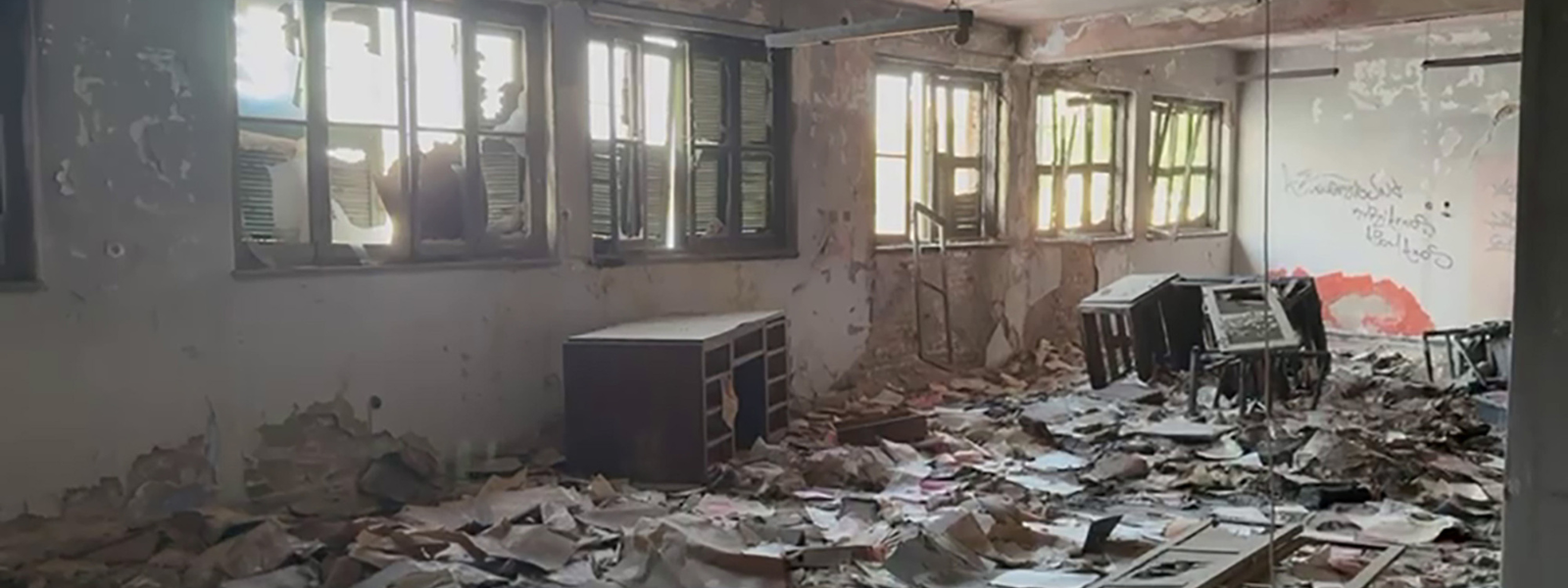
Eva Stefani
Ancestors
A former wrestler in Serres eating five eggs before work; Dionysis Savvopoulos ready to go on stage in his last concert in Athens; a sex-worker/prostitute watching a muted Christmas special on a broken television; E. Ch. Gonatas trimming a plant; an elder man on the phone with God; a premature newborn inside the incubator; a Georgian nurse whispering ‘Sleep’ to a patient; Vasilis Papavasileiou speaking about Chekhov; an elder woman in Komotini speaks to the TV presenter she watches on screen; a young Zaphos Xagorares painting banners in the early 180s.
Eva Stefani’s documentary film constitutes an arc of fragments from unfinished stories and apparently unconnected moments captured on film during a thirty-year period.
PEIRAIOS 260 – Β
24 June
Frauke Aulbert
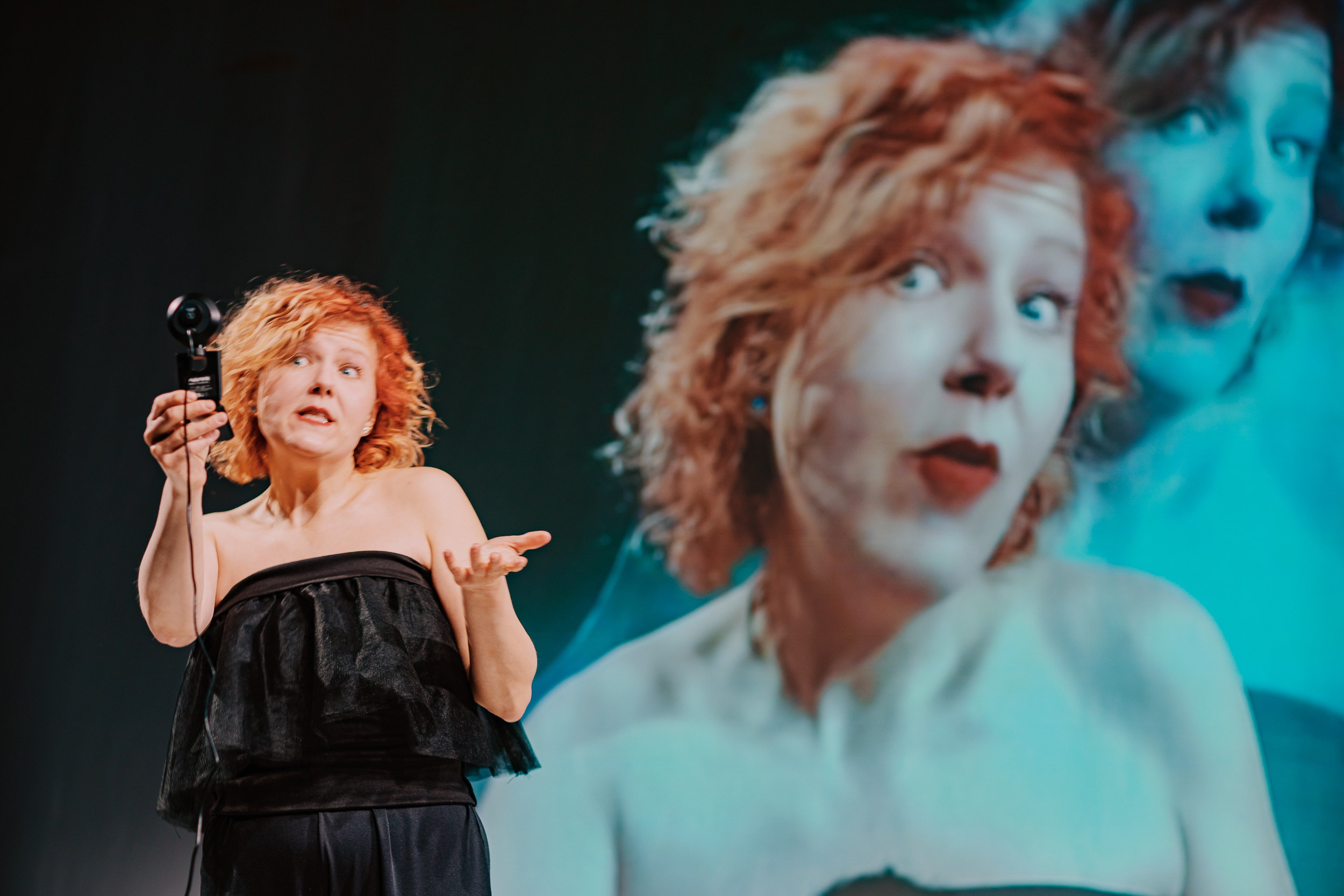
Voice Lab – Post Internet Dance Edition
A post-digital performance about voice, self, and digital traces in analogue life
The digital mantra has permeated every aspect of our lives: from work and leisure to information, and ultimately, the steady absorption of online practices into the fabric of our daily routines. Our world has become so enmeshed in its own digital image that some voices already speak of a “post-digital” era – as if our present condition belonged to the archaeology of a future that has only just passed. In the midst of such an unprecedented fever, what remains of the voice as a physical presence?
PEIRAIOS 260 – Η
27 & 28 June
Kurō Tanino
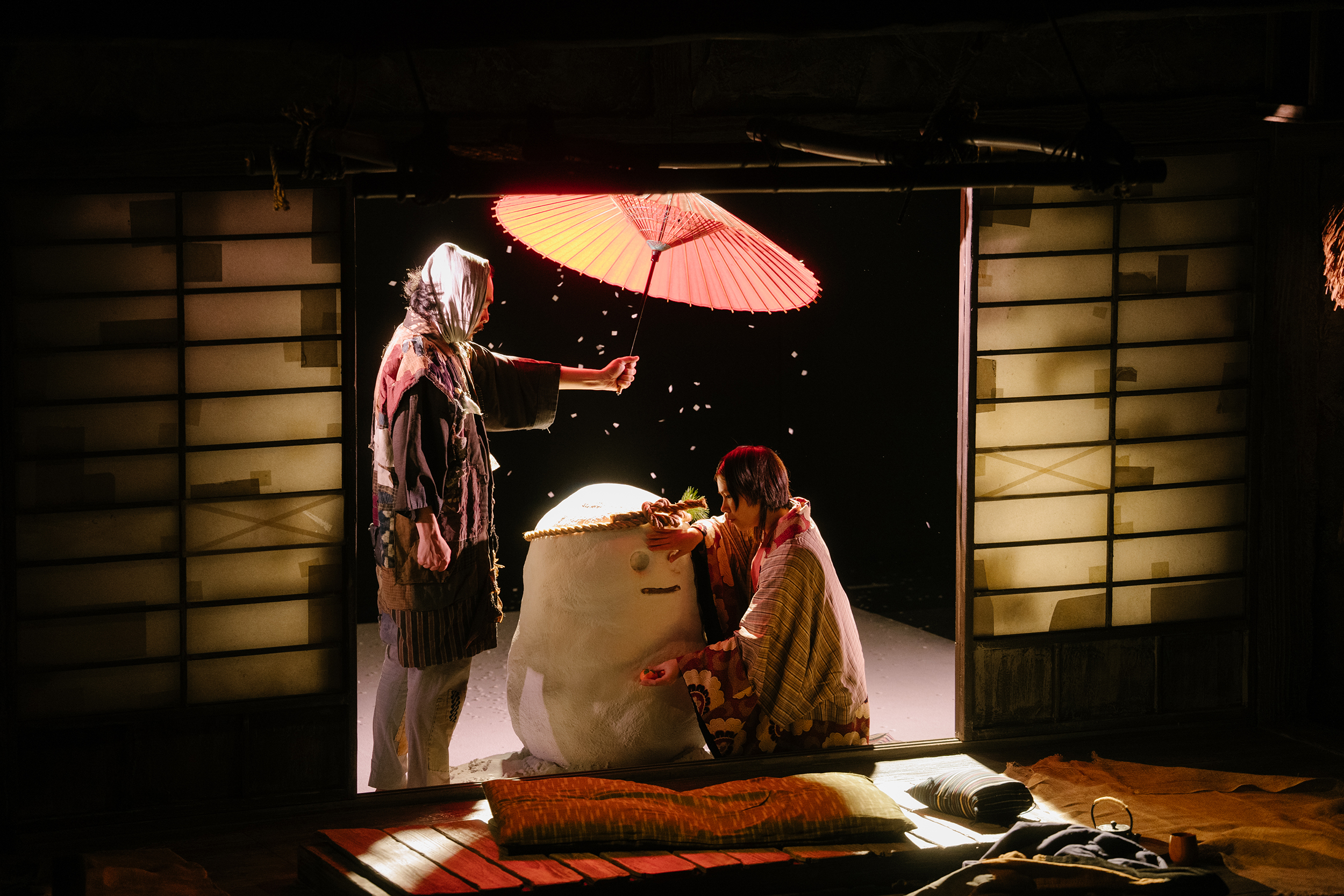
Sleeping Fires
Sleeping Fires traces its roots to the historical practice of blind massage therapists in Japan and is set in a mountainous region north of Edo – present-day Tokyo. In a society where blind men were institutionally supported through the hierarchically structured guild of Tōdōza, women remained largely invisible, deprived of comparable social or economic backing. Within this framework, the work illuminates not only conditions of exclusion but also the unexpected forms of freedom that may emerge beyond the reach of dominant social frameworks.
PEIRAIOS 260 – D
28 – 30 June
Angélica Liddell
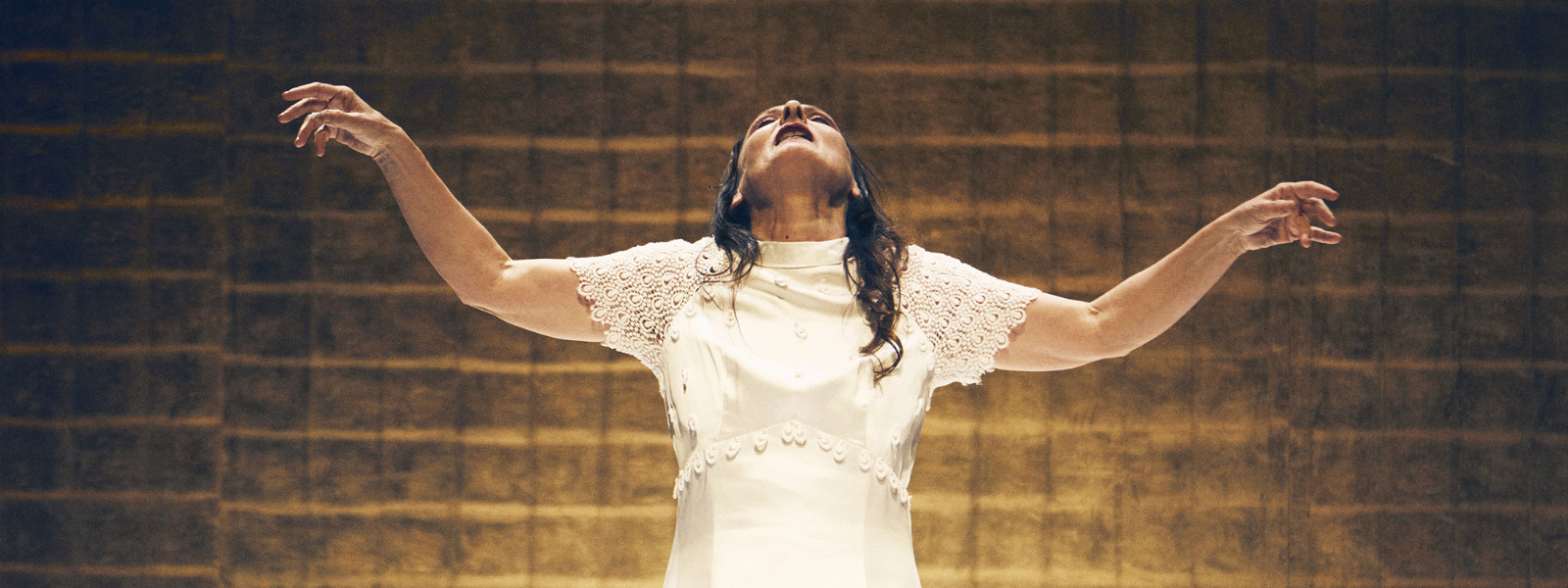
Seppuku. The Funeral of Mishimaor the Pleasure of Dying.
In November 1970, following a failed symbolic uprising aimed at restoring imperial power in Japan, the writer Yukio Mishima (1925–1970) brought his own life to an end through seppuku (or hara-kiri in colloquial Japanese), transforming his own body into his ‘final’ statement. Drawing on the spiritual code of the samurai – at whose core lies the injunction to “die mentally” each morning so as to no longer fear death – Angélica Liddell, one of the most radical voices of the contemporary Spanish stage, approaches seppuku as a meditation on freedom, discipline, beauty, and the limit. The work assumes the form of a funeral hymn that, devoid of any embellishments, is dedicated to all those who have taken their lives, embodying on stage the violent, lyrical pull of death as both an aesthetic ideal and an existential choice, set against the erosion of the spirit. With a language that resists easy categorisation, the restless and uncompromising creator delivers one of the defining works of contemporary European theatre-performance, a work that fuses ritual, personal confession, and philosophical contemplation on death, inspired by Mishima.
PEIRAIOS 260 – Ε
28 June
Manos Tsangaris
Reinventing the wheel
“What would it mean,” Paul Klee once wondered, “to paint in the knowledge that no other brushstroke has ever been laid upon the world?”
In Reinventing the wheel, Manos Tsangaris takes up the echo of this question and sets out to reimagine that very same “impossible condition.” In the form of a lecture performance, he creates an on-site syntax of “voice, extraterritorial sounds, and video,” conjuring from nothing an intuitive musical world that reconciles the visible with the ineffable.

PEIRAIOS 260 – Ε
28 June
Quatuor Diotima
Works by Aperghis, Tzortzis and Ligeti
A Tribute to Aperghis
Founded by four laureates of the Conservatoire de Paris, the international ensemble Quator Diotima stands among the most refined and sought-after string quartets of the twenty-first century. It has played a crucial role in the interpretation and dissemination of works by leading late twentieth-century composers such as Pierre Boulez and Helmut Lachenmann, while also establishing itself as one of the foremost interpreters and translators of Ligeti’s musical universe. Already familiar to Greek audiences through previous appearances, the quartet returns within the framework of the Athens Epidaurus Festival for a dedicated evening, guiding us across three distinct musical poles while preserving its unmistakable identity.

PEIRAIOS 260 – Β
30 June– 2 July
Themis Panou-Vilia Chantzopoulou
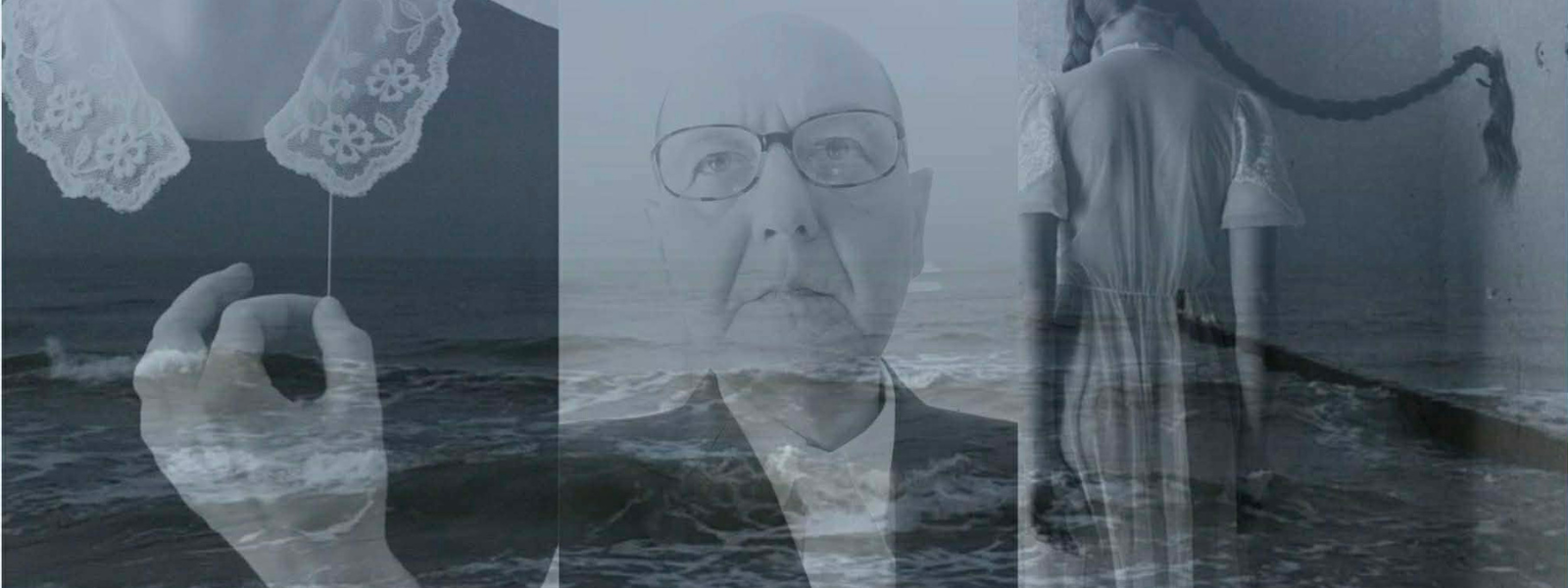
My Mother Cast Me Into the Sea
1950. In her first official posting, a young schoolteacher leaves mainland Greece and heads to a small island in the Cyclades to teach in a one-room primary school. The shift across the map sets in motion an inner monologue, born either of urgent necessity or of a deep, previously unarticulated desire. It is, in any case, the only means she possesses to bridge the distance between what has been left behind and what is just beginning.
The narrative unfolds along two paths. The first traces the heroine’s inner geography: a hinterland of thoughts, memories, faces, and relationships that refuse to fade into obscurity – like a wound that persists, refusing to heal. The second is the outer landscape – the blinding light of the Cyclades in the 1950s, the sea, the isolation, the open line of the horizon. And between the two paths, the island. Yet there is also another island: a stone’s throw away, a tiny speck on the map that will soon confront her with a decision capable of transforming her, compelling her to become who she is.
PEIRAIOS 260 – Η
1 & 2 July
Armin Hokmi
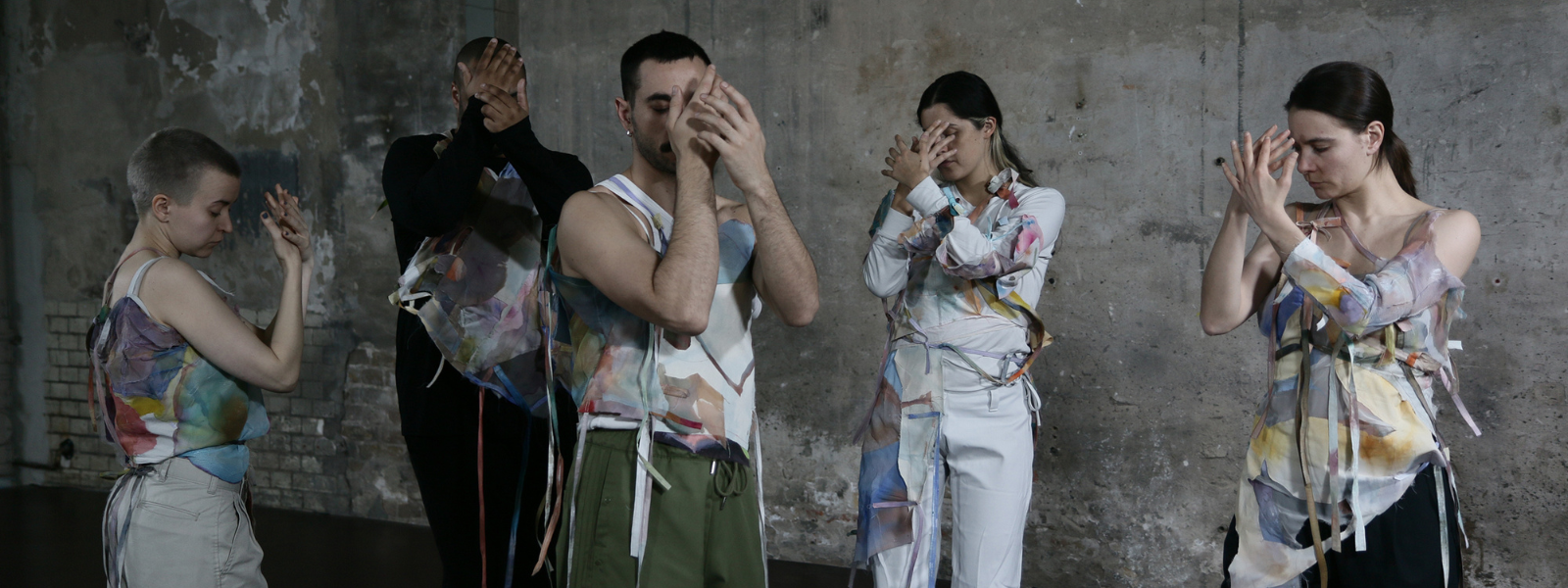
Shiraz
In 1967, Empress Farah Pahlavi of Iran, consort to the Shah of Persia, inaugurated the Shiraz Arts Festival amid the ruins of Persepolis – one of the most forward-thinking and radical cultural initiatives of the twentieth century. Bringing together music, theatre, and dance from across the globe, the festival struck a rare and fertile balance between avant-garde exploration and inherited tradition. In 1977, it was held for the final time: two years later, the Islamic Revolution brought it to an abrupt end, sealing its archive. How does one honour a decade of sustained artistic creation cut short so suddenly? Can a festival be revived through the medium of dance? Armin Hokmi and his collaborators tackle precisely these questions, with imagination and inventive force.
PEIRAIOS 260 – D
4 & 5 July
Milo Rau – NT Gent
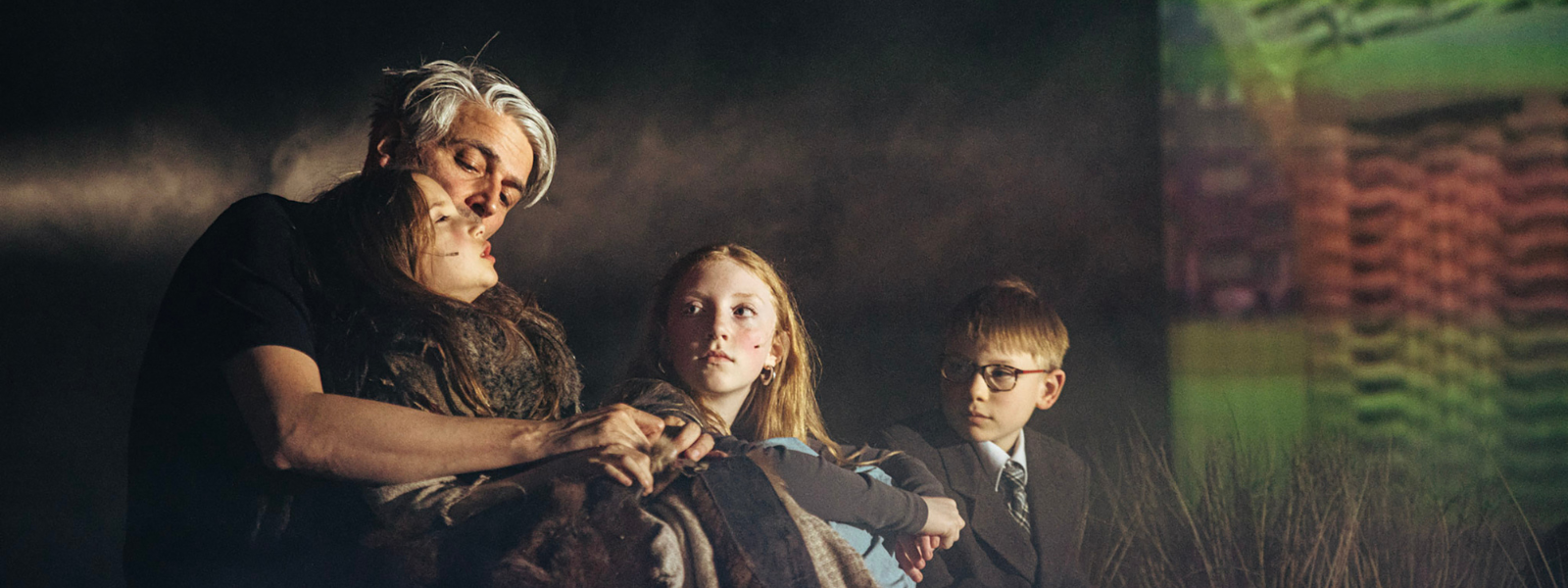
Medea’s Children
The action begins disruptively, after the murders have taken place, with a discussion onstage. Actor and facilitator Peter Seynaeve engages the young performers in a conversation about theatre, tragedy, family bonds, love, jealousy, trauma, and death. While the conventions of ancient tragedy usually keep both children and acts of violence offstage, here, both are brought into full view. The children are no longer unseen presences behind walls; they materialise on stage, speak, and look us directly in the eye. Renowned for his politically charged and realist documentary theatre, Rau does not shy away from the raw face of violence and insists that imagining and witnessing are fundamentally different experiences. Through the use of live cameras, large-scale projections, and pre-recorded scenes, the stage becomes a laboratory of representation and doubt, where the children assume roles as witnesses, mythic figures, and carriers of a foretold crime.
Tender and merciless in equal measure, Medea’s Children serves as a bold reminder of theatre as a collective deed; a ritual that does not “promise redemption” but initiates spaces for connection. Medea is portrayed neither as a monster nor a victim, but as a figure who refuses to be confined by facile judgments.
PEIRAIOS 260 – Ε
4 & 5 July
Gemma Hansson Carbone
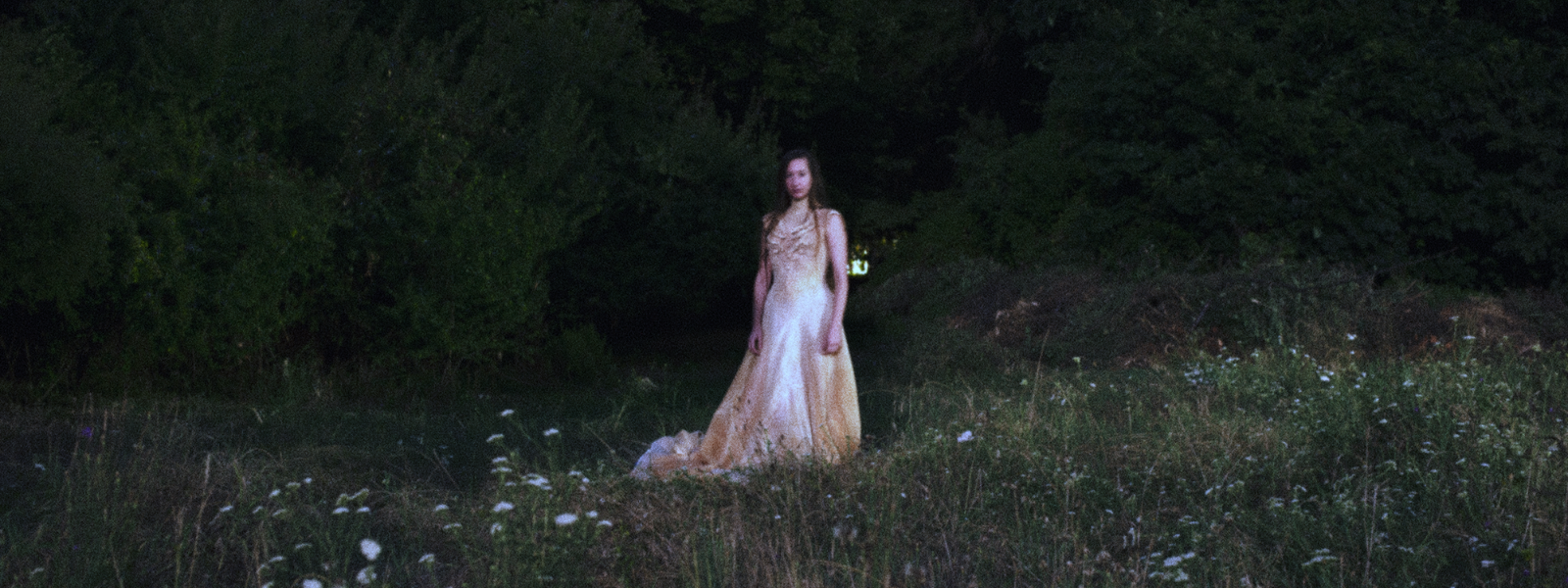
The Annunciation of Cassandra
by Dimitris Dimitriadis
After years of devoted research into Dying as a Country by Dimitris Dimitriadis, Gemma Hansson Carbone furthers her creative dialogue with the writer’s oeuvre, presenting this year at the Festival The Annunciation of Cassandra. Here, the Italian-Swedish actress and director ventures deeper into Dimitriadis’s universe – a writer who wields language and voice as instruments of invocation and awakening – embodying the text herself in a vocal and physical event where everything is transfigured into a hymn.
PEIRAIOS 260 – Β
5 July
Galan Trio
Raw Portraits
As a call to the musical forces of our time, the Greek Composers Union presents a programme comprising works by five composers, alongside two new commissions. It is a carefully curated selection of pieces that were either written specifically for the evening’s protagonists – the Galan Trio – or have since become established reference points within the contemporary Greek piano trio repertoire.
As a testament to its vital connection with contemporary Greek creation, the demanding task of performing these works is entrusted to the Galan Trio. Renowned for its dynamic stage presence and unflappable commitment to the living pulse of art music, the ensemble moves with assured virtuosity between the imperatives of the classical repertoire and a spirit of exploration, fostered through the commissioning and performance of new works for piano trio. Following the presentation of original programmes across Europe and the United States, the Galan Trio’s return to the Athens Epidaurus Festival – after its appearance in 2018 as part of the Claude Debussy tribute – marks a welcome homecoming and a shared occasion for celebration.
PEIRAIOS 260 – Η
7 & 8 July
Need company– Jan Lauwers – Maarten Seghers
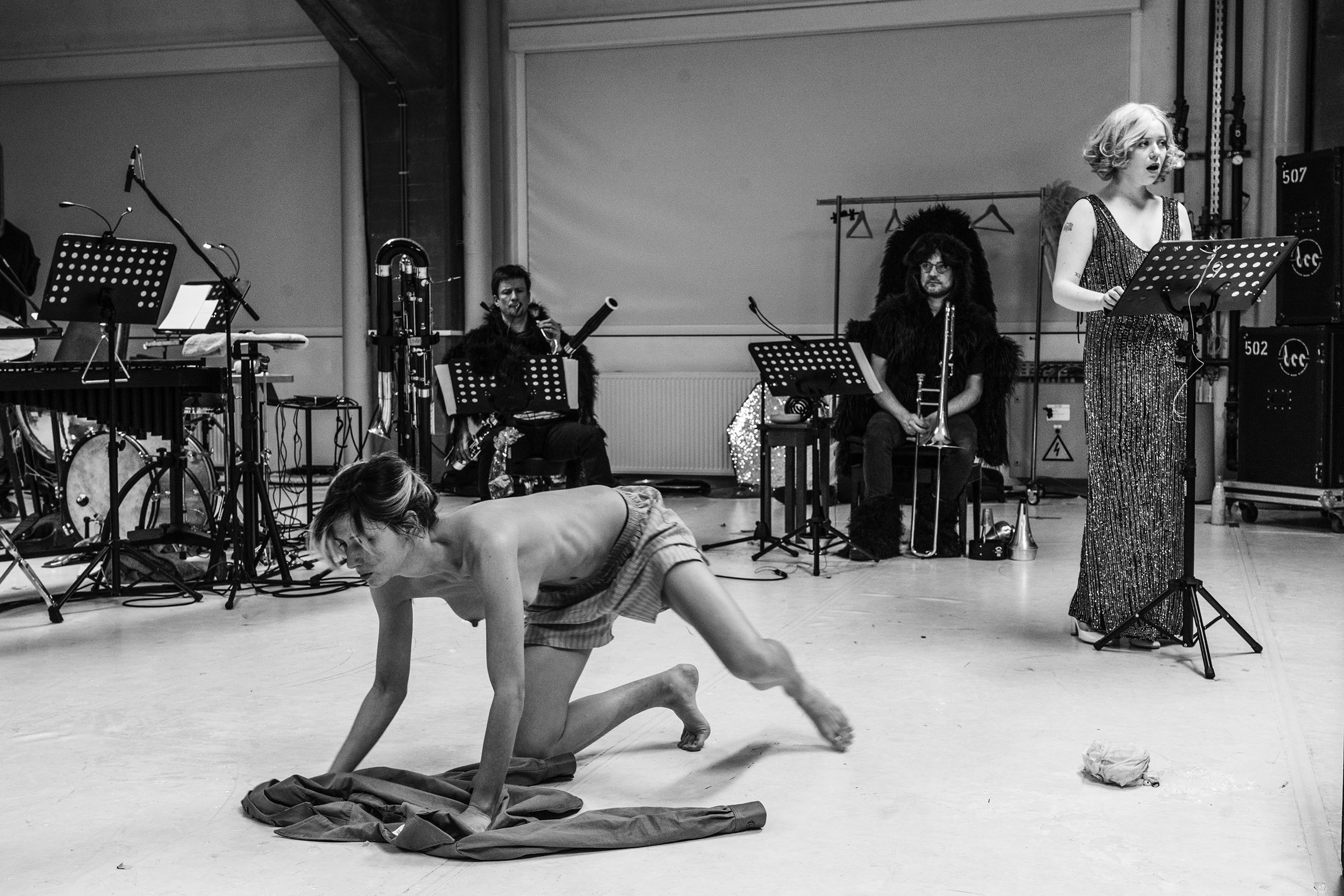
Lee Miller in Hitler’s Bathtub
A tragic cantata
30 April 1945. The thirty-eight-year-old war photographer Lee Miller stands inside the bathroom of Adolf Hitler’s private residence in Munich. Her clothes still carry the stench of her visit to the Dachau concentration camp. She removes her uniform and her mud-caked boots – deliberately soiling the floor as she does so – and steps into the “Devil’s bathtub,” in an attempt to wash away the smell of annihilation clinging to her body. A colleague captures her in what will become one of the most notorious photographs of the twentieth century. On the very same day, Adolf Hitler commits suicide in Berlin.
PEIRAIOS 260 – D
8 & 9 July
Fotis Nikolaou
The Corridor
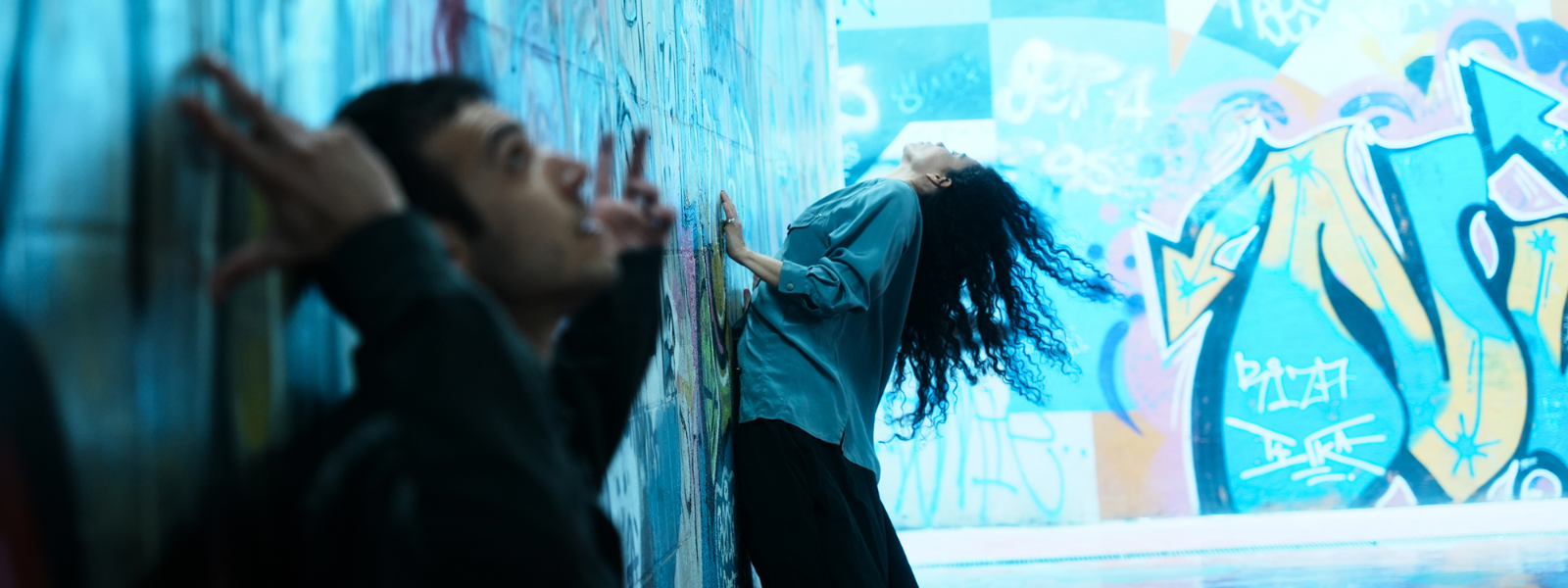
The Corridor is a dance-theatre performance conceived as a lyrical and polyphonic composition on grief, memory, resistance, and identity. At its core lies the universal experience of saying goodbye, not only as the loss of a loved one, but as the gradual erosion of the conditions that shape human life: youth, security, desire, freedom, and, above all, the sense of belonging.
PEIRAIOS 260 – Β
12 & 13 July
Lina Majdalanie – Rabih Mroué
Four Walls and a Roof
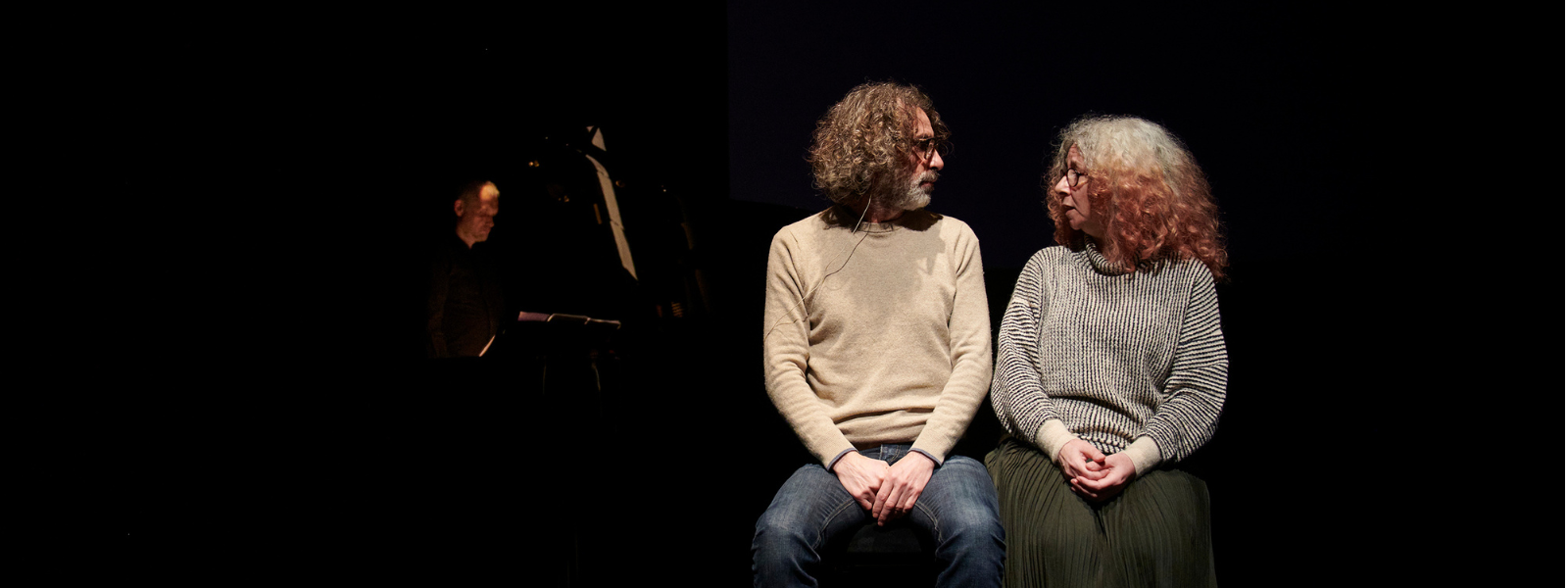
Referencing their own experience of displacement – their relocation from Beirut to Berlin approximately a decade ago – and confronted with the global rise of the far right, the two artists articulate, in unflinching terms, what it means to live and work in exile. What do expectations of freedom of speech look like within a Western democracy when they collide with lived reality – censorship, propaganda, character assassination, and the many forms through which dominant state narratives reproduce themselves? How free and open is, after all, the liberal democracy we inhabit?
PEIRAIOS 260 – Ε
12 & 13 July
Gloria Dorliguzzo
Butchers
What is the connection between butchers and Hasapiko dance?
Choreographer Gloria Dorliguzzo’s work takes its cue from this etymological, historical, and symbolic kinship, sparked by the chance discovery that Hasapiko – the traditional Greek dance – quite literally translates to “the butchers’ dance.” Pulling influences from Japanese martial arts – most notably the Art of the Sword – she turns to the gesture of cutting, seeking the precise point at which labour, rhythm, and everyday practice intersect.

PEIRAIOS 260 – D
12 & 13 July
TAO Dance Theater
16 & 17
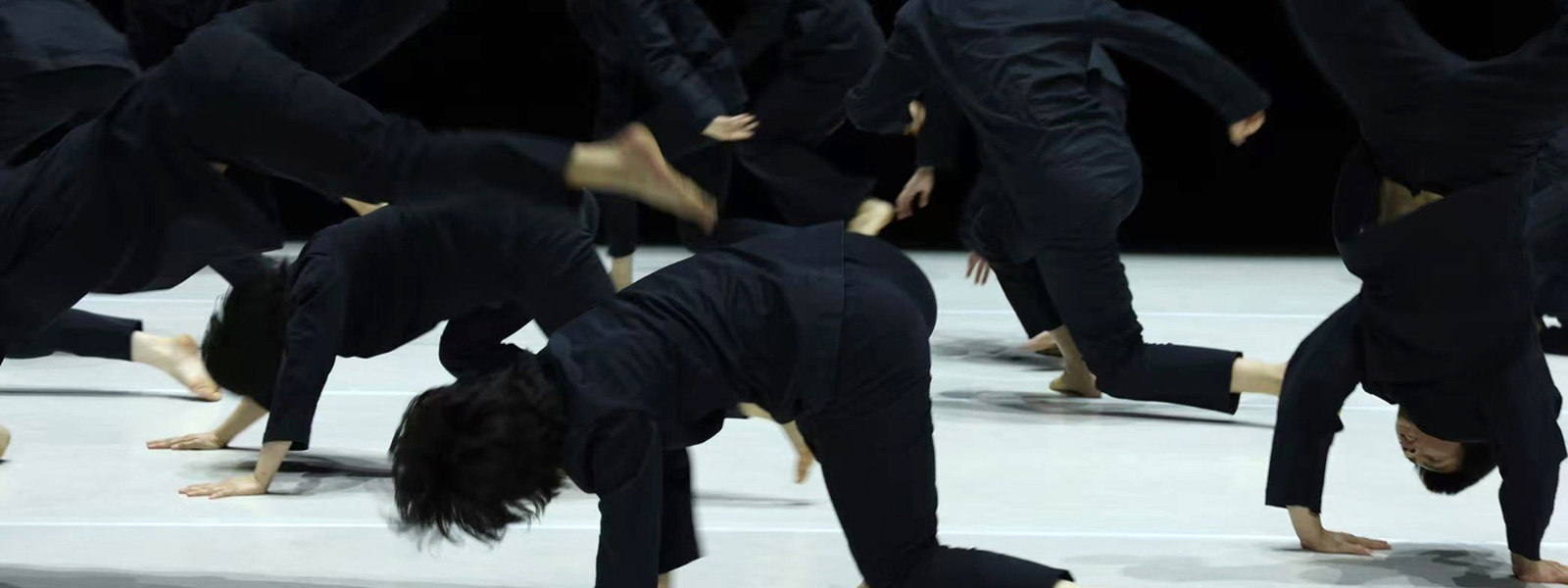
We are not often afforded the chance to engage directly with contemporary artistic production from China. Yet some encounters suffice to recalibrate our perception of the body, of movement, and even of time itself. TAO Dance Company falls precisely into this rare category: one of the most iconic and trailblazing companies in contemporary dance, having conquered the world’s stages with a body language that is exacting, unadulterated, and unmistakably its own.
PEIRAIOS 260 – Η
14 & 15 July
Municipal and Regional Theatre of Kozani
Georgia Mavraganni
The Promised Land
The Promised Land is the Municipal and Regional Theatre of Kozani’s new production for the summer of 2026, co-produced with Athens Epidaurus Festival. It is a theatrical play deeply connected to Western Macedonia’s identity and community, as well as the country’s little-known history of energy.
PEIRAIOS 260 – Ε
17 & 18 July
Mohamed El Khatib
Ending in Beauty
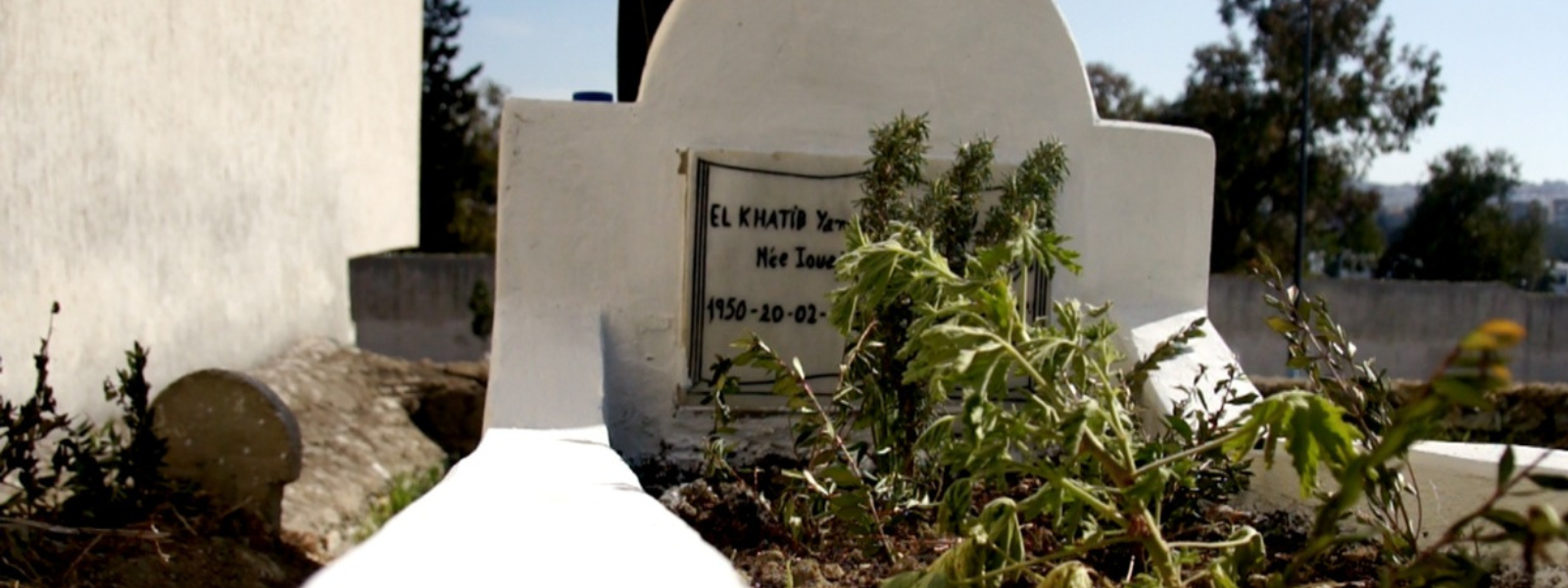
With austere means and meticulous directorial precision, the audiovisual environment becomes at once archive and crack, a space through which life continues to slip. Ending in Beauty is a tender yet unsparing meditation on parting: a theatre of reality that seeks out beauty precisely where it appears to have been exhausted.
PEIRAIOS 260 – Β
17 & 18 July
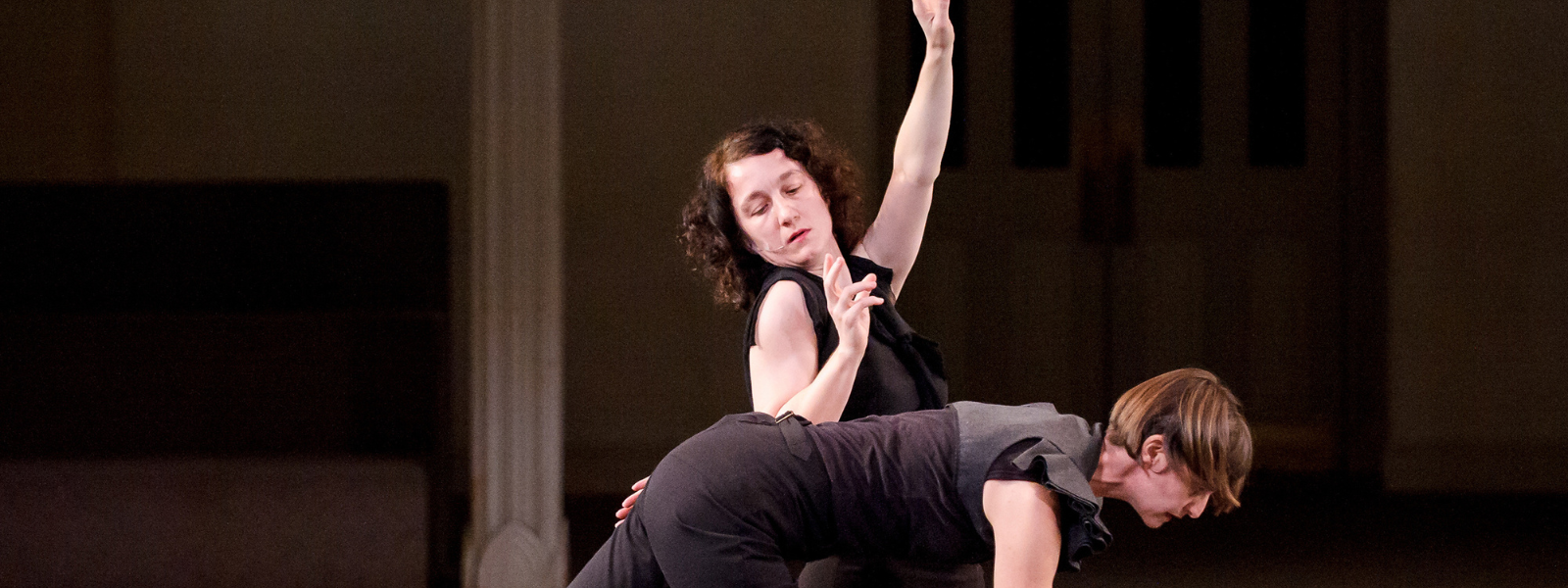
Deborah Hay
point Deborah Hay
No Time To Fly
As Holy Sites Go
How can choreography exist simultaneously as movement, as language and as a way to rethink the presence of the body in space? With the program point Deborah Hay, the Athens & Epidaurus Festival turns its attention to the work of a choreographer who ranks among the defining figures of the American avant-garde. This hommage invites us to reflect on the radically critical point of reference that her work constitutes today, presented for the first time in Greece through an expanded invitation.
PEIRAIOS 260 – D
20 – 22 July
Lena Kitsopoulou
Bacchae
One of the sharpest and most unpredictable voices in contemporary Greek theatre, writer and stage director Lena Kitsopoulou combines blunt realism, humour, and existential anxiety to create performances that balance between the personal and the deeply political.
In her latest work, Kitsopoulou doesn’t offer yet another psychoanalytical interpretation of the Euripidean tragedy. Her approach doesn’t deliver a “Higher” message that would satisfy the audience and grant them the fulfilment of the theatrical experience. Perhaps she only wants to start a celebration around dead-ends, both in the Human world and in the Gods’ realm.

PEIRAIOS 260 – Η
22 & 23 July
Maria Hassabi
Us
Drawing on Hassabi’s language of stillness, deceleration, precision, and sculptural physicality, Us treats time as material and presence as an active, sustained state, negotiated moment by moment.Drifting between moments of rest and observation, the performers maintain a continuous tension within their unfolding narrative, as singular beings and as a group. Each action affects their neighbour, passing from one to the next. Positioned opposite the audience. Them and us. Seated, in parallel. A quiet exchange of attention, duration, and perception.
PEIRAIOS 260 – Ε
22 – 24 July
Zoi Efstathiou
When Did Silence Get This Loud?

A question that isn’t looking for an answer, but rather actively requests the spectator’s participation, body, and mind. While asking, we already know that an answer is not an escape. When did silence get this loud? The dancers and the choreographer put silence in conversation with electricity through a symphony of movement, sound, light, and pulsations, exploring the ways we experience the overstimulation of information and sensory noise nowadays. Are there still kinds of silence weighing down on us?
PEIRAIOS 260 – Β
22– 24 July
Panos Malaktos
Brightest Heroine
The old world is dying; a brave new one is struggling to be born. This is the time of the monsters. In his new solo performance, dancer and choreographer Panos Malactos is inspired by the body that reacts, awakens, and revolts against the monsters of our time. The core of his performance is familiar: the energy that gathers when bodies refuse to remain silent against the ruthless reality of war, political oppression, state power abuse, and injustice. And blow up.

PEIRAIOS 260 – Β
22 – 24 July
Christiana Kosiari
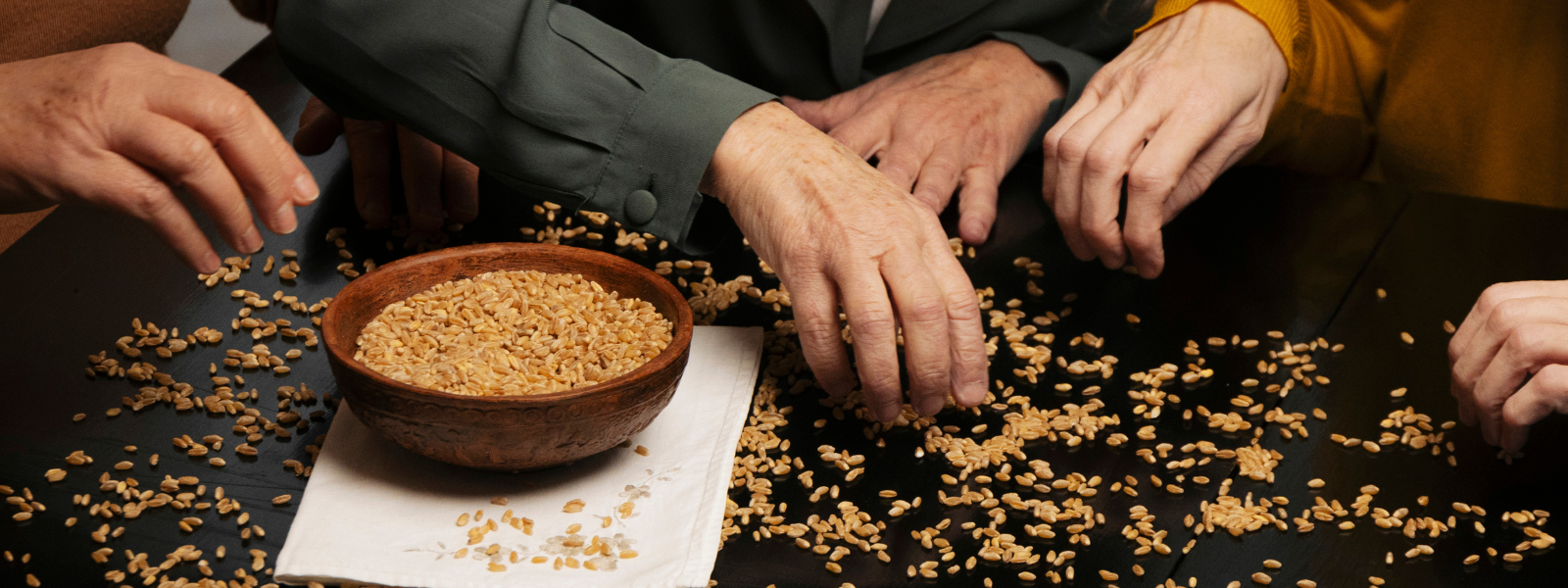
Koliva
Koliva is a dance performance bringing together Greek ritual tradition and contemporary stage language, focusing on the fine line between life and death. In the work’s core lies a paradoxical ritual: every year, five women above sixty meet to make their own koliva while they are still alive.
Choreographer Christiana Kosiari continues to focus on non-youthful bodies, bringing onstage two professional and three amateur performers above sixty. The performers share the same space onstage; each carries along her distinct life path, experiences, and relationship to her body.
Koliva is a celebration that deconstructs death with humour, reconciling it with the circle of life. An encounter that honours what is lost without forgetting what still exists, reminding us that memory, companionship, and joy are powers that echo even after the end.
PEIRAIOS 260 – Η
26 &27 July
Christiane Jatahy
A TRIAL
Based on the play An Enemy of the People
by Henrik Ibsen
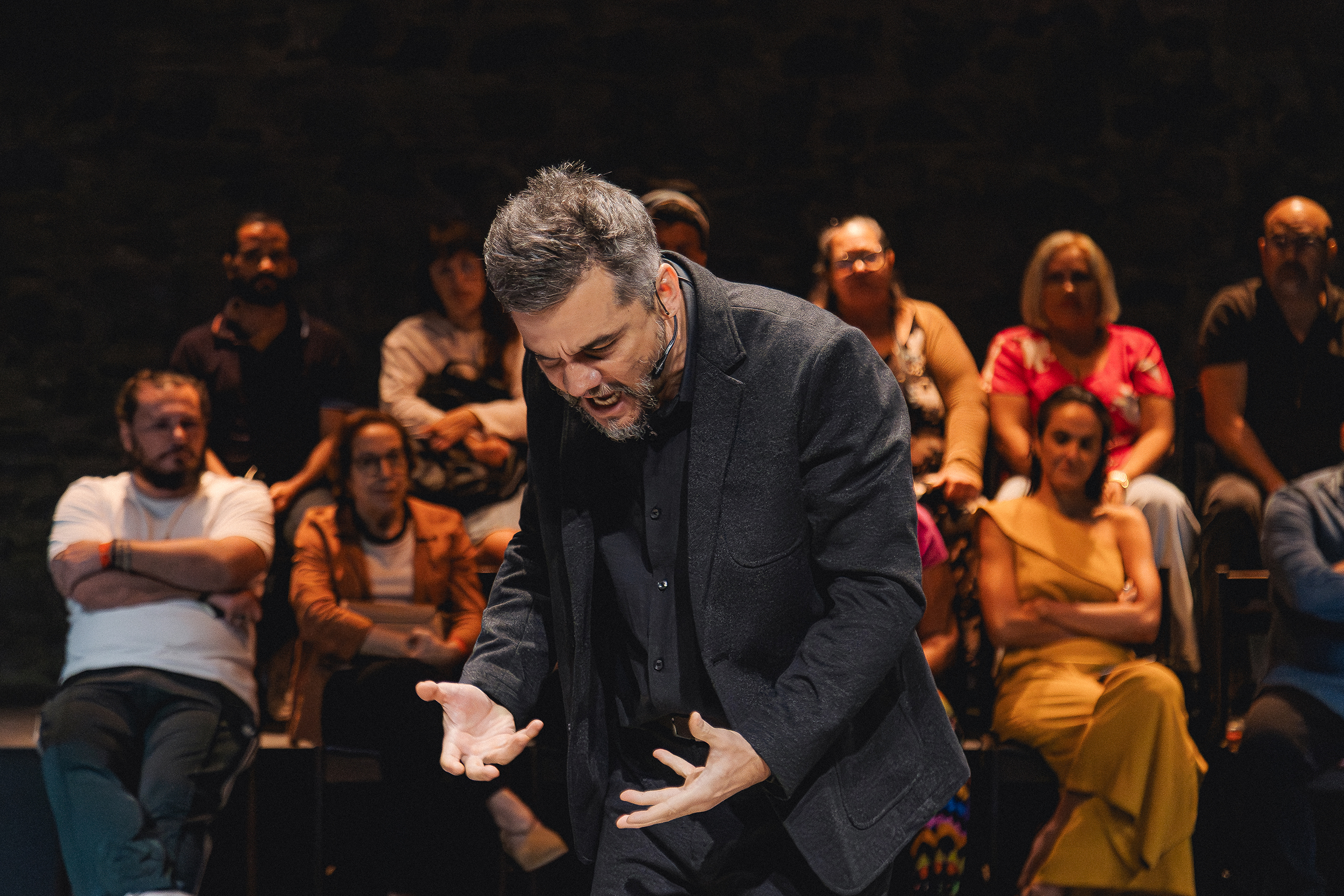
A TRIAL reinvents Ibsen’s drama as a contemporary, participatory “people’s tribunal,” where truth is not merely unveiled but actively subjected to judgment. The point of departure is the scandal at the heart of An Enemy of the People (1882) by Henrik Ibsen: Dr Thomas Stockmann, the medical officer responsible for the municipal baths on which the town’s prosperity depends, discovers that the water supply is perilously contaminated. He is forced to recognise that safeguarding public health demands political courage, personal sacrifice, and open confrontation. When Stockmann insists on making his findings public, the entire civic body – the town’s institutions, the press, and the majority opinion – turns against him, denouncing him as an “enemy of the people.”
At the centre stands Stockmann, embodied by Oscar-nominated actor, co-creator, and principal performer Wagner Moura, who becomes the catalyst of a stage process that turns theatre into an open arena of civic negotiation.
PEIRAIOS 260 –GARDEN
29 May– 27 July
Objects of Common Interest
The innovative visual lighting installation by the award-winning design studio Objects of Common Interest remains at 260 Peiraios Street this year as well, having become an integral part of the space’s visual identity.
The studio’s founders, architects and designers Eleni Petaloti and Leonidas Tramboukis, who work between Athens and New York, focus on creating sculptural objects and experiential environments that highlight the relationship between materiality and space.
PEIRAIOS 260 –LOUNGE E
13 – 30 June
Sergey Khismatov
Video Ensemble
At his installation at 260 Piraeus Street, Kismatov presents three examples of his cutting art. In POLITUNES, he isolates vocal stumbles or verbal gaffes by politicians, dictators, and populists in their live speeches, creating a micro-composition where the hilarious embraces the chilling. The material of SUONO POVERO is a chorus of trash—sounds produced by crushed packaging, waste in bags, and, generally, objects on the verge of being permanently removed from the cycle of life and consumption—in a condensed commentary on sustainability and ecological destruction, which further reveals the influence of Arte Povera on his artistic practice. In the work ROTONDA, Kismatov asked friends from all over the world to send him recordings of creaking doors. The mournful chirping produced by their opening and closing evokes the very gesture of acceptance or exclusion, a painful winking at global migration flows and the culture of tolerance and empathy.
All these videos are not mere sonic whims or navel-gazing, but self-contained and substantive works crafted and produced within the restless creative workshop of a composer who harnesses the full spectrum and dynamics of composition: the crescendo, the dynamics, the articulation, the kinematics of an orchestra, a broad percussive vocabulary, and, above all, the vocabulary of noise. If all this seems dizzying, don’t worry: this is the flavor of the twenty-first century.
PEIRAIOS 260
Calla Henkel–Max Pitegoff
THEATER
On the vast Santa Monica Boulevard in Los Angeles, lined with bright marquees, a woman is trying to put together a theater troupe. With the money she receives as compensation following an accident, she buys a fifty-seat theater and moves in. She is the central figure of the hybrid documentary THEATER by Kala Henkel and Max Pitegov, portrayed by director and visual artist Leila Weinraub, who delivers a performance that vividly echoes the lives of the filmmakers themselves – the artistic duo who renovated a small theater in Santa Monica in real life and began operating it as the New Theater Hollywood in 2024.
STARRY SKY – STARRY NIGHTS
Late-night screenings of the ephemeral nature of theatrical performance
PEIRAIOS 260 – SPACE D
16, 24 & 28 June
4, 8, 13, 21 & 24 July
The new program of the Athens & Epidaurus Festival, hosted at Space D of Peiraios 260, is presented under the title “Starry Sky – Starry Nights.” At midnight, in an industrial landscape, amidst the quiet of summer in Athens, under an open roof, films are screened. In a space where ephemeral performances take place, cinematic recordings are presented, meeting the viewer in a city that is slowing down.
Works filmed in a distinctive manner—not as mere documentation but as autonomous transcriptions of the theatrical experience—retain their intensity, rhythm, and dramatic quality. Contemporary creators compose a polyphonic landscape where theater, dance, and performance engage in dialogue with cinema. Thus—through cinema this time—the Festival’s long-standing dialogue with contemporary performance and the landmark works of the 20th and 21st centuries is established.
AΦTER
Curators Dimitris Tsakas, Iro Nicolaou
AFTER—a curated program of live music—keeps Piraeus 260 alive a little longer into the wee hours of the night. On Friday, May 29, with the start of the Festival, this new initiative is introduced to the public through a series of live performances that run throughout the P260 program, transforming the space into a lively meeting place at midnight.
This new series of live music aims to create a mosaic of sounds and moods, full of surprises. Thirteen musical evenings where jazz gives way to rock, live DJ sets reveal new approaches, while musical performances push the boundaries of stage and sound expression. An AFTER event that establishes P260 as a micro-concert venue—perhaps even independent of the rest of the preceding artistic program—an artistic event in its own right.
LECTURE – PERFORMANCES
A series of open presentations and discussions with a performance-based focus
Curated by Dimitris Papanikolaou
PEIRAIOS 260
16 June, 8, 9,26 & 27 July/ Β
30 June&14 Juky/ Ε
Fireflies
This year’s series of lectures and discussions at the Athens & Epidaurus Festival, presented at the Piraeus 260 venue, is titled “Fireflies.” Drawing inspiration from Pier Paolo Pasolini’s famous “Essay on Fireflies” as well as Georges Didi-Huberman’s book The Survival of Fireflies, we view fireflies as a symbol of resilience and risk-taking, environmental responsibility and eco-critical reflection, but also as a symbol of connection, mobility, and a shift in perspective. “Fireflies” will therefore be a series of open presentations and discussions with a performative character, a flexible format of public discourse that moves between the lecture, the performance, and collective reflection. Through lecture-performances, speakers with diverse backgrounds and specializations activate speech as a form of action and inquiry, proposing ways to rethink issues that traverse the contemporary sociopolitical and artistic landscape. We discuss political and artistic inquiry, the gendered dimension of expression, the memory of performance, confinement, perseverance and survival, citizenship, and participation. “Pygo-Lambides” thus constitutes a different kind of presentation series: small hubs of thought and exchange that seek to spark dialogue and open up multiple interpretations of reality.
In this flexible format, theoretical exploration of ideas, direct dialogue with the audience, and the performing arts coexist and feed off one another, while offering glimpses into the thinking and practice of the invited artists. By showcasing the ongoing artistic and/or research process, these encounters open a window for the public into the way an idea, an artwork, or a research question takes shape, transforming the presentation into a space of shared exploration.
Curated by Dimitris Papanikolaou
In collaboration with Isabella-Dimitra Karouti
Featuring Yannis Vogiatzis (6/16), Theodora Psychogiu and Katerina Foteinaki (6/30), Stathis Grapsas (7/8), Stefanos Levidis (7/9), Lena Platonos (7/14), AEF employees (7/27), and others
ΤΗΕΑΤΕΡ 104
18 – 21 June
Giorgos Vourdamis
Nochavelandi
A Room Western
by Giannis Aposkitis
*Nochavelandi*, based on an original text by Yannis Aposkitis and directed by Giorgos Vourdamis, is a dark farce about the legacy of colonialism, the greed and loneliness of modern man who consumes everything, even himself. Using the themes and aesthetics of Westerns and the annihilation of the tribes of the American continent as a historical fact and global narrative, the creators craft a political satire on humanity and its insatiable nature—a parable for the many El Dorados* of recent centuries.
20 – 23 July
Marinela Katranidou
The Bald Soprano
–These things happen sometimes–
Based on the play by Eugène Ionesco
*The Bald Soprano* is a deeply anti-theatrical play; indeed, the author himself described it as such. It premiered in 1950, provoking the outrage of the audience, who walked out en masse and booed the performance. Over the following years, however, it established itself as one of the most important works in world theater, forever changing the terms of modern dramaturgy.
In the version proposed by Marilena Katranidou, the play is treated as a field of inquiry into human behavioral mechanisms. A theatrical proposal centered on the absurd, a dramaturgy crafted from disparate materials, full of traps that seem absurdly logical. A clichéd story: two typical English couples, a maid, a firefighter, a ringing bell, a possible fire. And yet the real issue lies elsewhere. How many common logics are needed for the absurd to emerge?
MODERN THEATRE (SYGHRONO THEATRO0
21 – 23 July
Thanasis Kritsakis
Michel: Exercises in Mortality
*Michel: Exercises in Mortality* is an original theatrical production that explores fragments of everyday speech, as they are captured within the space of a gym, as well as emblematic texts of Western culture. Based on Michel Foucault’s seminal work, Discipline and Punish, it centers on the body, which is conceived as a site of subjugation and domination of subjects. The body as a system of signs, a field of operations, a machine that can be analyzed, controlled, and made to produce through surveillance, exercise, therapy, prevention, aestheticization, and punishment.
Drawing on both humor and drama, the performance—based on interviews—oscillates between realism, pure fiction, and surrealism, ultimately returning to an authentic artistic interpretation and depiction of reality.
ANCIENT AGORA
17 – 21 June
Giorgos Drivas
Conversation with a Program – An AI Walk Through the Ancient Agora
The project Conversation with a Software Program – An AI Walk Through the Ancient Agora is a walking–dialogic tour, based on the creator’s conversation with Artificial Intelligence (Artificial Intelligence – AI) and is presented in the form of a walk through the Ancient Agora, in the heart of the city of Athens.
ODEON OF HERODES ATTICUS
FAREWELL CELEBRATIONS
3 June
Víkingur Ólafsson
Works by Bach, Beethoven, Schubert
The Icelandic pianist Víkingur Ólafsson is an undisputed phenomenon of rare stature. Now in his early forties, his interpretations have lost none of their youthful ardour, trailblazing spirit, or profound spirituality – qualities that have defined him since he burst onto the international music stage some fifteen to twenty years ago. Among the most celebrated artists of his generation – and long an exclusive recording artist with Deutsche Grammophon – Ólafsson remains, above all, an uncompromising visionary. His artistic choices are marked by originality and by a subversive, luminous gaze that reimagines even the most familiar cornerstones of the piano repertoire.

4 June
The Avex Ensemble
Blade Runner
Live
Legend has it that there was never a definitive version of the film, but rather seven distinct incarnations. Like an ironic echo of the film’s central meditation on replication, Vangelis’s score remains singular and indivisible – a film within the film. It is not a mere accompaniment, but a living pulse alongside and within the image, a vital dramaturgical compass guiding every emotion articulated within Ridley Scott’s dystopian vision of the future. The music of Vangelis bears a singular compositional intelligence. In the forever-iconic “Love Theme” and “Runner’s Blues,” melody surfaces like an inner monologue, casting its hues upon the most fragile facets of a world suspended between the human and the mechanical. On June 4, beneath the rock of the Acropolis, the Final Cut of this landmark film will be screened on a monumental HD screen, while its future-proof soundtrack is performed live by the eleven-member The Avex Ensemble, in perfect synchrony with the image. This will surely be a rite of initiation: a fragment of the future brought to life within the shell of an ancient theatre, on the eve of its closure for restoration works.

5 & 6 June
Stavros Xarchakos
Here and Now
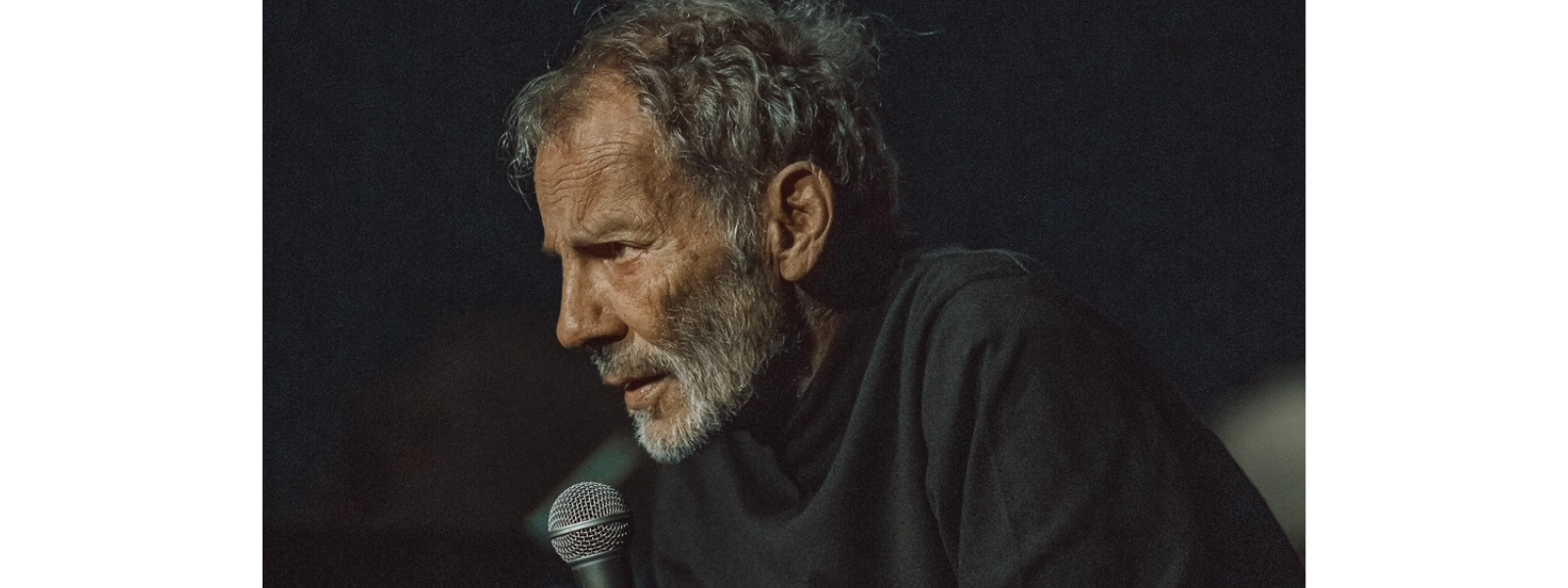
From Our Grand Circus to Rembetiko, from his studies in Paris with Nadia Boulanger to Juilliard in New York – encouraged by Leonard Bernstein – Stavros Xarchakos’ path has been unwavering and monumental, but, above all, highly attuned to the grand adventure of modern Greek song, of which he remains one of the most authentic craftsmen. And yet, this legacy does not seem to weigh upon his shoulders. His activity in recent years reveals an artist wholly surrendered to the pulse of the present and to its vital unrest. For the present is the true dwelling of the creator: a living moment, ever expanding, capacious enough to hold all others within it.
9 June
Εplekto Epirus Ensemble – Vassilis Kostas
Epirus
In the participation of Kostas Tzimas, Antonis Kyritsis and Petros Halkias
Under the artistic direction of the laouto player, lecturer at Hellenic College Holy Cross in the United States, and Grammy-nominated musician Vasilis Kostas – whose decade-long apprenticeship and close collaboration with Petroloukas Chalkias shaped a rare and invaluable core of knowledge and aesthetic insight – this material gains new life today through the Epilekto Epirus Ensemble, the principal orchestra of the production. Based in Ioannina, this twenty-member collective of young musicians from across Greece brings to the stage a vivid dialogue between the authentic performance of traditional melodies and novel approaches to orchestration. In doing so, it preserves the distinct idiom of Epirote music while offering a contemporary artistic perspective on the region’s perennial musical heritage.
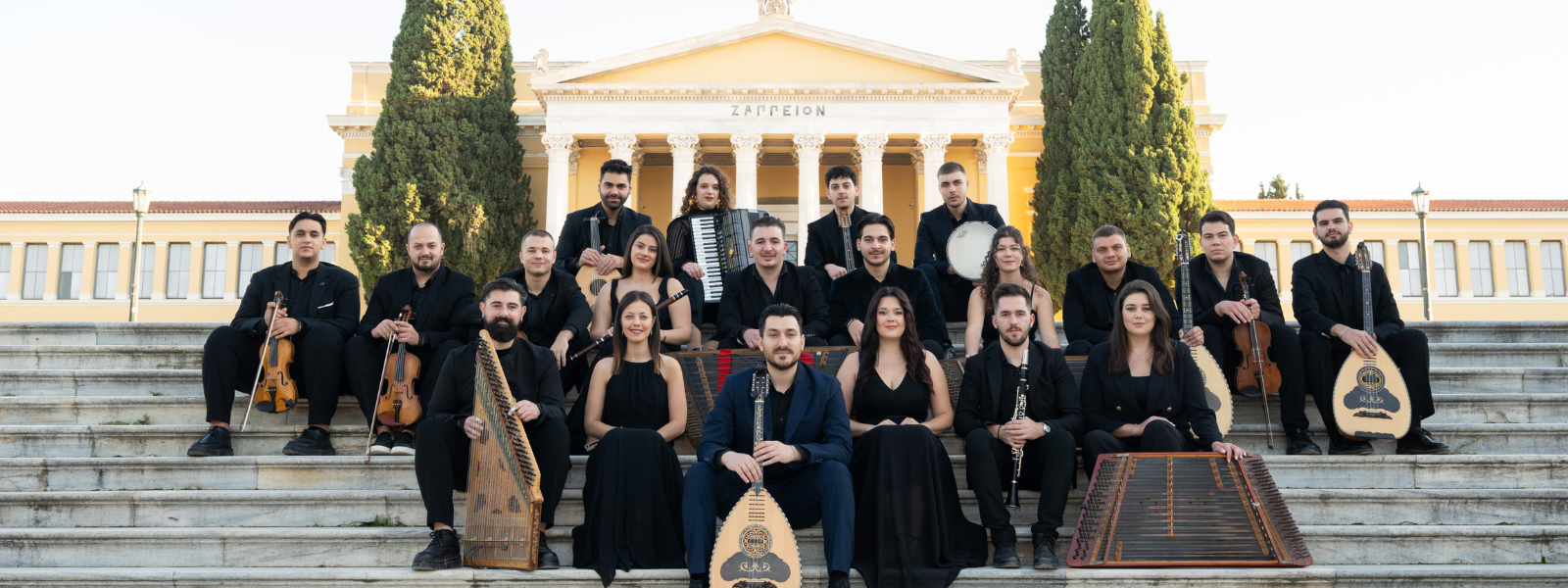
10 June
Athens State Orchestra – Lukas Karytinos
Αmerica by Manos X – Part I
The 1960s find the world in constant flux: legions of young people passionately seeking new visions and meanings in life and in art – culminating in the upheaval of May 1968 – while Greece, in particular, grapples with its own native political and social turbulence, leading to the coup d’état in 1967. Manos Hadjidakis stands at a moment of maturity and recognition. He had already been awarded the Academy Award (1961) for Never on Sunday and, more importantly, has succeeded in speaking directly to the soul of Greek –and not only Greek– audiences, weaving together art music and folk legacy in a manner at once natural, profound, and deeply candid.At this crossroads, he spreads his wings towards the United States, where he resides for several years, consciously retreating from a dire Greek reality, yet also distancing himself from his very own roots, that is, his leanings towards certain sounds, imagery, and the intimacy of his closest circle. In America, “dancing with his own shadow,” he experiences the universality of Greek music anew, while uncovering unexpected dimensions of his deeply seated sensibility. It is there that he composes the thrilling Gioconda’s Smile (1965), a work that would come to define the artistic quests of its time and stand as a touchstone of modern Greek music. Three years later, in 1968, he composes the score for the western film Blue by the Canadian director Silvio Narizzano. Despite the film’s failure, Hadjidakis’s music emerges as a singular accomplishment, and by virtue of its intrinsic value has endured independently as one of the finest instances in his orchestral oeuvre. This summer, the Athens State Orchestra, under the direction of its artistic director Loukas Karytinos, revisits these two major works by Hadjidakis, marking the centenary of his birth with a tribute worthy of his enduring legacy.
12 & 13 June
Stamatis Kraounakis
Lysistrata
A hillarious opera
Can anything new still be said about Lysistrata after all these years? Why does it return with such persistence to the stages of the world? What resources of meaning remain inexhaustible within the heroine’s audacious grace?
It is therefore a particularly felicitous moment for this adaptation by Stamatis Kraounakis, which leaves us wondering what might emerge from the encounter between the sparkling wit of Aristophanes and the composer’s unbridled musical imagination. Kraounakis forges a polyphonic operetta in which music and speech coexist in equal measure, all tuned to the key of the poet’s merciless satire. By turns lyrical, folk, and sharply cabaret-like, the music becomes the driving force of the action, while the sung theatrical speech completes this Aristophanic rite, casting glances to the present and amplifying the work’s exuberant theatricality. At the same time, the internationally acclaimed scenographer Takis envelops the production in a strikingly contemporary aesthetic that resonates with the work’s historical framework, culminating in an irresistible visual spectacle. On stage, thirty distinguished performers and musicians come together, with the singular presence of Dimitra Galani in the role of the goddess Athena.

15 June
Estonian Philharmonic Chamber Choir – Tallinn Chamber Orchestra – Tõnu Kaljuste
Works by Arvo Pärt
In a celebration of the life and work of the Estonian master, this evening at the Odeon of Herodes Atticus brings together emblematic works from his vocal oeuvre, both solo and choral. The demanding task of interpretation is entrusted to the Estonian Philharmonic Chamber Choir and the Tallinn Chamber Orchestra under the direction of Tõnu Kaljuste – Pärt’s long-standing collaborators for decades, who have played a critical role in shaping and disseminating the understanding of his musical language. Their presence on the stage of the ancient theatre promises an evening of profound musical devotion: a true vesper of sound, marked by unalloyed emotion and offered as a gesture of gratitude to a great hierophant, who once distilled the power of music into these few words: “If one can kill with a sound, then one can also heal with a sound.”

17 June
Giorgos-Emmanouil Lazaridis– Raining Pleasure
Αmerica by Manos X – Part II
A leap forward in time: in a studio just outside Cologne in 2004, Raining Pleasure complete their recording of Reflections, joined by saxophonist David Lynch and Elli Paspala on the closing track, “Noble Dame”. A band of innate melodic sensitivity and distinctly European orientation, they recognised their kinship with the key traits of Reflections – its English lyrics, its rock-infused pulse – and delivered a reinterpretation of remarkable finesse and emotional depth. The album became a crowning moment in their discography, while also opening new paths of international recognition through its live presentations across various stages.
This rare alignment of musical forces returns to life this summer. And if we look closely at the stage of the ancient theatre, as Raining Pleasure unfold the gossamer world of Reflections, we may glimpse a reflection forming, before the orchestra or suspended in the night sky: an electric ensemble under the baton of a composer-magician – the New York Rock & Roll Ensemble and the eternal Manos Hadjidakis.
18 June
Einstürzende Neubauten
An Ode to Avant Garde
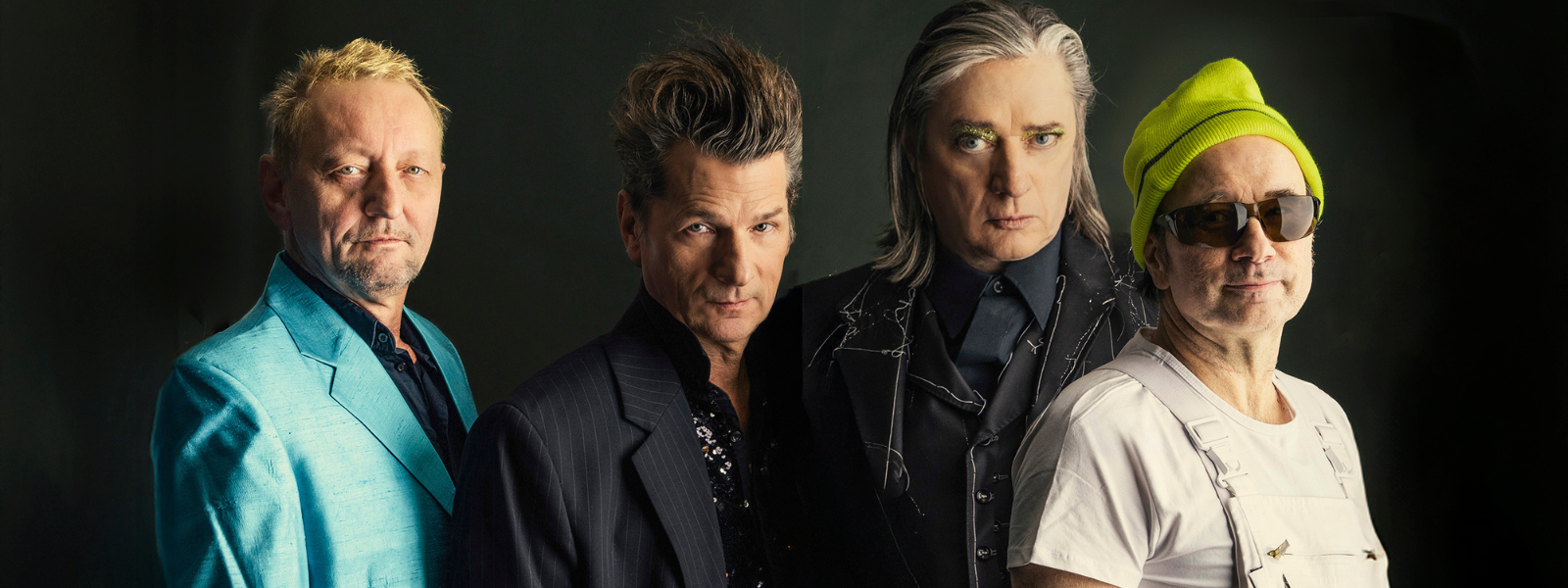
Those who will climb the stairs to the ancient theatre on this June night will find themselves confronted with a historical paradox: a demolition crew of musical conventions, disguised as a band, will have seized the stage of the Odeon of Herodes Atticus, transforming it into an exquisite industrial playground.
We are speaking, of course, of Einstürzende Neubauten (“Collapsing New Buildings”). Amongst the most vital biological processes that sustain a species, ensuring both its renewal and survival, is the capacity to absorb foreign DNA – even when it may prove hostile. With a wisdom that mirrors this principle, the German ensemble has traversed half a century of musical history, continuing to sound unmistakably like themselves because they sound like nothing else. While they may cast a fleeting glance toward passing sonic avant-gardes, their listening remains steadfastly attuned to a sound that emanates from within.
19 June
Lena Platonos-Maria Farantouri
Fortunes
The great Lena Platonos, perhaps at the most mature stage of her artistic career, and the interpreter of the great poets, Maria Farantouri—who is singing a Lena Platonos composition for the third time in its world premiere—come together at the Odeon of Herodes Atticus with three magnificent works.
The unique Lena Platonos, as a natural kinswoman of the ancient figures, uses her music as the vehicle that dynamically transports the poets into the present and ensures them a life in the future—now, set to song—giving the works a contemporary tone with her electronic palette. At the same time, she highlights the tradition of the ancient Greek musical scale, incorporating elements from traditional song. The ideal performer of these works could be none other than the timeless—and therefore timeless—voice of Maria Farantouri.
The music and narration by Lena Platonos, together with Maria Farantouri’s performance, rescue the Poetesses from oblivion, as a song both of the present and of all time, just as they truly deserve. The original texts of the narrations and the translations into Modern Greek are by Thanos Tsaknakis.

21 June
ERT National Symphony Orchestra – Michalis Oikonomou
Leonidas Kavakos – Elias Livieratos
World Music Day
Works by Beethoven and Mozart
The ERT National Symphony Orchestra joins forces with the renowned violinist Leonidas Kavakos in a performance of Wolfgang Amadeus Mozart’s masterpiece, the Sinfonia Concertante for Violin and Viola. Joining the internationally renowned soloist will be his longtime collaborator and violinist, Elias Livieratos, while the concert will be conducted by the orchestra’s principal conductor, Michalis Oikonomou.
22 June
Lykke Li
Lykke Li does not write songs; she writes moments. Moments that meet you when you least expect them, overturning the course of your day and transforming your night. The irreducible voice behind “I Follow Rivers” and tracks such as “No Rest for the Wicked” and “I Never Learn,” comes to Greece for the very first time, meeting her devoted fanbase at last and fulfilling a long-standing concert wish.
On 22 June, the Odeon of Herodes Atticus becomes the ideal setting for this long-awaited convergence – a concert that will traverse the entire gamut between the fragile and the explosive. With new material on the horizon and a forthcoming album expected in 2026, Lykke Li continues to redefine the contours of contemporary pop with impeccable style, wise instinct, and an unerring command of atmosphere.

25 & 26 June
Stathis Livathinos
Euripides
Hecuba
In the shade of Plato’s Republic
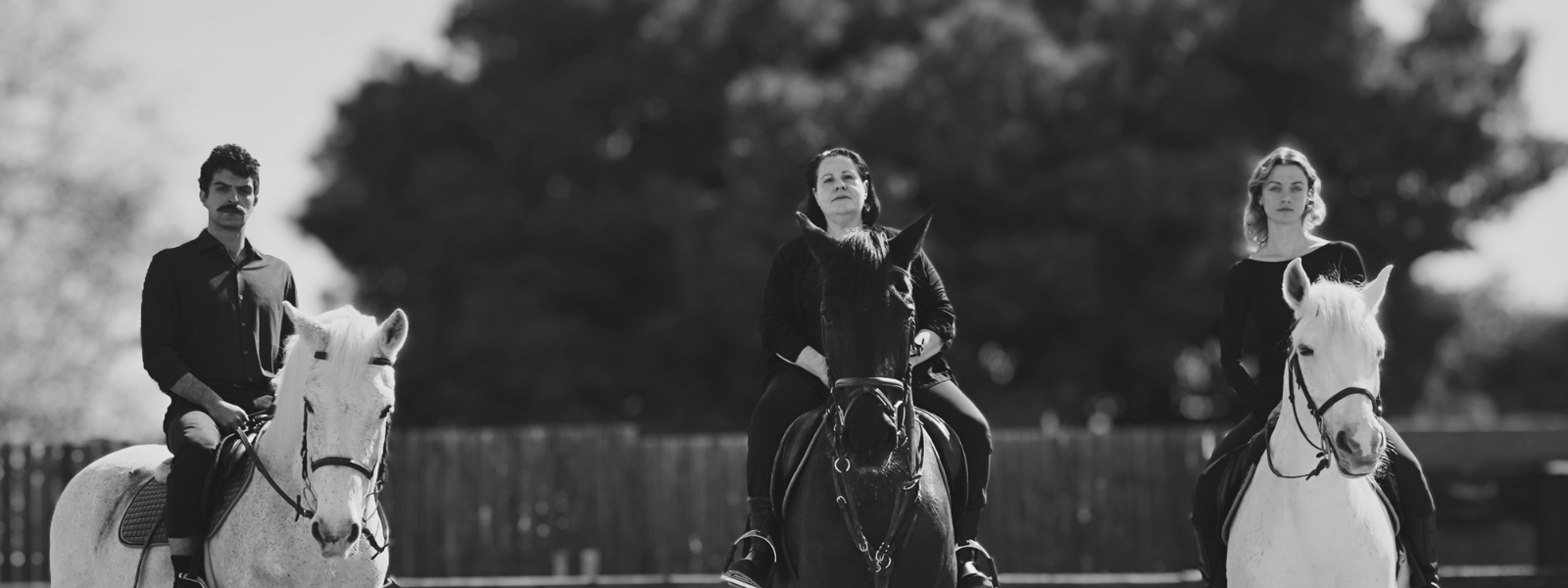
Euripides’ Hecuba, written in the early years of the Peloponnesian War, does more than recount the fall of mythical Troy; it also portrays the twilight of the Athenian polis as a coherent political and civic structure. Throughout the play, the invocation of law and justice recurs insistently – an indication of a period in which neither can truly function. By contrast, Plato’s Republic, composed during a period of cultural upswing, articulates a utopian vision of reconstruction, binding knowledge to the very fabric of political order. Though separated by genre and time, the two works align over a shared axis of inquiry:
The backbone of the staging is the “Allegory of the Cave,” Plato’s emblematic parable on illusion, knowledge, and the possibility of awakening. The image of prisoners mistaking shadows for reality establishes here a powerful theatrical condition. Within it, Hecuba rises as a catalytic presence, while the incisive directorial gaze of Stathis Livathinos transforms the union of tragedy and philosophy into a locus of reflection and trial – one where the limits of awareness, human measure, and responsibility are relentlessly tested.
29 June
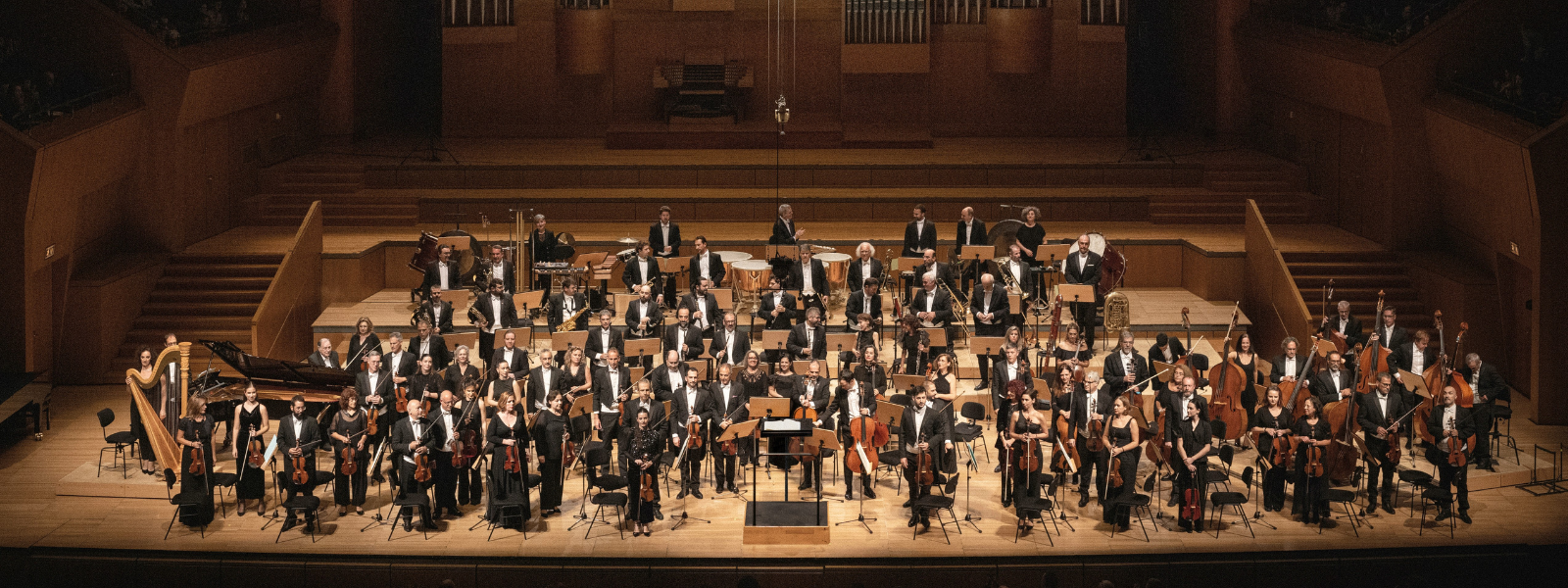
Athens State Orchestra-Michał Nesterowicz
Symphony No. 8
by Gustav Mahler
Even within the monumental symphonic output of Gustav Mahler, Symphony No. 8 occupies a singular place. It signals an extreme –indeed, a culmination – not only in the Mahlerian oeuvre, but in the Romantic symphonic lineage in its entirety. The epithet “Symphony of a Thousand” was not the composer’s own, but was coined by the impresario Emil Gutmann as a publicity device ahead of the premiere. It may sound like an exaggeration today, yet it is estimated that no fewer than 858 singers and 171 musicians participated in the performance. And yet, the essence of the work lies neither in its duration (Symphony No. 3 is longer) nor in the sheer scale of its performing forces (Symphony No. 2 demands similarly vast resources). The undisputed grandeur of the “Eighth” resides in its purely affirmative spirit: it is the only one of Mahler’s symphonies entirely devoid of irony, doubt, or inner conflict. Instead, it unfolds with a masterful, unyielding rhetorical force, conveying messages of profound spirituality with unflappable inner conviction and musical certainty. Its premiere on 12 September 1910 in Munich, conducted by the composer himself, was the greatest triumph of Mahler’s lifetime, just seven months before his death. Mahler himself regarded the Eighth as his supreme compositional achievement, while the great German writer Thomas Mann encapsulated the essence of this colossal work when he wrote that it “expresses the art of our time in its profoundest and most sacred form.”
30 June
John Legend
Evening of Songs& Stories
A contemporary myth, an illustrious stage, and an indisputable sense of momentum: John Legend – the soulful innovator of R&B and one of the defining voices of twenty-first-century music – arrives in Greece for the first time for an exclusive appearance at the Odeon of Herodes Atticus. A milestone moment, the final evening of June has already secured its place in history: this concert will be the penultimate cultural event to unfold upon the theatre’s fabled stage before it closes for an extended period of restoration.
This appearance forms part of the tour “An Evening of Songs & Stories,” a musical narrative in which each song becomes a waypoint in a life lived through sound. Legenda, in Latin, refers to stories “to be told” or “to be read” – and this is precisely what John Legend offers here. Alone at the piano, he strips his compositions of their orchestral armour, transforming them into a widescreen retrospective of memory and experience. What transpires on stage is an intimate act of revelation, as he unspools the stories, encounters, and lived moments that have shaped an unparalleled artistic and personal journey.

ANCIENT THEATRE OF EPIDAURUS
20 June
Greek National Opera – Jacques Lacombe–Panaghis Pagoulatos
Medea
By Luigi Cherubini
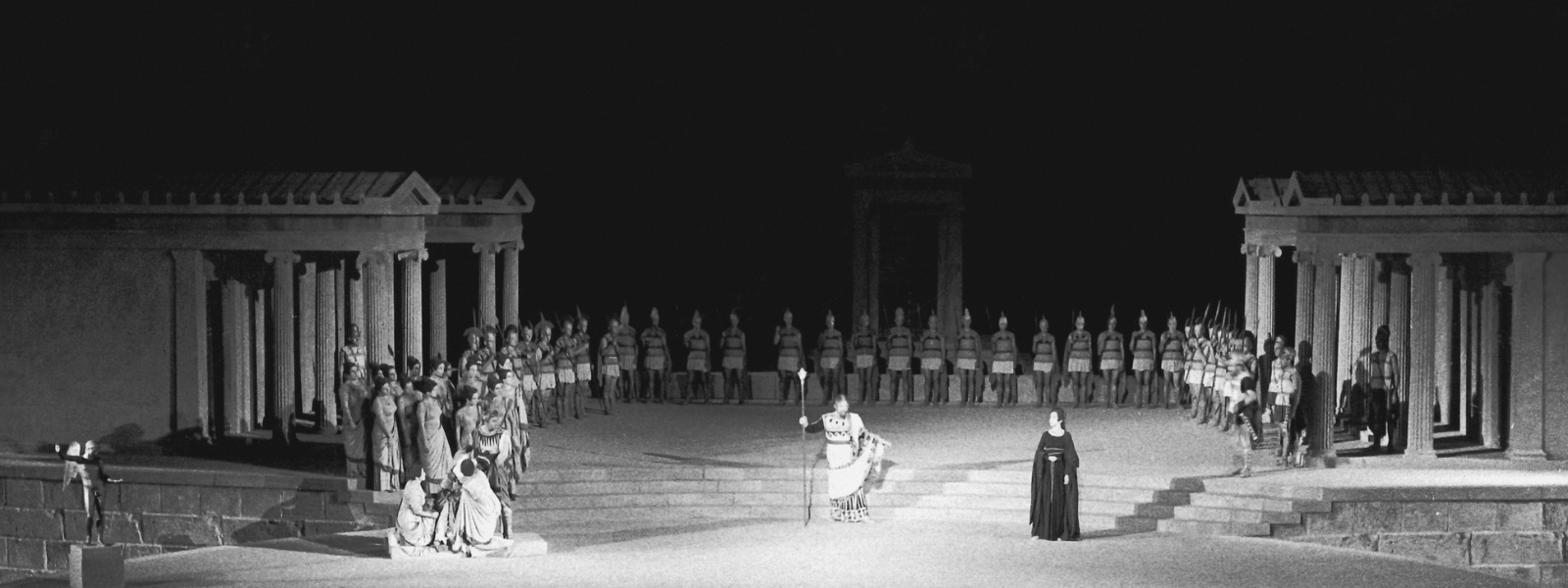
The Greek National Opera revives Luigi Cherubini’s Medea at the Ancient Theatre of Epidaurus for an exclusive performance on 20 June 2026, sixty-five years after the legendary 1961 production featuring Maria Callas in the title role, directed by Alexis Minotis, with sets and costumes by Yannis Tsarouchis, and choreography by Maria Mors.
Within the framework of the 2025/26 season’s thematic spine, which explores the notion of “tracing the opera of the future through the womb of the past,” the Greek National Opera returns to the historic Medea of 1961 through the materials of the present. Drawing upon Minotis’ directing notebooks, Tsarouchis’s original designs, and the extensive photographic material from Callas’s iconic performances at Epidaurus, the new production summons the spirit of the original staging as conceived and realised by those legendary artists who have left an indelible mark on Greek cultural history.
3 & 4 July
Christos Theodoridis
Aeschylus
The Persians
In his first appearance at the Argolic theatre, this young director from Thessaloniki confronts the nucleus of the Aeschylean tragedy. Written in 472 BC, The Persians is the oldest surviving complete work of ancient Greek dramaturgy, and, at the same time, the earliest case of History’s transcription into a purely theatrical deed. Christos Theodoridis invests himself in this profoundly anti-war work, furthering the conceptual trajectory he has traced in recent years through politically charged and acutely contemporary works (To You Who Are Listening to Me, Loula Anagnostaki; Who Killed My Father, Édouard Louis; and The Iran Conference, Ivan Vyrypaev, among others).

10 & 11 July
Ivan Vazov National Theatre
Javor Gardev
Euripides
The Bacchae
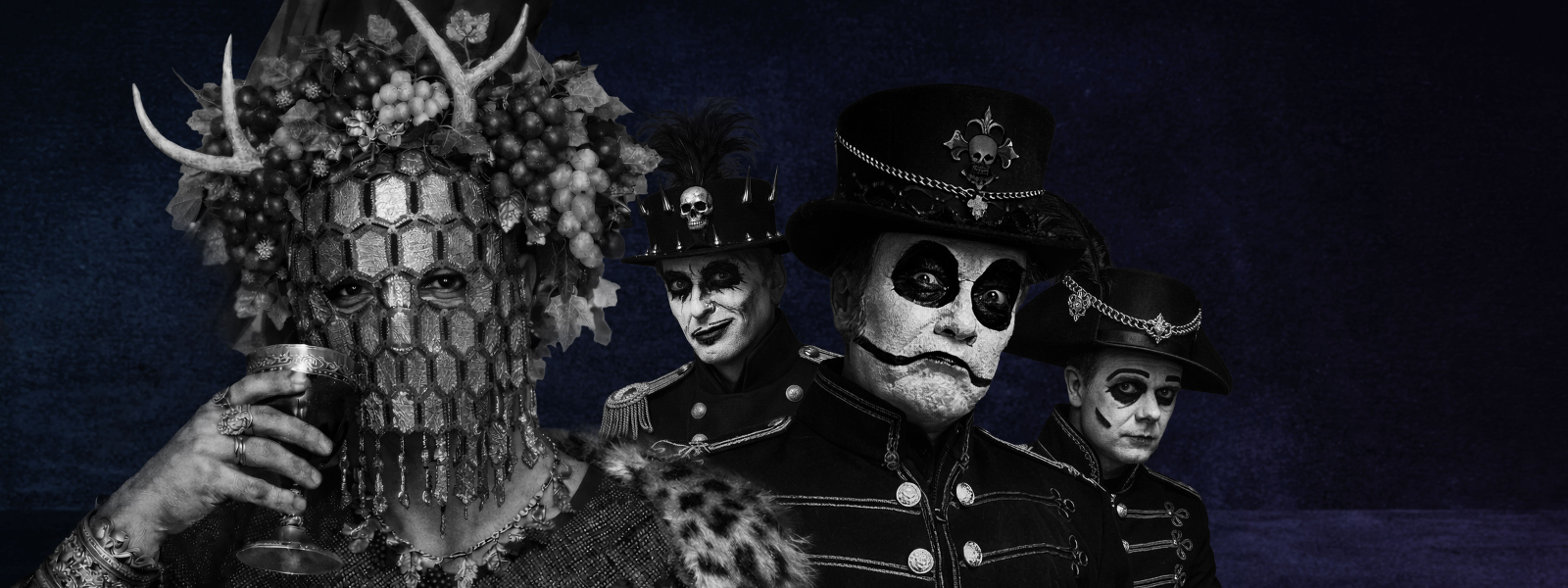
With The Tiger Lillies
On a rare Epidaurian occasion, at the very site where music and drama have resonated across millennia, The Bacchae, under the direction of the distinguished Bulgarian auteur Javor Gardev, come alive at the ancient theatre in a staging that unsettles the perennial contest between two primal forces: the radiant clarity of Apollo and the chaotic seduction of Dionysus. The music score is composed and performed live on stage by the internationally acclaimed British ensemble The Tiger Lillies, who further amplify the dramatic action in their guise as shadowy troubadours – figures elicited from the very heart of the Dionysian cosmos. From this convergence of Organisations, bodies, and live music emerges a performance that jolts the certainties of reason to their core.
In Gardev’s The Bacchae, a critical question takes centre stage: how much destabilisation can a society endure? How does the collective body metabolise an event – mentally, psychologically, and politically – before it hardens into trauma? The tragedy becomes a reckoning with the limits of orderliness, testing the resilience of both rules and institutions alike. In Euripides’ vision, Dionysian ecstasy is no carefree celebration; it is a trial for civilisation itself, pushing to extremes our obsession with control, custom, law, and self-image.
17 & 18 July
National Theatre Greece
Dimitris Karantzas
Euripides
Alcestis
In Gardev’s The Bacchae, a critical question takes centre stage: how much destabilisation can a society endure? How does the collective body metabolise an event – mentally, psychologically, and politically – before it hardens into trauma? The tragedy becomes a reckoning with the limits of orderliness, testing the resilience of both rules and institutions alike. In Euripides’ vision, Dionysian ecstasy is no carefree celebration; it is a trial for civilisation itself, pushing to extremes our obsession with control, custom, law, and self-image.
Dimitris Karantzas orchestrates Alcestis as a stage experiment, in which music, sound, movement, and the oscillations of theatrical tone coexist organically, conjuring a fluid, liminal, and ever-morphing world. With a remarkable cast of actors and collaborators, the performance becomes a staged argument that does not merely recount the myth but poses burning questions about power, gender, sacrifice, and society’s responsibility towards the perishing of the eponymous heroine – and of others beyond her.
24 & 25 July
Nikos Karathanos
Eirene (Peace)
A revisit to Aristophanes’ work
Nikos Karathanos, Fivos Delivorias, and Angelos Triantafyllou are the main collaborators on a new production, a new adaptation, a response to madness with madness.
Eirene holds a pivotal place within Aristophanes’ entire oeuvre as the most conciliatory and optimistic among his political comedies. Though deeply rooted in the era that birthed it, it remains timeless, shedding light on a mechanism that has perpetuated itself to this day: the wars that keep protracting at the expense of the many and for the benefit of the few. The insistence of ordinary individuals on claiming peace, even in the face of blatant power, renders the work urgently relevant in a contemporary world where invasions, violence, threats, insecurity, and cynicism are repeatedly replayed as unavoidable reality.

31 July & 1 August
National Theatre Greece
Eleni Efthimiou
Euripides
The Trojan Women
The quintessentially humanistic and fiercely anti-war work by the great tragedian is brought to life by a group of twenty-two performers – including members of the En Dynamei ensemble – of all ages, with and without disabilities, accompanied by live music on stage. At the Ancient Theatre of Epidaurus, the National Theatre of Greece presents Euripides’ The Trojan Women, directed by Eleni Efthymiou, in a performance probing the perennial horrors of war and loss as collective memory, but above all, the female body as a universal emblem of human tragedy.
In Eleni Efthymiou’s staging, The Trojan Women are not only the beautiful, robust bodies of the privileged royal household awaiting their final sorting. Their bodies are mixed with others – underage, disabled, elderly – bodies that even before the war never governed their own fate and are rarely granted the privilege of narration; bodies the system ostentatiously ignores, which power chooses either to manage or to annihilate. After all, death excels in being “just”, as he equates the more with the less, before condensing it to nothing.
7 & 8 August
Alan Lucien Øyen
Antigone
Inspired by the work of Sophocles
Antigone is a new, radical reimagining of Sophocles’ tragedy, fusing the poetry of movement with the expressive force of text and spoken word.
Crafted by Alan Lucien Øyen, one of Norway’s most restless and compelling contemporary choreographers, writers, and directors, the work brings to the stage the performing arts ensemble he founded two decades ago, winter guests, a creative unit comprising dancers, actors, writers, and designers. Joining them are leading collaborators and dancers from Pina Bausch’s Tanztheater Wuppertal, in a rare and meaningful artistic encounter: Øyen was one of the first choreographers invited to create a new, full-length work for the feted ensemble following the death of its founder.

21 & 22 August
National and Regional Theatre of Northern Greece
Asterios Peltekis
Aristophanes
Lysistrata
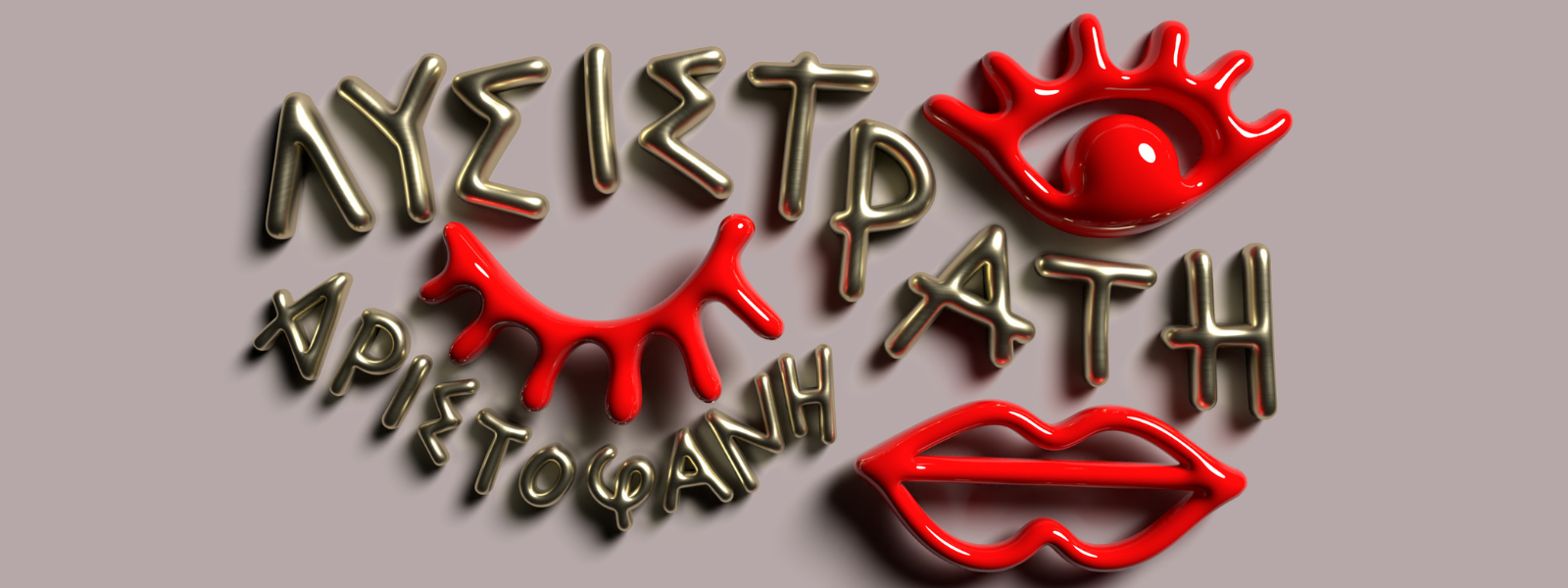
Lysistrata is not merely a comedy about war and love. It insists on being a profoundly political, deeply human-centred work, focused on that moment when a society, exhausted by blight, urgently seeks a new mode of organising itself.
The National Theatre of Northern Greece presents a contemporary stage reading of Aristophanes’ comedy, which, by virtue of laughter, addresses us with an authentically lyrical yet comedic earnestness, speaking to the entropy into which societies so often lapse.
At the Ancient Theatre of Epidaurus, where for centuries we gather as a community to confront our limits, our very own Lysistrata aspires to resurface not as a monument of ancient dramaturgy, nor as a reflection of an ancient-bound expression, but as a breathing political event. A reminder that even amid the direst decay, renewal remains possible if only we dare to imagine our existence and, mostly, coexistence under a new light. As if in a dream.
28 & 29 August
Cyprus Theatre Organization
Thomas Moschopoulos
Euripides
Ion
One of the most enigmatic cases of ancient Greek dramaturgy, Ion defies clear classification. It is not a “pure” tragedy, as it teeters between the tragic and the comic, myth and realism, mysticism and scepticism, always stirring issues of identity and belonging. Moreover, it is a work that appears to converse directly with present-day experience, in an era where everything seems to be under constant consideration and renegotiation.
The play, a production of the Cyprus Theatre Organisation under the direction of Thomas Moschopoulos, attempts to foreground the playful and ambiguous spirit of the work, transforming the stage into a multi-prismatic space of contemplation, where the reflections of truth and falsehood overlap – revealing and concealing one another – while the question of identity gapes wide open, fluid, and agonising.
20 June– 29 Aygust
Creative Activities for Children in Epidaurus
Little Trackers
The successful educational theater program “Little Trackers” continues this year, introducing children to the wonderful and mysterious world of ancient myths. While adults watch the performance undisturbed at the Ancient Theater of Epidaurus, children engage creatively with the content of the same play. The program is led by a team of experienced theater educators and teachers of music, movement, and aesthetic education.
Every Friday and Saturday
during the performances
at the Ancient Theater of Epidaurus
For children ages 5–9
EXHIBITION SPACE
3 July– 29 August
Temporary Exhibition
CHORON CHOROS
CHORUS Does Not Pretend
On August 6, 1879, residents of Lygourio, Argolis, ceded their properties to the Archaeological Society of Athens for the purpose of excavating the archaeological site of the Asclepieion of Epidaurus (Notarial deed, number 250).
A Chorus—this group of citizens—that will invite other Choirs to the Ancient Theater of Epidaurus in the future.
A long table, chairs, a cooler with cold water, and a circular arrangement of seats under the shade of a tree. The exhibition space is transformed into a welcoming structure that gives rise to Choreos gatherings and activities.
Snapshots of circle dances, sometimes in the village square and sometimes in the orchestra pit of the ancient theater. Social groups in costume for the Carnival celebration, groups of workers constructing sets for the performances at Epidaurus. Videos and photographs, audio recordings from archival materials capturing the Dance in performances, juxtaposed with contemporary artistic works in which another, real, and collective version of it is found.
A Chorus of young artists from the Athens School of Fine Arts travels to Epidaurus. It tours the area and meets with groups of local residents, discussing and listening. Gathered around the table, it examines and explores the functions of the Chorus.
Concept – Artistic Curation: George Sapountzis
Scientific Curation: Dio Kangelari, Panagiotis Michalopoulos
Assistant Curator: Sonia Myridou
Research – Documentation: Eva Georgousopoulou, Konstantina Nikolopoulou
EPIDAURUS STADIUM
26& 27 June
Dimitris Kamarotos
(Alkestis) Landscape After the Promise
A theatrical experience at an archaeological site featuring a soloist and a string quintet
In the second staging of this unruly text in this year’s Festival program, composer Dimitris Kamarotos transforms the work into a dimly lit monologue that takes on new dimensions. For here, Alcestis is not the heroine of a story, but a presence in transition.
The action unfolds at night, outside an archaeological site. Beneath suspended colored lights, the audience awaits the start of the performance. A figure greets them, giving instructions and directing the flow of entry. From here on, we cannot reveal more, for we would betray the plot of this work and, above all, its heroine. We can only say that we will embark on a journey—literally and figuratively—where we will follow the heroine into the dark side of the drama, where the devaluation of life and the even deeper disregard for sacrifice have opened a chasm that cries out for justice. In this personal descent of Alcestis, time slows down; she speaks, and the landscape answers her.
July 10 & 11
Zisis Seglias
Oedipus Steps
Don’t worry, this isn’t yet another production by the Athens & Epidaurus Festival featuring the iconic hero. Sophocles’ two unsurpassed tragedies have been put on mandatory hiatus for this year, yet a refracted perspective on their unique legacy could not be missing. We can imagine *Oedipus Steps*—by composer Zisis Seglias, making his debut at the Festival—as the “unseen footage” from the two plays. Or, as an unknown work within a known work, a stray theatrical act that exists outside of stage time, in the realm of what is implied rather than what is spoken.
The piece lasts only forty-five minutes. Within this brief slice of time, there is room for an adventurous encounter of music, dance, and speech, but also something much more: a fleeting thought that classical works hide dramatic treasures in their blind corners, but, above all, a dazzling reminder that the Theban cycle remains a tireless workshop of meaning capable of conversing directly, across the centuries, with the most contemporary and daring musical explorations.
ASKLIPIEION OF EPIDAURUS
4, 5, 11, 12, 18, 19, 25, 26 July
NARRATIVE ARCHAEOLOGY
Narrative Archaeology is a guided walking performance taking place this year for the first time at the Archaeological Site of Epidaurus. With the theme “Epidaurus – The Body and the Mystery of Healing,” this initiative, through the contribution and dynamic of the performing arts, aims to bring us into contact with the “unique narrative,” the singular and distinctive history of this archaeological site. Narrative Archaeology, as a research and performance methodology, has already been tested with remarkable results at archaeological sites in Greece and Italy, spectacularly transforming archaeological information into an immersive experience for the visitor.
Coordination – Curation: Isabella-Dimitra Karouti • Visual & Stage Design: Giorgos Sapountzis • Dramaturgy: Eleni Moleski • Artists – Researchers: Nikos Ziatzaris, Phoebus Michos-Ramos, Andromachi Fountoulidou, et al. • Consulting Archaeologist: Alexandra Sfyroera • Concept – Supervision: Michail Marmarinos
PARODOS
EPIDAURUS – The lessons
In Epidaurus, a place synonymous with ancient drama, two artistic research workshops on Attic tragedy and comedy will be held during the second half of July under the guidance of distinguished artists.
The research will focus primarily on the theme “Dance/Chorus,” approaching the Chorus—a key element of ancient Greek drama—through the study of movement, voice, and speech, as well as through the contemporary concept of choral performance.
Little Theater of Ancient Epidaurus
26 & 27 June
Euripides Laskarides
TOURNÉE
A performer and creator at the intersection of dance, theatre and visual art, Euripides Laskarides returns to the Little Theatre of Ancient Epidaurus with a work showcasing overlooked sides of modern Greek identity, through the magical adventure of theatre.
His starting point is the world of summer travelling theatrical troupes: a microcosm of companionship and exhaustion, ambition, adoration, and, finally, survival, with the same recurring stories. Bodies that are buried and exhumed, parts and identities that are always ambiguous, a brother or a lover; perhaps both.
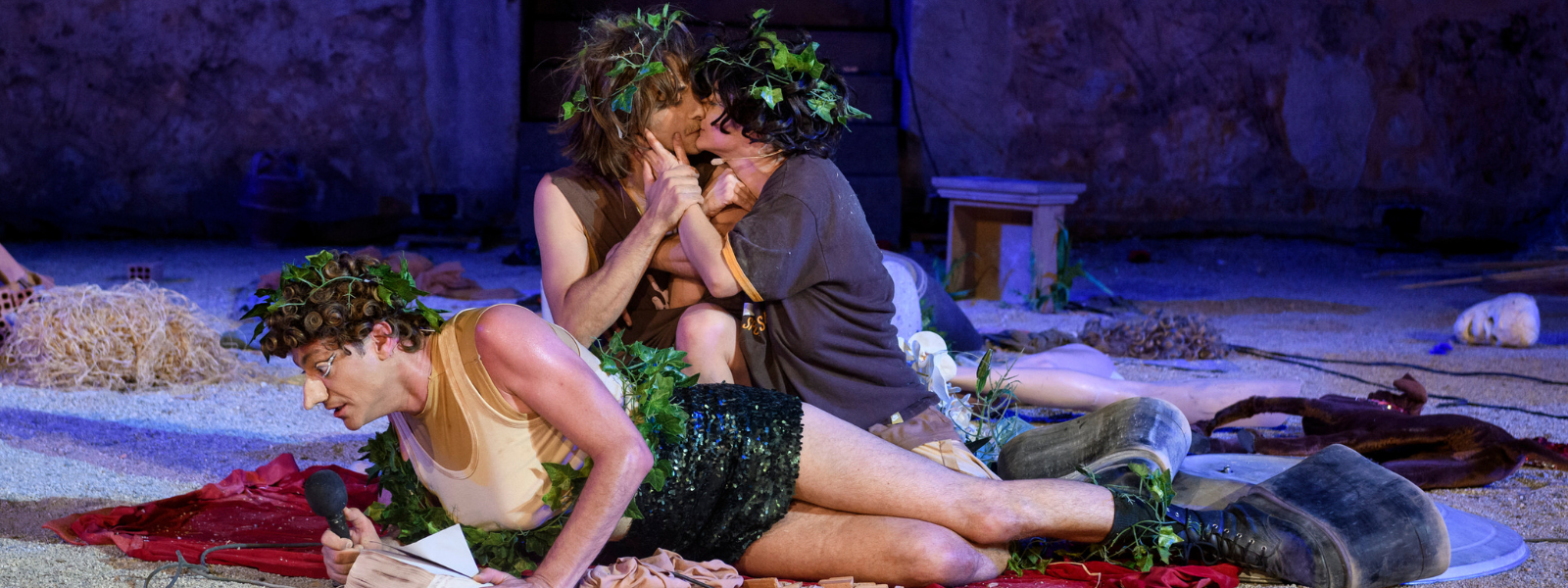
4 July
Marta Górnicka
Mothers–A Song for Wartime
The language of war is always the same, through space and time. The monstrosities, the rapes of women, the exhaustion of civilians, the destruction of life return within the tense international reality. Inside this cruel historical observation, Mothers – A Song for Wartime seeks all that remains from one’s voice, when violence has ruined even the possibility for speech.
Twenty-one women meet on stage. They come from Ukraine, from Belarus, and from Poland, and their ages span from 9 to 71 years old. A Chorus made up of mothers and daughters, survivors and witnesses of the havoc wrecked by war that function here as bearers of different lives and political experiences. Amongst them are refugees from Mariupol, Kyiv, Irpin, and Kharkiv, women that were persecuted, and women who opened their homes to host others. The testimonies of mothers and children, displaced from the war, become the material for a theatrical play uttering a collective accusation.
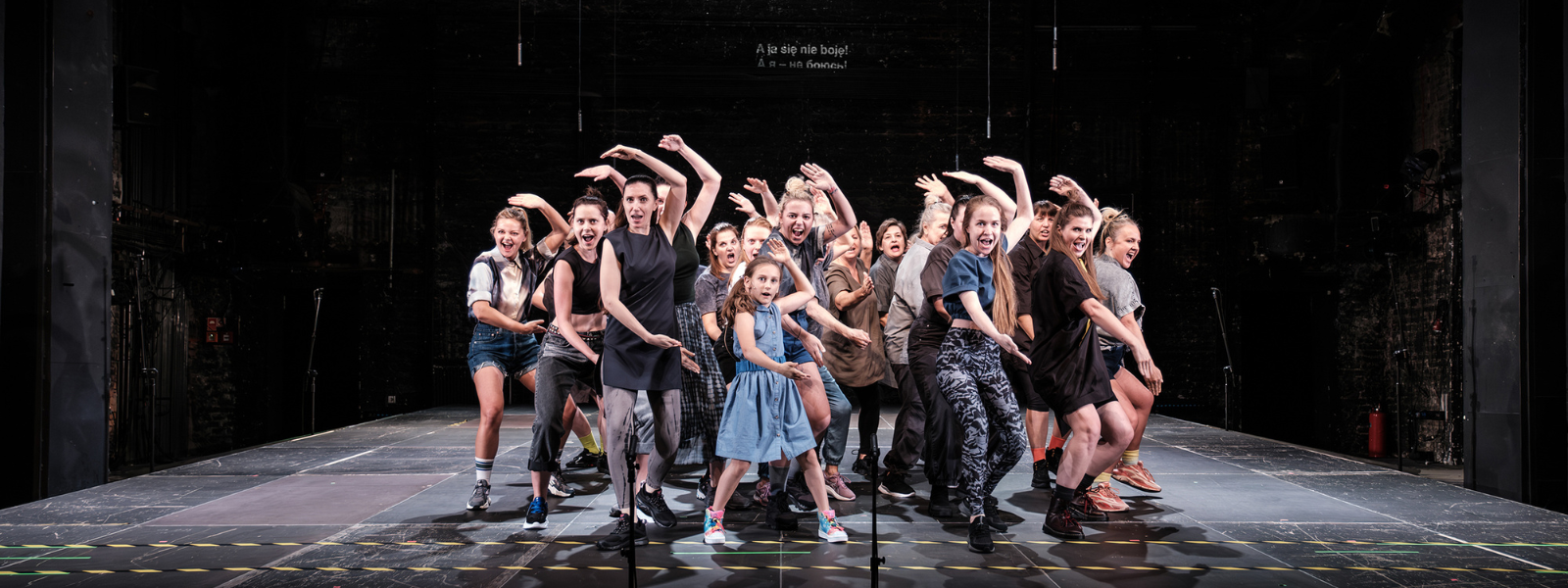
10 & 11 July
Κ. Bhta
Nine Water Lilies from the Dead Shore
Konstantinos Bhta – one the most restless pioneers of Greek electronic music – arranges through his own eyes traditional and rebetika songs. In his work Nine Water Lilies from the Dead Shore, a musical composition bridging the past and the present, personal and collective experiences, we find four songs by Giannis Papaioannou – one of the most important figures of the rebetiko – as well as a new song by Sokratis Malamas. The work also includes K. Bhta’s original compositions that function as entry and exit points from a musical world on the edge of a memory ready to turn into oblivion or to transform. It is the first time that the work will be presented live.
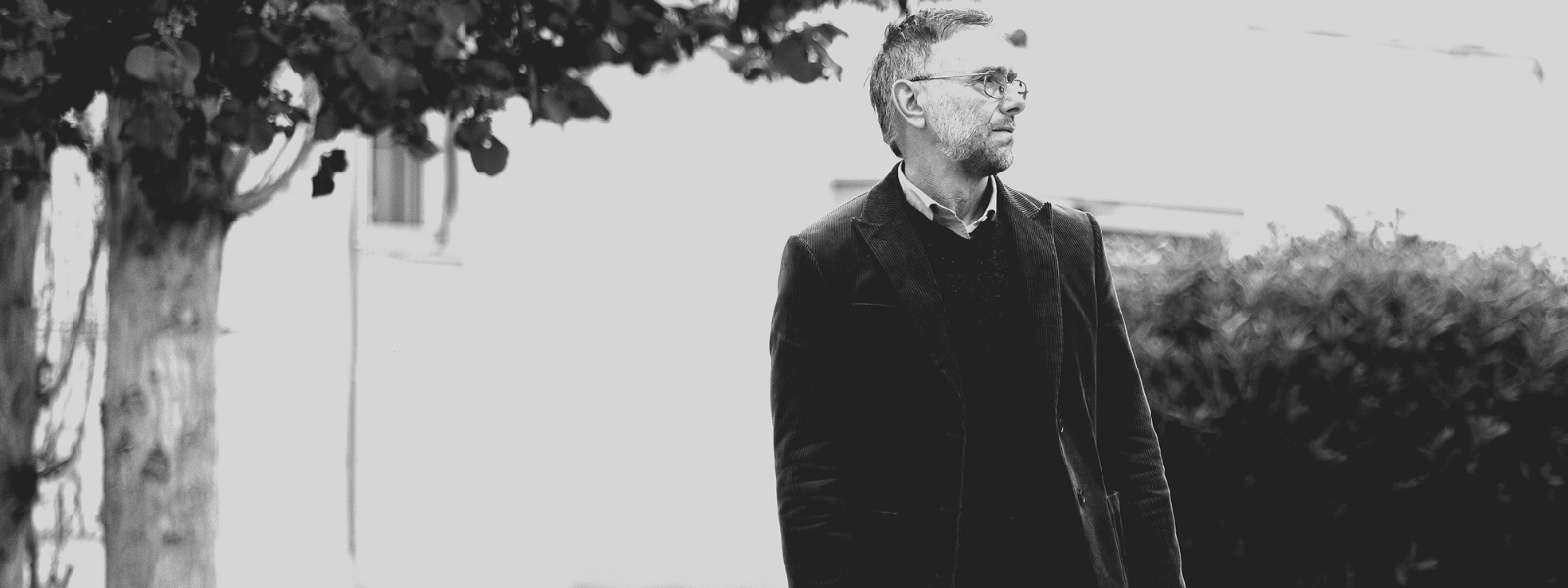
17 & 18 July
Thodoris Gkonis
The oranges of Palaia Epidaurus
An ensemble, a group of seven people, with their lapel badges of wanderers and captains, arrive at the grove with the orange and the olive trees, in the shadow of the big rock. According to an old Greek custom, they decide to start singing, and thus to recite their own story, the story of every place, of this place. A love story about the only child of Epidaurus’ old rural doctor, the young woman who painted with her blood the Oranges of Palaia Epidaurus once and for all; the deep-red Sanguine.
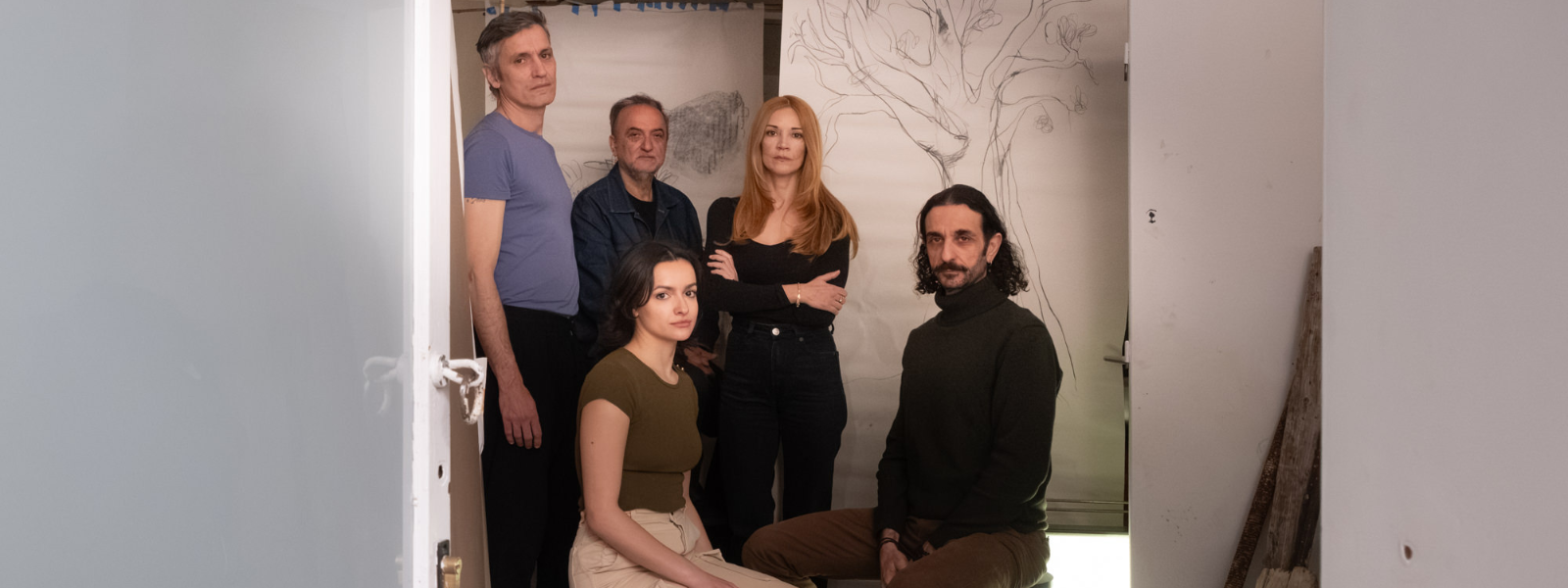
24 & 25 July
Kornilios Selmanis-Haris Fragoulis
1961
A sonic excursion to the ruins of the present
One actress, two voices, six instruments
With a handful of portable lights and a modest sound setup, the event evokes the atmosphere of a film shoot, as if lifted from black-and-white photographs. The musicians form a circle; at its centre stands a figure – a woman – who tells her story. It is her life, and at the same time, her time. At moments, a male voice is heard, an unseen presence we never encounter. Elsewhere, a young girl appears outside the circle: she sings, or remains silent.
We, the audience, seated in a semicircle, observe what unfolds within – not with nostalgia, nor with melancholy, but with a gaze that builds worlds; or rather, with a gaze that truly sees: an attentive, desirous gaze.
The creators extend an invitation: to inhabit, if only for a moment, a ruin.

31 July & 1 August
Kharálampos Goyós
CHOREKA
Voices for the speaking silences
In the evocative setting of the Little Theater of Ancient Epidaurus, the popular and dynamic women’s choral ensemble CHÓRES, under the musical direction of Irini Patsia, embodies the collective voice of femininity, at times exploring the mystical power of unaccompanied performance and at other times through new, subversive arrangements for the Athenaeum Saxophone Quartet, which, in collaboration with the women’s voices, bridges lyrical polyphony with contemporary sound. In explosive contrast, the magnetic Marina Satti elevates the material through free, improvisational jazz arrangements with the Yiannis Papadopoulos Trio, while the imposing bass-voiced Tasos Apostolou introduces the masculine counterpoint to the authoritative axis of the theatrical works.

7 & 8 August
Galin Stoev
I–ONE
by Ivan Vyrypaev
The new work by Ivan Vyrypaev comes into focus through the directorial lens of Galin Stoev, a creator with a profound command of contemporary European theatre. Three actors from different countries converge at the Little Theatre of Ancient Epidaurus, where Antigone Duchesne, Sofia Kokkali, and Karolina Rzepa share the leading role – forming from the outset a charged stage encounter between distinct performative lineages.
Drawing on both the form and the spirit of the ancient tragic tradition, Medea resurfaces here as a new tragedy for the twenty-first century. Stoev’s staging tests the limits of myth while grappling with some of the most fragile materials of our time: technology, the notion of selfhood, and the shifting ground of identity.

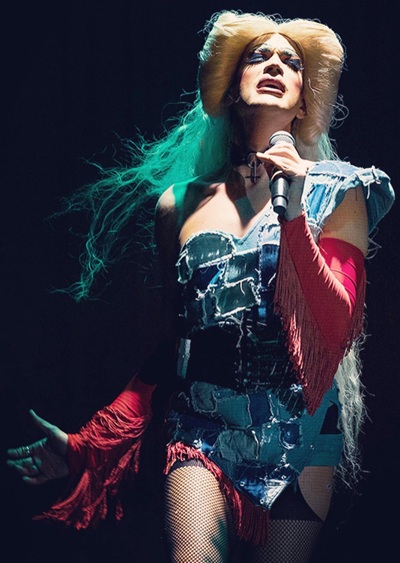
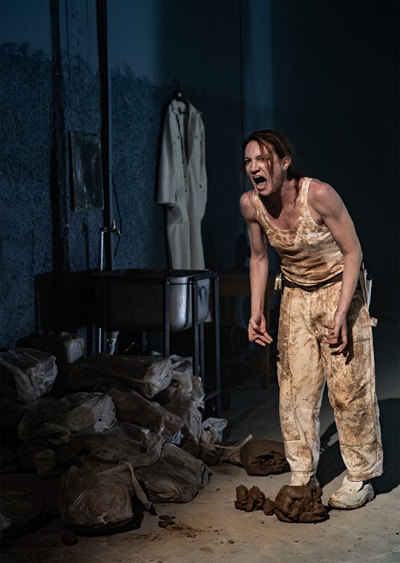



Leave A Comment