
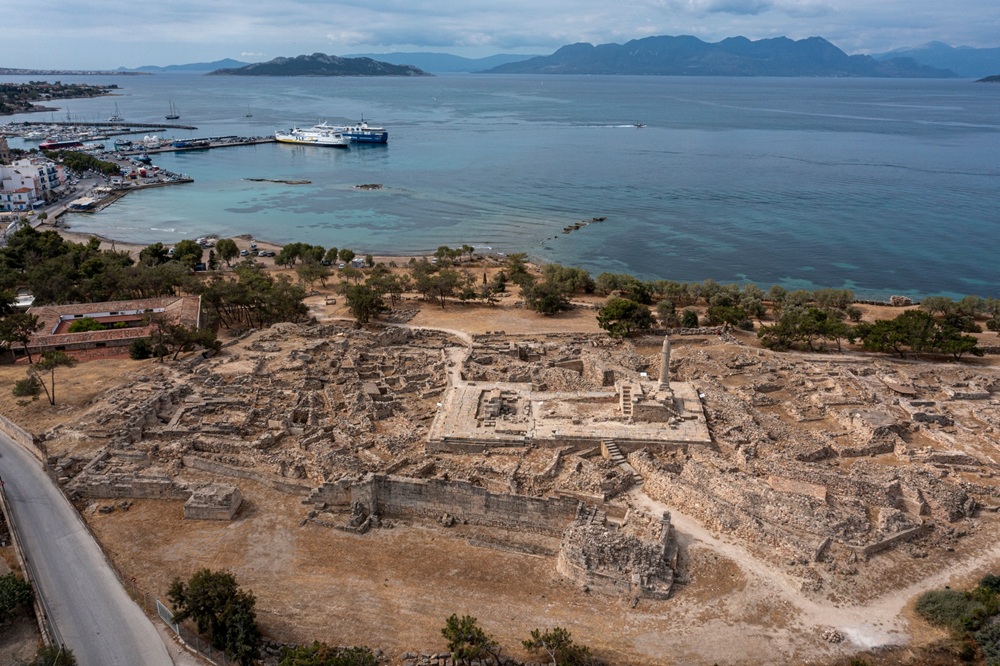
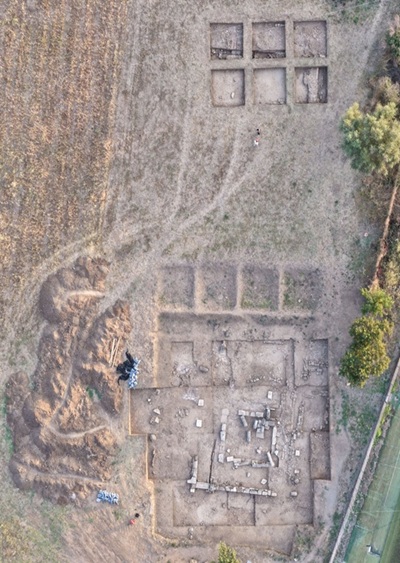
Several valuable discoveries were unearthed at Kolona Hill on Aegina during a systematic archaeological excavation in 2025.
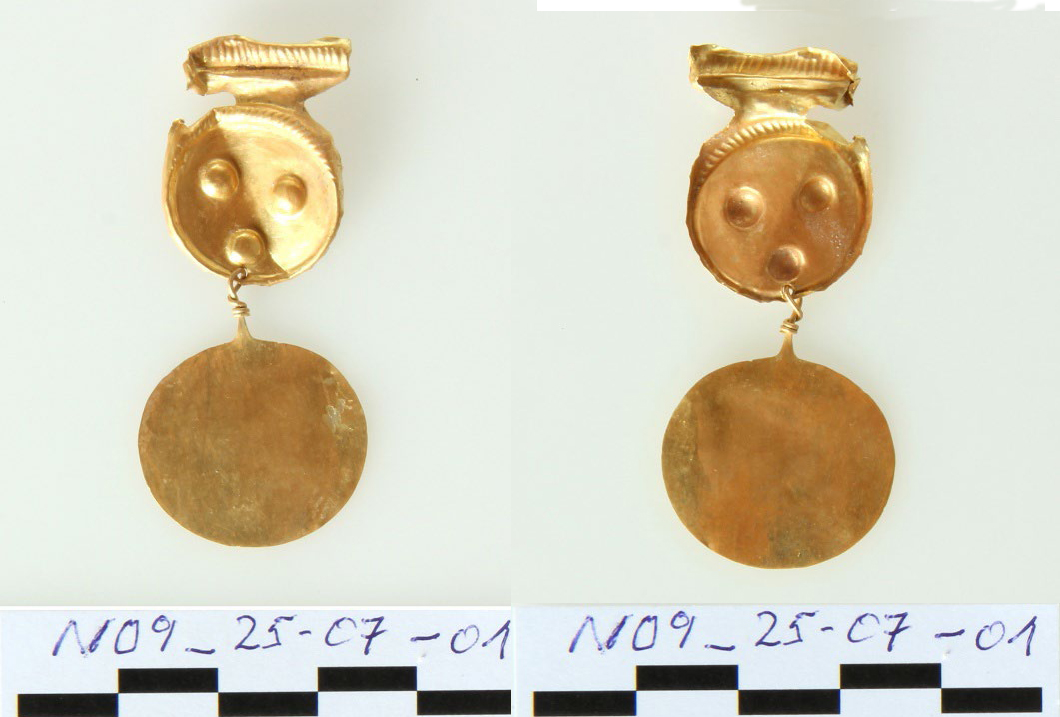
During the excavation of a trench inside a large stone-built structure, located outside and in immediate proximity to the remains of the wall that protected the expansion of the Middle Bronze Age settlement (the so-called “inner suburb”), eight gold biconical discs, one gold disc, seven gold biconical beads, one gold cylindrical bead, eight decorative gold leaf plates, and seven spherical beads made of carnelian. All likely belonged to a gold necklace or pendant, date to the first half of the second millennium BCE, and are preserved in excellent condition. In addition, twelve bronze fragments were found, likely from daggers, and a needle/pin.
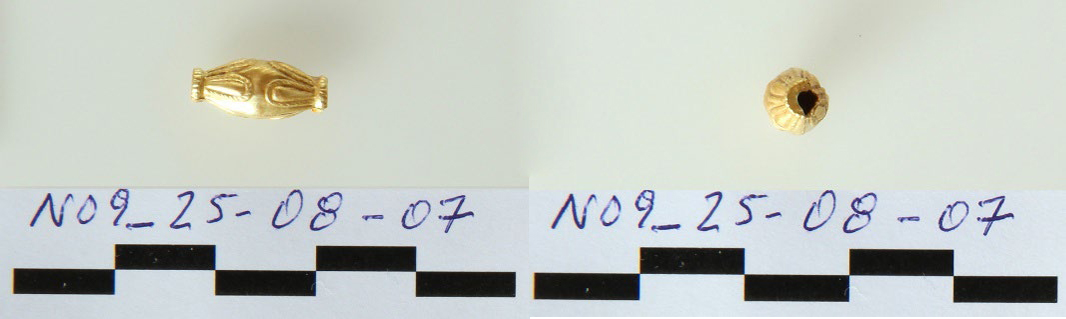
Although the stratigraphy of the excavation context in which they were found was disturbed, and the exact time period is unknown, it is reasonable to assume that the jewelry was grave goods, likely from a Middle Bronze Age burial, although no evidence of a preserved grave has been found.
The gold jewelry, particularly the pendants, bears similarities to some of the pieces from the so-called “Aegina Treasure” of prehistoric times, a collection of jewelry made of precious and semiprecious stones, which was found on Aegina, illegally exported, and has been housed in the British Museum since 1892.
The archaeological site of Kolona is located on the northwestern side of the island, near the port and the modern town of Aegina. Although it is best known for the 6th-century BC Temple of Apollo, the hill of Kolona has been in continuous use—as a prehistoric settlement, a sanctuary in historical times, the acropolis of the ancient city, and a Byzantine settlement.
Τα σημαντικά ευρήματα βρέθηκαν κατά τη διάρκεια της ανασκαφικής έρευνας που διενεργείται από το Πανεπιστήμιο του Σάλτσμπουργκ δια του Αυστριακού Αρχαιολογικού Ινστιτούτου στην Αθήνα, υπό τη διεύθυνση του καθηγητή Alexander Sokolicek και την εποπτεία της Εφορείας Αρχαιοτήτων Πειραιώς και Νήσων.
The significant findings were discovered during the excavation conducted by the University of Salzburg through the Austrian Archaeological Institute in Athens, under the direction of Professor Alexander Sokolicek and the supervision of the Ephorate of Antiquities of Piraeus and the Islands.
It is clear that, despite years of research, this hill still has much to reveal.


Leave A Comment