The studies for the modernization of the National Archaeological Museum and the Epigraphic Museum—which form part of the building complex defined by the Patission, Tositsa, Bouboulinas, and Vas. Irakleiou.
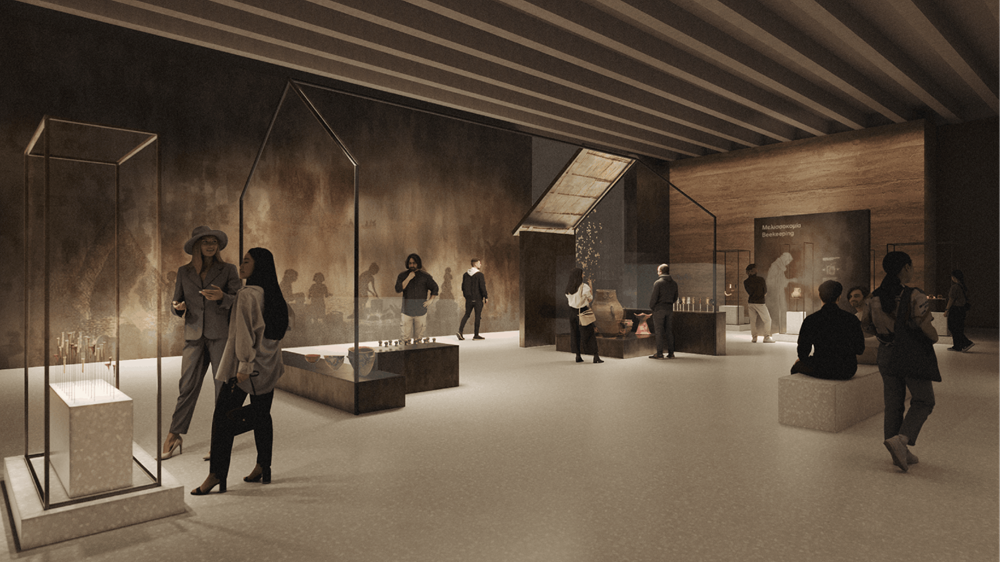
Following the approval of the final curatorial study for the new National Archaeological Museum (NAM) and the Epigraphic Museum (EM), the Council of Museums unanimously approved the corresponding preliminary museological studies for their new exhibitions. The preliminary studies were prepared by the architectural firm Atelier Bruckner, in collaboration with staff from the NAM and the EM, as well as with the architectural firms David Chipperfield Architects and Tombazis and Associates Architects, which have undertaken the architectural design for the museum’s renovation and expansion, and the companies Kardoff Engineering, Werner Sobek, and WHP, for the lighting, electrical, and mechanical engineering designs, as well as the structural engineering designs, respectively.
The Minister of Culture, Lina Mendoni, stated: “The preliminary museum design is based on all the approved studies—architectural, structural, and electromechanical—for the expansion and renovation of the National Archaeological Museum, the most significant and richest repository of ancient Greek art in the world. The museological preliminary study focuses primarily on general design choices, the spatial planning and layout of the exhibition sections, the exhibits, and the equipment, aiming, at this stage, to comprehensively address the requirements of the museological concept while exploring the optimal approach to their implementation. Key parameters of the architectural design have been taken into account, as well as, to a significant extent, the thematic content and the needs of the exhibition material. The collaboration between the designers—from all disciplines and specialties—and the staff of our two museums is ongoing and exemplary. A shared goal is adherence to the timelines as stipulated in the Donation Agreement between the Greek State and the couple Spyros and Dorothy Latsis. The comprehensive redesign of the exhibitions at both museums, based on the expansion and renovation of the building complex, will result in a modern museum of global significance.”
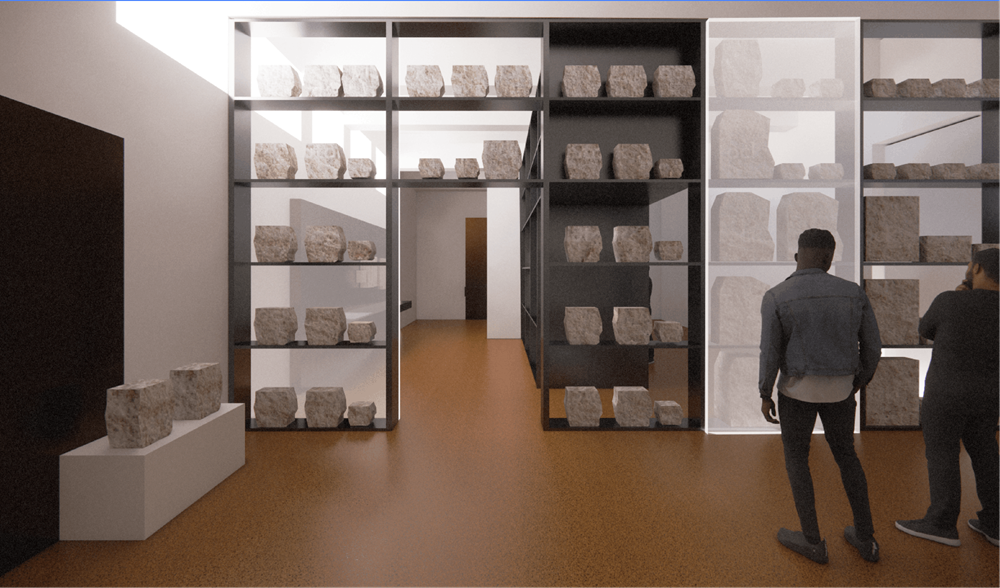
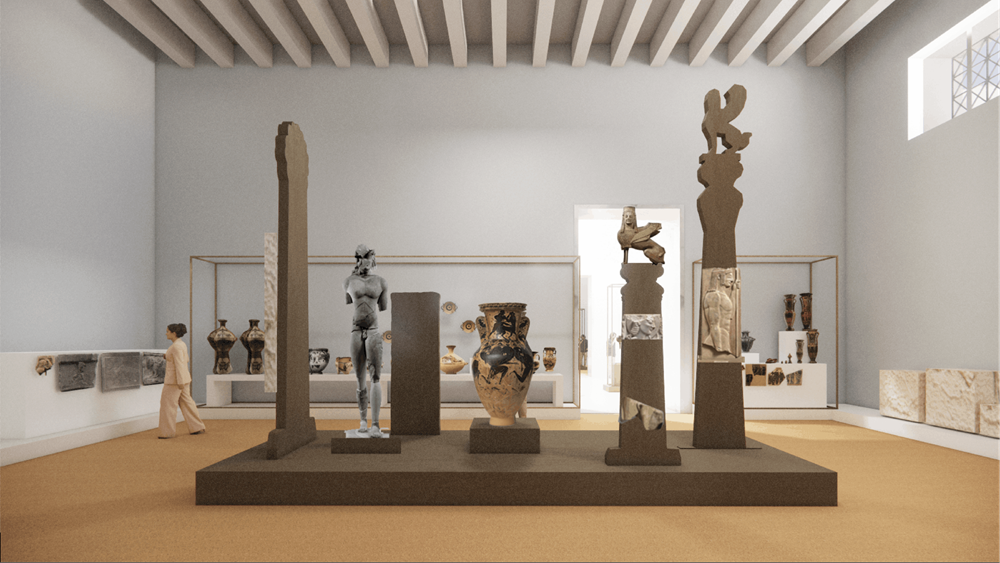
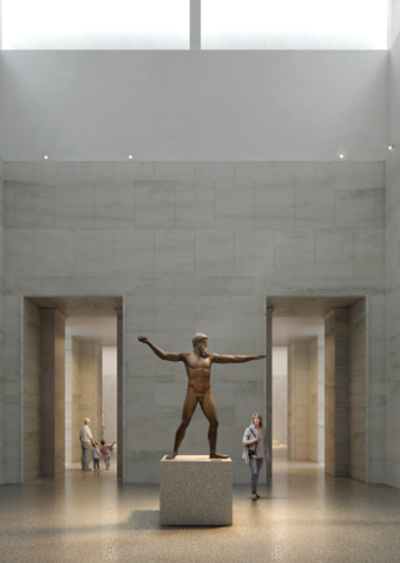
The primary consideration and rationale behind the development of the exhibition design—which defines its overall aesthetic and layout—is the synergy and complementary nature that should be achieved, based on the expansion study for the historic building, at the stage of the preliminary museographic study for the two museums. The museographic design at the National Archaeological Museum focuses on the works along the main route running through the entire exhibition, both in the extension and in the historic building, functioning as “magnets,” serving as the thread that unifies the museological narrative and guides the visitor. As for the Epigraphic Museum, the main proposed museographic interventions can be summarized as follows: the guided exhibition route, the grouping of the extensive exhibition narrative into thematic sections, the integration of open storage into the exhibition route, and the combination of a paratactic-chronological presentation of the exhibits with the creation of clusters of prominent, primarily epigraphic monuments that convey the specific themes of each chronological period. The new exhibition at the National Archaeological Museum features up to 650 inscriptions in a space covering up to 1,400 square meters.
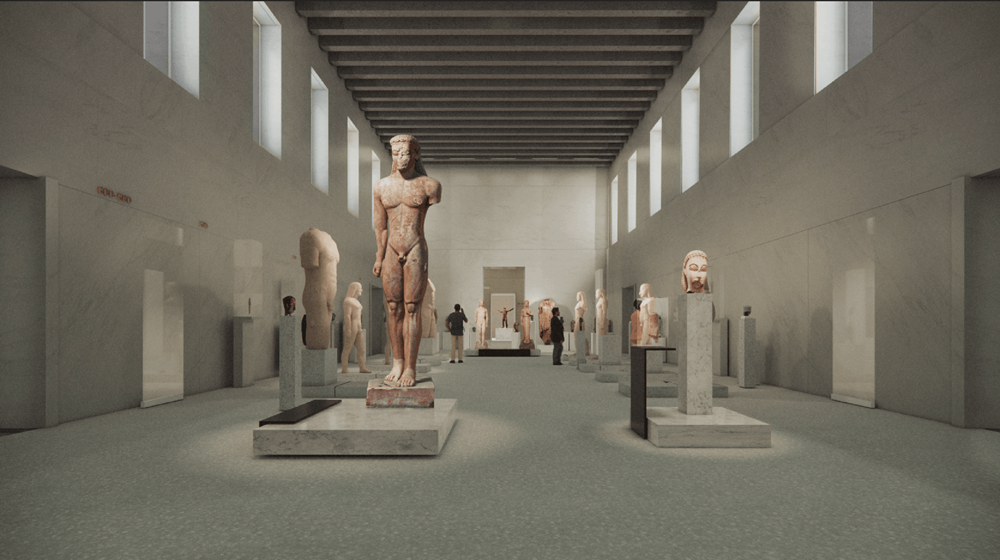
Specifically, the museological feasibility study for the National Archaeological Museum and the Epigraphic Museum focuses on:
– the methodology for organizing the archaeological material to be exhibited
– the organization of the main exhibition sections. At the National Archaeological Museum, the focus is on highlighting and positioning the introduction and conclusion of the exhibition, as well as presenting the “central axis,” which is structured around emblematic objects—exhibits—alongside the central axis and the axes surrounding it. For the Epigraphic Museum, the exhibition is organized on three levels (island displays, freestanding monuments, panorama, open storage, and research).
– the basic design principles (exhibition equipment, lighting, visual aids, signage), the functionality of all types of exhibition equipment, and the geometry of the basic exhibition structures (display cases – pedestals – shelves – visual aids) .
– the overall aesthetic of the building’s exhibition spaces (the monument and the extension) and, more generally, the way in which – the visualization of the curatorial concept and the main exhibition sections within the space, presenting the exhibition sections—primarily—through the visitors’ journey and the levels of information tailored to each exhibition section and the visitor’s potential choices.
– the visual identity of the exhibition spaces, equipment, and visual materials (color palette, typography, illustrations, content hierarchy, etc.)
– issues of physical and cognitive accessibility to the exhibition content and how to address them.
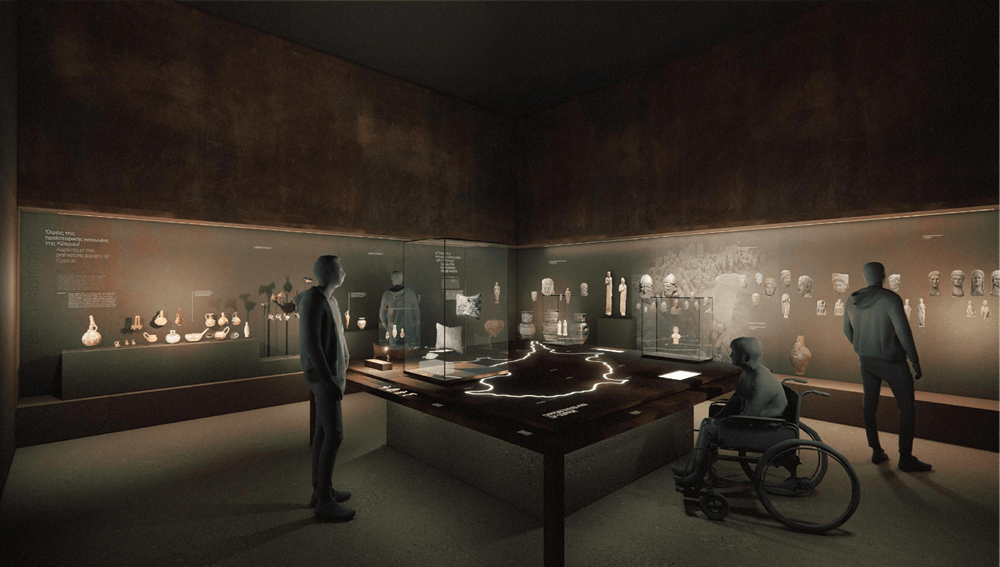
In addition, at the National Archaeological Museum, the open-display exhibits are presented in a way that allows for a 360-degree view wherever possible. Selected sculptures, particularly those with polychrome decoration or made of delicate materials, are displayed in glass cases. Self-guided tours of the exhibition are supported for all visitor groups. Multimedia applications are used judiciously, while a mixed lighting system is adopted, combining built-in display case lighting with accent lighting within the galleries. The museographic preliminary study for the Epigraphic Museum outlines the spatial layout, the organization of the sections, the “shelf display,” and the design of the display cases, so that the thematic sections and significant artifacts are presented effectively.

Leave A Comment