
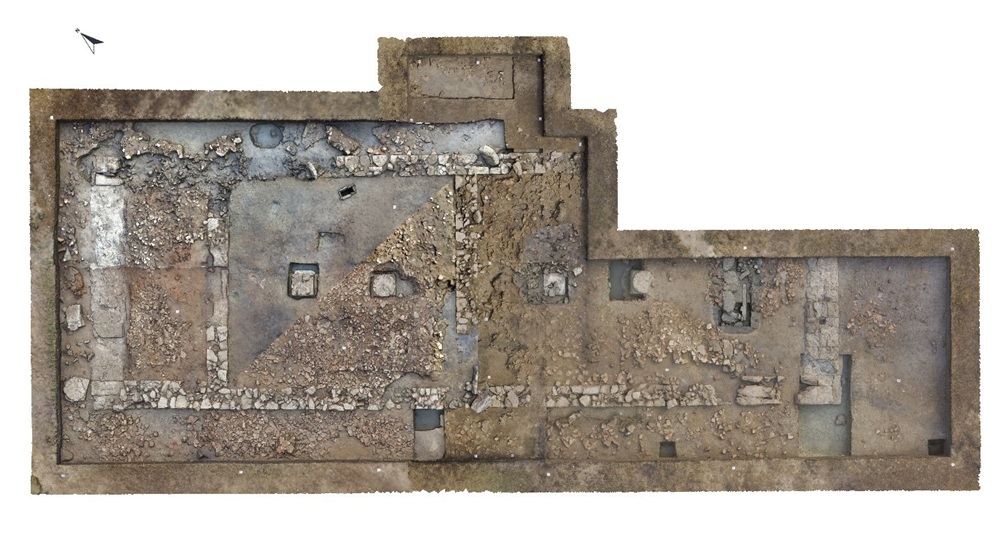
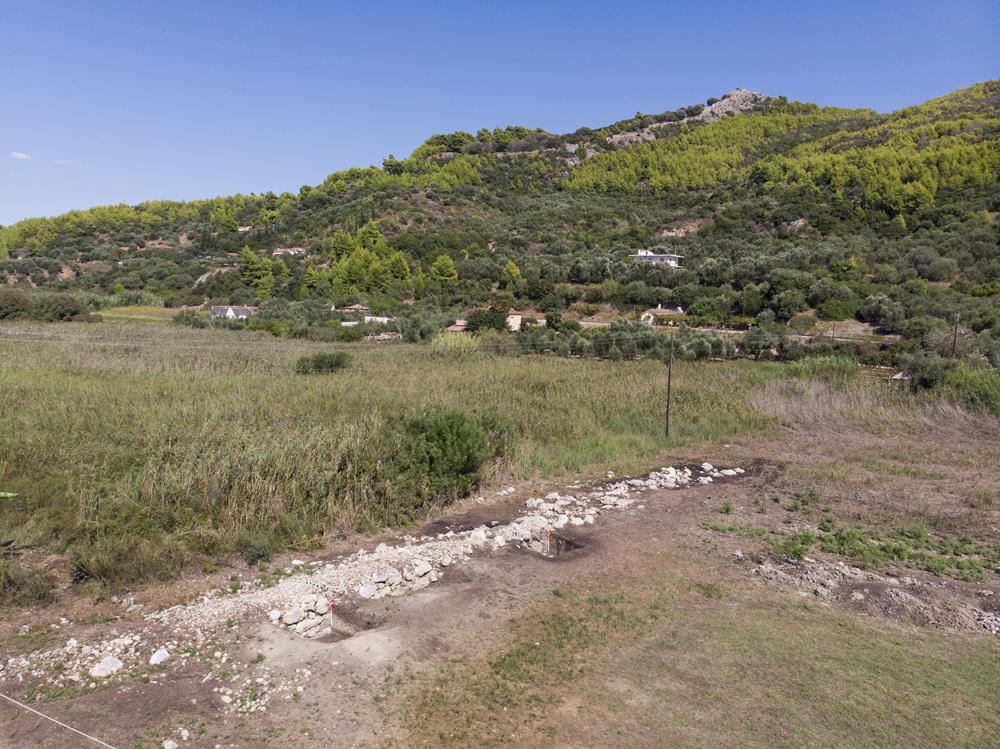
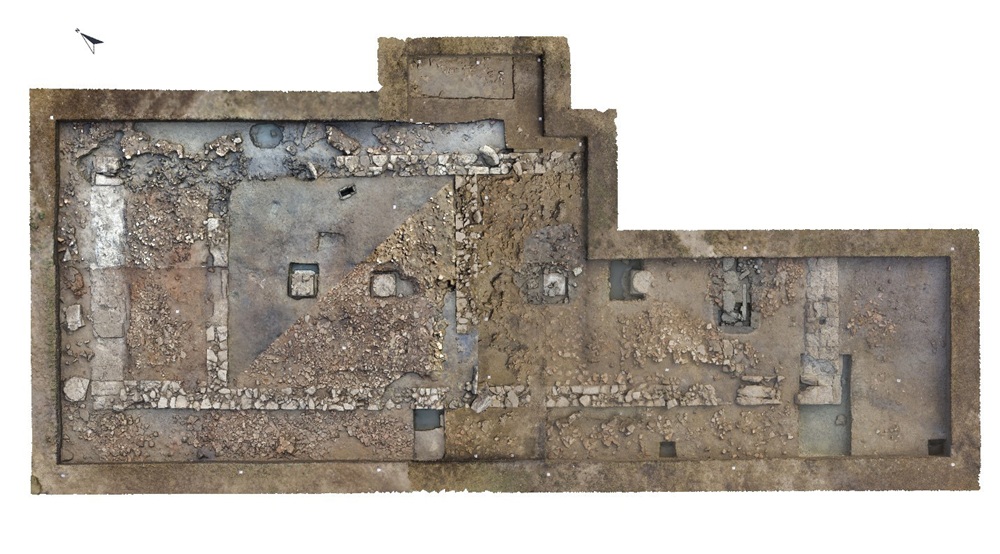
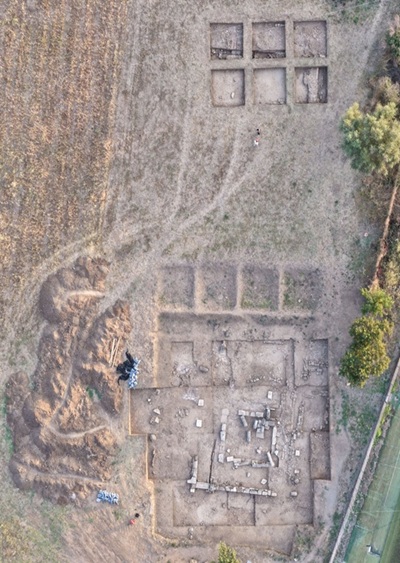
The excavation, carried out by the Ephorate of Antiquities of Elis and the Austrian Archaeological Institute of the Austrian Academy of Sciences, under the direction of Dr. Birgitta Eder and Dr. Erofili-Iris Kolia, as part of the five-year research program at Kleidi Samikou (2022–2026), has yielded important new results.
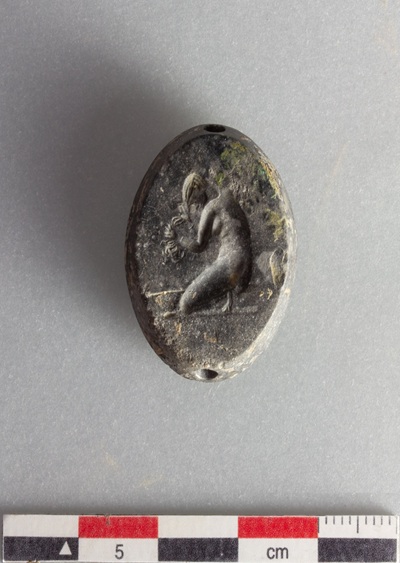
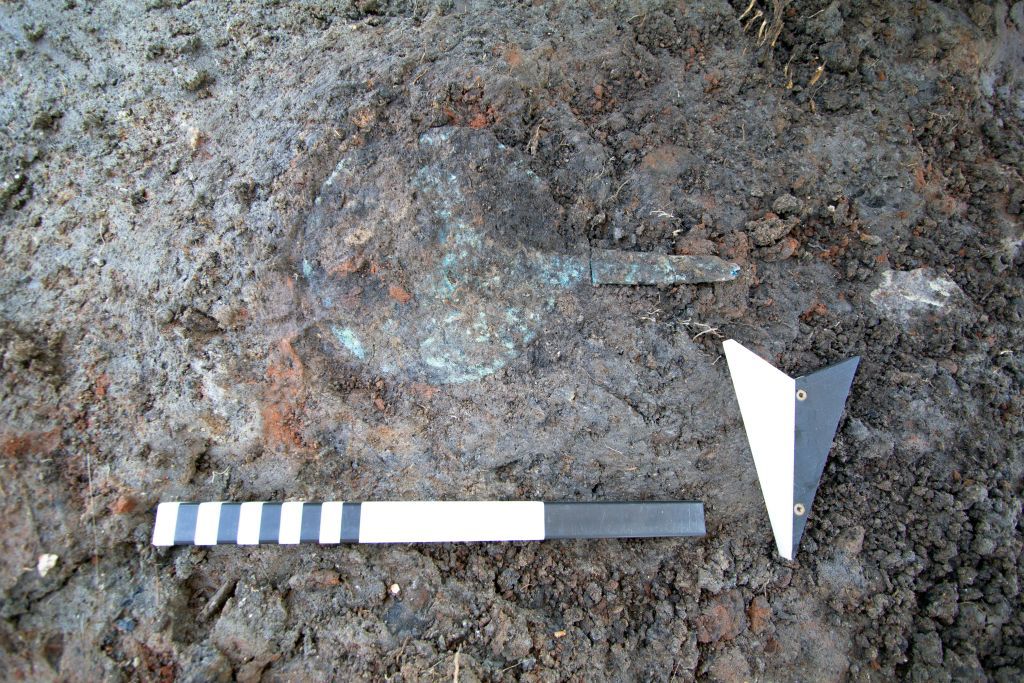
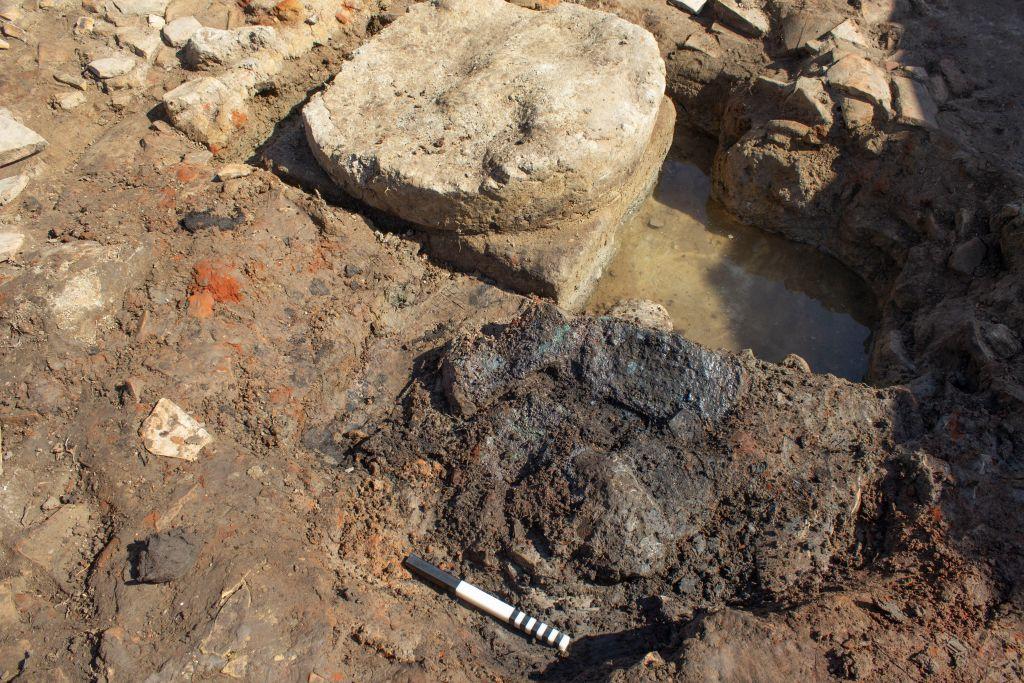
The temple, measuring 28 m long and 9.5 m wide, was probably built in the second half of the 6th century BC and consists of two large, independent rooms with a central colonnade along their axis. This year’s work focused on the excavation of the northwestern hall, where a large bronze inscription and an almost intact marble peristyle had been uncovered the previous year. The thick layer of damaged Laconic roof tiles was removed, revealing traces of the fire that destroyed the building. A number of finds were discovered on the floor of the hall, including a pile of bronze plates that had been severely damaged by the fire that destroyed the building and by the action of water on the ground. These finds, combined with the inscription that came to light last year, reinforce the hypothesis that this room was used as an archive. Also important is the discovery of three fragments of a disc-shaped acroterion, which allow for the reconstruction of a clay disc-shaped acroterion, at least one meter in diameter, decorated with black and red paint and overlapping relief bands.
The archaeological research is supported by the Gerda Henkel Foundation and the Austrian Archaeological Institute of the Austrian Academy of Sciences.


Leave A Comment