
The Ministry of Culture announces the registration of twelve new items and the designation of one Good Practice in the National Register of Intangible Cultural Heritage of Greece, implementing since 2006 the Convention for the Safeguarding of Intangible Cultural Heritage (UNESCO)
The 12 elements registered in the National Register of Intangible Cultural Heritage of Greece and the designation of Good Practice.
Sun-dried wine Malvasia from Monemvasia, Crete, and Paros.
Sun-dried Malvasia wine is a sweet, aromatic wine made from sun-dried grapes of specific local varieties, which are harvested when overripe and left in the sun to partially dehydrate and increase the concentration of sugars and other components. The “most famous wine in history” began in the 12th century in Monemvasia (Mal(e)vasia, Napoli di Malvasia) and then from the Cyclades and mainly from Venetian-ruled Crete, where it was produced and traded on a large scale by Venetian and Genoese merchants. It dominated Europe for six centuries, was praised by important personalities, and was reproduced in wines “named Malvasia” throughout the Mediterranean. Traditional viticulture and winemaking have been revived in recent decades in Monemvasia, Crete, and Paros, creating PDO wines and incorporating traditional techniques and historical memory.
The Holy Boat Race of Chios
New Year’s Eve is celebrated in Chios with a boat competition. Groups from the neighborhoods of the city of Chios and its suburbs spend the whole year constructing detailed replicas of warships and merchant ships. On the afternoon of December 31, the “crews” proudly present their boats in the central square of Vounaki-Nikolaos Plastiras and compete with each other, singing traditional carols and praises for their boats and the new year. In this original way, the island of Chios honors its maritime tradition, its expatriate sailors, and the Greek Fleet, which liberated it in 1912.
Τhe ”Keskeki” of Melissia
Keskeki is a community custom with roots in the Gyulbakshe region of Asia Minor, which is kept alive in Melissia, Attica, by descendants of refugees from Asia Minor. Every year, on the eve of the feast of St. George, members of the Asia Minor Cultural Association of St. George Gyulbakshe volunteer to prepare the custom using ingredients such as beef and hulled wheat, which are boiled overnight in large cauldrons in the courtyard of the church of Saint George. The food is blessed after the divine liturgy and distributed to those present as an act of remembrance, blessing, and unity. This is immediately followed by a celebration for the entire community with music and dancing, promoting the values of solidarity and preservation of historical heritage.
Rodavgi Artas Pancakes
Our village’s beloved and delicious pancakes are quick to make and require plain flour, lukewarm water, salt, local tsipouro, oil for frying, and sugar or honey. Pancakes are associated with the social life of Rodavgi and are usually served at the annual Chestnut Festival, at Christmas, at weddings, and at baby showers. But every visit is also an occasion for the housewife to make them, to sweeten and please her guests. Also of culinary interest are the savory pancakes and cabbage pancakes, which are made with the addition of eggs, feta cheese, or milk, in addition to the basic ingredients.
Decoration and Procession of Epitaphs in Arta
After the Passion Service on Holy Thursday evening, young and old parishioners from all the parishes in the city decorate the Epitaphs in the traditional way. They gather seasonal flowers and then, mainly women and children, decorate the epitaphs while singing hymns and lamentations. This custom highlights and reinforces the Byzantine identity with which Arta experiences Holy Week. On Good Friday evening, all the churches in the city of Arta gather the epitaphs on the city’s main pedestrian street (Skoufa Street), where the procession takes place with great reverence, while in the more remote parishes, the procession takes place within the neighborhoods and villages.
Kales and Bramdes in Skopelos
Kales and Bramdes is a carnival event that takes place on the last Sunday of Carnival in Tyrini. It is a parody of a traditional wedding procession, where a man dresses as a bride and a woman dresses as a groom. The couple is accompanied by the maid of honor and best man and a crowd of people of all ages wearing traditional costumes, mainly local ones. The procession is accompanied by traditional musical instruments. The participants parade throughout the town of Skopelos singing the local song “Let’s go, Vlach,” while stopping at each square to dance, sing local songs, and be treated to seasonal delicacies by the residents of each neighborhood. The procession ends at the island’s beach, where a celebration follows with the participation of the entire local community.
Cretan mantinada
The mantinada, as an oral poetic form, is not simply a literary genre. It is connected to every aspect of life in Crete and encapsulates the Cretan landscape and spirit in two lines. It consists of two fifteen-syllable rhyming lines in the Cretan dialect, with complete meaning. It is characterized by improvisation, verbal skill, and interaction between its performers. It involves the body, voice, space, and time, creating an experience for both the performer and the audience. Its core lies in communities, as they are the ones that transmit, shape, and renew the mantinada across generations. The mantinada functions as a vehicle of collective memory and local identity.
The art of traditional violin
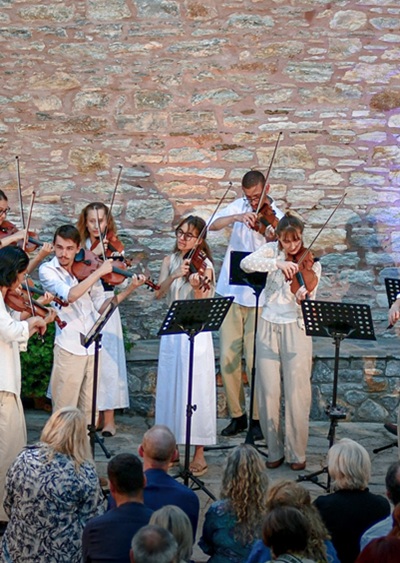
The violin has established itself as one of the most popular instruments used in Greek traditional and urban folk music and has played a particularly important interpretative role in the musical culture of most local traditions since the 19th century. As a performing art, it presents a wide variety of expressive idioms, having developed its own musical character in each particular region, with several common features, across the whole of Greece, with the result that it is generally considered to be a unified art form.
Dance of Antromana in Deskati, Grevena
During Holy Week in Deskati, Grevena, the Easter celebrations take place, culminating in the event of the “departure of Easter” on the Friday of the feast of Zoodochos Pigi. The residents bid farewell to Easter in the central square, dancing in separate concentric circles of men and women and singing without musical accompaniment. The “Andromana” is the culmination of these dances. It is formed by young men in the shape of a three-legged human pyramid, at the moment when the rhythm of the songs changes and becomes faster.
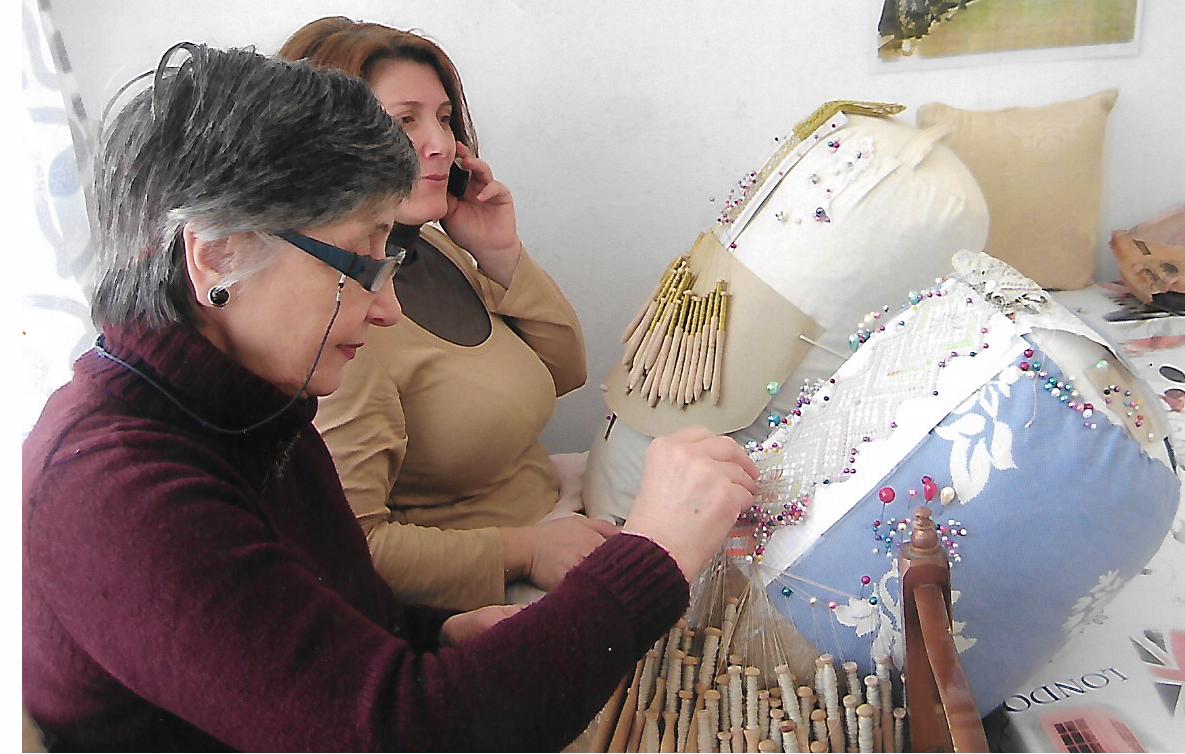
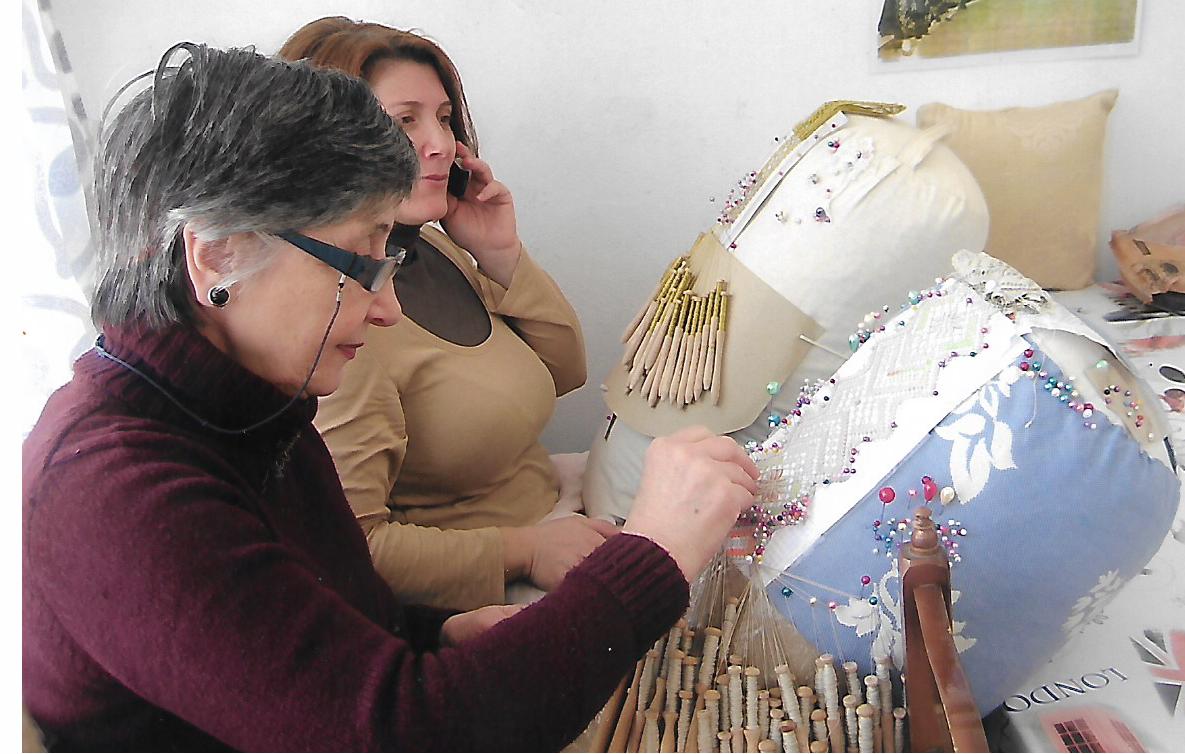
The kopaneli of Salamina
Kopaneli is a type of lacework. It is created using wooden bobbins. This technique is used to knit a variety of practical and decorative lace items: accessories for traditional costumes, dowry items, jewelry, and women’s accessories. The name comes from the long, thin sticks (spools) that are struck (knocked) against each other as they move during the weaving of the threads, which are fixed on a cylindrical cushion. The Salamina technique differs from the techniques of other regions in terms of the knitting method, due to the large number of “kopanelia.” This technique has a long history dating back centuries, but it is still a living tradition in Salamina, as it is still practiced today by groups of women and individual craftswomen.
Trata (Fregata) of Skopelos
The “Trata” is a carnival event in Skopelos that takes place on the last Sunday of Carnival. Exclusively men construct boat frames from reeds with a tin can in the middle to light a fire. The men, known as “trataraioi,” lift the replica boat in their hands and carry it in a procession through the village of Skopelos. Dressed in old clothes, they satirize sailors, pirates, and the “captain” with funny skits, bawdy songs, and teasing the audience. The procession ends at the sea, while housewives from each neighborhood offer food and wine at stops along the way. This lively, maritime custom draws inspiration from the island’s maritime history and shipbuilding tradition.
The “Trata” is a carnival event in Skopelos that takes place on the last Sunday of Carnival. Exclusively male members of the community, of various ages, dressed in comical carnival costumes, construct makeshift boat replicas from improvised materials, which they parade around Skopelos Town, stopping at squares and crossroads before throwing them, The custom draws inspiration from the island’s maritime history and shipbuilding tradition.
Lazaritika Kalanta in Krinitsa, Trikala
Lazaritika Kalanta are traditional songs performed by the Lazarines in Krinitsa, Trikala, on Lazarus Saturday. The songs are about love, beauty, romance, and being away from home. Every year, on Friday afternoon, the day before Lazarus Saturday, the girls pick wildflowers from the fields and flowers from the gardens, which they use to decorate their baskets. On the morning of Lazarus Saturday, they gather at the village church, where they begin the performance with the song “Ekklisitsa fountoti…” and then they walk around all the houses in Krinitsa, collectively performing the Lazarus Carols.
Promotion, preservation, and utilization of intangible cultural and agri-food heritage in Lemnos
The Good Practice developed by MedINA in Lemnos is a comprehensive and participatory approach to promoting, preserving, and utilizing intangible cultural and agri-food heritage, linking living traditions with sustainable local development. Promotion and preservation are achieved through systematic documentation and audiovisual recording, the inclusion of practices in the National Register of Intangible Cultural Heritage, and the transmission of knowledge through publications, digital tools, educational programs, and experiential seminars on traditional arts, such as basket weaving. Valorisation is achieved by linking culture and agricultural production through the empowerment of producers, home-based crafts and the development of gastronomic experiences. At the same time, the added value of products is enhanced through the institutional protection of local seed and breed varieties and Terra Vita certification. Finally, community participation and empowerment are present at every stage, ensuring that intangible cultural heritage remains alive, collectively managed, and replicable as a model in other areas with similar characteristics.





Leave A Comment