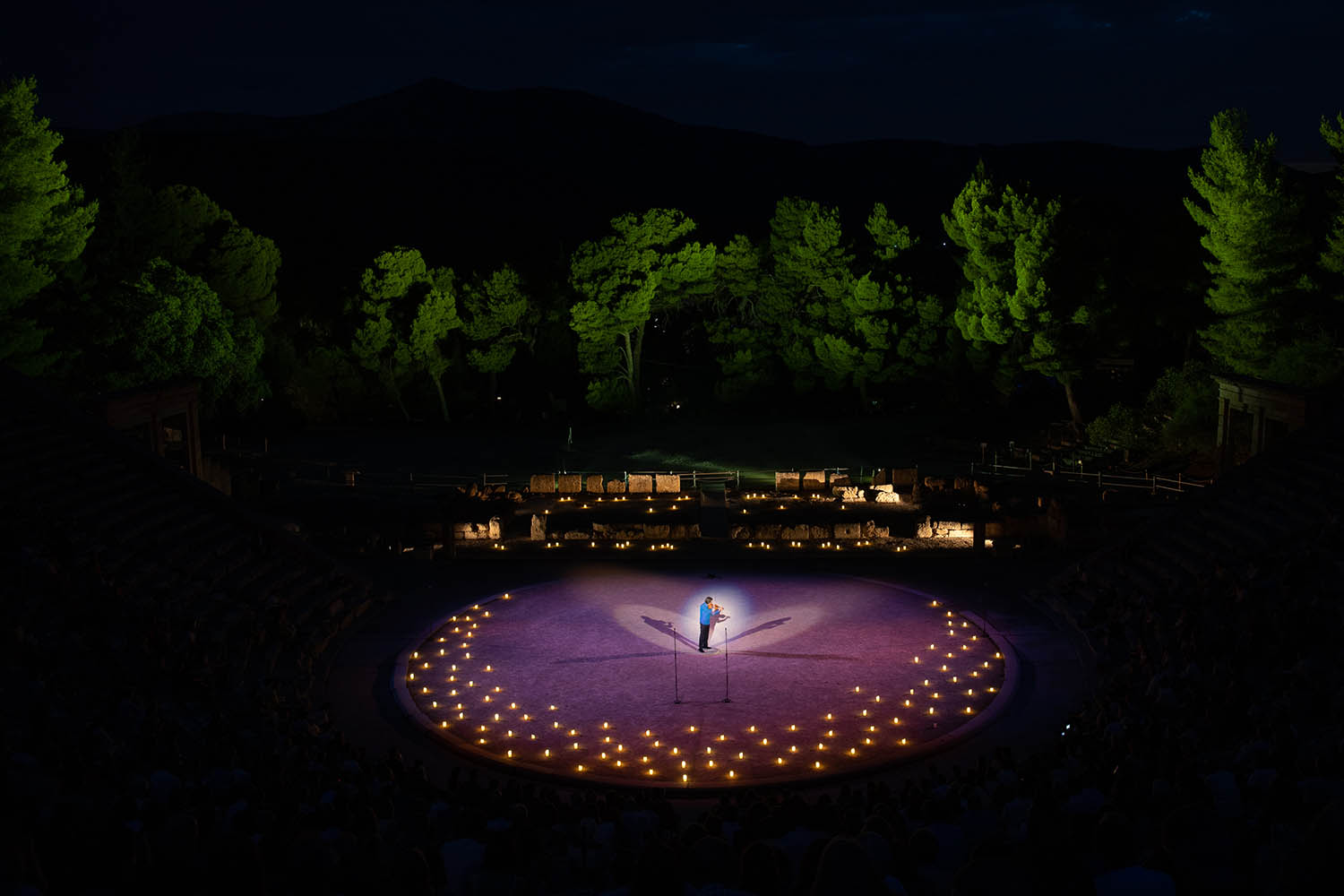
In a targeted statement, the new director of the Athens Epidaurus Festival, Michail Marmarinos, presented the titles that will entertain audiences this summer at the Argolic theater. Revivals, contemporary interpretations of ancient drama, and a highly anticipated return to Aristophanic comedy make up a diverse festival that will appeal to all tastes.
“At Epidaurus, a meeting place, the audience will have the opportunity to encounter unique interpretations by Greek and foreign artists, in well-known but also rarely performed works. Different fields of the performing arts – such as theatre, dance and opera – are woven together in this year’s programme, with the aim of highlighting the timeless value and dynamism of ancient drama,” emphasises Michail Marmarinos in his welcome address.
SCHEDULE OF EVENTS
20 JUNE 2026| OPERA-REVIVAL
National Opera
Medea
by Luigi Cherubini
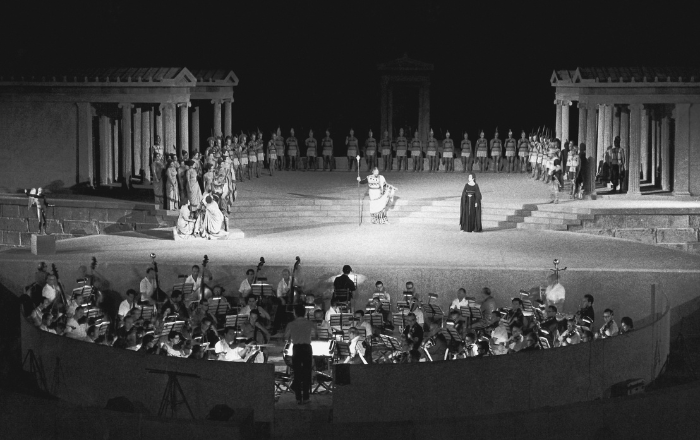
The Greek National Opera revives Luigi Cherubini’s opera Medea at the Ancient Theater of Epidaurus for a unique performance on June 20, 2026, sixty-five years after the legendary 1961 production with Maria Callas in the title role, directed by Alexis Minotis, with sets and costumes by Yannis Tsarouchis and choreography by Maria Hors.
As part of its thematic focus for the 2025/26 artistic season, which explores the concept of “the opera of the future through the lens of the past,” the Greek National Opera has chosen to revive the 1961 Medea with today’s materials. Through Minotis’s director’s books, Tsarouchis’ designs, and the rich photographic material preserved from Callas’ legendary performances at Epidaurus, an attempt is made to reconstruct the performance as it was inspired and presented by those legendary artists who left their mark on Greek culture.
Following the closure of the Odeon of Herodes Atticus for restoration work, the GNO continues its great tradition of summer opera productions, this time at the Ancient Theater of Epidaurus, almost seven decades after the last time it presented an opera production there and for the first time in the 21st century.
The phenomenal 1961 performance
Directed by Alexis Minotis • Set and Costume design by–Yannis Tsarouchis • Choreographer Maria Hors
The 2026 Revival:
Artistic director Giorgos Koumentakis • Music director t.b.a. • Director Panagis Pagoulatos • Set design Lili Pezanou • Costumes Tota Pritsa • Lighting Christos Tziogas • Choir direction Agathangelos Georgakatos • Performed by Anna Pirotsi Medea, Danae Kontora Glauke, Alicia Kolosova as Neris, Jean-François Boras as Jason, Tasis Christoyannopoulos as Creon • With soloists, the orchestra and choir of the Greek National Opera
Medea
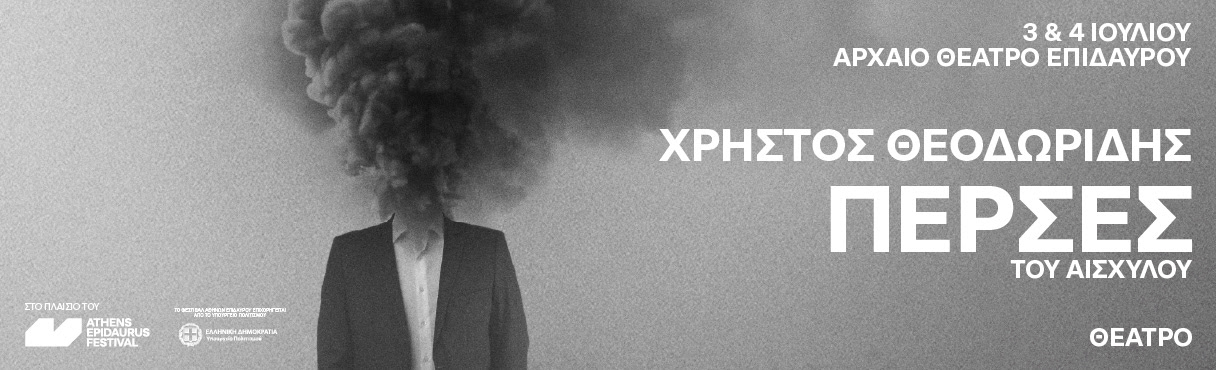
3 & 4 July| THEATRE-PREMIERE
Christos Theodoridis
The Persians
by Aeschylus
With the news of the devastating defeat at Salamis as its narrative starting point, the central theme of the story is mourning—uncompromising, constant, repetitive—for those who were lost, for the happy past that was lost.
In his first appearance at the Argolic Theater, this young director from Thessaloniki takes on Aeschylus’ tragedy. Written in 472 BC, it is the oldest surviving complete work of ancient Greek drama and, at the same time, the oldest transcription of historical events into theater.
Departing from the mythical narrative that usually dominates tragedy, Aeschylus composes here the only work of the “documentary theater” genre found in ancient Greek tragedy.
Translation Panagiotis Moullas • Direction Christos Theodoridis • Dramaturgy Isabella Konstantinidou, Christos Theodoridis • Costumes Angelos Mentis • Lighting Tasos Palaioroutas • Music The Boy • Choreography – Movement Xenia Themeli • Production Marossoulis Productions • Co-production Athens & Epidaurus Festival
10 & 11 July
More to be announced in a later date…
17 & 18 July | THEATRE-PREMIERE
National Theatre Greece
Dimitris Karantzas
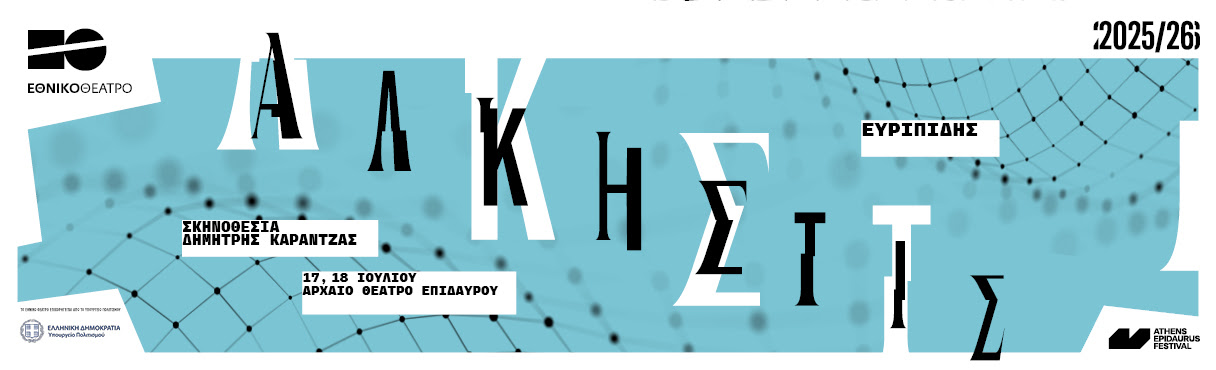
Alcestis
by Euripides
A contemporary parable with strong political overtones. A dual-natured work. A constant oscillation between life and death, play and nightmare, overwhelming tragedy and unexpected comedy. The National Theater presents Euripides’ Alcestis, directed by Dimitris Karantzas, at the Ancient Theater of Epidaurus.
Admetus will be saved from death only if someone else agrees to die in his place. Alcestis, his wife, offers herself in exchange. Her sacrifice takes place in public, before the eyes of the citizens, as a premeditated murder—an act that today is inevitably interpreted as femicide, legitimized by the social and political order.
Alkestis is orchestrated by Dimitris Karantzas as a theatrical experiment, where music, sound, movement, and acrobatics coexist organically, creating a fluid, liminal, and constantly changing world. With a great team of actors and contributors, the performance becomes a theatrical argument that does not simply narrate the myth, but raises crucial questions about power, gender, sacrifice, and society’s responsibility towards the death of the eponymous heroine—and others.
Adaptation – Direction Dimitris Karantzas • Dramaturgy Consultant Gelly Kalabaka • Set Design Konstantinos Skourletis • Costumes Ioanna Tsami • Music Panagiotis Manouilidis • Movement Tasos Karachalios • Lighting Eliza Alexandropoulou • Cast (in alphabetical order) Konstantinos Avarikiotis Feris, Dimitra Vlagopoulou Maid, Giorgos Zygouris Hercules, Iro Bezou Alcestis, Giannis Niarros Admetus, Kostas Nikouli Apollo, Aeneas Tsamatis Servant, Theodora Tzima Death
Chorus to be announced soon
24 & 25 July| THEATRE-PREMIERE
Nikos Karathanos
Piece
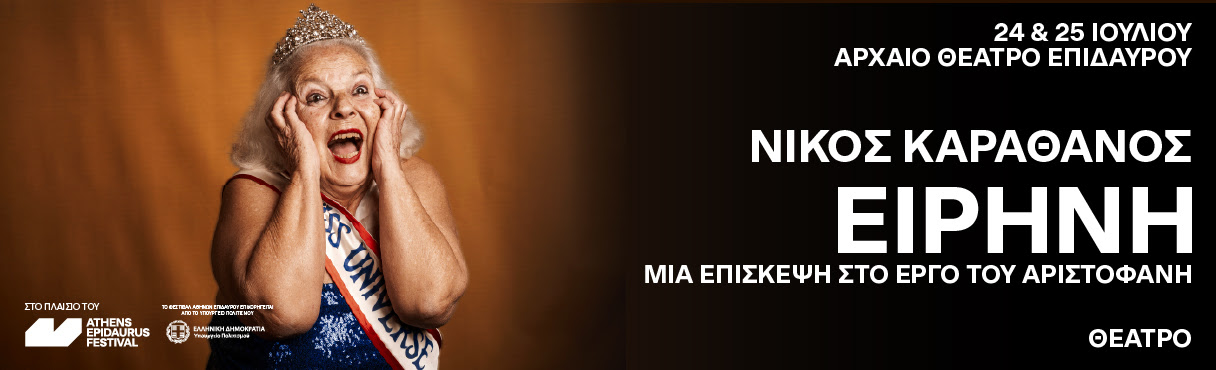
A visitation to Aristophanes
Nikos Karathanos, Foivos Delivorias, and Angelos Triantafyllou are the main collaborators in a new performance, a new adaptation, a response to madness with madness.
Peace occupies a central place in Aristophanes’ overall work as the most conciliatory and optimistic of his political comedies. Despite its strong connection to the era that gave birth to it, it remains timeless because it sheds light on a mechanism that continues to this day: wars that are prolonged at the expense of the many and for the benefit of the few. The persistence of ordinary people in demanding peace, even against the logic of power, makes the play absolutely relevant in a world like today’s, where invasions, violence, threats, insecurity, and cynicism continue to be presented as an inevitable reality.
Adaptation – Original text – Songs by Foivos Delivorias • Direction – Concept by Nikos Karathanos • Assistant director Angelos Triantafyllou • Collaborating in dramaturgy Eri Kyrgia • Set design Eva Manidaki • Costumes Angelos Mentis • Music Foivos Delivorias, Angelos Triantafyllou • Songs – Lyrics Foivos Delivorias • Lighting design by Eliza Alexandropoulou • Movement by Amalia Bennett • Consultant on the ancient text by Giannis Asteris • Assistant directors Dimitris and Orestis Stavropoulos • Cast Galini Hatzipaschali, Thanasis Alevras, Panos Papadopoulos, Giannis Kotsifas, Ioanna Mavrea, Vasso Kavaliaratou, Foivos Delivorias, Nikos Karathanos, Angelos Triantafyllou, Yilmaz Housmen, Alkis Bakogiannis, Konstantinos Kontogeorgopoulos, Konstantinos Zografos, Vasilis Papadopoulos, Giannis Sampsalakis, Spyros Bosgas, Antonis Christou • Featuring Andreas Polyzogopoulos, trumpet soloist, and other musicians • Production: Theatrical Productions Technochoros • Co-production: Athens & Epidaurus Festival
31 July & 1 Augusut| THEATRE-PREMIERE
National Theatre Greece
Eleni Efthimiou
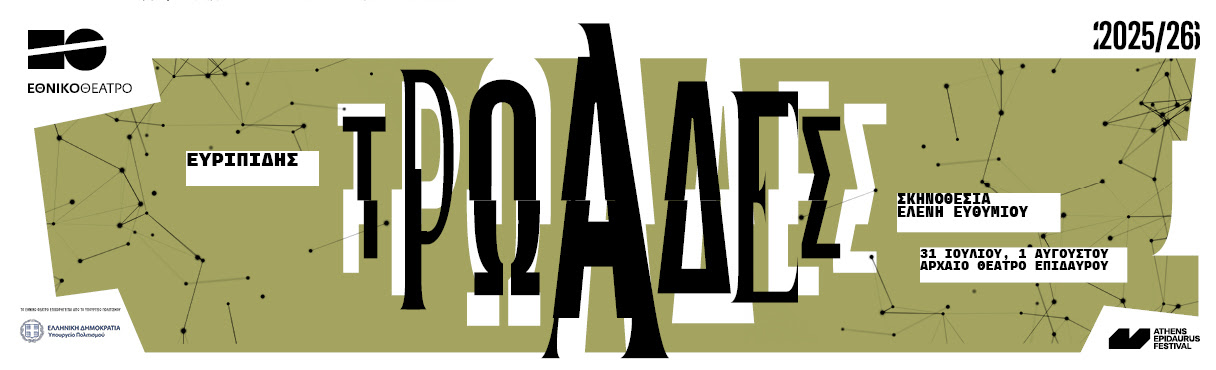
The Trojan Women
by Euripides
The quintessentially human-centered and deeply anti-war work of the great tragedian is brought to life by a group of twenty-two performers—including members of the En Dynamai Theater Company—of all ages, with and without disabilities, and with live music on stage. At the Ancient Theater of Epidaurus, the National Theater presents Euripides’ The Trojan Women, directed by Eleni Efthymiou, in a performance about the timeless horror of war and loss as collective memory, but – mainly – about the female body as a universal symbol of human tragedy.
In Eleni Efthymiou’s staging, the Trojan Women are not just the beautiful, healthy bodies of the privileged women of the royal family awaiting the final selection. Their bodies are mixed with other bodies—minors, disabled, elderly—who even before the war had no say in their own lives and who usually do not have the privilege of narrating their stories. Bodies that the system ostentatiously ignores, that the authorities choose how to manage or eliminate. In this respect, at least, war is ‘fair’: it always equates the much with the little and with the nothing.
Translation by Yannis Tsarouchis • Adaptation – Direction by Eleni Efthymiou • Dramaturgy consultant Sofia Efthymiadou • Set design by Evangelia Kirkine • Costumes by Angelos Mentis • Music by Lefteris Veniadis • Lighting design by Zoë Molyvda-Fameli • Sound design by Sofia Kamagianni • Music instruction by Melina Paionidou • Cast (in alphabetical order) Giorgos Karamichos Menelaus, Argyris Xafis Talthybius, Evi Saoulidou Andromache, Nancy Sideri Cassandra, Vasiliki Troufakou Helen, Lydia Fotopoulou Hecuba • Chorus Myriam Arzani, Maria Dachlythra, Eleni Dimopoulou, Nikos Kyparissis, Irini Kourouvani, Loxandra Loukas, Lygiri Mitropoulou, Theano Papavasiliou, Katerina Papandreou, Niki Petala, Chrysa Toumanidou • Michalis Mitsis in the role of young Astyanax
7 & 8 Αυγούστου| DANCE-FOR THE FIRST TIME IN GREECE
Alan Lucien Øyen
Antigone
Inspired by the work of Sophocles
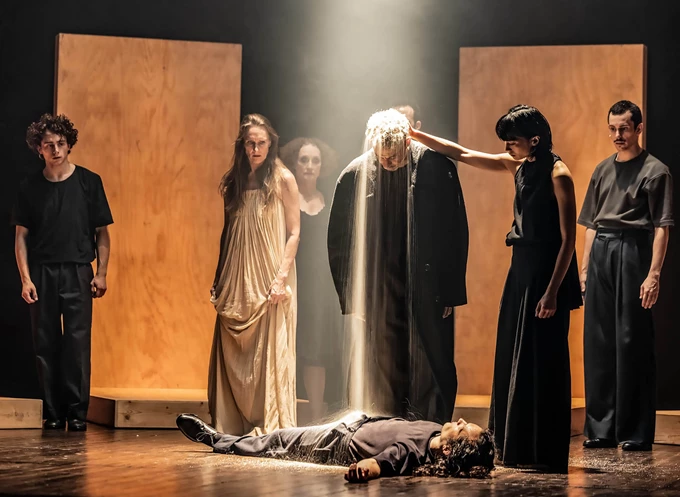
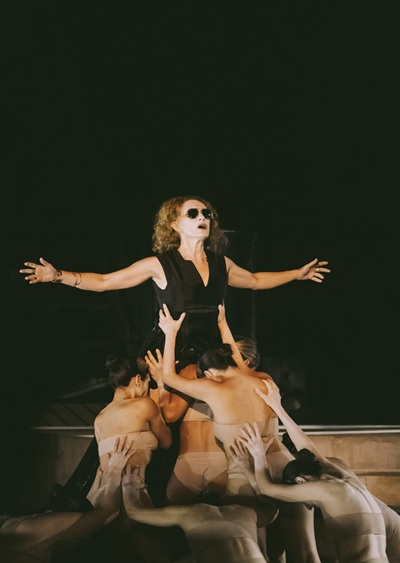
A new, radical interpretation of Antigone, a performance that combines the poetry of movement with the poetry of text and spoken word. Created by Alan Lucien Øyen , one of Norway’s most restless contemporary choreographers, writers, and directors. On stage, the performing arts group winter guests, which he founded twenty years ago and consists of dancers, actors, writers, and designers. They are joined by important collaborators and dancers from Pina Bausch’s Tanztheater Wuppertal, with Ogen being the first choreographer invited to create a new, complete work for the group after the death of its founder.
Director– Choreographer Alan Lucien Øyen • Artistic collaborators Andrew Wale, Daniel Proietto • Performers Enoch Grubb, Douglas Letheren, Pascal Marty, Antonin Monié, Nazareth Panadero, Héléna Pikon, Julie Shanahan, Fernando Suels Mendoza, Meng-Ke Wu • Set designed Åsmund Færavaag • Costumes Stine Sjøgren • Lighting Design Martin Flack • Sound Gunnar Innvær, Mathias Grønsdal • Video Mathias Grønsdal • Photographer Mats Bäcker • Technical consultant Chris Sanders • Stage Manager Daniel Hones • Wardrobe Anna Lena Dresia • Produced by winter guests • C0-produced by Fondazione Teatro di Roma, The Norwegian Opera and Ballet, Centro Servizi Culturali Santa Chiara • production runner Essar Gabriel • production managers Ornella Salloum, Syv mil / Tora De Zwart Rørholt, Ingrid Saltvik Faanes (for winter guests troupe) • with the support of Arts Council Norway City of Bergen • kindly provided rehearsal venue by Pina Bausch Zentrum
Antigone
21 & 22 August| THEATRE
National Theatre of Northern Greece
Asterios Peltekis
Lysistrata, by Aristophanes
Lysistrata is not just a comedy about war and love. It insists on being a deeply political, human-centered work that focuses on the moment when a society, exhausted by decay, urgently seeks a new way of organizing itself. The National Theater of Northern Greece presents a contemporary stage reading of Aristophanes’ comedy, which, through laughter, addresses us with genuine lyrical “comic” seriousness about the entropy into which a society often falls.
Entropy—as a natural and philosophical term—denotes the gradual decomposition of order, the dissipation of energy, the inability of a system to “self-regulate.”
Translated by Konstantinos Bouras• Director– Dramaturgy Αsterios Peltekis• Performed by Elisavet Konstantinidou, Alexandra Paleologou, Krateros Katsoulis, Pagagiotis Petrakis, Nikos Georgakis, e.t.c
Lysistrata, by Aristophanes
28 & 29 August | THEATRE
Cyprus Theatre Organisation
Thomas Moschopoulos
Ion, by Euripides
It is one of the most enigmatic works of ancient drama. Ion is not a “pure” tragedy: it moves between the tragic and the comic, myth and realism, mysticism and skepticism, focusing on the issue of identity and belonging. It is a work that seems to speak directly to contemporary experience, at a time when everything is constantly being questioned and renegotiated.
The action takes place at the sacred oracle of Apollo at Delphi, a place that constitutes a threshold between the tangible and the invisible, between the public and the private. This is where the young Ion grows up, without a name or awareness of his origins. He struggles to piece together an identity from fragments, while the audience already knows the truth. Through contradictions, refractions, and misinterpretations, the blurred, almost invisible past crystallizes into a pure, tangible present, and an expectation of meaning emerges from the void.
Thomas Moschopoulos
Director– Translated by– Dramaturgy Thomas Moschopoulos
Cast and crew are currently being finalized.



Leave A Comment