
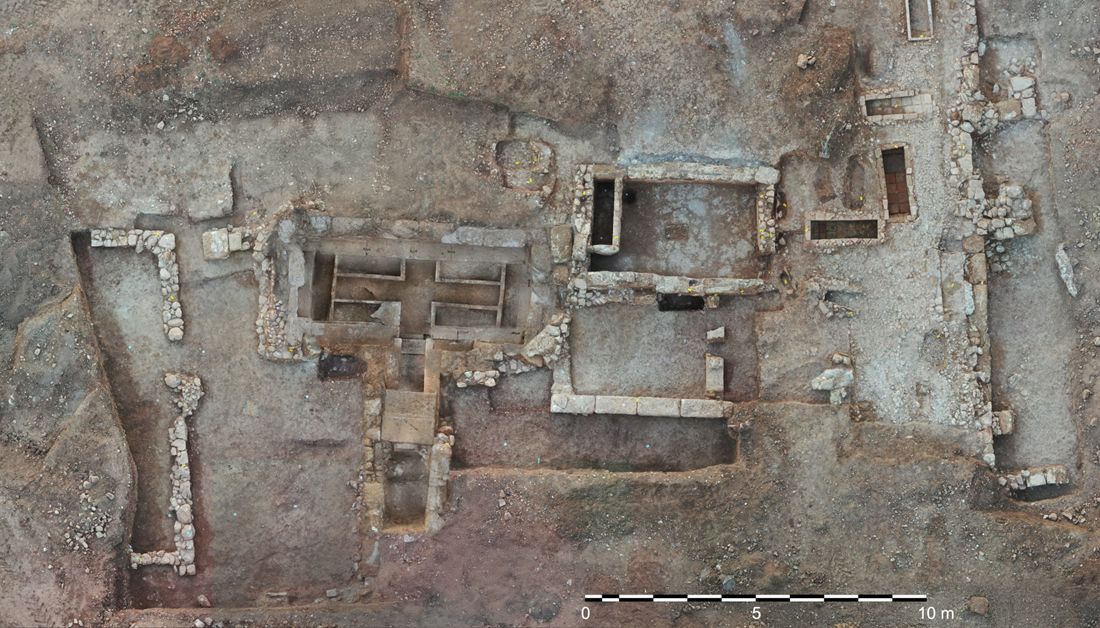
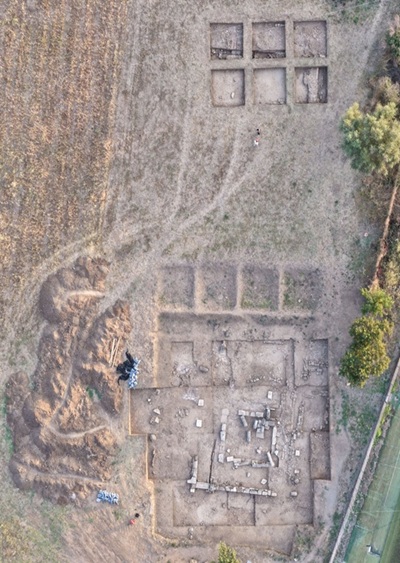
In October 2025, the systematic excavation of ancient Tenea was completed. Around the Tomb Monument III, an extensive complex was uncovered, which was in use from Archaic to Roman times.
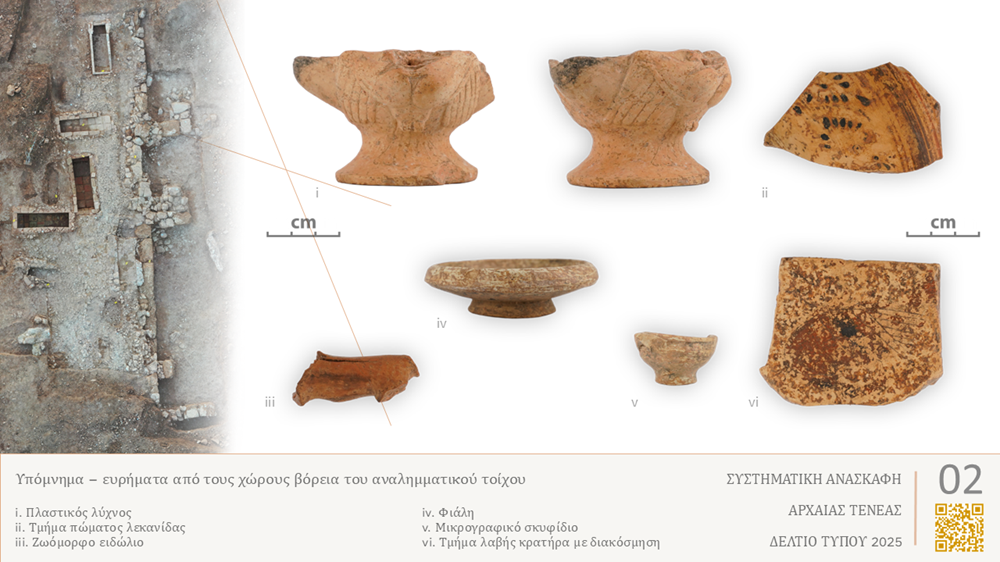
The focal point of the complex in the Archaic period is the rectangular underground building, around which there is an extensive paved plateau bounded on the north by an ancient road with a retaining wall and functional spaces along its length, and to the south by a building with separate interior spaces.
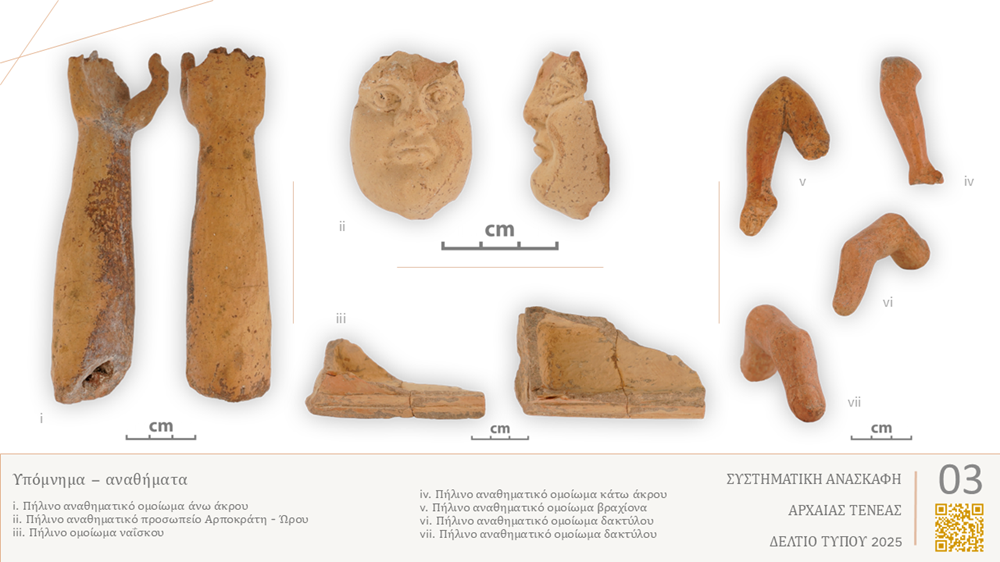
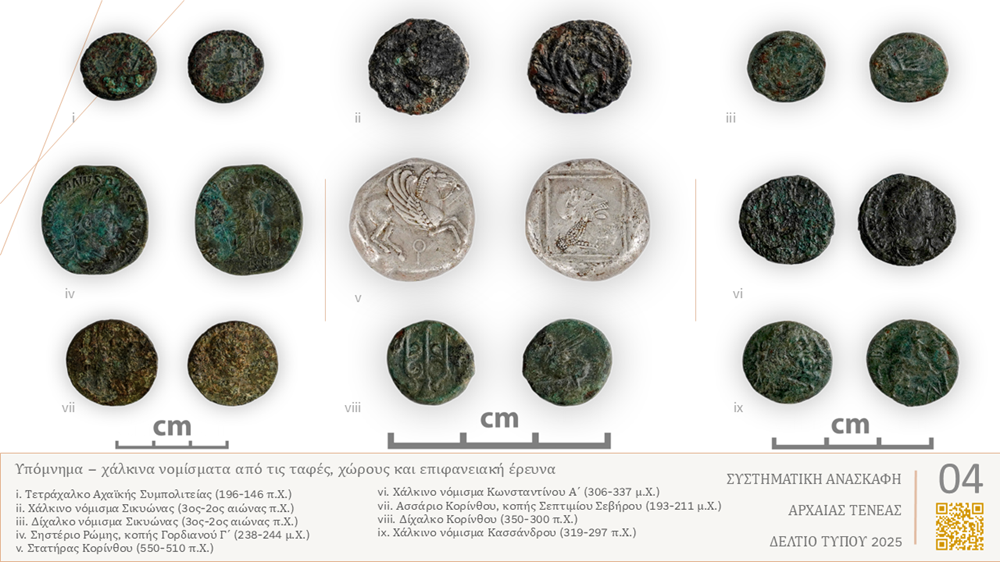
In late Hellenistic times, the building was converted into a covered ritual reservoir associated with healing ceremonies, and to the east of it, a space was created to support its operation. The architectural members that were found testify to the existence of an elaborate building in the area, with a function related to the whole. A silver stater, corinthian cut (549-510 BC), along with votive clay figurines of fingers, a hand, a lower limb, and a votive clay mask, most likely of Harpocrates-Horus as a child.
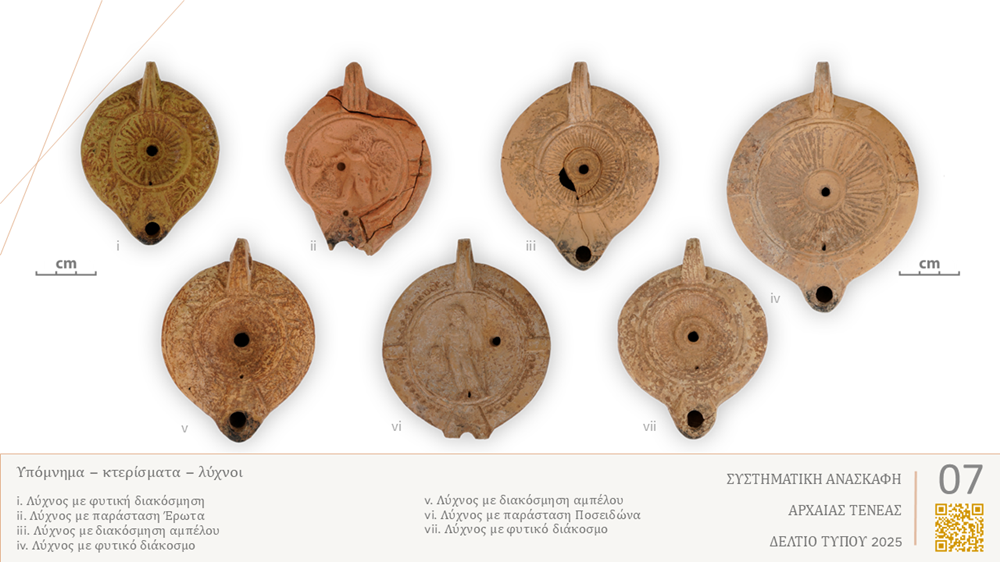
From the above findings, combined with those discovered in 2024, such as clay offerings of human limbs, metal tools for preparing medicines, and a quantity of arsenic poison, it is now clear that the site is associated with mysterious healing rituals. The cistern was the key element of healing, which was achieved through a process of purification and immersion in water. The votive effigy of Harpocrates, along with finds from earlier excavation periods, such as the gold ring with a seal stone depicting Apollo the Physician, the clay relief tile of a rooster, the acrokeramika, the iron ring and the lamp with representations of Sarapis, as well as the gold lotus leaves associated with Harpocrates, and finally the abundance of zoological material from animals used in mystery rituals, greatly reinforce the above view. The presence of Sarapis and Harpocrates proves that Tenea was in step with the cultural and religious syncretism that originated in Egypt and became universal during the Ptolemaic period.
The ancient underground building with the plateau was probably the original site of the mystery ceremonies, while the retaining wall with the road proves that the sacred place of worship had already been demarcated within the boundaries of the city’s cemeteries since ancient times. Probably shortly after the construction of the cistern, Tomb Monument III was founded in the 1st century BC, while the early structures in the area continued to be maintained and used.
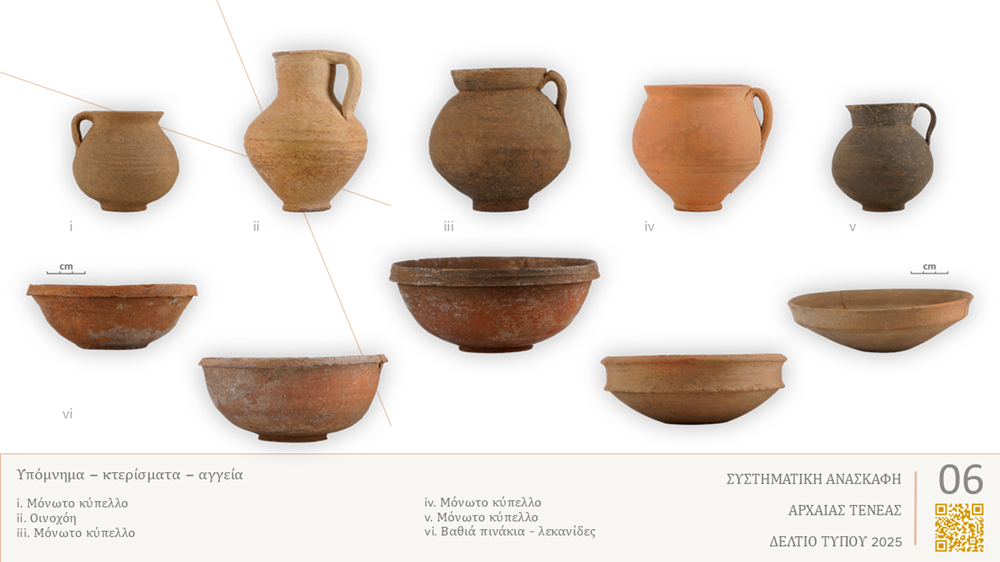
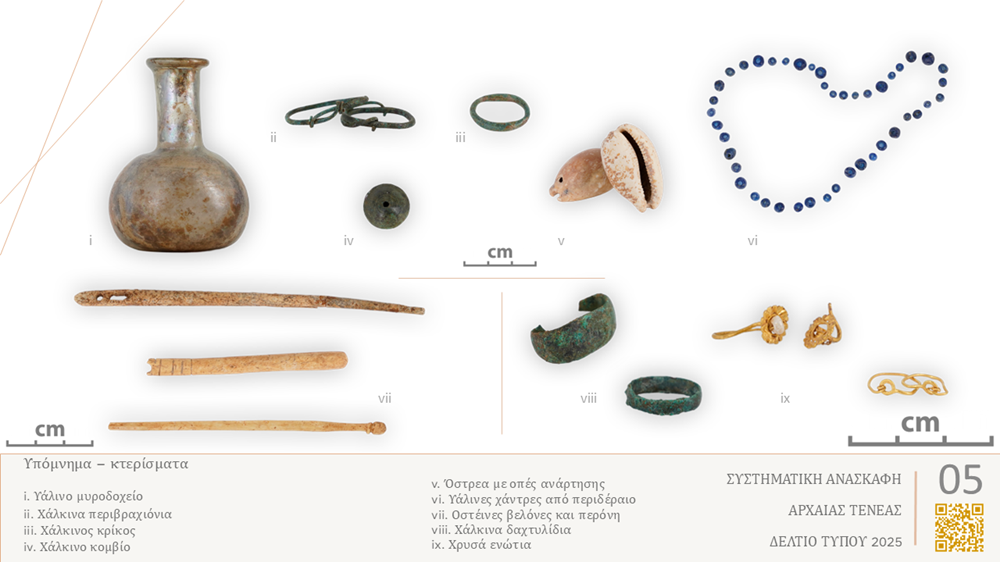
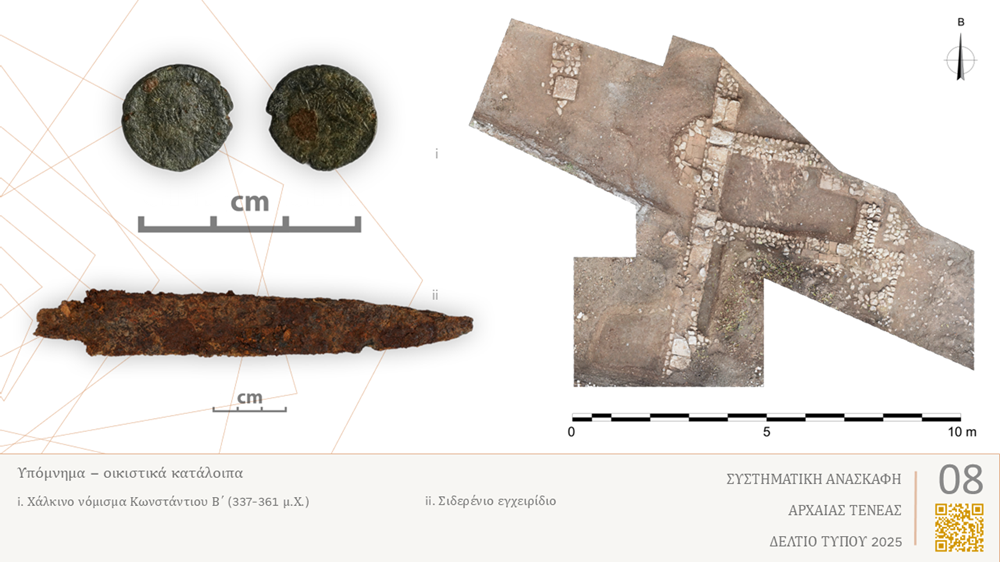
The appearance of the site changed dramatically at the beginning of the 3rd century AD, most likely due to the urban restructuring of the Roman city. The sacred site was transformed into an extensive cemetery that was used until the 5th century AD. A total of twenty-three (23) tombs were excavated, richly furnished with coins, gold and bronze jewelry, glass beads and glass perfume bottles, clay pots, lamps, etc. Finally, new residential structures from the Roman and late Roman periods were identified within the urban fabric of the city.
The Ancient Tenea program is being carried out by the D.I.P.K.A. under the direction of Dr. E. Korka and the supervision of Ms. P. Evangeloglou, archaeologist at the Ephorate of Antiquities of Corinth. It is supported by an interdisciplinary team led by Dr. K. Lagos, numismatist, Dr. Chr. Papageorgopoulou, anthropologist, Dr. D. Bartzis, architect-engineer, and archaeologists P. Panailidis, M. Ioannou, E. Avgerou, A. Koutoula, A. Kamargianni, P. Vlachos, and E. Kapouralos, surveyor Z. Korolis, conservators F. Kousiaki and A. Petridou, and photographer F. Pallikaras.


Leave A Comment