Roma Gallery presents the exhibition Christos Oikonomou: L’Infini terrible, the artist’s first solo presentation at the gallery. The exhibition opens on Thursday, 18 December 2025, and will run until Tuesday, 13 January 2026. It is curated by the art historian Alia Tsagkari.
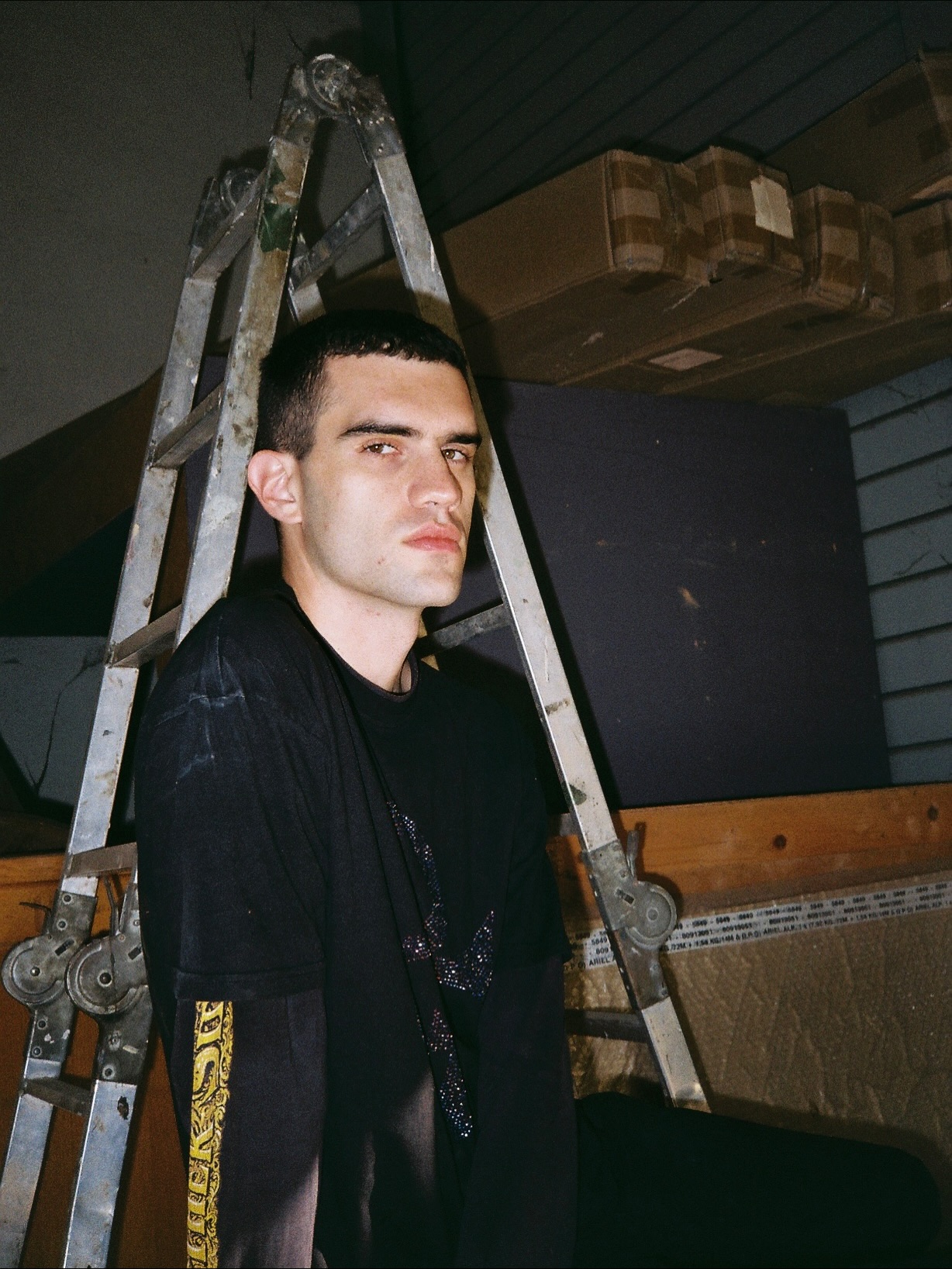
Born in Piraeus in 1998, Christos Oikonomou is one of the most distinctive and influential figures among the younger generation of Greek artists under the age of 30. His painting practice, primarily ink and pastel on paper, is cohesive, focusing on the human body as a field upon which psychological and physical tensions are inscribed. Charged with impulses, instincts, and deliberate distortions, Oikonomou’s works teem with mythological, mystical, and pragmatic references, articulating a groundbreaking understanding of trauma as a lived experience, unburdened by any evaluative judgement.
In 2024, Oikonomou participated in Sun Gazing, a spatial-sound ritual by the collective LABOUR (Colin Hacklander & Farahnaz Hatam), at the National Museum of Contemporary Art (EMST) in Athens. In 2023, he held his first solo exhibition in Athens at the alternative art space We Are Bud. The same year he published his artist book At the Edges of Present (Hideout Editions, 2023). He has also taken part in several group exhibitions. He lives and works in Athens.
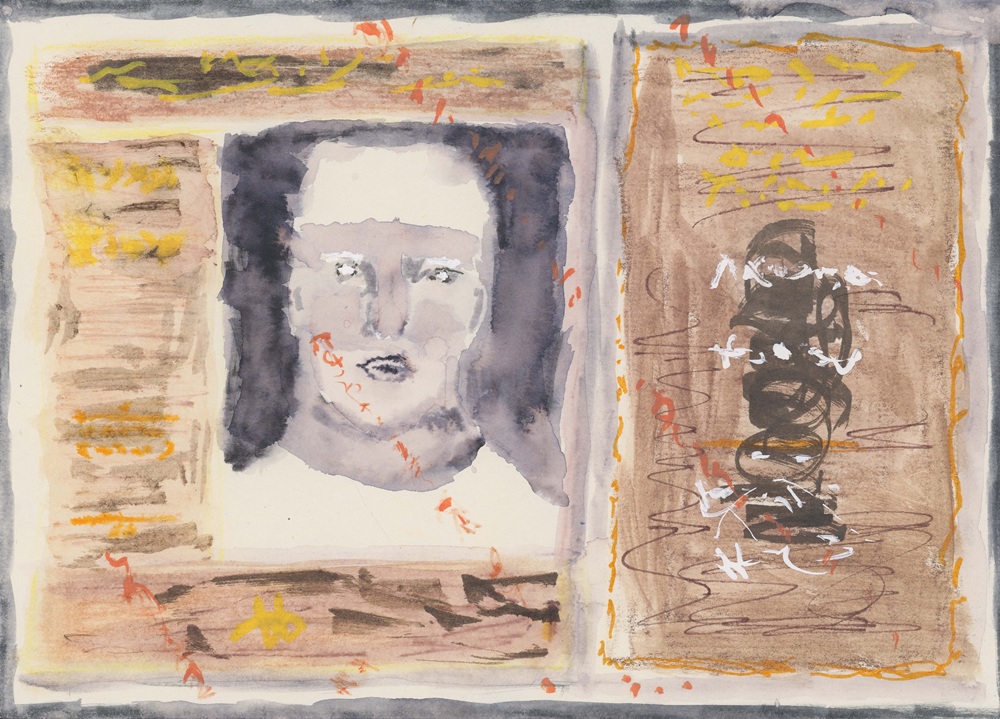
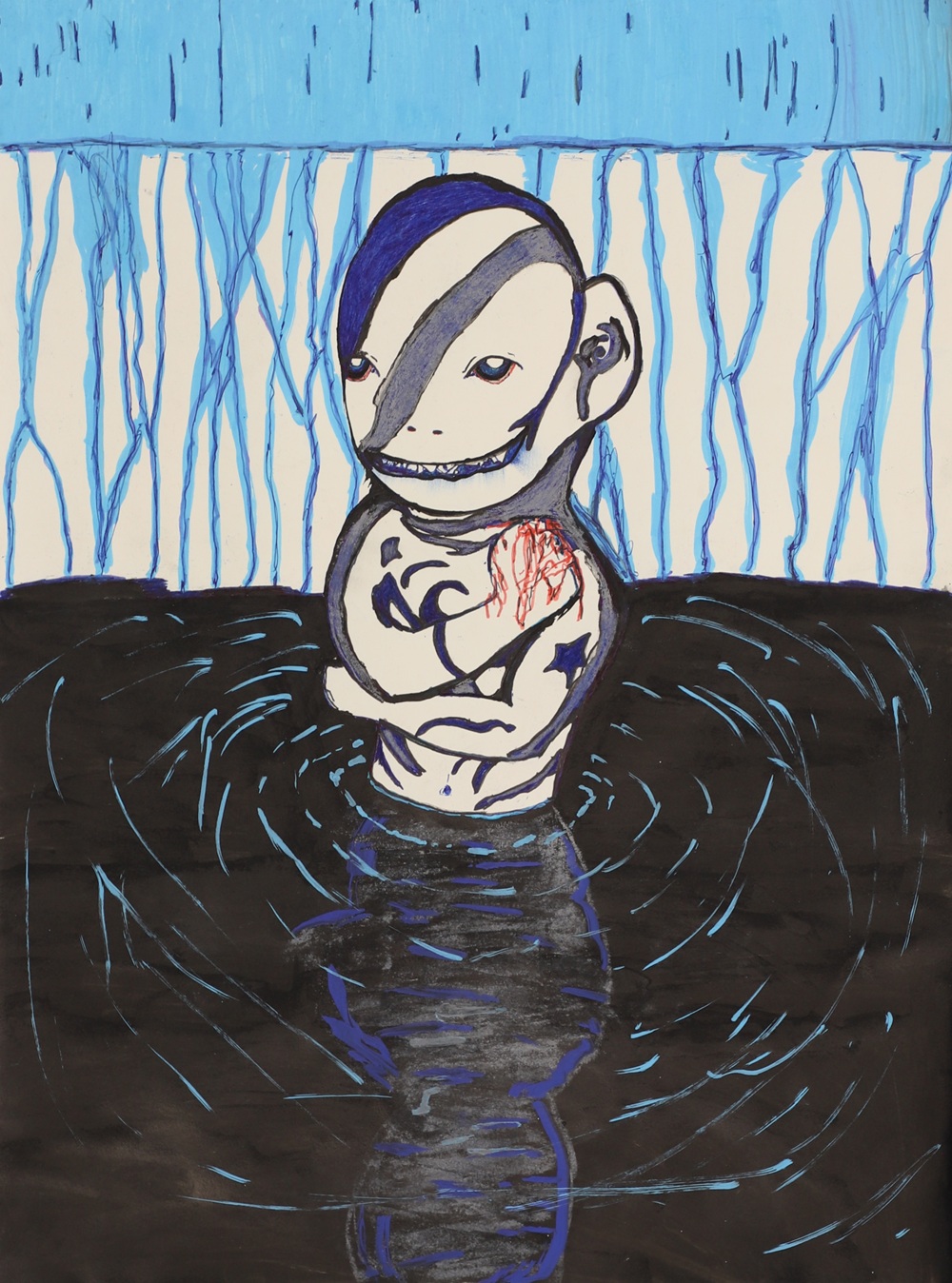
ID Inverted, 2021, ink and coloured pencil on paper, 15 x 21 cm
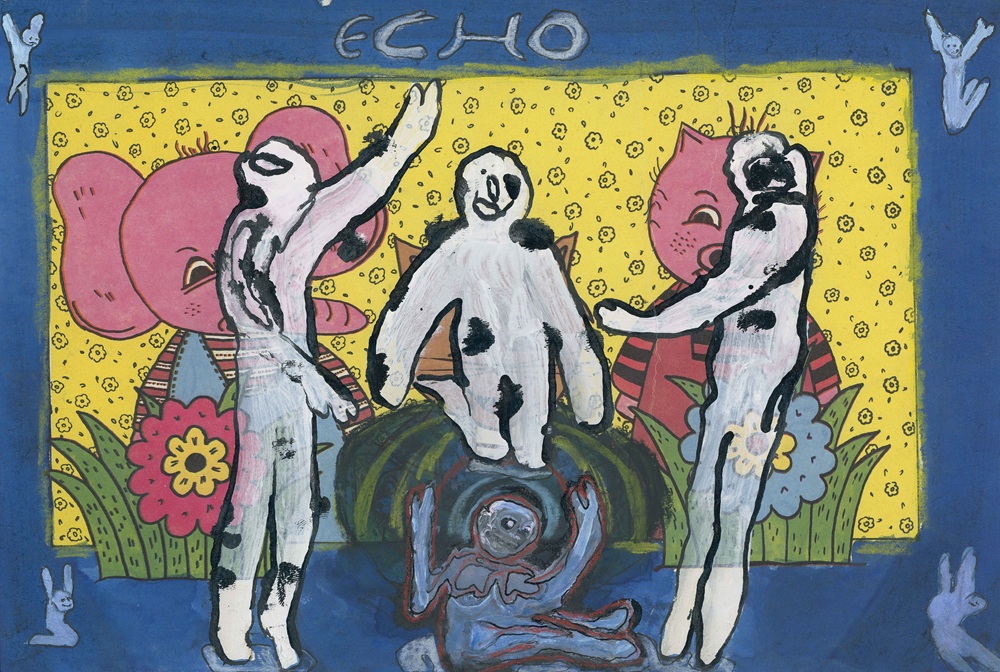
The exhibition Christos Oikonomou: L’Infini terrible brings together more than sixty works on paper created over the past five years, offering a representative view of the artist’s extraordinarily beautiful and provocative representations of the human form.
The selected works are shown in conversation with the “terrible infinite” that terrifies Ophelia’s blue eye in Arthur Rimbaud’s homonymous poem. Signaling the cataclysmic terror of an unlimited, unrepresentable danger that marks the escalation of tension, the Terrible Infinite is identified with the Lacanian Real: a traumatic core of both jouissance and threat.
Suspended between the intoxication of confronting the Real and the menace of bodily dissolution, a captivating monstrosity dominates Oikonomou’s practice, rendering the destructive passion for flesh a privileged site of transcendence.
Distortion functions as the primary mechanism of this transcendence. Stripped of identifiable markers, Oikonomou’s bodies undergo Procrustean dislocations, violent contorsions, and formless renderings that destabilise anatomical coherence. Proportions are warped; faces condense into mask-like structures with schematic ocular cavities; elongated, hyperaccentuated limbs with elastic choreography enact a phantasmagoria that ruptures the body and, through its fragments, reveals the terrifying horizon of the Real.
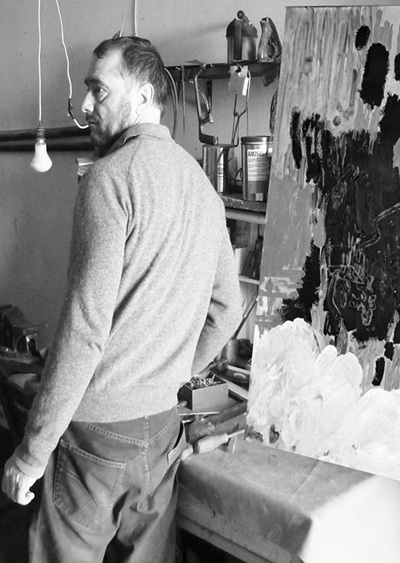
Christos Oikonomou
Thus, the Terrible Infinite operates as an instantaneous fissure that activates the vital forces of pain, effort, and sensorial alertness, forming the energetic economy of the works: the greater the expressive intensity, the more violent the deformation of the limbs, the more extreme the rupture of epidermal cohesion, the more imperative the truth of the forms.
The body, dismembered, exposed and overloaded with color and tension, functions as the locus where the Real is inscribed within the pictorial field, turning distortion into the necessary condition through which form reaches the ultimate limit of its truth.
With a vertiginous plunge into Reality, Oikonomou tears open the curtain of pretence, proliferates formal ruptures, and exposes the Terrible Infinite as a rebuke to moderate pleasures, sensory indolence, and intellectual anhedonia. Within this maximalist conception of the world as a perpetual condition of life-affirming tension and hyper-stimulation, Oikonomou’s practice approaches the notion of trauma as an experience articulated through the ever-intensifying repetition of the initial stimulus.
The uniformity of material, dimensions, and formal motifs functions as the analogue of a desynchronized psychic mechanism which, akin to trauma, continues to operate autonomously, reproducing the works’ initial impression beyond their first encounter. In this way, trauma emerges as a privileged site for penetrating the Real, inaugurating an immersive confrontation with lived experience stripped of any positive or negative evaluative charge.
In Oikonomou’s practice, the material substrate does not serve as a neutral surface but as an active mechanism of morphogenesis. Ink, pastel, and occasionally acrylic are applied on sheets of paper that the artist collects as objets trouvés: 1990s drawing blocks found in vintage bookstores in downtown Athens, weathered remnants of a quotidian, almost childlike materiality. The patina of these papers shapes a dynamic interplay between the naïve, school-like substrate and the corporeal violence of the imagery, turning the surface into a site of trauma and sensory overload.
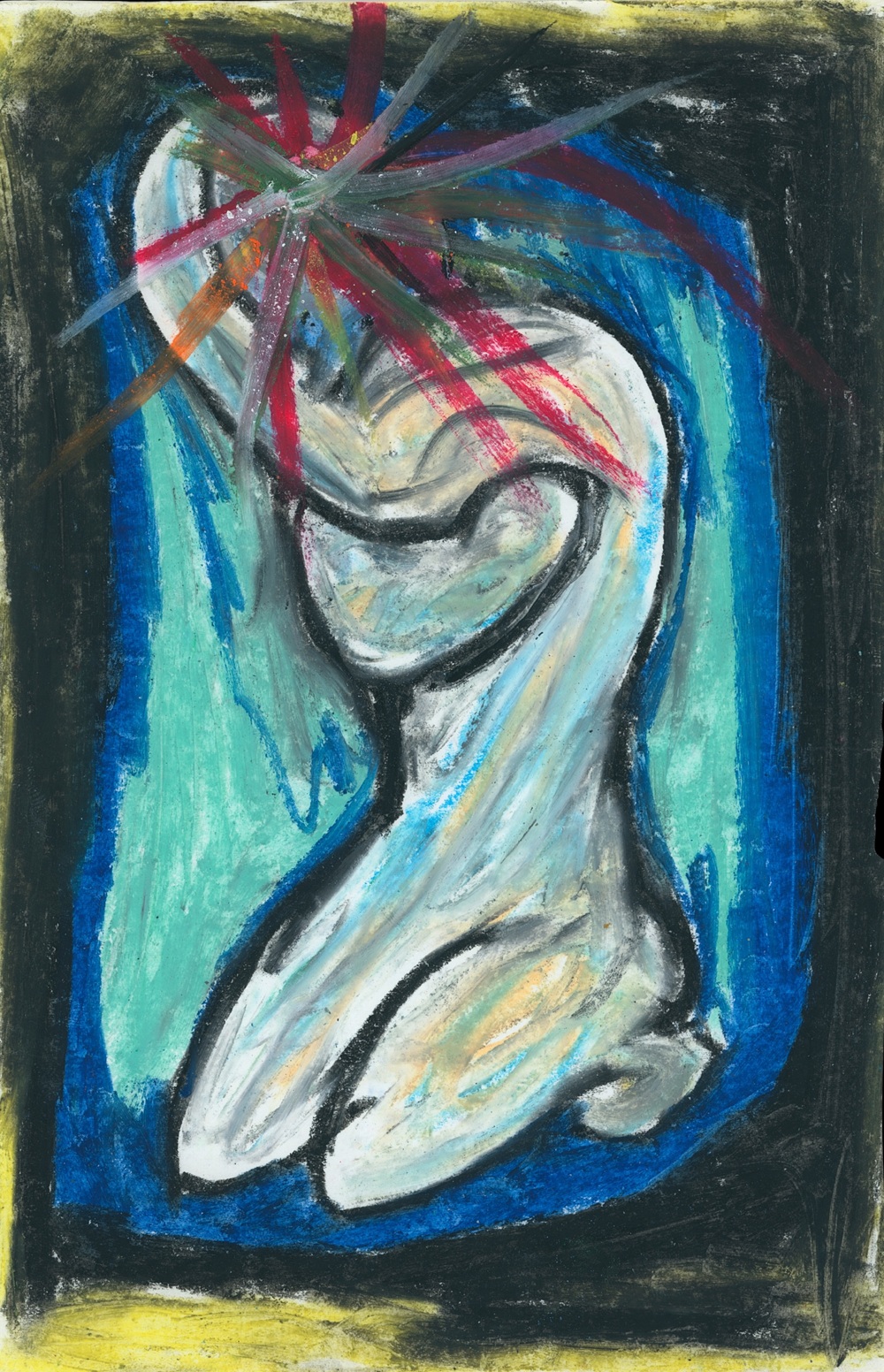
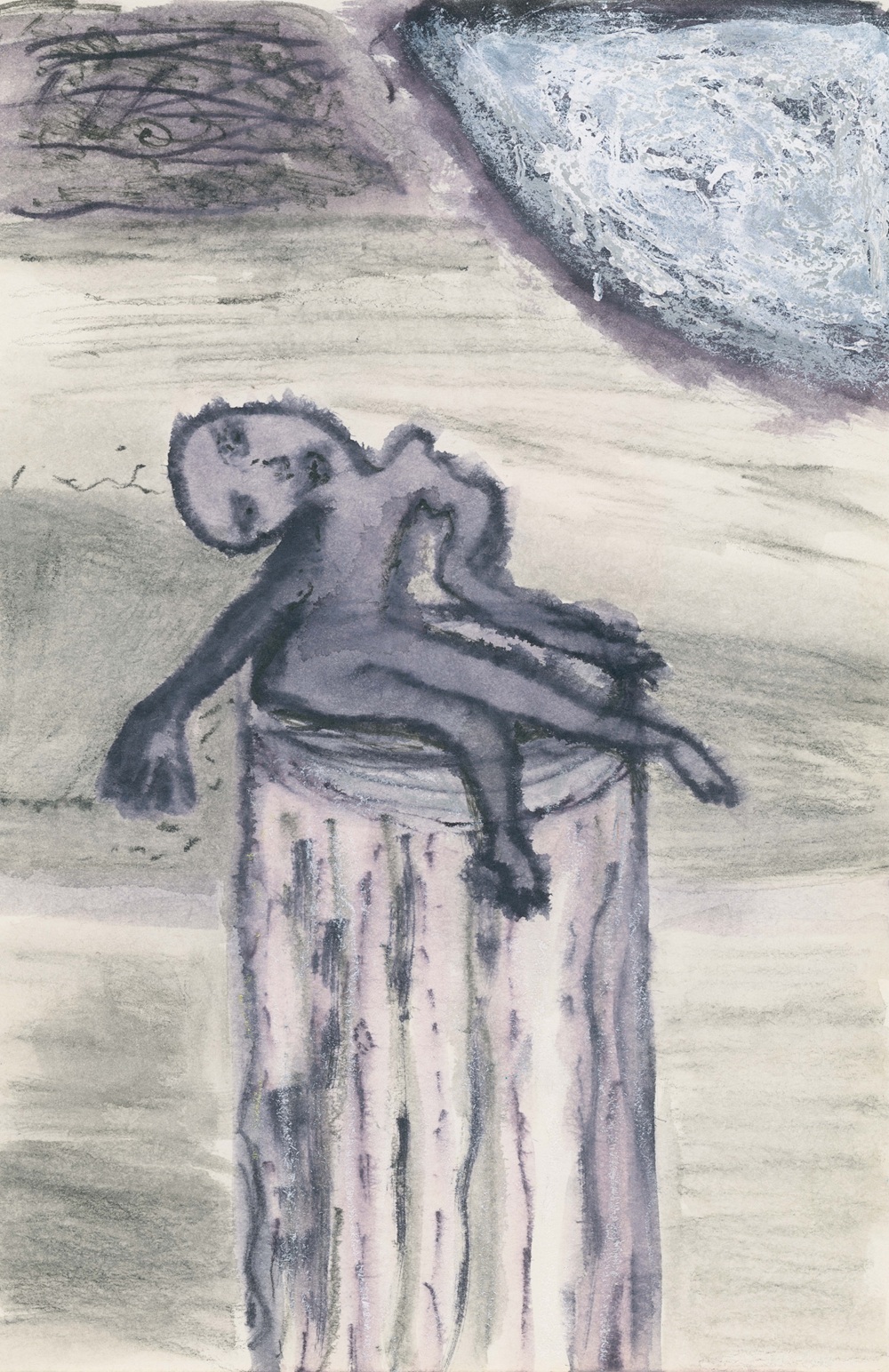
Epiphany, 2025, ink and pastel on paper, 24,5 x 16,5 cm
In larger-scale works such as Close Encounters, Cuteness Aggression I & II, and Return to the Source, Oikonomou continues his investigation of trauma as experience, distilling the élan vital of an entire post-crisis generation into scenes where the playful simplicity of anthropomorphic shapes coexists with an underlying, often disquieting psychic tension, one that proves vitalizing and awakening.
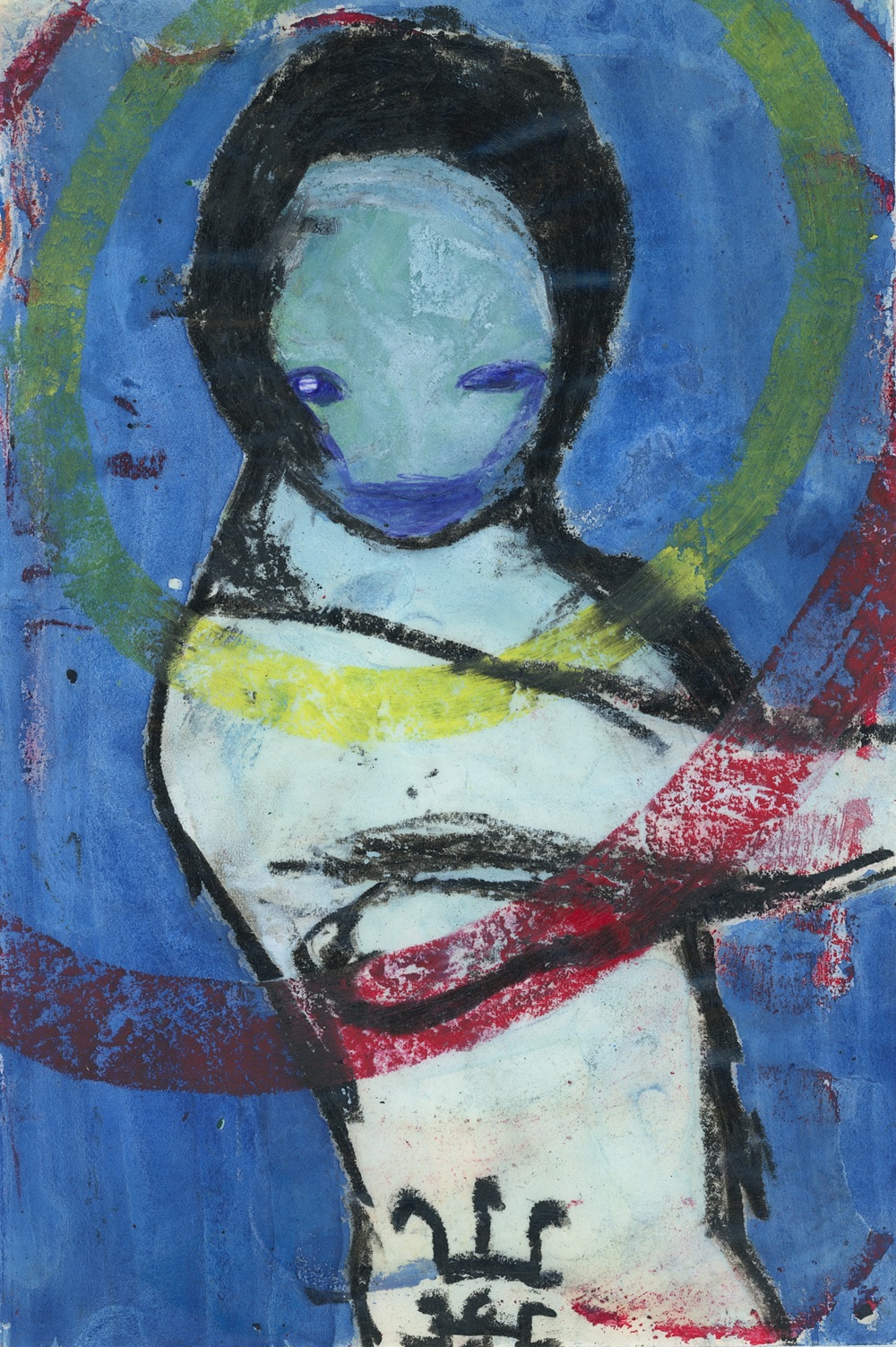
The abruptness of gesture and the economy of color, the saturated cobalt blue, black, and carmine red, form compositions that function as liminal landscapes, where distorted bodies move within an intermediate zone between childlikeness and violence.
The Cuteness Aggression works explore the violence inherent in tenderness, while Return to the Source and Close Encounters, evoke aqueous motifs of genesis and return as allegories of psychic depth. Together, they reinstate the Romantic ideal within painting, imposing the acuteness of Oikonomou’s dramaturgy: the delicate balance between the childlike and the menacing, the tender and the terrifying, corporeality and its spectral decomposition.
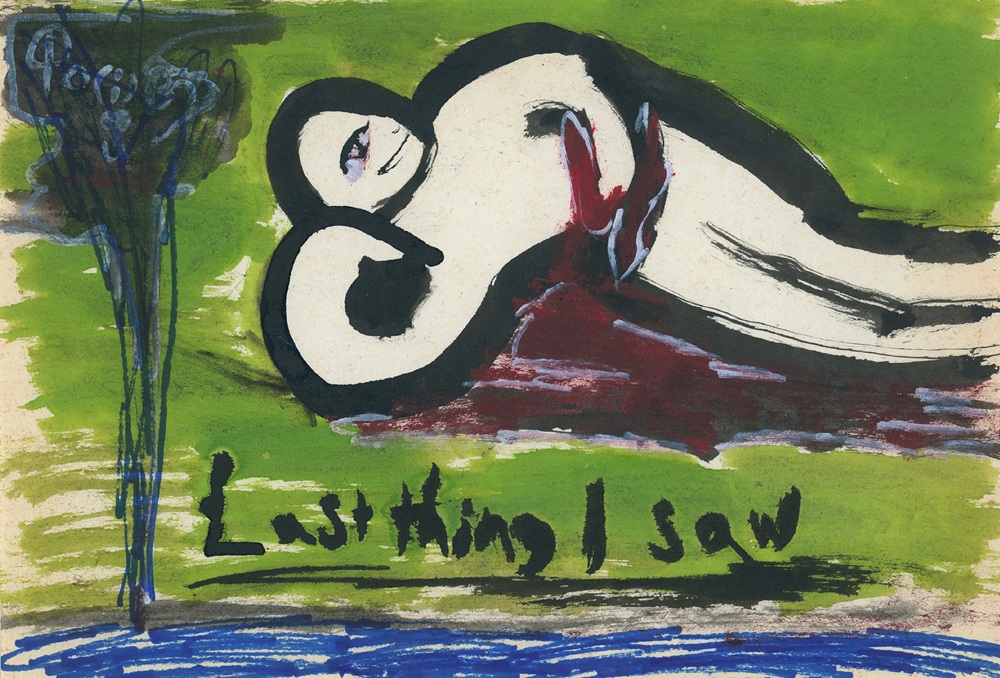
With Le Dormeur du Val (2022), Oikonomou directly engages with Rimbaud’s poem of the same title, in which deceptive serenity shatters to reveal the trauma lurking at the core of every organic existence: “Quieted. There are two red holes in his right side.” In place of idyll emerges terror: peace is funereal. The nature that embraces the body does not protect it but absorbs it. The figure’s faint smile,reminiscent in the poem of the “sick child,” and in Oikonomou’s work of the enigmatic smiles from Neon Genesis Evangelion, plays a decisive role. This ambiguous, extralinguistic sign functions as an index of violence, constituting a code that overturns expectation. The blood-red perforation marks the destructive passion that delivers these robust, vitalistic bodies into a process of decay, as they burn from their own vital intensity.
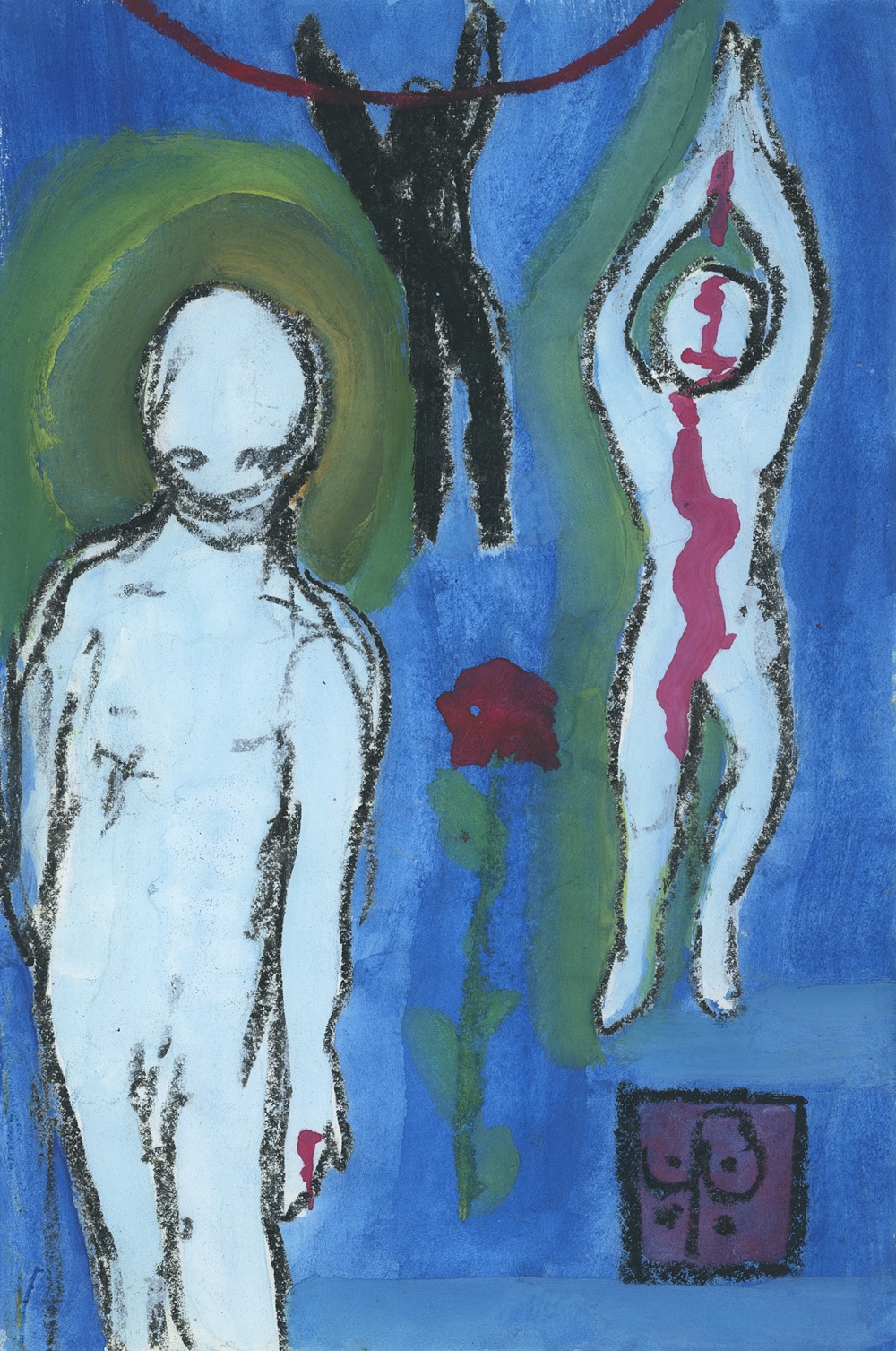
In The Garden of Rituals (2025), the transition from depicting isolated bodies to constructing a unified, ritually charged pictorial field enables Oikonomou to foreground violence, ritual act, and bodily decomposition as fundamental aspects of cultural experience. Here, sacredness is not associated with classical harmony but is located in the zones of rupture within the body, where the sacred manifests as dissolution and destabilization. Anthropomorphic figures, suspended or still within fields of chromatic intensity, function as hybrids of ritual and trauma, while the solitary red flower-form signals the ambiguous passage between decay and rebirth. Through this concentrated scenography, Oikonomou establishes a dark sacredness that emerges from the very limits and fissures of flesh.
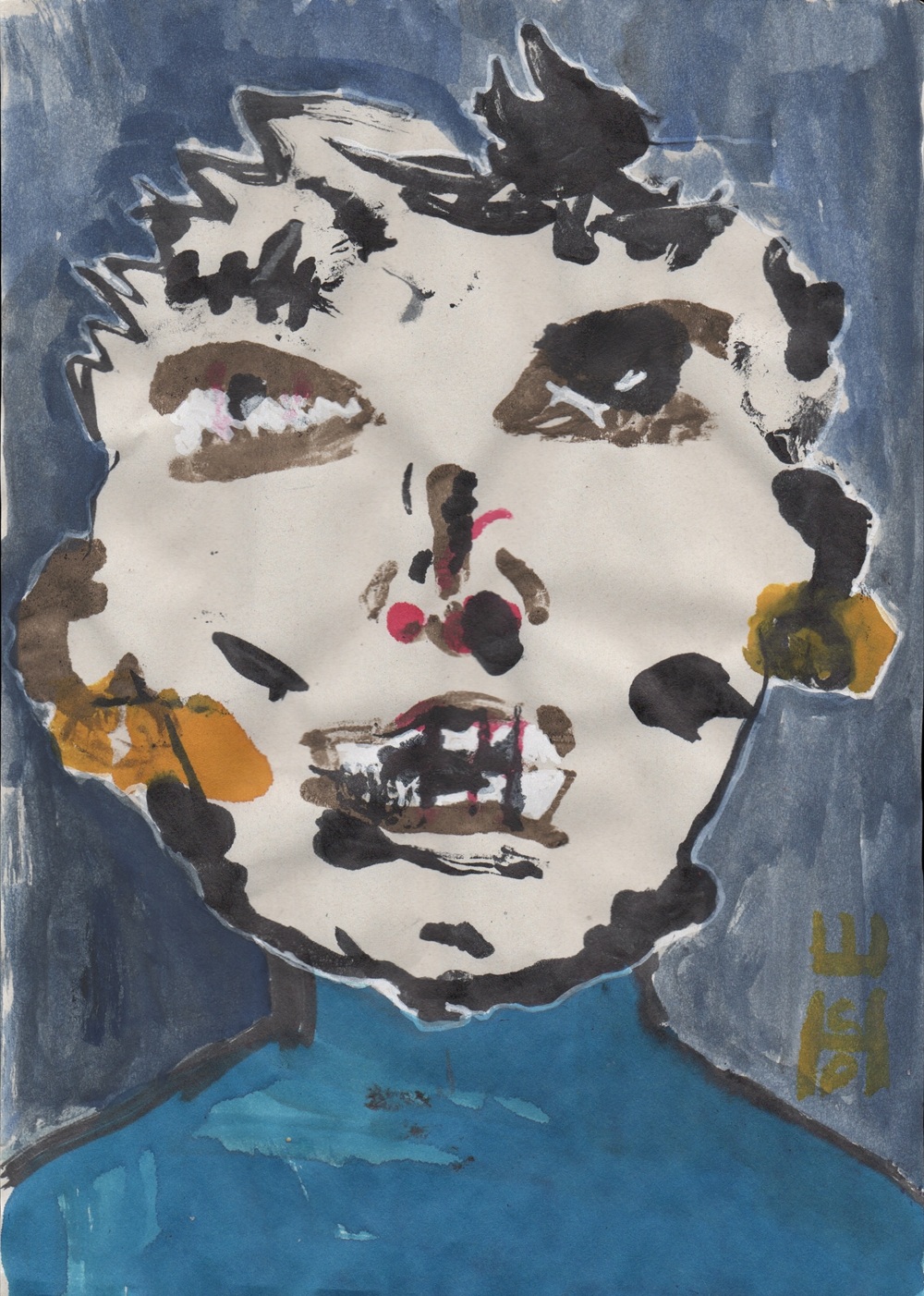
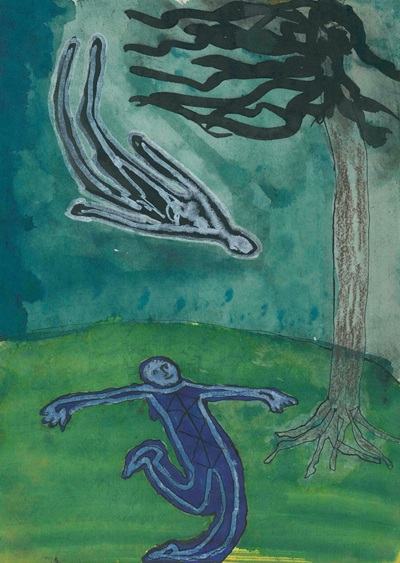
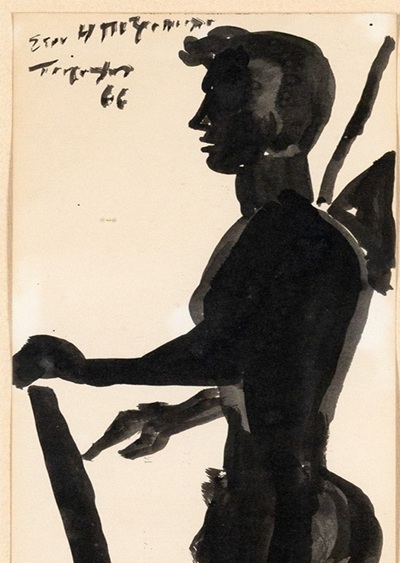
Orpheus, 2022, ink on paper, 25,5 x 18 cm
Roma Gallery
Roma 5, Athens 10673
21 3035 8344 | roma-gallery.com | [email protected]
Opening Hours:
Tuesday, Thursday, Friday : 11:00-20:00
Wednesday, Saturday: 11:00-16:00
Sunday, Monday: κλειστά
For more information: [email protected] or call at 21 3035 8344.



Leave A Comment