
Significant findings emerged during a rescue excavation conducted by the Ephorate of Antiquities of Fthiotis and Evrytania on the eastern foothills of Lake Kifissida (Kopaida), 6 km north of the Sanctuary of Apollo Ptoon and ancient Akraiphia. The excavations are being carried out by EFAE archaeologist Maria Papageorgiou and archaeologists Niki Mitropoulou, Elisavet Vergeraki, and Elena Tzimoulias, under the direction of the Director of the Ephorate, Ms. Efthimia Karantzali, and the Deputy Director of the Department of Prehistoric and Classical Antiquities, Ms. Aristea Papastathopoulou.
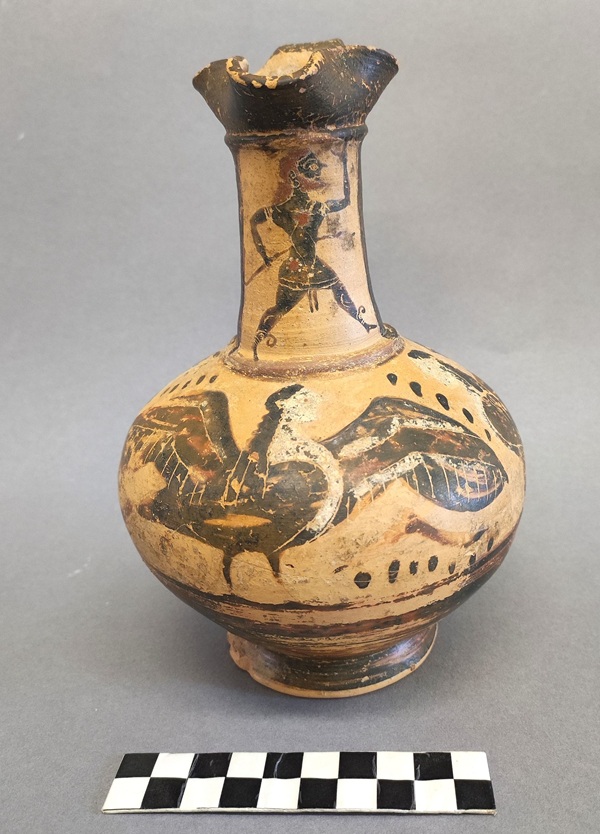
Three-leafed wine jug
The rescue archaeological investigation began on the occasion of the construction of a photovoltaic park by METKA ATE, a subsidiary of Metlen Energy & Metals, and is financed almost entirely by the Mytilineos Group.
A cemetery from the Archaic and Classical periods was discovered, along with architectural remains of a fortified settlement from the same period. The site is marked on old maps as “Spitia-Katavothra.” The cemetery is arranged in clusters and consists of pit graves, burial pyres, and tile-roofed tombs. Archaeological research is ongoing, but the 40 graves that have been investigated document the high standard of living and social status of the landowning inhabitants of the riverside Boeotian settlement.
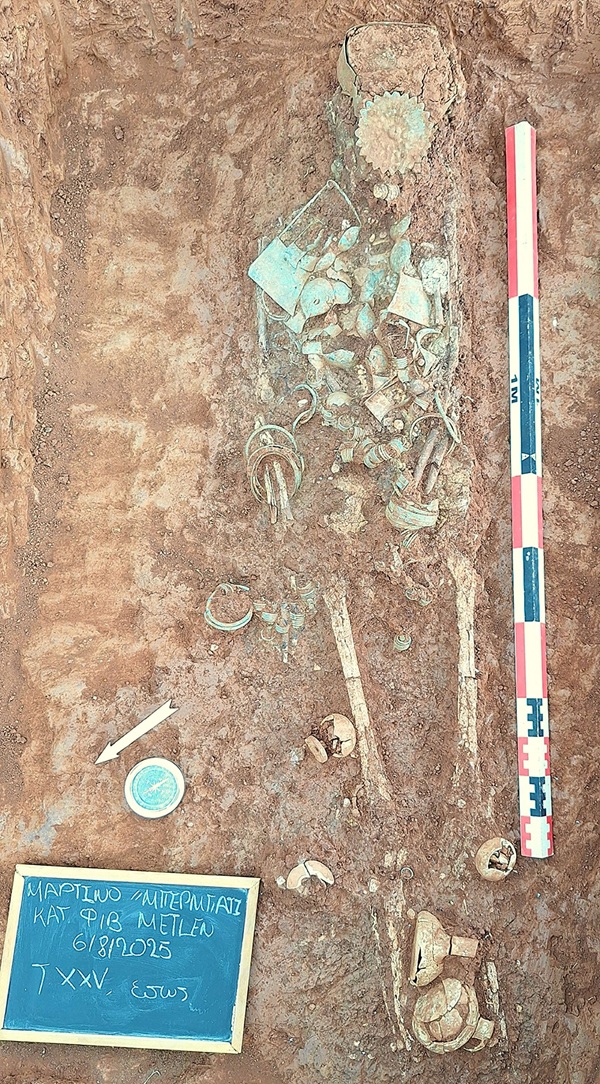
The burial of the noblewoman
“The Lady with the Inverted Diadem.”
Particularly impressive is the “Burial of the Lady with the Inverted Diadem,” which dates to the second half of the 7th century BC and is part of a cluster of three pit graves. According to preliminary examination of dental remains, the burial of the noblewoman belongs to an adult woman aged 20-30. An impressive bronze banded diadem with a large wheel-shaped ornament, “in the shape of a sun,” was placed ceremonially on her head as a symbol of her superiority and rank. The elaborate diadem is made using the repoussé technique and is decorated with pairs of heraldic lions, male and female, animals that symbolize royal power and authority par excellence. However, the diadem had been placed on the head of the deceased upside down, with the lions in a supine position and the jewel at the lower end. In modern times, the king’s crown worn upside down symbolizes the abdication or fall of the monarch, and in any case signals the loss of his power and office.
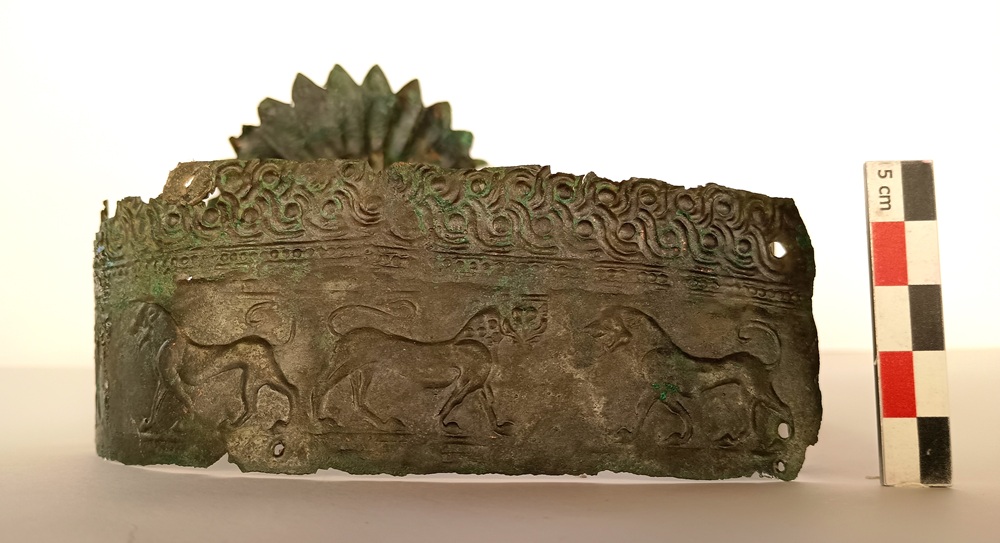
Diadem
The burial of the noblewoman fits chronologically into the transitional socio-political context of the mid-7th century BC, a period during which the traditional hereditary monarchy was shaken and the rise of the aristocracy led to the establishment of an oligarchy and an aristocratic political system in the following period.
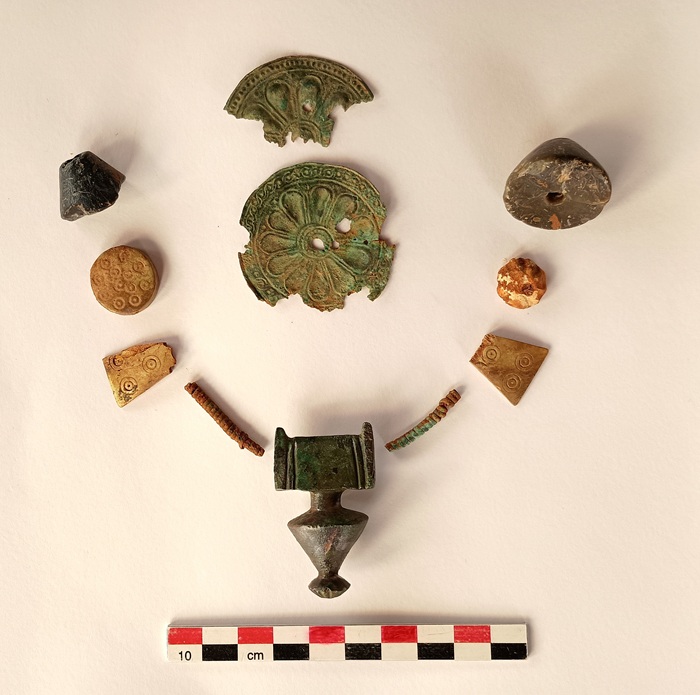
Jewelry
The status, prestige, and wealth of this burial are evidenced by the numerous bronze grave goods. The number of grave goods is impressive, among which the two oversized Boeotian-type brooches with engraved geometric horse decorations, the necklace with a large vase-shaped pendant, the bone and ivory beads, the amber beads, the bronze earrings, the bracelets, and the spiral rings worn on all fingers.
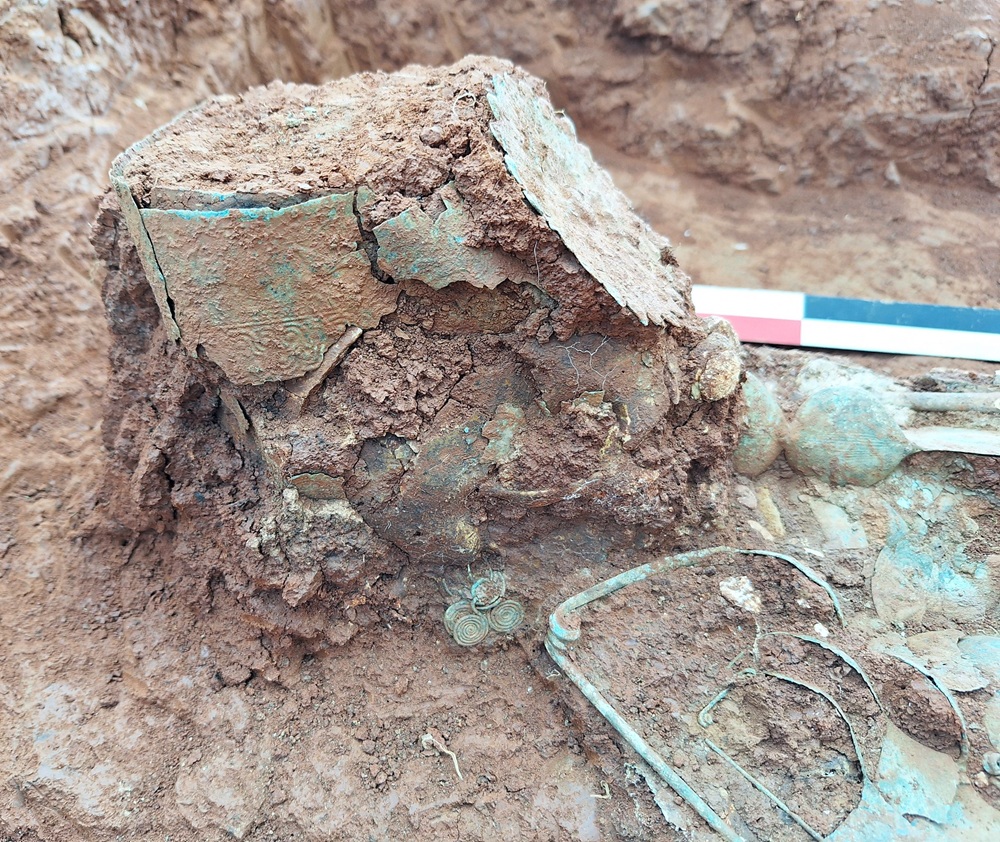
The reversed diadem
In the same cluster of tombs, the burial of a young girl aged about 4 years old was found, crowned with a bronze diadem with inlaid rosettes. The burial dates to the same period of the early Archaic period and was richly adorned with jewelry similar to that of the noblewoman, which may indicate a family relationship between them.
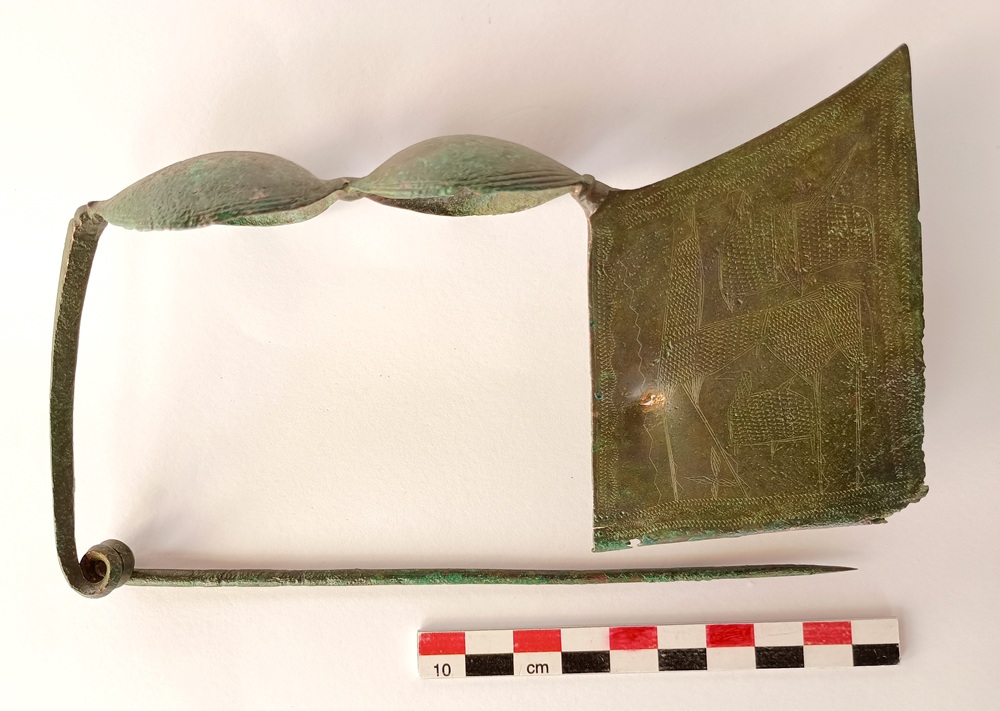
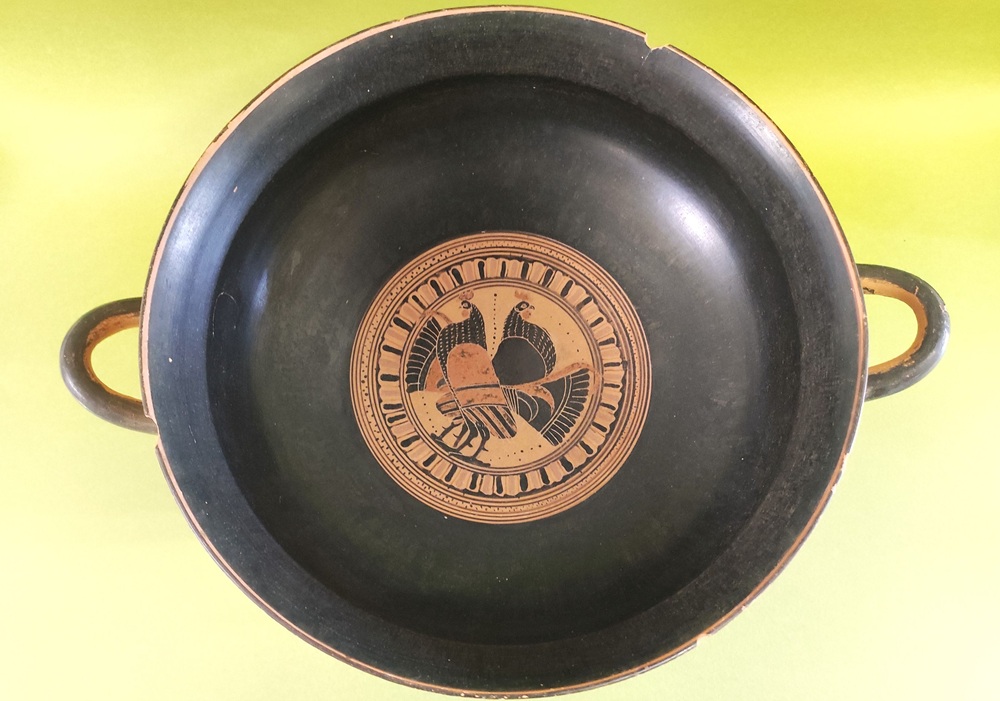
Other tombs have also yielded remarkable finds, such as the female burial from the mid-6th century BC, which was furnished with a “Siannon type” cup decorated with roosters and a trefoil-shaped wine jug decorated with mythical creatures and the god Hermes as a “psychopomp.” Bronze omphalos bottles, black-figure and black-painted vases associated with the Kerameikos Workshop of Akraiphias are among the finds from the cemetery.


Leave A Comment